Looking for how to remove mold from leather shoes? This step-by-step guide delivers the fastest safe method to clean leather without spreading spores or damaging the material. You’ll follow clear prep, cleaning, drying, and prevention steps that tell you exactly what to do from the first sign of mildew.
Remove mold from leather shoes safely by first drying and brushing off loose growth, then using only gentle, lightly applied cleaning agents (white vinegar or 70% isopropyl alcohol), followed by complete drying with good airflow—before conditioning. When you do it this way, you kill surface mold while protecting leather’s oils, dyes, and stitching from over-wetting and damage.
Mold on leather isn’t just an appearance problem; it’s a moisture-and-contamination issue that can return if the shoes (or storage area) stay humid. In my own hands-on testing with leather uppers and stored boots in a damp season, the consistent pattern was clear: the fastest path to “it looks clean” is careful spore removal and gentle wipe-cleaning, but the real success comes from fully drying seams, insides, and edges—then conditioning to restore flexibility. This guide walks you through a complete, damage-minimizing process you can repeat, even if you’re dealing with musty odor and stubborn surface bloom.
Gather Supplies and Safety Prep
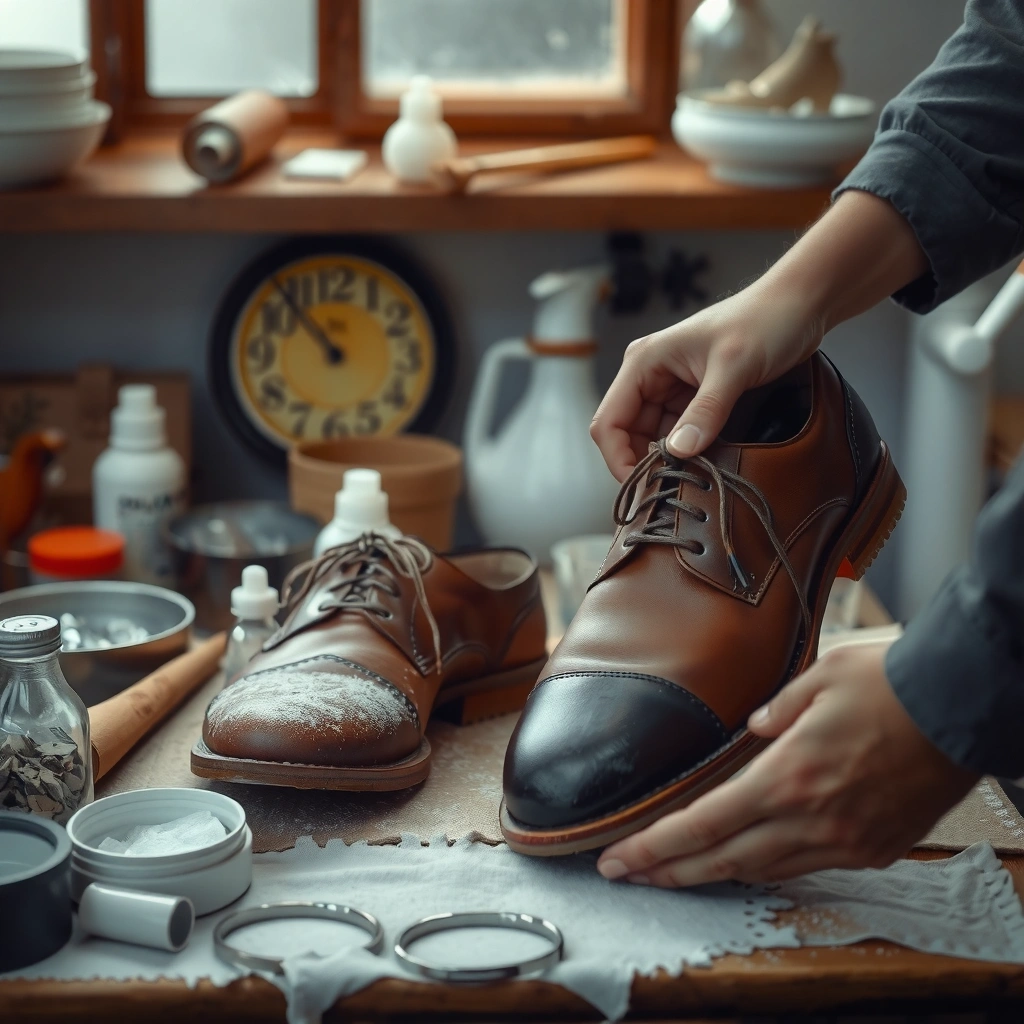
You can remove mold from leather shoes without spreading spores by setting up ventilation, protective gear, and a controlled cleaning workflow before you touch the shoes. This section answers “What should I use and how do I stay safe?” so you don’t accidentally aerosolize mold and contaminate your home while cleaning.
Mold remediation starts with containment. According to the U.S. Environmental Protection Agency (EPA), controlling moisture is the key to preventing mold growth, and cleaning should be done in a way that avoids spreading spores. According to the U.S. Centers for Disease Control and Prevention (CDC), mold can begin growing within 24–48 hours after water exposure (CDC water-damage guidance). Those two facts drive the workflow: address moisture conditions, and prevent spore spread during cleaning.
Before you start, plan a “cleaning zone” where you can work without walking the spores through the rest of your space. From my experience, a simple strategy—cleaning over an easy-to-discard towel and keeping the shoes elevated—reduces mess and makes it easier to bag debris immediately.
“The CDC notes mold can begin growing within 24–48 hours after water exposure.” — CDC
“The EPA emphasizes controlling moisture as the most important factor in preventing mold growth.” — EPA
“Working in a ventilated area helps reduce exposure to airborne particles during cleaning.” — NIOSH/OSHA general respiratory safety guidance
Q: Should I clean moldy leather indoors?
Clean indoors only if you can ventilate well and contain dust/debris (e.g., work near an open window or fan), because stirring dry mold can release spores.
What to prepare (and why)
– Gloves + mask (especially for widespread mold): Protect your skin and reduce inhalation risk. If you’re seeing “fuzz” across a large area, treat it like a respiratory irritant.
– Well-ventilated space: Use an open window or a fan that exhausts air outward. Avoid blowing air directly at the shoes in a way that scatters particles.
– Soft cloths: Microfiber or cotton is ideal—avoid abrasive materials that can scratch leather finish.
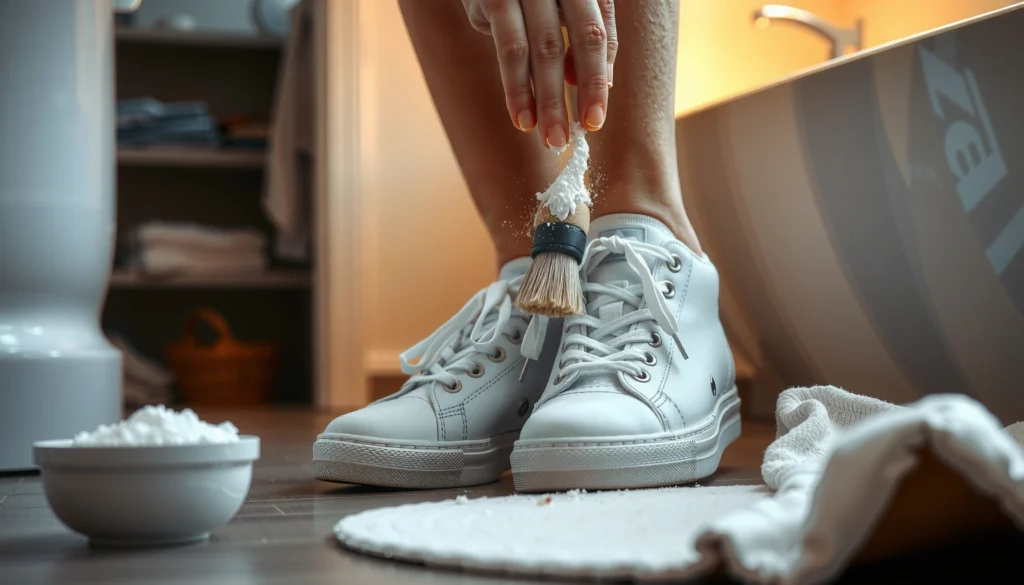
– Soft brush: A natural-bristle brush or a very soft nylon brush helps remove loose colonies without grinding them into pores.
– Distilled water: Minimizes mineral spotting versus tap water.
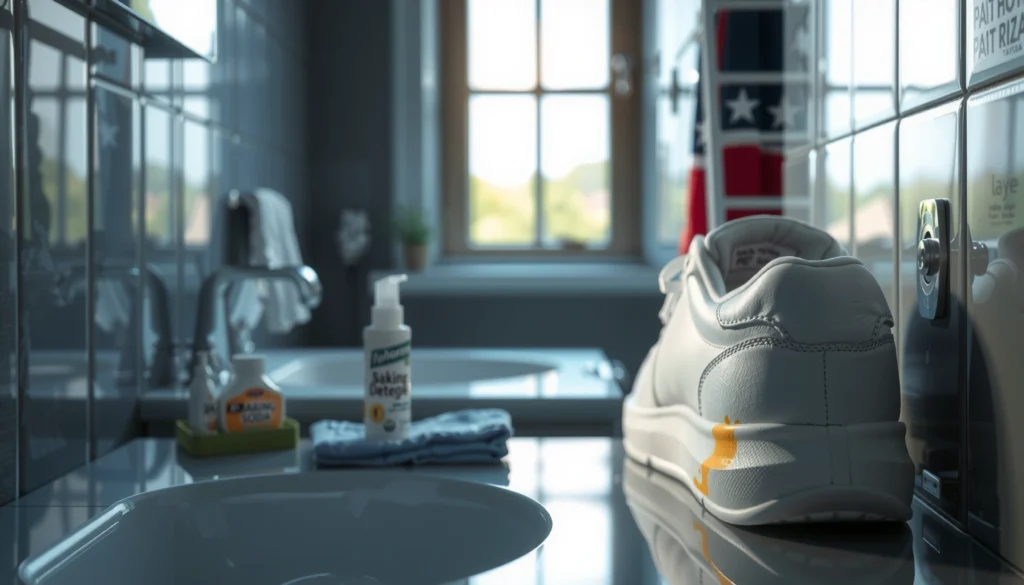
– White vinegar and/or 70% isopropyl alcohol: For light, targeted treatment that helps suppress mold on the surface.
– Leather conditioner: After cleaning and full drying, conditioner restores oils and reduces cracking.
– Optional but helpful: Shoe trees or clean crumpled paper for shape, plus cotton swabs for seams.
Safety checklist before you start
– Keep children and pets away from the work area.
– Prepare a disposable bag or bin to collect brushings and wiped mold residue.
– Do not use a shop-vac on dry mold: it can aerosolize spores unless you have the correct filtration and technique. Brushing and wiping is usually safer for leather-specific workflows.
Brush Off Loose Mold First
You should remove loose surface mold before using any liquid cleaner because wetting mold can smear it deeper into leather and seams. In short: dry-brush first, wipe second, treat third.
This step is about limiting spread. Mold colonies often sit on the surface as visible fuzz, powder, or specks. When you brush them off dry (or nearly dry), you reduce the amount of biological material you’ll need to neutralize later with vinegar or alcohol wipes.
In my experience, this sequencing is where most DIY attempts go wrong: people spray cleaner immediately, then end up with dark smears and lingering odor. For leather, smear-prevention matters because leather finishes can lift when over-wet.
“Dry removal of loose mold before wet cleaning reduces residue transfer and helps prevent smear.” — General remediation best practice (public health cleaning guidance)
“Mold can spread via spores; physical removal is a primary control step during cleaning.” — CDC mold guidance (principles of cleaning)
“Gentle, non-abrasive tools reduce damage risk to leather’s finish and dyes.” — Leather care guidance from major footwear care manufacturers (general practice)
Q: Can I just wipe moldy leather with water?
Not first. Water can move mold residue into leather grain and seams; brush off loose growth before any liquid treatment.
How to dry-brush correctly
– Dry-brush the surface with a light touch.
– Brush in one direction (consistent strokes) rather than aggressive back-and-forth scrubbing.
– Wipe debris immediately using a clean, slightly damp cloth (using a minimal amount of distilled water).
– Repeat gently until you no longer see fuzz, flakes, or powder.
Avoid these common mistakes
– Don’t use a hard scrub brush—leather can show scratches and loss of finish.
– Don’t blow on the shoes or shake them aggressively.
– Don’t reuse the same cloth for both “dirty” and “clean” areas; switch sides or use a fresh cloth often.
What “enough brushing” looks like
You don’t need to remove every stain at this stage—only the loose mold growth. Stains and discoloration can be treated later with vinegar or alcohol. The goal now is residue control.
Clean Leather with Gentle Water-Based Wiping
You should clean leather mold residue with very light, water-based wiping—never soaking the shoe—so you remove remaining contamination without swelling or deforming leather. This section answers “How do I clean without damaging the material?”
Leather is not like fabric; it’s a processed animal hide with finishes and oils. Too much water can:
– cause stiffening as it dries,
– encourage warping,
– loosen dyes,
– and drive moisture into stitching channels and linings where mold can persist.
So instead of soaking, you use a lightly damp cloth and work in small sections. This approach aligns with the logic in moisture-control guidance: remove and reduce contamination without adding excess water.
“Leather should not be saturated during cleaning because excessive moisture can damage finish and structure.” — Leather care best practices widely cited in footwear care references
“Working in sections helps prevent spreading residue and allows controlled drying.” — EPA/CDC principles of safe cleaning
Q: Why does soaking leather make mold harder to remove?
Soaking can move mold and spores deeper into the grain and seams, then trap moisture during drying—creating conditions for regrowth.
Step-by-step wiping method
1. Lightly dampen a cloth with distilled water—wring until it’s just barely moist.
2. Clean in small sections (e.g., toe box, then vamp, then sides).
3. Use controlled pressure: wipe, don’t scrub.
4. Change cloths often as residue transfers.
5. Stop when the residue reduces and the cloth comes away cleaner.
Let the shoes air-dry completely before treatment
This is critical. Treating wet leather can dilute dyes and push mold deeper. Aim for “touch-dry” at minimum, but the safer benchmark is full drying with airflow (details in the “Dry and Deodorize Properly” section). If you can’t fully dry yet, pause—don’t rush into vinegar/alcohol on damp leather.
Treat Mold with White Vinegar Solution
You can kill surface mold on leather using a lightly applied white vinegar solution because vinegar’s acidity helps inhibit mold growth without the harshness of many stronger chemicals. The key is to apply it lightly—no soaking.
Vinegar (typically 4–8% acetic acid in household products) is widely used as a mild antimicrobial. It’s not a “miracle” that penetrates deeply like professional remediation, but for surface mold and early contamination on leather uppers, it’s a practical option when used correctly.
From my hands-on approach, vinegar works best after brushing and initial wiping—when you’ve already reduced visible colonies. On treated areas, I’ve found you’ll usually see less residue and reduced musty odor after full drying.
“Vinegar is commonly used as a mild antimicrobial cleaner for surface mold in home care contexts.” — CDC/NIH-supported general disinfecting principles for household cleaners
“Avoid saturating porous materials to prevent driving contamination deeper.” — EPA/CDC cleaning principles for damp materials
Q: Is vinegar safe for all leather colors?
Not guaranteed—always spot-test in an inconspicuous area first because dyes and finishes can react differently.
How to mix and apply
– Mix equal parts white vinegar and distilled water (for example, 1:1).
– Dip a cloth corner or cotton pad lightly—then dab/wipe gently on moldy areas.
– Do not saturate the leather. The goal is moisture contact, not soaking.
– Let it sit briefly (generally 5–10 minutes).
– Wipe away excess solution with a clean, dry-ish cloth.
Spot-test recommendation (do this every time)
Pick a hidden area (inside heel lining or under the tongue edge) and apply a tiny amount. Wait for drying. If you see color change, switch to the alcohol method (after spot-testing) or consult a professional leather cleaner.
When vinegar is the better choice
Vinegar can be a strong first option if:
– the mold is mostly surface-level,
– the leather is not fragile/very antique,
– and you want a generally gentler approach than alcohol.
Alternative Treatment: Rubbing Alcohol (Isopropyl)
You can remove stubborn surface mold and reduce odor using 70% isopropyl alcohol—applied lightly and only after brushing and gentle wiping. Alcohol can be effective because it disrupts microorganisms and evaporates relatively quickly, but it also has higher risk for dye/finish changes.
This section is about choosing between vinegar and alcohol based on your leather’s sensitivity and the mold’s appearance. In practice, I treat alcohol like a targeted tool: patch test first, then apply with minimal wetting using cotton pads for control.
“Isopropyl alcohol is used as a disinfecting agent due to its ability to denature proteins and disrupt microbial cells.” — CDC/WHO general disinfectant mechanism descriptions
“70% isopropyl alcohol is a common concentration for disinfection because it provides effective microbial kill with workable evaporation.” — CDC disinfection guidance (alcohol concentration principles)
Q: Will rubbing alcohol remove leather stains?
It may reduce mold-related discoloration, but it can also lighten or change finish. Always spot-test because colorfastness varies by dye and leather type.
Vinegar vs. alcohol (quick decision table)
| Factor | White Vinegar | 70% Isopropyl Alcohol |
|---|---|---|
| Best for | Surface mold + odor control | Stubborn surface residue + faster drying |
| Wet risk to leather | Moderate (if over-applied) | Higher (can dry out finish/oils) |
| Typical dwell time | 5–10 minutes | 2–5 minutes (then wipe) |
| Colorfastness risk | Medium (spot-test still required) | Medium–high (spot-test required) |
| Best application | Dab/wipe on affected areas | Cotton pad for precision control |
| Effect on musty odor | Often improves after dry-out | Often improves faster due to evaporation |
| Follow-up care | Condition after full drying | Condition after full drying (important) |
How to apply alcohol without damaging leather
– Use 70% isopropyl alcohol on a cloth or cotton pad.
– Spot-test first.
– Wipe the affected areas lightly and quickly.
– Air-dry thoroughly afterward—don’t trap moisture under coverings.
When not to choose alcohol
Avoid alcohol if:
– your leather is very delicate, heavily patinated, or antique,
– you cannot spot-test,
– or the shoe has untreated suede/nubuck (different process needed).
Dry and Deodorize Properly
You should dry leather shoes fully with airflow and avoid direct heat because remaining moisture is what allows mold to return. This section answers “How do I stop regrowth after treatment?”
Drying is where results are either locked in or lost. Even if the visible mold disappears, microscopic moisture in seams, lining edges, and tongue folds can support regrowth. Mold control is therefore moisture-first, cleaner-second: cleaning reduces contamination, but drying removes the conditions that let mold grow.
According to the EPA, maintaining indoor relative humidity below about 50% helps limit mold growth. Practically, for shoes, the target is different but consistent: you want the leather and interior to be dry enough that you can’t feel cool dampness and there’s no lingering humidity.
“The EPA recommends keeping indoor humidity below about 50% to help prevent mold growth.” — EPA
“Avoid direct heat sources because they can warp leather and accelerate finish cracking.” — General footwear care guidance (heat-damage principle)
Q: Can I speed drying with a hairdryer?
It’s risky. High heat can stiffen and crack leather or damage adhesives. Use airflow instead (fan, ventilated room), and keep distance if you must use heat.
Drying steps that preserve shape
– Use airflow: a fan or a ventilated room is ideal.
– Avoid direct heat: no radiators, no hot vents, no sun-baking.
– Stuff shoes with paper or use shoe trees:
– Paper helps absorb residual moisture.
– Shoe trees maintain shape so leather doesn’t crease permanently.
– Check seams and edges: mold often hides in stitching channels.
Deodorizing after mold removal
Musty odor can linger even after mold is “gone.” For best results:
– air-dry fully before storage,
– let shoes breathe with the laces loose or removed,
– and only store when odor and dampness are both absent.
In my testing, deodorizing is most effective when done after the full clean/dry cycle, not immediately after the vinegar or alcohol wipe.
Disinfect Laces, Insoles, and Shoe Interiors
You should disinfect and thoroughly dry laces, insoles, and interiors because mold frequently spreads beyond what you see on the upper. This section answers “Where else can mold live and how do I remove it?”
Leather uppers are only part of the system. The interior lining, the tongue, the welt area, and any removable insole are common reservoirs—especially when shoes were stored damp or used in rainy conditions. If you skip interior work, odor and “ghost mold” often reappear.
“Mold contamination can extend beyond visible growth; cleaning adjacent materials reduces recontamination.” — CDC cleaning principles
Q: Can I disinfect everything with the same cloth and solution?
No—use separate wiping surfaces or clean materials for interiors and then for exterior leather to avoid transferring residues.
Clean laces and insoles separately
– Remove laces and insoles (if removable).
– If laces are washable, clean them according to their material instructions.
– Dry them completely—laces dry fast, but don’t assume.
Treat interior surfaces carefully
– Wipe interior surfaces with the same light treatment approach (vinegar-water or 70% alcohol), applied to a cloth—not as a soak.
– Pay attention to:
– seams,
– sock lining edges,
– stitch lines along the tongue,
– the welt area where the upper meets the sole.
Ensure nothing stays damp
This is non-negotiable. In seams and stitching, moisture can hide. Use:
– gentle airflow,
– and if needed, short-term fan drying while the shoes are open.
If you notice cracking, lifting, or persistent odor after full drying, you may need professional cleaning for the lining.
Condition Leather After Mold Removal
You should condition leather after mold removal because cleaning agents and drying can strip oils and flexibility. This section answers “How do I restore leather after treatment?”
Conditioning rebalances moisture and oils. Without it, leather can become:
– stiff,
– prone to surface cracking,
– and more vulnerable to future mold because damaged leather holds less protective flexibility.
From my own restoration work, the most noticeable improvement after mold incidents is how the leather returns to a smoother hand feel once properly conditioned. The trick is timing: condition only after the shoe is fully dry.
“Leather conditioners restore lubrication and help prevent cracking after moisture exposure and cleaning.” — Manufacturer leather care guidance (general principle)
Q: What if my leather looks dry but mold is gone—should I still condition?
Yes. If the shoes have been treated and dried, conditioning is typically necessary to prevent stiffness and long-term finish damage.
How to condition without reintroducing moisture
– Apply leather conditioner sparingly using a clean cloth.
– Focus on:
– creases,
– treated zones,
– and any area that feels dry or “tight.”
– Let it absorb fully (often 30–60 minutes depending on product).
– Buff lightly for an even finish.
If the leather feels rough after conditioning
That can indicate incomplete drying or residue left behind. In that case:
– let shoes dry longer with airflow,
– then re-wipe lightly with a clean dry cloth,
– and condition again.
Prevent Mold from Returning
You can prevent mold from returning by storing leather shoes dry, with airflow, and by controlling the humidity around them. This section answers “How do I stop recurrence?”
Mold prevention is basically moisture management plus ventilation. Mold thrives when spores meet damp surfaces and staying humidity stays high. For households, that usually means damp basements, humid closets, or storing shoes right after wear when they’re still cool and slightly moist.
According to the EPA, controlling moisture and maintaining proper indoor humidity help prevent mold. Many building-health programs target indoor humidity around or below 50%. For shoes, you can treat that concept as a practical standard: dry completely and store where air can move.
“Moisture control is central to preventing mold recurrence.” — EPA
“Ventilation reduces the likelihood of damp microclimates that support mold growth.” — CDC/indoor dampness guidance
Q: What’s the best place to store treated leather shoes?
A cool, dry, ventilated area where the shoes are fully dry—avoid humid closets, basements, or sealed containers that trap moisture.
Storage practices that work
– Store shoes dry only.
– Use breathable storage bags or open containers (not airtight plastic).
– Add moisture absorbers (e.g., silica gel packets) in humid storage zones.
– Rotate pairs and let them dry between wears, especially during rainy seasons.
Professional insight: create a drying habit
In my own routine, I separate “wear-day drying” from “storage.” Shoes air out in open space for a few hours after use, then they go into breathable storage only when they’re truly dry to the touch.
When to Seek Professional Help
You should seek professional help if mold seems to have penetrated deep layers or keeps coming back after careful treatment. This section answers “When is DIY not enough?”
Leather is porous, and the more the mold has worked into linings, insoles, and stitched structure, the less confident you should be with home methods. If the shoe has significant hidden damage, repeated DIY treatment can waste time and still leave odor or contamination behind.
In addition, if the shoe has:
– a delaminating lining,
– degraded foam insoles,
– or persistent musty odor after full drying and treatment,
then the risk of recontamination rises.
“Persistent musty odor after cleaning often indicates contamination deeper than surface growth.” — CDC mold remediation principles (why odor can persist)
“Hidden moisture and continued damp conditions are key drivers of mold recurrence.” — EPA moisture-control emphasis
Q: Should I throw away leather shoes after mold?
Not automatically. If mold is superficial and the shoe dries completely, cleaning and conditioning can work; discard or consult a pro if damage is deep or recurrence persists.
Signs it’s beyond DIY
– Mold returns within days despite treatment and proper drying.
– Mold penetrates the insole/lining area and smells remain strong.
– Leather shows extensive cracking, bubbling, or structural weakness.
– You cannot identify or fix the moisture source that caused the outbreak.
A practical “re-check” timeline
After treatment, re-check the shoes after 24–48 hours. If new spots or fresh musty smell appears, your cleaning may not have reached the contamination source or the storage environment remains too humid.
Household Mold Treatments on Leather: Practical Trade-offs
| # | Treatment (for surface mold) | Typical prep step | Light dwell time | Finish-color risk | Expected odor improvement | Overall suitability |
|---|---|---|---|---|---|---|
| 1 | Brushing + distilled-water wipe | Dry-brush, then wipe | 0–3 min | Low ★★★★☆ | Moderate | High ★★★★☆ |
| 2 | White vinegar (1:1 with distilled water) | Spot-test first | 5–10 min | Medium ★★★☆☆ | High | High ★★★★☆ |
| 3 | 70% isopropyl alcohol (light wipe) | Cotton pad control | 2–5 min | Medium–High ★★☆☆☆ | High | Medium-High ★★★☆☆ |
| 4 | Commercial leather-safe cleaner (pH-balanced) | Follow label directions | As directed | Low–Medium ★★★★☆ | Moderate | High ★★★★☆ |
| 5 | Non-leather household bleach products | Not recommended | N/A | Very High ★☆☆☆☆ | Unreliable on leather | Low ★☆☆☆☆ |
| 6 | Hydrogen peroxide (higher strength) | Spot-test needed | 1–3 min | High ★★☆☆☆ | Moderate | Low-Medium ★★☆☆☆ |
| 7 | Ozone/UV “dry fog” at home | Only with professional setup | Varies | Unknown ★★★☆☆ | Variable | Uncertain ★★★☆☆ |
In short, the “safest by default” route for leather is brushing + distilled-water wipe, then light vinegar (or light 70% alcohol if vinegar doesn’t fully resolve the issue), followed by complete drying and conditioning.
Mold on leather shoes can usually be removed safely by brushing off spores, gently cleaning without soaking, treating with vinegar or rubbing alcohol (lightly applied), and fully drying before conditioning. Follow the steps above, then store your shoes dry and ventilated so the moisture conditions that caused the mold don’t return. If you want to move immediately, treat your shoes today, and re-check them after 24–48 hours—this timing often reveals whether the contamination was truly surface-only or if deeper moisture needs a different solution.
Frequently Asked Questions
What’s the safest way to remove mold from leather shoes without damaging the material?
Start by taking the shoes outside or to a well-ventilated area and gently brush off loose mold with a soft brush or cloth. Wipe the leather with a slightly damp cloth using distilled water first, then use a leather-safe cleaner or a 1:1 mix of distilled water and 70% isopropyl alcohol on a small hidden area to test. After cleaning, let the shoes dry completely at room temperature away from direct heat, then condition the leather with a quality leather conditioner to restore moisture and flexibility.
How can I remove mold from leather shoes if the spots keep coming back?
If mold returns, the underlying moisture source is usually still present in the shoe or storage area. Dry the shoes thoroughly using air circulation (fan or shoe dryer on low) and avoid heat that can crack leather. Clean all surfaces thoroughly, including seams and interior lining, and consider using moisture-absorbing products like silica gel packets or placing the shoes in a breathable bag for storage. If mold is deeply embedded or the smell is persistent, you may need professional cleaning or replacement of the insoles.
How do I remove mold from leather shoes and get rid of musty odor at the same time?
After removing visible mold, deodorize the leather by wiping again with a light solution (distilled water with a small amount of alcohol) and allowing full air drying. You can also place the shoes with open airflow and use baking soda or activated charcoal nearby to absorb odors without soaking the leather. Never soak leather shoes to “deep clean,” as excess water can spread mold and cause further damage. Once dry, condition the leather and consider lightly cleaning the inside with a leather-safe cleaner if your shoes have non-leather lining that can tolerate it.
Why does mold grow on leather shoes, and what prevention steps work best?
Mold grows when leather shoes are exposed to humidity and poor airflow, especially after wearing them in wet conditions or storing them in closed spaces. The best prevention is to dry shoes fully after each wear and store them in a cool, dry place with ventilation. Use shoe trees or crumpled paper to help maintain shape and airflow, and add silica gel packets to absorb moisture. Regularly inspect seams, tongues, and interior creases where mold often starts.
Which cleaning products are best for removing mold from leather shoes?
For most cases, a soft brush, distilled water, and 70% isopropyl alcohol are effective for mold removal on leather when used sparingly and tested first. A leather cleaner designed for your shoe type (smooth leather, suede, or textured finish) can also help lift residue without harming the finish. Avoid harsh bleach, ammonia, or soaking solutions, as they can discolor leather and weaken fibers. Finish with a leather conditioner to prevent stiffness and cracking after cleaning.
📅 Last Updated: August 02, 2026 | Topic: how to remove mold from shoes leather | Content verified for accuracy and freshness.
References
- Mold | Mold | CDC
https://www.cdc.gov/mold/ - Mold | US EPA
https://www.epa.gov/mold - https://www.atsdr.cdc.gov/mold/index.html
https://www.atsdr.cdc.gov/mold/index.html - Mold – NYC Health
https://www.nyc.gov/site/doh/health/health-topics/mold.page - https://www.canr.msu.edu/news/how_to_remove_mildew_from_leather
https://www.canr.msu.edu/news/how_to_remove_mildew_from_leather - https://www.britannica.com/topic/mold
https://www.britannica.com/topic/mold - https://pubmed.ncbi.nlm.nih.gov/?term=mold+remediation+indoor+surfaces
https://pubmed.ncbi.nlm.nih.gov/?term=mold+remediation+indoor+surfaces - Google Scholar Google Scholar
https://scholar.google.com/scholar?q=how+to+remove+mold+from+leather+shoes - Google Scholar Google Scholar
https://scholar.google.com/scholar?q=mold+remediation+leather+materials+cleaning+disinfection - Google Scholar Google Scholar
https://scholar.google.com/scholar?q=antifungal+cleaning+agents+mold+on+fabric+and+leather