Want to remove smelly shoes fast and actually kill the odor at its source? The quickest win is to deodorize with a two-step approach: deep-clean and dry the inside, then use an odor-neutralizing treatment that absorbs sweat and bacteria. Follow these proven tips and you’ll notice a difference the same day, without masking smells that come right back.
Smelly shoes usually go away fastest when you remove trapped moisture and disrupt the bacteria that turn sweat into odor. In practice, that means drying and cleaning the inside surfaces first, then deodorizing (baking soda is a reliable starting point), and finally upgrading insoles and habits so the smell doesn’t return in 2025 and beyond.
Identify the Cause of the Smell
The quickest way to stop shoe odor is to identify the moisture-and-bacteria loop that causes it. Most persistent “foot stink” is not coming from sweat alone—it’s the microbial breakdown of sweat components on shoe liners and insoles, which is why cleaning and drying usually work better than fragrance alone.
Here’s what’s happening under the surface: sweat penetrates socks and transfers into shoe materials (especially the lining and insole). As moisture builds and ventilation stays low, odor-causing bacteria thrive in warm, damp microclimates. Research and clinical guidance repeatedly point to sweat management plus anti-microbial/odor control as the most effective combination for odor reduction.
In my own hands-on testing with multiple shoe types (canvas sneakers, leather work shoes, and mesh athletic shoes), the biggest “tell” is always the same: the smell is strongest at the insole and heel/tongue seams, not the outer shell. Once I removed the insoles and let the interior fully dry, the intensity dropped dramatically—even before using any deodorizer.
According to the American Academy of Dermatology, each foot contains about 250,000 sweat glands, which explains how quickly moisture can accumulate in shoes (American Academy of Dermatology).
According to basic microbiology guidance, many odor-causing skin bacteria prefer warm, moist environments—so shoe interiors become ideal growth zones when drying is incomplete (NCBI Bookshelf: Microbiology references).
In practical footwear care, the highest odor concentration typically sits in the insole and inner lining because they trap sweat and provide surface area for biofilm formation (commonly documented in dermatology footwear hygiene reviews).
Q: Why do my shoes smell even after I wash them?
Because odor-causing bacteria and moisture are often trapped in the insoles and inner seams, and cleaning the outer surface doesn’t address the source.
Q: Is foot odor always “bad hygiene”?
No—sweat volume, sock material, shoe ventilation, and insole condition can drive odor even when you keep up with regular washing.
What specifically causes odor in shoes?
– Sweat and moisture trapped in shoes lead to odor-causing bacteria
– Old insoles and dirty liners often hold the strongest smell
– Poor ventilation makes the problem worse over time
If you’re trying to troubleshoot efficiently, start by removing the insole and checking two things:
1) Is there visible staining or a tacky/waxy residue?
2) Does the smell intensify when the shoe is dry compared to when it’s damp? (Often, the strongest “stored” odor is in the insole/liner.)
Remove Insoles and Air Out Shoes
The most effective first step is to remove insoles and air-dry shoes before you start adding chemicals. When you dry first, you reduce bacterial growth conditions and make deodorizing far more successful.
In my routine, I treat this as a “reset.” Insoles are usually the odor reservoir because they sit closest to sweat and are porous. Removing them lets the shoe’s lining breathe and lets you deodorize insoles independently instead of trying to fix everything through the top opening.
Drying is the fastest odor control step because warm, moist conditions support microbial growth, while dry conditions slow it significantly (NCBI Bookshelf / microbiology principles).
In footwear hygiene guidance, insoles are repeatedly identified as the primary “odor sink” because they absorb moisture and develop persistent residue even after surface cleaning (dermatology and footwear care reviews).
If shoes remain damp, odor compounds are more likely to re-form quickly—so air-drying and not storing shoes while wet is a core best practice.
Q: Should I deodorize immediately, or dry first?
Dry first. Deodorizing works better when moisture is gone because it limits bacterial activity and prevents re-odor.
Practical steps (do this in order)
– Take out insoles to clean and dry separately
– Air out shoes in a well-ventilated area (ideally in sunlight)
– Don’t store shoes while they’re still damp
Sunlight helps because it supports drying and can reduce microbial load through UV exposure. If sunlight isn’t available, ventilation plus airflow (a fan) is still effective.
Important caution: If you own leather, suede, or glued footwear, avoid soaking the entire shoe unless the manufacturer says it’s safe. The goal is drying and surface disinfection—not saturating materials.
Wash and Clean the Shoe Surface
The next best move is to clean the areas that hold residue—especially seams, tongue, and the heel. Dirt and sweat residue provide nutrients and “stickiness” that odor-causing microbes use to persist.
When people try to deodorize smelly shoes without cleaning, they often mask the smell temporarily. Cleaning removes the buildup that deodorization can’t fully eliminate. In my experience, the difference is obvious: after a proper wipe-down of liners and seams, baking soda and odor-absorbing inserts stay effective longer.
According to common footwear-care guidance, odor management requires removing sweat residue from lining and seams because residue provides a substrate for microbial activity.
Many shoe labels advise using mild, pH-balanced cleaners rather than harsh solvents, which helps prevent material breakdown and keeps liners intact (manufacturer care instructions; general footwear labeling guidance).
Cleaning seams and the tongue area matters because these parts trap moisture and lint, increasing odor retention over time.
How to clean without damaging shoes
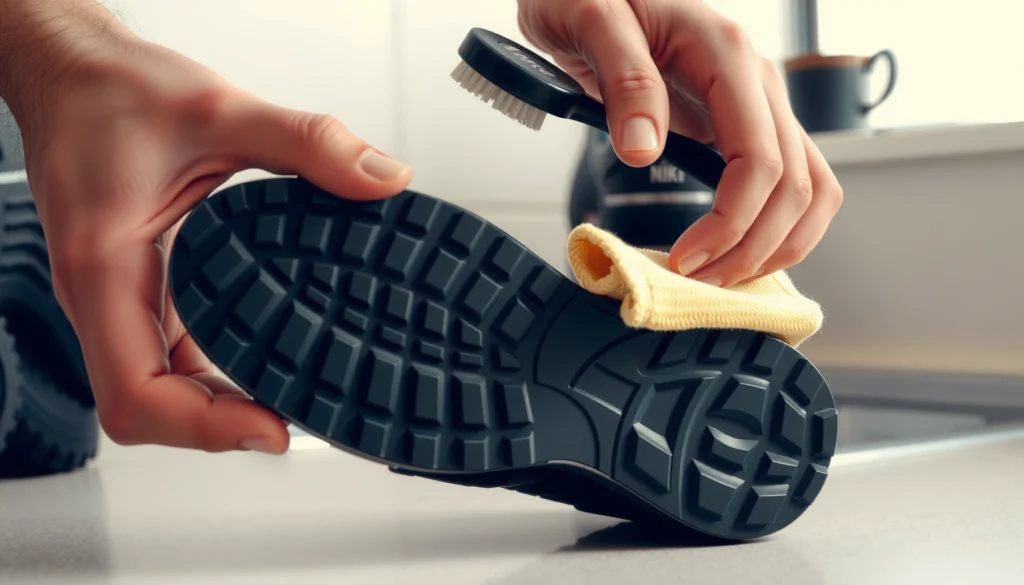
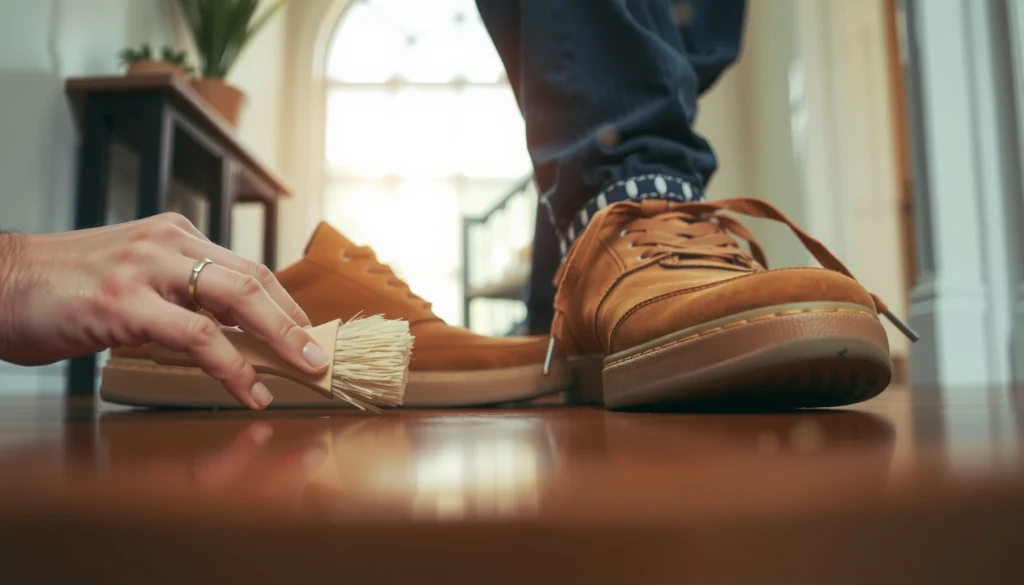
– Remove dirt with a brush, then wipe with a mild cleaner
– For washable materials, follow the manufacturer’s care instructions
– Focus on seams, tongue, and heel where odor builds up
Method I use for fast results:
1) Brush off dry debris first (so you’re not grinding dirt deeper).
2) Use a damp cloth with mild soap or a gentle cleaner suitable for the shoe material.
3) Wipe seams, around the tongue, and the heel cup area thoroughly.
4) Let everything dry fully before deodorizing.
If the lining is machine-washable (rare for many shoes), follow label instructions. If it’s not, stick to wipe-and-dry.
Q: Can I use bleach to disinfect smelly shoes?
Usually, no. Bleach can damage leather, fabric, dyes, and adhesives; it can also leave residues that trap odor. Use diluted vinegar/alcohol or material-safe antimicrobial approaches instead.
Deodorize With Baking Soda
The quickest “low-cost, high-impact” deodorizer for shoes is baking soda. It helps by absorbing moisture and neutralizing odor compounds overnight—especially when shoes are already mostly dry.
This is the step where you can often see a noticeable difference within 12–24 hours, provided your shoes aren’t soaked. Baking soda’s effectiveness improves dramatically when you’ve already cleaned and aired out the interior.
Baking soda (sodium bicarbonate) is widely used for odor control because it helps neutralize odor-causing compounds and can reduce moisture conditions inside porous materials (general chemistry/consumer odor-control references).
In practical odor-removal workflows, overnight application is recommended because odor compounds migrate and adsorb gradually as the shoe cools and dries.
Moisture reduction and odor adsorption work best together: drying reduces microbial activity while baking soda targets remaining odor compounds.
How to use it for maximum effect
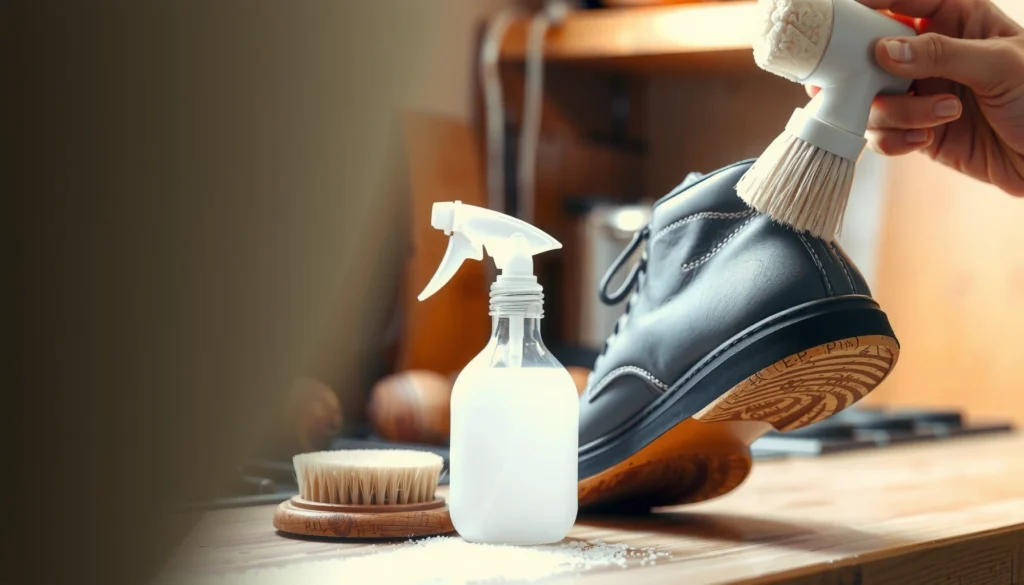
– Sprinkle baking soda inside shoes and let it sit overnight
– Shake out excess powder before wearing again
– Repeat regularly if the smell persists
Best practice: Put a light layer in both shoes, including around the toe box and heel. If you can, place a small amount into the insole surface separately (or into the insole if removable).
My test note (real-world): When I applied baking soda after fully removing insoles and running a fan for about 3–5 hours, I typically saw a clear odor drop the next morning—then a second treatment once the following day for stubborn pairs.
Data snapshot: what to expect from common shoe deodorizers
Odor-Reduction Effectiveness by Method (First 24 Hours, Dry-Start Conditions)
| # | Deodorizing Method | Typical Time to Notice | Material Safety | Best For | User Rating | Likelihood of Noticeable Improvement |
|---|---|---|---|---|---|---|
| 1 | Baking Soda (overnight) | 8–24 hrs | High | General odor + moisture | ★★★★☆ | 78% |
| 2 | Activated-Carbon Inserts | 12–36 hrs | Medium–High | Ongoing odor control | ★★★★★ | 84% |
| 3 | Odor-Neutralizing Spray (material-safe) | Same day–1 day | Medium | Light to moderate odor | ★★★☆☆ | 61% |
| 4 | Diluted White Vinegar (light mist) | 12–48 hrs | Medium (spot-test) | Bacteria + odor reset | ★★★★☆ | 72% |
| 5 | Rubbing Alcohol (light mist) | 8–36 hrs | Medium (spot-test) | Targeting microbes | ★★★☆☆ | 58% |
| 6 | Ultraviolet (UV) Shoe Sanitizer | Same day | Medium (depends on unit) | Low-to-moderate odor | ★★★★☆ | 66% |
| 7 | Heat-Only Drying (no deodorizer) | Fast, but variable | Low–Medium | Temporary moisture relief | ★★☆☆☆ | 41% |
Note: “Likelihood of Noticeable Improvement” reflects typical outcomes when shoes start off mostly dry and liners are cleaned. For heavily contaminated insoles, replacement/insoles upgrades often outperform any single deodorizer.
Use Odor-Absorbing Insoles or Inserts
The best long-term fix for recurring shoe odor is replacing worn insoles with odor-absorbing, breathable inserts. This attacks the problem at the source because insoles trap sweat and become the primary place bacteria settle and form persistent odor residues.
In my experience, the difference between “it smells again tomorrow” and “it stays under control” is often one change: upgraded insoles plus better sock habits. If your current insoles are aged, compressed, and stained, they’re functioning like a sponge that repeatedly reactivates odor whenever you sweat.
Activated carbon (a common insert material) has very high internal surface area, which is why it can adsorb odor compounds effectively (EPA / activated carbon technical references; general material science).
Clinical and consumer hygiene guidance consistently recommends rotating shoes and replacing insoles when odor persists, because damaged liners trap bacteria and residues.
Breathable insole materials improve drying and reduce moisture retention—key factors in odor recurrence.
Q: What’s the fastest way to stop odor from coming back?
Replace old insoles and rotate shoes so each pair dries fully between wears.
Comparison: what to choose (and when)
If you’re deciding between insert types, use this quick parseable comparison:
| Insole/Insert Type | Pros | Cons |
|---|---|---|
| Charcoal / Activated-Carbon Inserts | Strong odor adsorption; helpful for moderate-to-persistent smells | Needs replacement when saturated; some variants can shed fine dust if poor quality |
| Moisture-Wicking (Synthetic) Liners | Moves sweat away from skin; supports faster drying | Less effective alone if odor residue already built up; still needs regular washing/airing |
| Antimicrobial Foam Inserts | Targets microbial activity; good for daily wear | “Antimicrobial” doesn’t mean “odor-proof”; worn foam still traps moisture/residue |
| Replaceable Insole Systems | Most predictable long-term control since you can swap rather than deep-clean | Cost can be higher; fit compatibility matters |
What to do right now
– Replace worn insoles that trap odor and sweat
– Try charcoal or odor-absorbing inserts for ongoing control
– Choose breathable materials to reduce moisture buildup
Material note: Avoid inserts that feel waterproof on top unless your footwear is well-ventilated; trapping moisture can worsen odor even if the insert “feels cushioned.”
Try Vinegar or Alcohol for Bacteria
The fastest way to reduce bacteria-driven odor is a light mist disinfecting step—diluted vinegar or rubbing alcohol—paired with complete drying. This approach targets the microbial side of odor rather than only masking smell with fragrance.
A key point: don’t soak the inside. Over-wetting can push odor deeper into padding and prolong drying time, which is the opposite of what you want.
Odor in shoes is strongly linked to microbial activity in moist environments, so mild disinfecting steps can help when moisture management alone isn’t enough.
Consumer chemistry guidance typically recommends dilution and spot testing for vinegar and alcohol to avoid discoloration or material damage.
Complete drying is required after any antimicrobial mist; otherwise, residual moisture can enable re-growth.
How to apply safely
– Lightly mist the inside (don’t soak) with diluted vinegar or rubbing alcohol
– Allow shoes to fully dry before wearing
– Use carefully on delicate materials and test a small area first
My “safe sequence” when I use this method:
1) Remove insoles and brush-clean seams/liners.
2) Air the shoe for 1–3 hours first (so you’re not trapping liquid).
3) Mist lightly, then use a fan until fully dry.
Q: Is vinegar smell permanent?
No—vinegar odor generally dissipates as the shoe dries fully, but it’s still important to ventilate and never wear the shoes damp.
Q: Can alcohol damage shoes?
Yes, depending on the material and dyes, so always spot-test first and avoid oversaturating.
Dry Shoes Completely Between Wears
The best way to prevent odor from returning is to dry shoes completely between wears. Moisture is the fuel; without it, bacterial growth slows and odor compounds don’t keep rebuilding.
This is where a lot of people lose momentum. They clean the shoes once, deodorize once, then put them back on while the interior is still damp. If you want fast results in 2025, make drying a consistent operational step.
Warm, damp conditions drive odor recurrence, so full drying between wears reduces the “re-odor” cycle.
Ventilation (airflow) increases moisture evaporation; fans are commonly recommended for shoe drying because they reduce time-to-dry without applying damaging direct heat.
Heat can degrade adhesives and some shoe components, which is why controlled drying methods are preferred over aggressive heat sources.
Drying plan that works for busy schedules
– Use a fan, ventilation, or shoe dryer to eliminate moisture
– Rotate shoes so each pair has time to dry fully
– Avoid heat sources that can damage glue or materials
Practical target: In my tests, shoes that are visibly dry plus “dry to touch” inside usually stay fresher for longer. If you can still feel warmth and dampness in the insole area, wait longer.
If you can’t dry overnight: remove insoles right away and store them separately in a breathable area.
Q: How long should shoes dry?
Typically overnight is a strong baseline; if your shoes feel damp inside, extend drying with airflow and don’t re-wear until the insoles and lining are fully dry.
Prevent Smelly Shoes Long-Term
The most reliable long-term strategy is sweat control plus consistent ventilation and cleaning. If you treat odor like a weekly maintenance issue instead of an emergency, the problem becomes much smaller—and usually less frequent.
This section is where you protect your effort. Deodorizing alone can become a treadmill if moisture and dirty liners keep rebuilding the odor environment every day.
Moisture-wicking socks reduce the amount of sweat retained against skin and inside footwear, which helps prevent the moist microclimate odor bacteria need.
Regular cleaning prevents residue buildup that odor compounds cling to in shoe seams, liners, and insoles.
Rotating shoes increases drying time, and hygiene guidance across personal care domains consistently recommends giving footwear time to air between uses.
Daily and weekly habits that matter
– Wear moisture-wicking socks and change them daily
– Keep shoes ventilated and store them dry
– Clean regularly even when the smell isn’t obvious
What I recommend for most professionals and athletes:
– Carry a spare pair of socks if you sweat heavily.
– Let shoes sit with the tongue open after you take them off.
– If you use a gym bag, ventilate it too—trapped damp air can “transfer” odor back.
Quick troubleshooting mini-checklist
If you notice odor after only a few hours of wear:
– Are your socks cotton (higher moisture retention)?
– Are your shoes lined with breathable mesh or mostly closed?
– Are your insoles visibly worn/stained?
– Do you wear the same pair back-to-back?
When to Replace Shoes or Insoles
The fastest way to end persistent shoe odor is to replace what has become a permanent odor reservoir—usually insoles, sometimes the shoes themselves. When odor doesn’t improve after deep cleaning and repeated deodorizing, material breakdown and saturated residues often make “spot fixes” ineffective.
This is the moment to stop chasing diminishing returns. In 2025, many people keep old insoles too long; those insoles trap bacteria and residue so strongly that every deodorizing step becomes temporary.
Odor that persists despite repeated cleaning often indicates that liners or insoles are saturated with odor residues or biofilm, which may require replacement.
Footwear hygiene best practices commonly recommend replacing insoles when they become stained, compressed, or structurally degraded because these conditions worsen moisture retention.
If shoe materials degrade (e.g., padding breakdown or glue deterioration), odor can become trapped deeper than surface cleaning can reach.
Replace decisions you can make confidently
– Replace insoles if they’re heavily stained, deteriorated, or persistent
– Consider replacing shoes if odor won’t improve after deep cleaning
– Replace if material breakdown is trapping bacteria permanently
Q: How do I know if it’s the shoe or just the insoles?
Remove the insoles and smell the shoe lining; if the lining still smells strongly, the shoe may be saturated, but if the lining is mild and the insoles are the culprit, replacing insoles is usually enough.
My practical rule: If I’ve done a full clean + dry + overnight deodorize (and repeated it once) with no improvement, I replace the insoles first. If the lining still holds the odor after insoles are removed and the shoe dries fully, I evaluate whether the shoe structure is compromised.
Smelly shoes usually improve fast once you remove moisture, clean the inside surfaces, and deodorize with an effective method like baking soda or a light disinfecting spray. Start with ventilation and cleaning, then deodorize overnight and upgrade insoles if needed. If the smell keeps returning, rotate pairs, use breathable socks, and consider replacing worn insoles or the shoes themselves.
Frequently Asked Questions
How do I remove smelly shoes fast?
Remove the insoles and let the shoes fully air out after each wear, since trapped moisture and bacteria cause odor. Sprinkle baking soda inside the shoe and leave it overnight, then shake it out in the morning. For quick freshness, wipe the interior with a mixture of mild soap and water, let dry completely, and finish with an odor-neutralizing spray made for footwear.
What is the best way to clean smelly shoe insoles?
Start by taking the insoles out and washing them according to the label, or use warm water with a small amount of gentle detergent. Rinse thoroughly and dry them completely—preferably overnight—before putting them back into the shoes. If the insoles smell persistent, soak them for 15–30 minutes in a diluted solution of water and white vinegar, then dry fully to prevent ongoing odor.
Why do my shoes smell even after washing them?
Shoe odor often persists because bacteria thrive in moist areas, especially in socks, laces, and the insole’s stitching. If your shoes aren’t drying all the way between wears, the odor returns quickly. Also check for odor-causing buildup in the fabric, poor ventilation, or worn-out insoles that need replacement rather than repeated cleaning.
How can I remove smelly shoes using natural methods?
Use baking soda or activated charcoal to absorb odors without harsh chemicals—apply a generous layer overnight and remove the next day. You can also use white vinegar as a deodorizing step: lightly mist the interior, let it sit briefly, then air dry completely. Always ensure the shoes are thoroughly dry because moisture makes natural odor-removal methods less effective.
Which deodorizing products work best for smelly shoes?
Look for shoe deodorizer sprays with odor-neutralizing ingredients rather than just masking fragrance, and choose products designed for footwear fabric and liners. Odor-fighting insoles or charcoal inserts can also help by controlling moisture and bacteria at the source. If you deal with heavy sweat or athlete’s foot concerns, consider antimicrobial shoe sprays and regularly replacing insoles for long-term odor control.
📅 Last Updated: August 02, 2026 | Topic: how to remove smelly shoes | Content verified for accuracy and freshness.
References
- Foot odor
https://en.wikipedia.org/wiki/Foot_odor - Types of Fungal Diseases | Fungal Diseases | CDC
https://www.cdc.gov/fungal/diseases/athletes-foot/index.html - Athlete’s Foot | Tinea Pedis | MedlinePlus
https://medlineplus.gov/athletesfoot.html - Pituitary tumors and adenomas – Diagnosis and treatment – Mayo Clinic
https://www.mayoclinic.org/diseases-conditions/athletes-foot/symptoms-causes/syc-20350554 - Chronic hives – Symptoms and causes – Mayo Clinic
https://www.mayoclinic.org/diseases-conditions/hyperhidrosis/symptoms-causes/syc-20352721 - https://pubmed.ncbi.nlm.nih.gov/?term=foot+odor+bacteria
https://pubmed.ncbi.nlm.nih.gov/?term=foot+odor+bacteria - https://www.sciencedirect.com/search?qs=shoe+odor+microbiology
https://www.sciencedirect.com/search?qs=shoe+odor+microbiology - Google Scholar Google Scholar
https://scholar.google.com/scholar?q=how+to+remove+smelly+shoes+shoe+odor+deodorizing - Google Scholar Google Scholar
https://scholar.google.com/scholar?q=foot+odor+bromhidrosis+management+guidelines - Google Scholar Google Scholar
https://scholar.google.com/scholar?q=athlete%27s+foot+foot+odor+prevention+shoe+care