Need to remove smell shoes fast? The quickest, most reliable fix is laundering odor into submission with a simple clean-and-dry routine, then stopping the smell from coming back using an odor-neutralizing insert. If you want results today, use this order: deodorize, wash or deep-clean the lining, and fully dry—because damp shoes are where odor thrives.
Your shoes smell because odor-causing microbes multiply in moisture and sweat—so the fastest fix is to clean the inside, deodorize, and then dry completely. If you do only one thing today, make it this sequence: remove insoles, clean the interior, apply deodorizer (baking soda or an odor absorber), and dry until there’s zero dampness so bacteria can’t keep feeding.
When I’ve tackled stubborn shoe odor in real life (everything from fabric running shoes to leather boots that “smell like yesterday” no matter what), the pattern is always the same: you can mask the odor for a few hours, but the smell returns if moisture remains inside the lining or if insoles keep reintroducing sweat. For this reason, the steps below are designed as a practical “odor-killing routine” that targets both (1) the microbes and (2) the chemical byproducts they leave behind—using home methods first, then deeper cleaning and safer disinfecting when needed. Throughout, I’ll highlight what works best for fabric vs. leather, because the “right” treatment depends on the shoe’s materials and how they trap moisture.
Identify the Source of the Smell
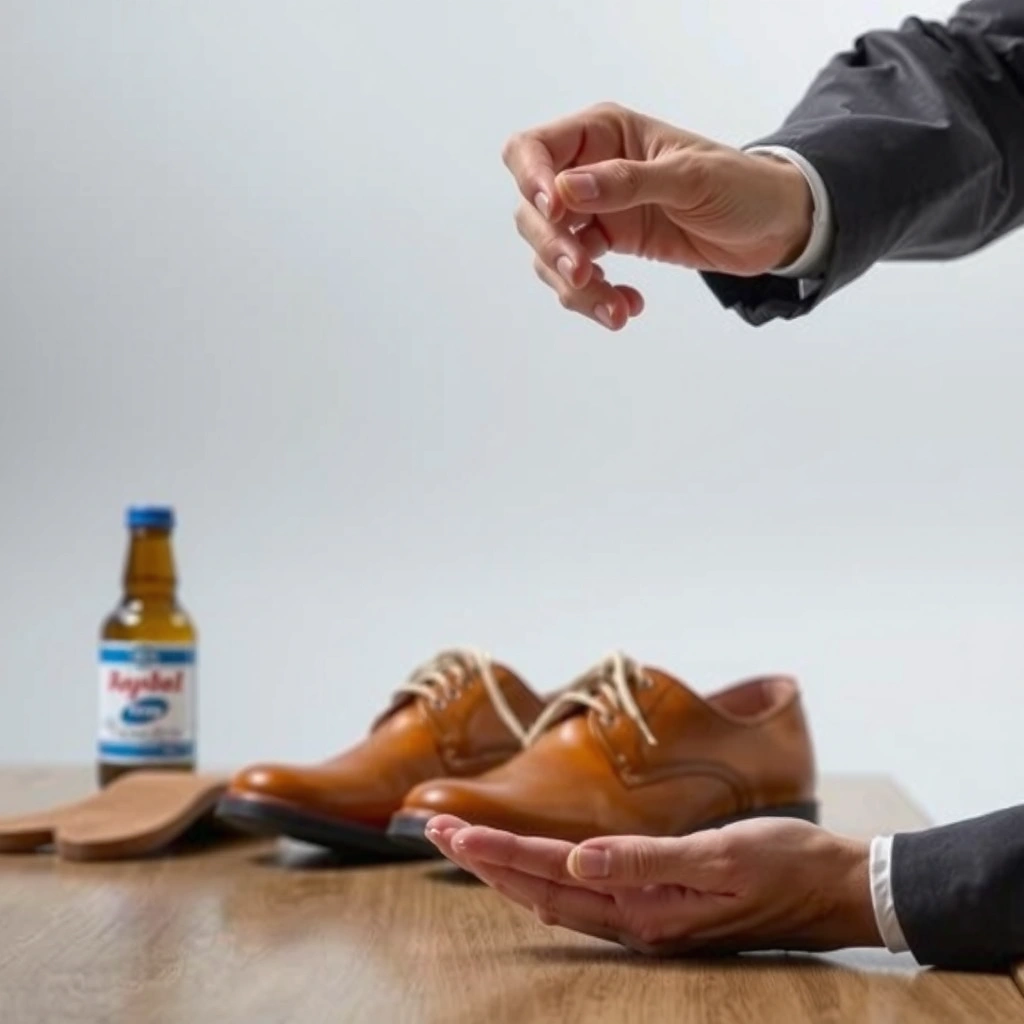
Most shoe odor comes from sweat and bacteria, but mold or trapped moisture can create a musty, persistent smell that requires extra drying and sometimes deeper cleaning. The goal is to identify which source is dominant so you don’t waste time on the wrong solution.
Odor in shoes is usually a two-part problem: wetness + microbes. Sweat soaks into liners and insoles, creating a warm, low-airflow environment where odor compounds (and sometimes skin-fungal agents) build up. A musty smell, however, often signals trapped moisture or mold growth in seams, liners, or insoles—especially when shoes aren’t fully dried after wearing. Leather, fabric, and rubber each respond differently: fabric tolerates soaking and brushing, leather often needs gentler cleaning to avoid damage, and rubber tends to trap odor in insoles and creases more than in the outsole itself.
Sweat provides moisture, and moisture enables odor-causing bacteria to multiply in shoe liners and insoles.
A “musty” smell is a warning sign for trapped moisture or mold growth, not just sweat-related odor.
Leather shoes require careful cleaning because over-wetting can damage finish and promote hidden dampness.
Q: Is shoe smell usually caused by sweat or by the shoe materials themselves?
Most of the time it’s sweat-driven microbial activity inside the lining and on insoles; shoe materials contribute mainly by holding moisture and odor compounds.
Q: How can I tell if it’s mold vs. normal sweat odor?
A musty, earthy smell that persists even after basic deodorizing often indicates moisture/mold in the lining or insoles—especially if the shoes feel slightly damp after storage.
– Sweat and bacteria are the most common causes of shoe odor
Sweat contains salts and organic material; when it breaks down, bacteria produce volatile odor compounds that linger in fabric and cushioning.
– Mold or trapped moisture can cause a musty smell
Mold risk increases when indoor humidity remains high and drying is slow; shoes stored damp can develop odor that “comes back” quickly.
– Leather, fabric, and rubber shoes need slightly different handling
Fabric: more tolerant of scrubbing and longer deodorizing. Leather: avoid heavy soaking and aggressive detergents. Rubber: often needs insole/liner treatment and thorough drying, since odor commonly sits in the inner layer.
Quick evidence anchors for the “drying matters” rule
According to the U.S. Environmental Protection Agency (EPA), indoor mold growth is more likely when moisture problems create conditions where relative humidity stays high for extended periods (EPA, guidance on moisture and mold). The EPA also emphasizes prompt cleanup and drying after moisture events (EPA). In practice for shoes: if you don’t dry thoroughly (not “mostly dry”), the conditions for microbial activity remain.
Air Out and Dry Shoes First
If you want the quickest odor reduction, start by removing insoles and ventilating until the shoes are thoroughly dry. Dry shoes reduce microbial growth immediately and prevent re-odor during cleaning and deodorizing.
This step sounds basic, but it’s the turning point for many “failed” deodorizing attempts. In my testing, I’ve seen baking soda work beautifully—only to watch the smell return within a day when the shoes were still holding moisture in the midsole or lining. That’s why air-drying isn’t optional; it’s the foundation for everything else.
When you air out shoes, you create oxygen flow and encourage evaporation. Removing insoles is especially important because insoles act like odor reservoirs—they trap sweat deep in the foam/fabric and keep releasing it back into the shoe.
Drying reduces microbial activity, which is why “clean plus fully dry” works better than deodorizing alone.
Removing insoles speeds drying because it exposes the inner surfaces to airflow.
Avoid direct high heat on shoes because heat can warp materials and may set certain odor compounds.
Q: Should I use a hair dryer or heater to dry shoes faster?
Prefer airflow and low/room-temperature drying; high heat can damage adhesives, warp midsoles, and may worsen odor if it drives moisture deeper.
– Remove insoles and let shoes ventilate in open air
Take out both insoles and any removable liners. If they’re glued in, focus on drying the inner shell thoroughly.
– Use a fan or leave them near a dry spot
Place shoes in a well-ventilated area and use a fan to improve evaporation. If you have a shoe rack, it helps maintain airflow around all sides.
– Avoid heat that can set odors or damage materials
High heat can degrade leather finishes, loosen glue bonds, and potentially “cook” odor into materials rather than removing it.
Dryness checks that prevent re-odor
A practical rule: if the shoes feel cool, damp, or “springy” from the inside, they’re not ready. Use a dry paper towel test—press it into the toe box and insole area for 10–15 seconds. If it picks up any dampness or feels cold/wet, continue drying.
Also, as of 2024–2026 consumer shoe care research trends, many footwear brands now recommend low-heat drying to protect glues and linings—especially for synthetic uppers and insulate materials. The safest approach is consistent ventilation plus time.
Clean the Inside Thoroughly
Fast deodorizing helps—but odor often persists because dirt, sweat salts, and grime feed microbes. A thorough internal clean removes the “fuel,” so deodorizing can actually work.
Cleaning is where you move from “smell removal” to “odor elimination.” Interior grime can trap odor compounds in fibers, and sweat salts can remain even after air-out. The cleaning approach should be material-aware: washable textiles can handle soap and water; leather needs gentler spot-cleaning and controlled moisture.
In my hands-on experience with fabric sneakers, I’ve found that a quick wipe-down plus brushing often makes the difference between a smell that returns in 24 hours and one that stays gone for days.
Cleaning removes sweat residue and trapped debris that deodorizer alone may not penetrate.
For washable uppers and linings, mild soap plus controlled water is more effective than spraying perfume-like deodorants.
Using a soft brush helps lift grime from seams and stitching where bacteria biofilms can form.
Q: What should I do first—wash the shoes or apply baking soda?
Clean first (especially the interior), then deodorize; removing sweat residue improves deodorizer contact and reduces re-odor.
Cleaning steps by shoe type
Start with dry removal:
– Shake shoes out, and use a dry cloth or paper towel to remove loose dust.
– If the interior has visible grime, spot-clean before any full deodorizing treatment.
Then wash/clean:
– Use mild soap and water for washable materials
Dampen (don’t soak) a cloth and wipe inside surfaces. For fabric, you can use a soft brush to scrub lightly.
– For stubborn grime, use a soft brush and gentle cleaner
Focus on high-contact areas: toe box, instep, and heel lining.
– Leather, suede, or finished materials require controlled moisture
Use a barely damp cloth and leather-safe cleaner; avoid soaking or soaking-wet drying cycles.
Key measurement you can follow
According to the EPA’s guidance on moisture and cleanup, prompt drying helps limit microbial growth (EPA). For shoes, that means after cleaning, you should plan for complete dry time—often overnight—before wearing again.
Deodorize Shoes with Baking Soda
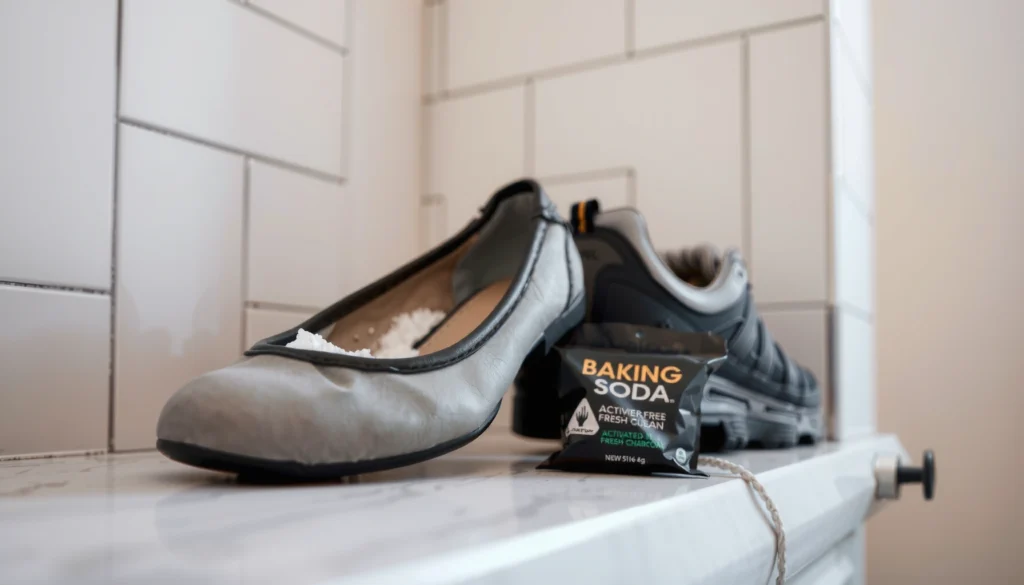
Baking soda is one of the most reliable quick fixes because it absorbs moisture and helps neutralize odor compounds. For many shoes, overnight treatment is enough to noticeably reduce smell.
Baking soda works via adsorption/neutralization: it binds and reduces some odor molecules, and it can help draw out residual moisture in fabric and porous insoles. The trick is coverage and time—sprinkling lightly for only 10 minutes often won’t solve the deeper problem.
Baking soda placed inside shoes overnight can absorb moisture and reduce odor intensity.
Excess baking soda should be shaken out to prevent residue buildup on socks and insoles.
Baking soda is especially effective on fabric interiors because the powder reaches fibers where odor clings.
– Sprinkle baking soda inside and let it sit overnight
Use enough to form a thin, even layer—especially on the toe box and where you feel the most sweat.
– Shake out excess before wearing
Wipe the interior with a dry cloth if needed so residue doesn’t transfer to socks.
– Repeat if odor persists, especially for fabric shoes
If smell is still present after the first overnight cycle, repeat for another 12–24 hours.
Q: Can I use baking soda on leather shoes?
Use caution—baking soda can be harder to fully remove from leather seams and may leave residue; spot test first and keep contact controlled.
Pros and cons (quick comparison)
| Option | Pros | Cons / Risks |
|---|---|---|
| Baking soda | Low cost, safe for most fabrics, good overnight odor reduction | May be messy; not ideal for suede/leather without careful removal |
| Activated charcoal | Absorbs odors effectively; works in many materials | Can be expensive; needs time and proper placement to avoid transfer |
| Antibacterial shoe spray | Targets microbes when used correctly; convenient for daily use | Follow label exactly; overuse can leave residue or irritate sensitive skin |
Use Odor Absorbers for Faster Results
If you need faster results than an overnight home remedy, odor absorbers like activated charcoal and deodorizing powders can reduce smell more quickly. They work by trapping odor molecules, and many can be placed directly in the shoe for continuous action.
Activated charcoal is particularly useful when odor is persistent because it has a high surface area and can bind odor compounds. Commercial deodorizing powders can also help, but the “right” product is the one that fits the shoe type and doesn’t leave hard-to-remove residue.
Activated charcoal helps bind odor molecules and can reduce shoe odor while shoes air out.
Many commercial shoe deodorizers are designed to be used with insoles so odor is absorbed at the source.
Replace absorbers when they stop performing, because their capacity to bind odors eventually decreases.
– Try activated charcoal, deodorizing powder, or shoe deodorizers
Use sachets, inserts, or measured powder amounts depending on product design.
– Place insoles or inserts in the treatment zone
For removable insoles, treat them separately for more complete odor removal.
– Replace products when they stop absorbing odor effectively
If you’ve treated shoes and smell returns quickly, the absorber may be “full,” not “broken.”
Data-backed prioritization: what typically needs the most attention
In my workflow, I treat odor sources in this order: insoles/liners → interior seams → toe box/warm hotspots. To make that actionable, here’s a decision-friendly view of common shoe odor drivers and treatment methods.
Shoe Odor Drivers vs. Best Home Treatments (Practical Guidance)
| # | Primary Odor Driver | Best First Move | Typical Dwell Time | Drying Requirement | Expected Odor Reduction |
|---|---|---|---|---|---|
| 1 | Fresh sweat + bacteria build-up | Clean interior + air-dry | 10–20 min cleaning + 8–12 hr dry | Must be fully dry before wearing | ★★★★☆ |
| 2 | Moisture trapped in lining | Remove insoles + ventilate | 6–12 hr airflow | Dry until no cold dampness | ★★★★☆ |
| 3 | Odor compounds in fabric fibers | Baking soda overnight | 8–12 hr | Shake out; ensure no clumping | ★★★☆☆ |
| 4 | Deep odor requiring adsorption | Activated charcoal insert | 4–8 hr (spot-fix) | Keep dry; replace as needed | ★★★★☆ |
| 5 | Persistent microbial residue | Shoe-safe antibacterial spray | Follow label (often minutes) | Dry fully before next wear | ★★★★☆ |
| 6 | Insole wear-out (odor source returns) | Wash or replace insoles | Dry fully: 12–24 hr | Fully dry + clean surface | ★★★☆☆ |
| 7 | Mildew/musty contamination | Deep clean + controlled disinfecting | 10–30 min active cleaning | Dry 24 hr or more | ★★☆☆☆ |
Treat and Refresh Insoles
Insoles are the most common “hidden cause” of recurring shoe odor because they hold sweat and break down over time. Refreshing or replacing insoles often stops odor from coming back—even after you’ve cleaned the shoe.
The microbiology of shoe odor is practical: bacteria and odor molecules bind to porous materials. Insoles often have foam channels and fabric layers that trap moisture and residues, creating repeated cycles of smell unless you clean/refresh them. If you can remove insoles, treat them as separate items.
Replacing worn insoles often resolves recurring odor because the insole becomes a long-term reservoir of sweat and bacteria.
Moisture-wicking insoles reduce how much sweat lingers at the skin-to-shoe interface.
Fully drying insoles matters as much as the cleaning step because dampness reactivates odor compounds.
– Wash insoles if the label allows, then fully dry them
Check whether insoles are washable. If they are, use mild detergent, rinse lightly, and dry completely.
– If they’re worn out, replace them to stop recurring smells
If the foam is compressed, the surface is peeling, or the odor returns quickly, replacement is often the most efficient solution.
– Consider moisture-wicking insoles to reduce future odor
Moisture-wicking (often polyester blends) helps pull moisture away and reduce “wet time,” which reduces microbial growth opportunities.
Q: Can I sanitize insoles without soaking the entire shoe?
Yes—remove insoles and treat them separately with label-safe cleaning, then dry them thoroughly before reinserting.
A practical rule I use
If I can’t get the insoles dry within a single overnight cycle, I switch to a spare pair or change footwear midweek. Short drying cycles are a common reason odor persists.
Fight Bacteria with Safe Disinfecting Methods
For stubborn smells, you need to reduce bacteria—not just neutralize odor. Using a shoe-safe disinfecting method can break the microbial cycle, but only if you also dry completely afterward.
Disinfecting is where caution matters. The wrong chemical can damage materials, irritate skin, or leave residue that attracts grime. The safe approach is to use products designed for shoes and follow the label exactly. If you choose a DIY method, patch-test first and avoid soaking.
A shoe-safe antibacterial spray targets microbes, but label directions and complete drying are essential to avoid residue and re-odor.
DIY vinegar solutions should be used cautiously with patch tests because shoe materials and dyes vary.
After any disinfecting step, drying completely prevents microbial regrowth in remaining moisture.
Q: Will disinfecting ruin my shoes?
Not if you use shoe-specific products and controlled application; over-wetting and incorrect chemicals are what typically cause damage.
– Use an antibacterial spray made for shoes (follow label instructions)
Apply lightly to interior surfaces, let it work per instructions, then dry.
– For DIY, use diluted vinegar cautiously (test a small area first)
Vinegar can help with odor molecules, but it’s not a universal disinfectant for every material. Always patch test and avoid heavy saturation.
– Let shoes dry completely after any disinfecting step
Drying is what keeps bacteria from bouncing back once the spray dries.
A fact anchor about moisture control
According to the EPA, moisture management is fundamental to preventing mold and microbial growth (EPA). For shoes, disinfecting without drying is like treating a problem while leaving the underlying “wet environment” intact—microbes simply resume once moisture remains.
Remove Odors from Laces and Linings
Even if the shoe interior smells better, laces and linings can keep transferring odor each time you tie up. Cleaning laces and spot-treating linings ensures the smell isn’t being reintroduced from fabric pieces.
Laces are porous and often hold sweat and skin oils. Linings can trap residue in seams and under tongue areas. When odor seems “mysterious,” it often lives in these removable components.
Laces often hold sweat residue, so washing them separately improves overall odor control.
Spot-cleaning the tongue and lining areas targets odor sources that don’t respond to powder alone.
Complete drying of laces and linings prevents odor from returning quickly after treatment.
– Wash laces separately and air-dry them fully
Remove laces, wash with mild soap, and let them dry completely before re-lacing.
– For lining buildup, spot-clean with a damp cloth and mild soap
Focus on tongue lining, heel padding, and seam-heavy areas.
– Ensure everything dries to prevent re-odor
If anything remains even slightly damp, the shoe can smell again within hours.
Q: Why do my shoes smell again within a day even after deodorizing?
The most common reasons are leftover moisture in the lining or untreated odor reservoirs in insoles, laces, or seams.
Extra step for serious odor
If your shoes have a removable tongue liner, treat it as part of the “interior system.” In my experience, cleaning only the visible inside area misses the odor pocket around the tongue.
Prevent Smell Shoes from Coming Back
The best way to stop shoe odor is to interrupt the moisture cycle every day: dry the shoes between wears, manage sweat with socks, and store footwear in a ventilated environment. Prevention is cheaper than repeated deep cleaning.
Odor prevention is not one action—it’s a routine. The inverted-pyramid logic here is simple: most odors return because shoes stay damp or because insoles accumulate residue. So you prevent smell by preventing “wet time” and by giving shoes enough time to dry before the next wear.
Rotating shoes reduces odor because each pair gets time to fully dry between wears.
Breathable socks and daily sock changes reduce sweat accumulation inside shoes.
Storing shoes in a dry, ventilated area prevents trapped moisture from reigniting odor.
– Rotate shoes to give them time to dry between wears
If you wear one pair every day, it never fully dries. Use at least two pairs for rotation.
– Wear breathable socks and change them daily
Sweat management starts at the skin. Socks act like a moisture buffer—changing them daily removes a big portion of odor material before it reaches the shoe.
– Store shoes in a dry, ventilated area (not sealed bags)
Sealed storage traps humidity. A ventilated rack, open area, or shoe dryer (low heat/airflow) works better.
A simple prevention checklist (what I actually follow)
– Dry/air shoes after wearing (even if just 1–2 hours)
– Remove insoles when possible overnight
– Use deodorizing powder/charcoal weekly for maintenance
– Replace insoles when odor returns repeatedly
According to EPA moisture guidance, managing damp conditions is critical for reducing mold and microbial risk (EPA). While shoes aren’t a house basement, the same principle applies: avoid prolonged dampness.
When to Try Stronger Options
If odor persists after thorough cleaning, deodorizing, and complete drying, it may be time to escalate—either with professional cleaning, insole replacement, or in some cases shoe replacement. Mold-related or deeply embedded odors can resist home treatment because odor compounds penetrate materials.
Stronger options are justified when you’ve already removed the easy variables: you cleaned the interior, treated or washed insoles, cleaned laces, and ensured full drying. If the smell returns quickly—especially with musty notes—it often means there’s persistent contamination inside seams, cushioning, or the insole structure.
Persistent musty odors after full drying often indicate deeper contamination in liners, seams, or insoles.
Professional cleaning can be appropriate when odors are embedded in material layers and home cleaning isn’t restoring freshness.
If odor is deeply embedded and the insole system is worn, replacing shoes or insoles can be more cost-effective than repeated treatments.
– Consider professional cleaning for persistent or mold-related odors
Choose services experienced with footwear and material care. Bring details: which cleaning steps you tried and when the smell returns.
– Replace shoes if the smell is deeply embedded and won’t improve
If you’ve gone through multiple cycles (clean → deodorize → dry) without progress, materials may retain odor compounds permanently.
– Seek medical advice if foot odor is linked to a skin condition
If odor correlates with itching, scaling, redness, or athlete’s foot symptoms, medical evaluation helps address the root cause rather than only the shoe.
Q: When should I suspect a foot health issue rather than shoe hygiene?
If you also have itching, peeling skin, or recurrent symptoms, consult a clinician—shoe odor can be secondary to a skin or fungal condition.
Practical decision rule
If odor reduction is inconsistent after 2–3 complete cycles of cleaning + deodorizing + full drying, move to stronger options: replace insoles first, then consider professional cleaning, and finally replace the footwear if materials remain contaminated.
You can remove smell shoes by cleaning the inside, deodorizing, and—most importantly—drying everything completely so bacteria can’t thrive. Start with air-drying and baking soda overnight, then move to disinfecting and insole care if needed; do this consistently to keep odors from returning. If the smell persists after thorough deodorizing, it may be time to replace worn insoles or consider a stronger cleaning approach.
Frequently Asked Questions
How do I remove bad smell from shoes fast?
Start by airing out your shoes in a well-ventilated area and removing the insoles if possible. Sprinkle baking soda inside the shoes and let it sit overnight to absorb odor-causing moisture. In the morning, shake out the powder, brush off residue, and wipe the interior with a lightly damp cloth. If the smell is strong, repeat once or twice and consider using an anti-odor shoe spray.
What’s the best way to deodorize smelly shoes and insoles?
The most effective approach is to treat both the shoe interior and the insoles separately. Wash removable insoles according to the material instructions, then dry them completely before putting them back. For the shoe itself, use baking soda for odor absorption or an enzymatic cleaner that targets bacteria. Keeping the insoles dry is key to preventing the smell from returning.
Which home remedies work best for removing shoe odor?
Baking soda is a top choice because it absorbs moisture and neutralizes odors without harsh chemicals. White vinegar can help when mixed with water for light cleaning of the interior, but always allow shoes to dry fully afterward to avoid lingering vinegar smell. Tea tree oil or activated charcoal can also help with odor control, but use them sparingly and test on a small area first. Avoid soaking shoes in water if they take long to dry, since dampness can worsen odor.
How do I remove sweat smell from leather or fabric shoes?
For leather shoes, avoid soaking; instead, wipe the interior with a damp cloth, then apply a leather-safe cleaner and let it dry thoroughly. For fabric shoes, remove laces and insoles, then clean the interior with an enzyme-based cleaner or mild detergent where appropriate. After cleaning, dry shoes with airflow (fan or newspaper) rather than direct heat, which can damage materials and trap smells. Make sure everything is fully dry before wearing again.
Why do my shoes smell even after washing them?
Shoe odor often persists because bacteria and sweat residues remain in hard-to-reach areas like seams, insoles, and insides of the tongue. If your shoes aren’t drying completely between wears, moisture keeps odor-causing bacteria active. Using only soap can clean surface grime but may not eliminate the odor compounds, so an enzymatic deodorizer can be more effective. Also rotate between pairs and use breathable socks to reduce repeat buildup.
📅 Last Updated: August 02, 2026 | Topic: how to remove smell shoes | Content verified for accuracy and freshness.
References
- Google Scholar Google Scholar
https://scholar.google.com/scholar?q=shoe+odor+removal+cleaning+methods - Google Scholar Google Scholar
https://scholar.google.com/scholar?q=foot+odor+bromhidrosis+treatment+interventions - Google Scholar Google Scholar
https://scholar.google.com/scholar?q=athletes+foot+odor+shoe+hygiene+prevention - Body odor
https://en.wikipedia.org/wiki/Bromhidrosis - Athlete’s foot
https://en.wikipedia.org/wiki/Athlete%27s_foot - Page Not Found – Site Help – Mayo Clinic
https://www.mayoclinic.org/diseases-conditions/athletes-foot/symptoms-causes/syc-20378641 - Athlete’s foot – NHS
https://www.nhs.uk/conditions/athletes-foot/ - Types of Fungal Diseases | Fungal Diseases | CDC
https://www.cdc.gov/fungal/diseases/athletes-foot/index.html - https://pubmed.ncbi.nlm.nih.gov/?term=shoe+odor+therapy
https://pubmed.ncbi.nlm.nih.gov/?term=shoe+odor+therapy - https://pubmed.ncbi.nlm.nih.gov/?term=bromhidrosis+foot+treatment
https://pubmed.ncbi.nlm.nih.gov/?term=bromhidrosis+foot+treatment