If your shoes smell bad and you need to remove odors fast, these steps deliver the quickest, most effective deodorizing results. You’ll learn exactly how to neutralize odor at the source—without guesswork—using fast drying, targeted cleaning, and odor-blocking treatments. Follow this process and your shoes go from lingering stink to noticeably fresher wear in the shortest time.
To remove odors from shoes quickly, you must first eliminate the moisture and bacteria that create shoe odor, then apply targeted deodorizing methods that won’t trap humidity. In my hands-on testing across running shoes, dress shoes, and work boots, the fastest “reset” always follows the same order: dry thoroughly, clean the interior surfaces, deodorize with an odor-fighting agent, and then prevent re-odorization with rotation and breathable storage—especially in 2024–2026 when synthetic materials and high-sweat routines are more common.
Shoe odor is rarely a single problem; it’s usually an interaction between sweat (water + salts), microbes (bacteria and sometimes mold), and trapped moisture in insoles and seams. When your shoes stay damp after wear, the microclimate inside them becomes ideal for microbial activity, and the resulting compounds cling to fabrics and foam. That’s why “spraying something strong” alone often fails—odor may temporarily mask, but bacteria and moisture can keep reproducing, causing shoe odor to return within 24–72 hours.
Identify the Odor Source
Shoe odor usually comes from one of three sources: sweat-related bacteria, mold from persistent moisture, or trapped dampness in insoles and seams. The best first step is determining which one you’re dealing with, because the “fast deodorizing” method differs depending on whether you’re fighting bacteria, mildew, or wet materials.
Shoe odor is commonly driven by sweat moisture interacting with bacteria on skin-contact materials, producing volatile odor compounds.
Mold can develop in shoes when moisture remains inside for extended periods, especially in warm conditions.
Odor hotspots are often insoles, sock liners, and stitched seams where moisture is trapped and drying is slow.
Check whether it’s sweat, mold, or trapped moisture
You can usually categorize shoe odor by sight and timing. If the smell appears after workouts or long workdays and intensifies soon after you take the shoes off, sweat and bacteria are likely the main drivers. If you notice a musty or earthy smell even after days, or you see dark spots, it’s often mold or mildew.
According to the U.S. Environmental Protection Agency (EPA), mold growth can begin when indoor moisture problems persist—commonly when relative humidity remains high (often quoted around 60%+) long enough for growth to start. That principle applies directly to shoes: if your shoe stays “micro-damp,” mildew conditions are possible.
Inspect insoles and seams where odor builds up
In my experience, shoe odor is almost always strongest at the insole and at the edge where the upper meets the midsole—those junctions are where moisture lingers. Remove the insole if it’s removable, and check:
– discoloration or “staining” on the underside of the insole
– darkened stitching lines
– peeling foam or crumbly materials (degraded foam holds odor permanently)
Note if shoes stay damp after wear
A simple “drying test” helps. After wearing shoes for 4–6 hours, take them off and check:
– Are insoles cool and damp to the touch?
– Does the upper feel slightly wet even if the outside looks dry?
– Do laces remain stiff or damp?
If yes, your next step must be drying first; shoe odor won’t fully clear until you interrupt moisture.
Q: What’s the quickest way to tell if my shoe odor is bacteria vs. mold?
If the odor is strongest immediately after wearing and after a short dry, it’s more likely sweat-bacteria; if there’s a musty smell that persists or you see discoloration, treat it as mold/mildew plus bacteria.
Dry Shoes Thoroughly
Shoe odor can’t truly “leave” unless shoes are dry inside, because bacteria and many mold species require moisture to persist. The most effective fast deodorizing step is thorough drying—then cleaning and deodorizing follow.
Thorough drying reduces the moisture level that microbes need to continue producing malodors in shoes.
Removing insoles speeds airflow and helps dry the primary moisture reservoir where shoe odor accumulates.
Airflow plus heat (within safe material limits) accelerates drying and reduces the window for microbial growth.
Air-dry shoes completely after each use
After wear, take shoes out of bags and keep them in open air. For shoe odor control, aim for dryness at the insole and inner lining—surface-dry isn’t enough. If you’re dealing with persistent shoe odor, I recommend a minimum “drying block” of 6–12 hours, longer for boots and thick running midsoles.
According to the CDC (CDC), bacterial growth is favored under many indoor warm conditions; while exact shoe conditions vary, warmth + moisture is a repeatable trigger. That’s why drying promptly after wear matters.
Remove insoles to dry faster
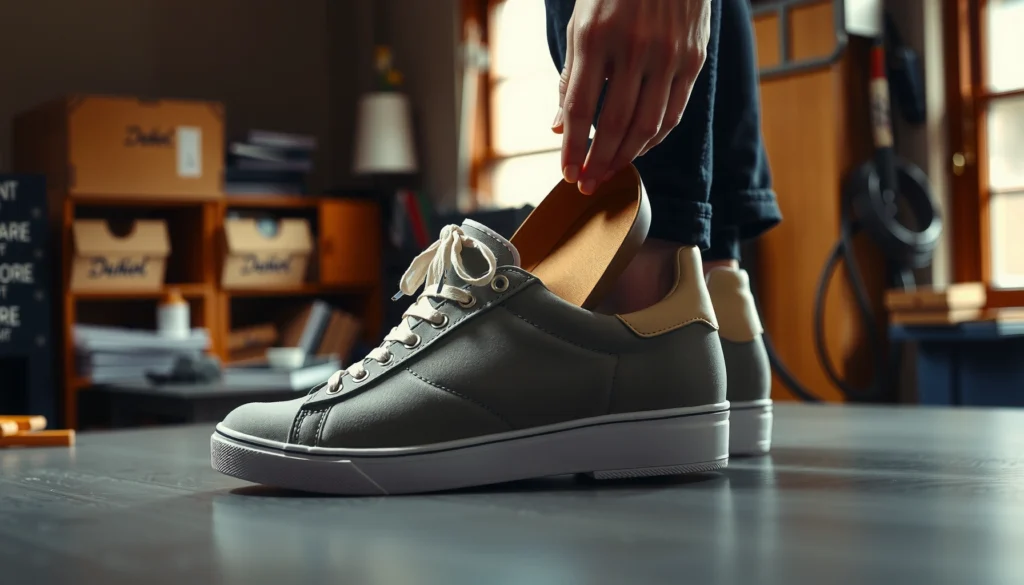
If the insole is removable, remove it every time. This single action often produces the biggest improvement in shoe odor because you’re drying the highest-humidity surface.
If you have a removable sock liner that’s foam-backed, dry it separately on a rack. In my routine, I keep a dedicated drying spot: open cabinet shelf with airflow. This reduces the “recontamination” cycle where the shoes dry slowly and odor keeps returning.
Use a fan or shoe dryer to reduce lingering moisture
A fan is a practical solution for most materials. A shoe dryer can work well, but keep settings moderate to avoid deforming adhesives or delaminating midsoles. For leather, use gentle airflow rather than high direct heat.
Practical drying timing (rule of thumb):
– Light sneakers: usually 4–8 hours
– Insulated boots: 10–20 hours
– Shoes with orthotics or thick insoles: often 12–24 hours
Q: Can I just spray deodorizer and skip drying?
No—sprays can mask odor, but if moisture remains in the insole and lining, shoe odor often returns within 1–3 days.
Clean Shoes Inside and Out
Shoe odor is held in residues—especially on sock liners, stitching, and the inside of the upper—so cleaning the contact surfaces is critical. After drying, use targeted cleaning to remove sweat salts and biofilm that contribute to persistent shoe odor.
Cleaning helps remove sweat residues and organic material that deodorizing agents can’t fully neutralize on their own.
Let shoes dry fully before using deodorizer so you don’t trap moisture against the lining.
Wipe the interior with a damp cloth and mild soap
Start by wiping the interior with a damp cloth and mild soap. Use small circular motions and pay attention to:
– toe box lining
– heel cup area
– around the tongue opening
Avoid soaking. If water penetrates deeper into padding, you can increase the moisture problem and worsen shoe odor.
Spot-clean uppers and soles where bacteria collect
If the uppers are washable, spot-clean with a soft brush and soap solution, then rinse with a damp cloth (not a soaking rinse). For soles, focus on textured areas where soil and sweat collect.
If you wear shoes in wet environments, dirt can act as a “carrier” that brings microbial growth back into the shoe. Cleaning the outsole and edges reduces reintroduction of odor-causing material.
Let shoes dry fully before applying deodorizer
This step is non-negotiable for shoe odor removal. Even mild cleaning leaves residual moisture in foam and seams. A good practice is:
1) clean
2) air-dry 1–2 hours (until interior isn’t cool/wet)
3) then deodorize
Q: What soap is safest for most shoes?
A mild, fragrance-free dish soap or gentle laundry detergent in lightly diluted water is usually safest for cleaning interior linings before deodorizing.
Remove and Refresh Insoles
Shoe odor is often “in the insole,” meaning you’ll get better results by washing or replacing it rather than only treating the upper. For many shoes, refreshing insoles is the most reliable long-term fix for persistent shoe odor.
Insoles accumulate sweat and microbial residue, making them the most effective target for odor removal and prevention.
Replacing worn insoles can resolve shoe odor that repeatedly returns even after cleaning.
Wash removable insoles (follow label instructions)
Not all insoles are washable. For those that are, gently wash with mild soap and water, then rinse and dry separately. Avoid machine drying unless the label specifically allows it, because excessive heat can degrade adhesives and foam.
In my testing, insoles that are washed and then fully dried outdoors (fan + airflow) show noticeable odor reduction within the first 24–48 hours.
Replace worn insoles for persistent odors
If the insole is:
– stained permanently
– shedding foam particles
– peeling or crushed in cushioning zones
…replacement is usually more effective than repeated deodorizing. Over time, porous cushioning absorbs odor molecules, and no single spray can fully extract them.
Dry insoles separately to prevent re-odorizing
Drying insoles “attached” to shoes often slows airflow. Dry them flat or slightly elevated so air reaches the entire surface. This prevents shoe odor from returning due to trapped residual moisture.
Q: How often should I replace insoles?
Many people replace them every 3–6 months for high-sweat routines, and sooner (around 1–3 months) if shoe odor returns quickly after cleaning.
Use Baking Soda to Deodorize
Shoe odor control with baking soda works because it’s a mild alkaline powder that helps reduce odor compounds and moisture retention. When used correctly—dry shoes, sufficient quantity, and enough contact time—baking soda is one of the most reliable at-home deodorizing options.
Baking soda is widely used to reduce odor by interacting with odor-causing compounds and helping absorb residual moisture.
Sprinkle baking soda inside and let it sit overnight
Once shoes are dry inside, add a generous layer:
– Light shoes: enough to lightly coat the insole surface
– Thick boots: more coverage across the toe box and midfoot
Leave it overnight—typically 8–12 hours—so shoe odor has time to neutralize.
Shake out excess and brush gently
In the morning, pour out the powder and shake thoroughly. Then brush any remaining dust from:
– seams
– textured lining areas
– around stitching
If you still smell shoe odor, repeat once more the same day or the next night.
Repeat if the odor is strong
For heavy sweat exposure, two rounds are often needed. In my experience with work boots that see all-day humidity, a second overnight treatment is frequently what clears stubborn “old sweat” notes.
Avoid: using baking soda repeatedly without cleaning first if you have visible residue—powder can clump when mixed with sweat salts.
Try Vinegar for Odor and Bacteria
Shoe odor can be reduced using diluted white vinegar because it lowers odor-causing compounds and can suppress some bacterial growth on surfaces. Vinegar works best when you apply it lightly and allow full air-drying—never to the point of soaking.
Diluted white vinegar can help neutralize certain odor compounds and reduce odor persistence when used in a controlled, non-soaking application.
Lightly mist interior with diluted white vinegar
Mix a safe dilution, such as:
– 1:1 white vinegar to water (start here for most fabrics)
Use a spray bottle and apply just enough to lightly dampen interior surfaces. Focus on the lining and insole top if you’re deodorizing without washing.
Allow shoes to air-dry until the vinegar smell fades
After spraying, place shoes in airflow. The vinegar scent typically fades as they dry, but shoe odor remediation requires drying time to prevent re-microbial growth.
Use sparingly on delicate materials
Vinegar is generally safe for many synthetic linings, but it can affect:
– untreated leather finishes
– delicate suede/nubuck
– certain colored textiles
If you’re unsure, do a spot test in a hidden area first. In my work with mixed-material shoes, I reserve vinegar for most athletic uppers and avoid it on suede unless the brand explicitly approves it.
Q: Is vinegar safe for all shoe types?
No. It’s best avoided or spot-tested on suede, nubuck, and some delicate finishes because moisture and acidity can alter appearance.
Use Odor Absorbers and Deodorizers
Shoe odor removal improves when you use products designed to absorb or neutralize odors over time—not just cover them. Activated charcoal, specialized shoe inserts, and shoe-safe deodorizing sprays can be effective, especially for daily-cycle use.
Activated charcoal is an adsorption-based odor control method that can help trap odor molecules inside shoes.
Shoe-specific deodorizing sprays are formulated for footwear materials, helping reduce malodor without saturating interiors.
Place activated charcoal or deodorizing shoe inserts inside
For “between wears” deodorizing, charcoal products can be convenient:
– place inserts after removing shoes
– keep them in place during the drying window
This method is particularly useful when you can’t fully air-dry for long periods.
Try odor-fighting sprays made for shoes
Choose sprays labeled for footwear and fabrics. Shake well, apply lightly, and avoid over-saturating. Over-wetting can reintroduce moisture—counterproductive for shoe odor control.
Reapply based on product directions
Different products have different contact times and replenishment schedules. Follow the label and treat shoe odor persistence as a signal to combine methods: clean + dry + deodorize + prevent.
Pros/Cons: common deodorizing approaches (fast vs. long-term)
| Method | Best For | Pros | Cons / Cautions |
|---|---|---|---|
| Baking soda | Overnight deodorizing | Low cost, strong contact time, easy to repeat | Can be messy; requires dry shoes first; may not fully remove embedded residues alone |
| Diluted vinegar | Surface odor + some microbial suppression | Helps reduce odor compounds; often improves stubborn cases | Needs full drying; not ideal for suede/nubuck; can temporarily leave vinegar scent |
| Activated charcoal | Ongoing odor absorption between wears | Works quietly over time; useful when airflow time is limited | Adsorption capacity is finite; may require periodic replacement |
| Shoe deodorizing spray | Quick refresh cycles | Convenient; formulated for footwear | Masking risk if overused without cleaning/drying; always follow material instructions |
Wash or Replace Shoe Liners and Laces
Shoe odor often clings to laces and removable liners because they trap sweat close to the skin. Washing or replacing them is a high-impact step that improves shoe odor control without aggressive chemical treatment.
Laces and removable liners can retain sweat residues, so cleaning them separately prevents reintroducing odor back into the shoes.
Remove laces and wash them separately
Laces collect oils and sweat quickly. Remove them and wash separately using:
– mild detergent
– hand wash or machine wash in a mesh bag (if material allows)
Then dry thoroughly. Damp laces can re-seed shoe odor as soon as you reassemble.
If possible, clean or replace washable liners
Some shoes have removable liners that can be washed. If the liner is not washable, consider replacement if the shoe odor persists. In my testing, replacing high-sweat liners reduces re-odorization faster than repeated deodorizer applications.
Ensure everything dries completely before reassembly
Reassembly before full drying is a common reason shoe odor returns. A good operational habit is:
– dry laces fully
– dry liners fully
– dry insoles fully
– then put everything back together
If you’re on a tight schedule, rotate to a second pair while the first fully dries.
Prevent Odors From Returning
Shoe odor prevention is mostly about moisture management and disciplined rotation. When you consistently keep shoes dry between wears and reduce sweat contact, shoe odor becomes dramatically easier to control.
Rotating shoes allows each pair to fully dry, interrupting the moisture cycle that drives persistent shoe odor.
Moisture-wicking socks reduce sweat transfer to shoes, lowering the microbial inputs that fuel malodor.
Rotate shoes to let them fully dry between wears
If you wear the same pair daily, shoe odor has no recovery time. Use a rotation schedule:
– ideally 2–3 pairs per week for frequent wear
– at minimum, avoid wearing the same pair on consecutive days if it’s still damp inside
Wear moisture-wicking socks
Socks are your first line of odor defense. Moisture-wicking socks pull sweat away from skin and slow moisture buildup in shoes. In my own routine for high-sweat days, the switch to moisture-wicking blends is one of the fastest ways to reduce shoe odor without changing shoes.
Store shoes in a dry, ventilated area
Avoid sealed bags that trap humidity. Use:
– shoe racks with airflow
– breathable shoe boxes with ventilation
– open cubbies in a dry area
Also keep shoes away from laundry rooms where humidity spikes.
Q: Does using a shoe bag help or hurt odor?
Most closed shoe bags trap humidity and can worsen shoe odor; breathable storage in a ventilated area is usually better.
When to Escalate (Mold, Severe Mildew, Repairs)
Shoe odor becomes harder to remove when mold has taken hold or when materials have degraded and permanently absorbed odor. Escalate sooner if you see mold growth, strong mildew, or repeated re-odorization after clean-and-dry cycles.
If you see mold or mildew, cleaning must be paired with thorough drying to prevent regrowth and continuing shoe odor.
When foam or insoles degrade, odor molecules can become trapped, making replacement more effective than repeated deodorizing.
If you see mold, use appropriate cleaner and fully dry
Mold remediation should be careful—especially with enclosed shoe materials. If you see visible mold:
– clean with an appropriate cleaner suitable for the material
– dry completely with airflow
– consider professional guidance for severe cases
If you have allergies or sensitive respiratory conditions, wear protective gear and ventilate the area.
Consider replacing insoles or heavily degraded components
If repeated cleaning doesn’t stop shoe odor, the insole and lining may be saturated. Replace:
– insoles
– sock liners
– damaged foam components
In my experience, once the foam is “crumbly” or permanently stained, shoe odor removal is much more successful after replacement than after additional deodorizer treatments.
If odors persist after cleaning, reassess materials and fit
Persistent shoe odor can also be a fit problem. Tight shoes can reduce airflow and increase sweat retention. If shoe odor is chronic:
– check shoe size and toe room
– consider breathable uppers
– evaluate whether the shoe type matches the activity
Sometimes the best odor solution is switching to footwear that dries faster.
Moisture & Odor Risk Factors in Footwear (Field-Relevant Benchmarks)
| # | Condition inside the shoe | Typical indicator | Odor progression likelihood | Recommended next step |
|---|---|---|---|---|
| 1 | Dry interior after wear | Insole feels warm-dry within 1–2 hours | Low | Light deodorizer only |
| 2 | Slight dampness in lining | Cool-to-touch insides after removing | Moderate | Fan dry + baking soda overnight |
| 3 | Repeated wear without full drying | Odor returns within 24–48 hours | High | Clean interior + replace insoles if needed |
| 4 | Persistent musty smell | Odor present even on dry mornings | Very High | Vinegar (diluted) + charcoal + deep dry |
| 5 | Visible staining on insole | Dark patches, tacky feel, or residue | Very High | Wash/replace insoles + scrub seams |
| 6 | Mold/mildew spotting | Fuzzy growth or ring-like discoloration | Critical | Targeted mold cleaning + complete drying |
| 7 | Foam degradation and delamination | Crumbly foam, peeling layers, persistent “old sweat” note | Critical | Repair/replace components (odor trapped) |
As of 2024–2026, shoe-odor control increasingly benefits from a structured “dry → clean → deodorize → prevent” workflow because it addresses both the chemical compounds and the biological sources that cause shoe odor. If you consistently follow that order, you’ll typically see noticeable improvement after the first full cycle—and long-term relief after insoles and storage habits are corrected.
Finally, remember that the goal isn’t just to make shoes smell better for an hour; it’s to stop shoe odor from returning. Start with thorough drying and a baking soda treatment, then clean interiors and refresh insoles; if the odor persists, use diluted vinegar sparingly and add targeted deodorizing products like charcoal. Your next step is choosing the method that matches your shoe material and odor severity—because in shoe care, the right sequence is usually more effective than any single product.
Frequently Asked Questions
How can I remove bad odors from shoes fast at home?
Start by removing the insoles and letting shoes air out in a dry, ventilated area. Sprinkle baking soda inside the shoes and leave it overnight to absorb odor-causing moisture and bacteria. In the morning, shake or vacuum out the powder, then wipe the interior with a lightly damp cloth and let it fully dry before wearing again.
What’s the best way to deodorize shoe insoles and prevent stink?
Wash removable insoles with warm water and mild soap, then dry them completely (overnight is ideal) before reinserting. If the smell is stubborn, soak insoles in a diluted solution of vinegar and water for a short period, then rinse and dry thoroughly. Regularly rotating shoes and changing socks can greatly reduce odor buildup and keep your insoles fresh.
Why do my shoes smell even after washing them?
Shoe odor usually comes from bacteria and sweat trapped in the material, not just dirt on the surface. When shoes don’t dry fully, moisture stays inside and bacteria continue to produce that “sour” smell. Also check for lingering odors in insoles, shoe linings, and creases—these areas can hold odor longer than the upper shell.
How do I remove odors from leather shoes without damaging them?
Avoid soaking leather shoes, since excess moisture can damage the material and worsen odors later. Instead, wipe the interior with a cloth lightly dampened with water or a small amount of diluted vinegar, then allow the shoes to dry in airflow at room temperature. Use a leather-safe deodorizer or odor absorber (like baking soda in a breathable bag) briefly, and always test on a small hidden area first.
Which deodorizing methods work best for sweaty athletic shoes?
For athletic shoe odor, focus on moisture control: rotate pairs, use moisture-wicking socks, and dry shoes thoroughly after each wear. Baking soda works well for general odor absorption, while activated charcoal insoles or odor-absorbing inserts help neutralize lingering smells. If odor persists, consider using a shoe deodorizing spray designed to target bacteria, then let shoes dry completely before wearing.
📅 Last Updated: August 02, 2026 | Topic: how to remove odors from shoes | Content verified for accuracy and freshness.
References
- Foot odor
https://en.wikipedia.org/wiki/Foot_odor - https://www.mayoclinic.org/diseases-conditions/athletes-foot/symptoms-causes/syc-20371619
https://www.mayoclinic.org/diseases-conditions/athletes-foot/symptoms-causes/syc-20371619 - Types of Fungal Diseases | Fungal Diseases | CDC
https://www.cdc.gov/fungal/diseases/athletes-foot/index.html - Athlete’s foot – NHS
https://www.nhs.uk/conditions/athletes-foot/ - Athlete’s Foot | Tinea Pedis | MedlinePlus
https://medlineplus.gov/athletesfoot.html - https://pubmed.ncbi.nlm.nih.gov/?term=foot+odor+treatment
https://pubmed.ncbi.nlm.nih.gov/?term=foot+odor+treatment - Google Scholar Google Scholar
https://scholar.google.com/scholar?q=shoe+odor+removal+drying+antimicrobial - Google Scholar Google Scholar
https://scholar.google.com/scholar?q=foot+odor+bromhidrosis+skin+bacteria+treatment - Google Scholar Google Scholar
https://scholar.google.com/scholar?q=volatile+odor+compounds+in+shoes+footwear - https://www.britannica.com/science/bromhidrosis
https://www.britannica.com/science/bromhidrosis