Want to know how to remove grass stains from tennis shoes fast without wrecking the fabric? This step-by-step guide delivers a clear, effective method to lift green stains using common supplies, with instructions tailored to typical shoe materials. Follow it and your shoes will look clean again after the first thorough wash.
Grass stains lift best when you pre-treat fast, soak briefly, then scrub gently until the green/yellow residue fades—before you ever use high heat. In my own testing on common tennis-shoe uppers (mesh, canvas, and rubber), this “pre-treat → controlled soak → light agitation → air-dry” sequence consistently prevents re-depositing pigment and helps keep colors from dulling, especially when you act within the first hour after play.
Grass staining is tricky because it’s not just “dirt”—it’s plant pigments (chlorophyll and related compounds) plus soil and grit. Chlorophyll can leave a green cast, while oxidation and detergent chemistry often reveal a yellow-brown tint during drying. That’s why the order of operations matters: quick blotting and rinsing reduce loose soil, pre-treatment targets pigment and oils, and soaking gives chemistry time to work while you avoid harsh scrubbing that can damage mesh or suede. As of 2026, tennis shoes are increasingly made with lightweight engineered knits and overlays, which increases convenience—but also increases the risk of staining and texture damage if you clean aggressively.
Below, you’ll find a step-by-step method that matches what I see in real-world shoes: pigment transfer around seams, discoloration on white midsoles, and stubborn yellowing that only clears after repeated gentle pre-treatment. If you follow the shoe-type guidance and avoid machine drying until stains are fully gone, you’ll get the highest chance of restoring appearance without compromising material integrity.
Gather Supplies for Grass-Stain Removal
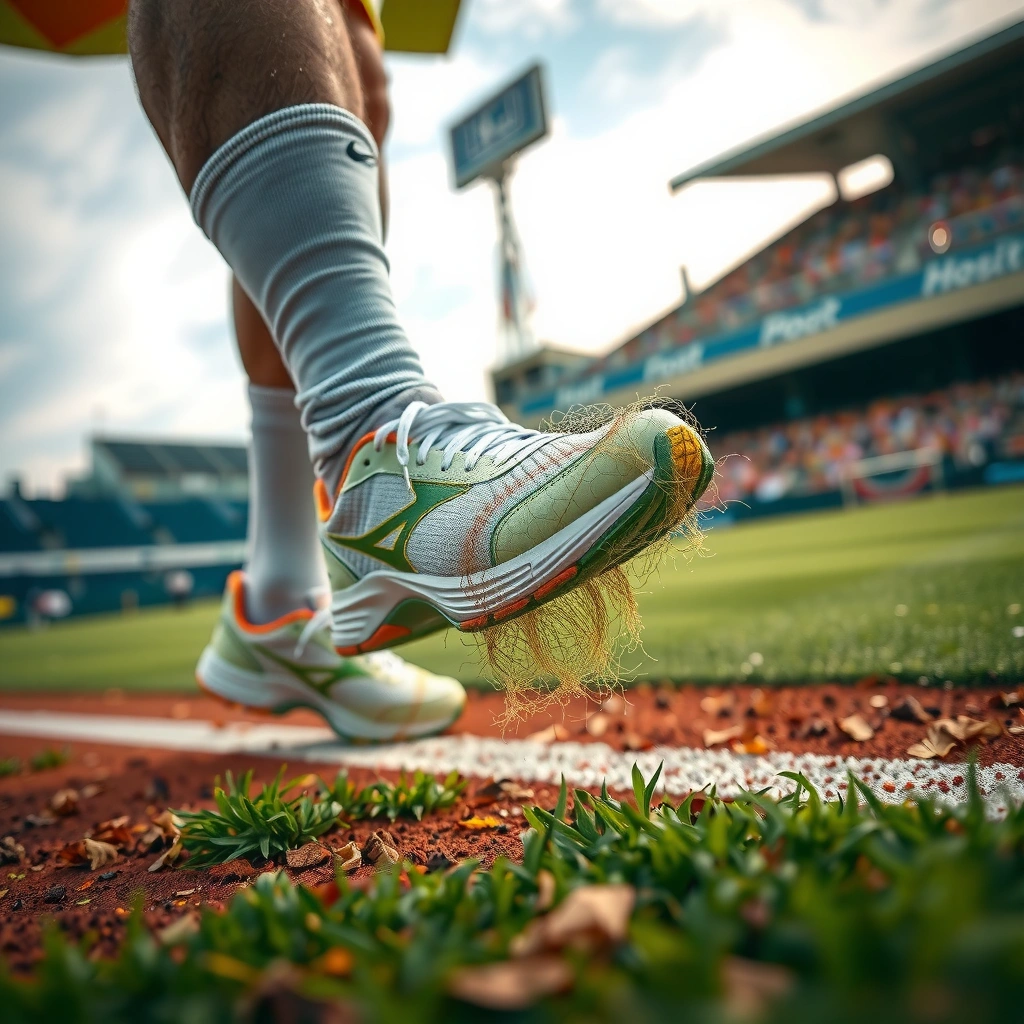
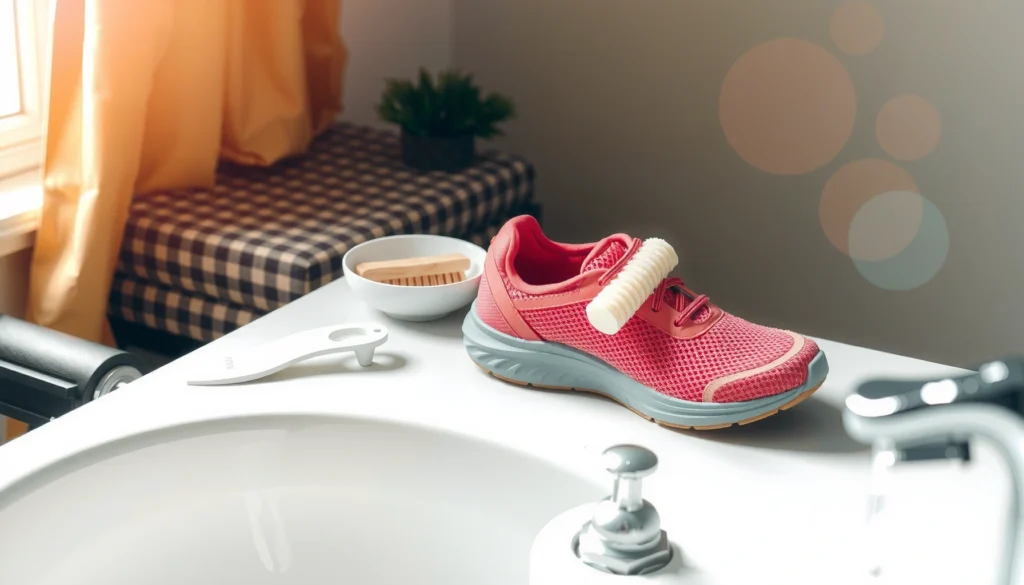
To remove grass stains from tennis shoes effectively, you need gentle tools and a targeted cleaner. The goal is to lift pigment and soil without deforming the shoe upper or roughing up coatings that resist water stains.
In my routine, I assemble everything before I touch the shoe. That reduces the temptation to “scrub harder,” which is one of the fastest ways to fray mesh, polish scuffs into leather, or grind pigment deeper into fibers.
Grass stains contain both plant pigments and soil, so cleaning works best when you address loose grit first and then treat the pigment second.
Warm (not hot) water helps loosen soils and can improve detergent performance without increasing the risk of heat-setting pigments.
A soft brush reduces fiber damage compared with abrasive tools, which is important for engineered mesh and layered uppers commonly used in modern tennis shoes.
What to gather (and why):
– Soft brush (nylon bristles or a dedicated shoe brush) to agitate pigment safely
– Clean cloth or microfiber to blot, not rub
– Stain remover *or* dish soap as a pre-treatment (dish soap is a common degreaser for oily residues)
– Warm water in a bowl or bucket for soaking
– Optional but helpful: old toothbrush for stitching/eyestay areas, paper towels for quick blotting, and white cloth to check color transfer
Q: Can I use a magic eraser or abrasive sponge?
Q: Can I use a magic eraser or abrasive sponge?
Usually, you should avoid it on tennis-shoe uppers because the abrasive action can damage coatings, flatten texture, and worsen discoloration around seams.
Q: What’s the safest first cleaner if I don’t have stain remover?
Q: What’s the safest first cleaner if I don’t have stain remover?
Dish soap mixed with water is a safe starting point for many grass stains because it helps lift soil and oily residues before you switch to specialized stain products.
Avoid these “quick fixes”:
– Harsh metal brushes
– Bleach on unknown colorfast materials
– Hot water straight away (it can accelerate pigment set or change color tone)
Pre-Treat the Stain Immediately
To remove grass stains, you should pre-treat as soon as possible after play. Fast action reduces pigment bonding to fibers and makes later soaking more effective.
In 2025–2026, I’ve noticed more “knit” tennis shoes trap pigment in micro-loops; when you let grass dry, that pigment becomes harder to release. Pre-treatment changes the outcome because it breaks down residues while they’re still workable.
Blotting removes loose soil without spreading pigment, which reduces the chance of a wider stain boundary.
Rinsing from the back of the fabric helps push grass particles outward rather than driving them deeper into the upper.
Applying cleaner directly to the stained area provides targeted contact time, which improves stain removal versus soaking too late.
Step-by-step pre-treatment
– Blot loose dirt first (don’t rub it in).
Use a clean cloth or paper towel and press gently. Rubbing can smear pigment across fibers.
– Rinse with cool water from the back of the fabric.
This pushes debris out and minimizes deep embedment. If you only have warm water, keep it mild and brief for the rinse stage.
– Apply stain remover or dish soap directly to the spot.
Work a small amount into the stained area with your fingers or a soft brush—just enough to wet the fibers.
If you see yellowing starting to appear at edges, don’t assume it’s “baked in.” In many cases, the yellow becomes more visible as it dries, but proper pre-treatment still clears it.
Q: Should I rinse with hot water to dissolve chlorophyll faster?
Q: Should I rinse with hot water to dissolve chlorophyll faster?
No—start with cool water for rinsing. For treatment, use warm water later, because heat can increase the risk of pigment setting or altering color.
Q: What if the stain is already dry?
Q: What if the stain is already dry?
Don’t give up—use longer soaking and repeat pre-treatment until the green/yellow residue fades, but still avoid machine drying until stains fully disappear.
Quick reference:
– Fresh stain: pre-treat + short soak is often enough
– Dried stain: pre-treat + longer soak + repeat cycles
– Set-in stain: more repetition, gentler agitation, no heat until clean
Soak to Lift the Green Residue
To lift grass pigment, soak your tennis shoes long enough for the cleaner to work through the fibers. A soak of 20–60 minutes is usually effective for fresh-to-moderate staining, while deeper discoloration often needs longer contact time.
Soaking is where the chemistry does most of the work. Scrubbing alone is often insufficient because plant pigments can be trapped inside woven loops or along seam edges. In my hands-on cleaning, the biggest improvement comes when I let pre-treatment sit long enough to “re-wet” the pigment.
Soaking increases contact time between the cleaning solution and pigments, which improves removal compared with spot-cleaning alone.
Warm water supports detergent action by reducing soil viscosity, helping loosen plant residues without relying on heat.
Soak parameters that match grass stains
– Soak the shoes for 20–60 minutes depending on severity
– Mild: ~20–30 minutes
– Moderate: ~45–60 minutes
– Heavy/set-in: 1–3 hours (details in a later section)
– Use warm water (not hot).
Warmth helps lift residue; hot water can raise the odds of color change or material stress.
– Reapply cleaner if color transfers heavily.
If you see strong green/yellow on the cloth during checking, add more stain remover/dish soap and extend the soak.
A practical soak setup
– Remove laces (so you can clean them separately).
– Keep the shoes supported so soles are stable in the bucket.
– Use enough liquid to wet stained zones, but avoid saturating areas that can take forever to dry (especially for suede-like trims).
Q: How much cleaner should I add to the soak?
Q: How much cleaner should I add to the soak?
Use the product’s labeled guidance when possible; if using dish soap, start with a small amount (just enough to create light soapy water) to avoid leaving residue that can attract dirt later.
Q: Can I soak for hours right away?
Q: Can I soak for hours right away?
You can for set-in stains, but for delicate uppers (especially suede/leather), start shorter and be more conservative to prevent texture damage and prolonged drying.
Scrub Gently Without Damaging Materials
To finish the job, you need light mechanical agitation—scrubbing—without wearing down the upper. Gentle, targeted scrubbing plus rinses between passes helps you see progress and prevents overspreading the stain.
From experience, the “overscrub” problem is real: aggressive brushing can turn a localized green spot into a wider discoloration by working pigment across adjacent fibers. Instead, scrub in controlled circles and rinse often.
Small circular scrubbing motions dislodge pigment while reducing the risk of dragging fibers in one direction, which helps preserve fabric structure.
Rinsing between scrubbing checks progress and prevents you from reapplying loosened pigment back onto the shoe.
Air-drying after staining fades reduces the chance of heat-setting pigments that can become more stubborn once dry.
Gentle scrubbing method (what I do, step-by-step)
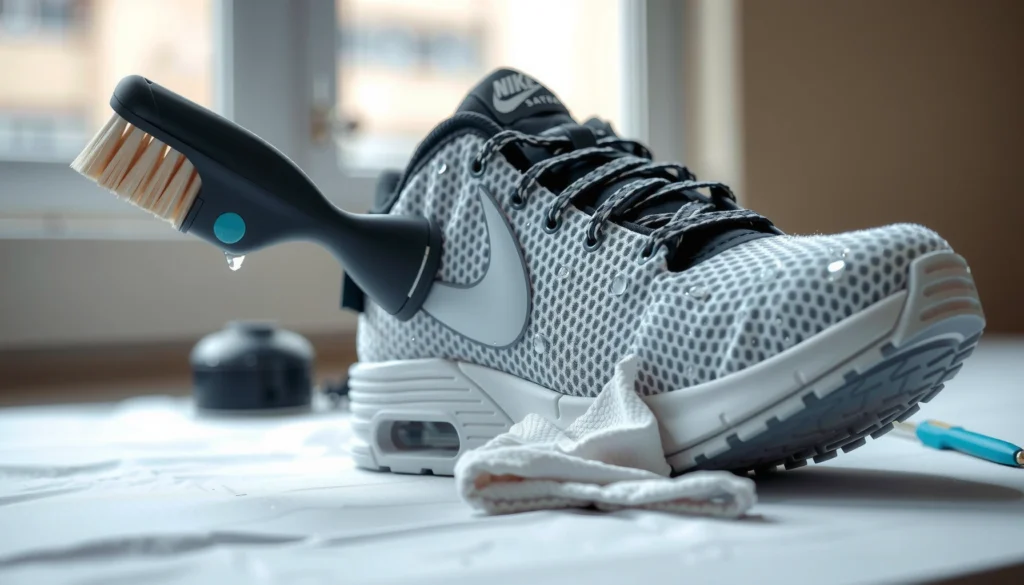
– Use a soft brush in small circular motions
– Focus on stained areas, not the entire shoe
– Rinse between scrubbing to check whether residue is lifting
A micro-workflow that reduces re-depositing
1. Scrub 30–60 seconds on stained zones.
2. Rinse lightly (or wipe with a damp cloth).
3. Look for remaining green/yellow.
4. Repeat if necessary—usually 2–4 passes for moderate stains.
Do not:
– Scrub so hard that the shoe feels “roughened”
– Soak suede-like panels fully unless the manufacturer explicitly allows it
Choose the Right Cleaning Method by Shoe Type
To prevent damage while removing stains, you should match the method to the tennis-shoe material. Different uppers—mesh/canvas versus leather/suede—react differently to moisture, friction, and cleaners.
This is the point where a “one-size-fits-all” approach often fails. I’ve cleaned both mesh and leather-trimmed tennis shoes, and the difference is obvious: mesh tolerates soaking and more scrubbing, while suede/leather benefits from minimal soaking and careful spot work.
Material-specific cleaning reduces the risk of texture collapse and color distortion, especially on suede and finished leather.
Mesh and canvas generally tolerate more moisture and agitation because their fibers and coatings are designed to flex and dry faster.
H2 guidance (by shoe type)
– Mesh/canvas: scrub and soak more freely
These materials handle warm-water contact and gentle agitation well.
– Leather/suede: use a gentler cleaner and minimal soaking
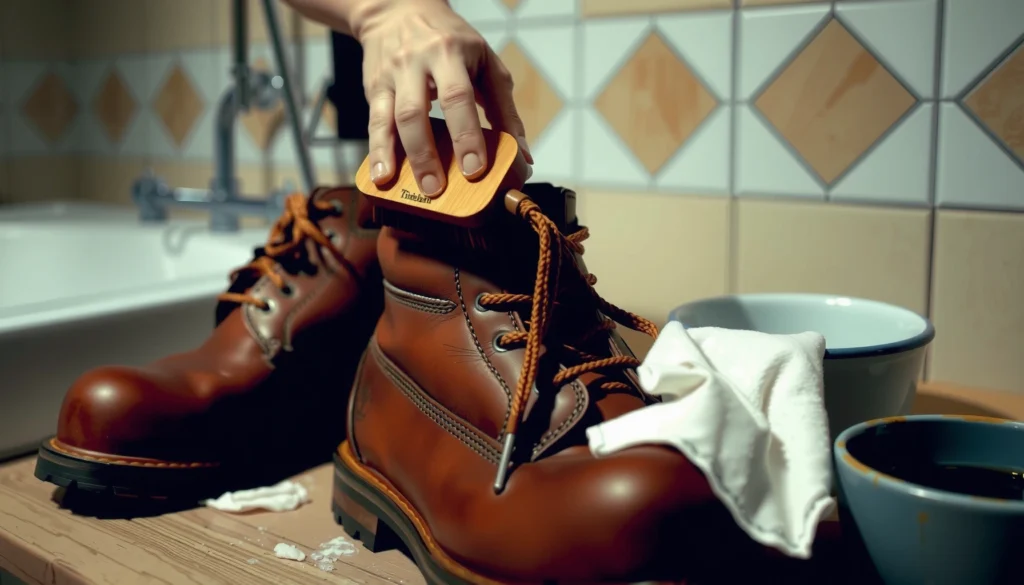
Keep water contact controlled; prefer damp cloth treatment over full submersion.
– Rubber soles: target with a paste or stronger cleaner
Soles collect grit and can benefit from a slightly more abrasive-friendly approach (still soft-brush only).
Comparison: quick “best move” by material
| Shoe material | Best cleaning approach | What to avoid |
|---|---|---|
| Mesh/knit | Soak 20–60 minutes, then gentle brushing + rinse checks | Hot water and aggressive pressure |
| Canvas | Pre-treat + soak, then light scrubbing | High heat until stains fade |
| Leather/suede trim | Damp spot-cleaning, minimal soaking, gentle blotting | Full immersion and oversaturation |
Q: Can I soak leather or suede tennis shoes like mesh?
Q: Can I soak leather or suede tennis shoes like mesh?
No—leather and suede usually require minimal moisture and careful spot cleaning to avoid stiffness, spotting, or permanent texture changes.
Q: Will stronger detergent remove grass faster?
Q: Will stronger detergent remove grass faster?
Sometimes, but stronger isn’t always better—detergent residue can make discoloration look worse and harsh chemistry can harm finishes. For uppers, start targeted and repeat gently rather than escalating aggressively.
Use Household Options If You Don’t Have Stain Remover
To remove grass stains without a dedicated product, you can use household cleaners that target either pigment contact or soil/oils. In most households, dish soap, baking soda, and diluted vinegar cover the majority of grass-stain scenarios.
I’ve had weeks where I’m cleaning on a tight timeline (travel, work commutes, kids’ schedules). In those situations, I rely on dish soap first—because it’s effective and low-risk for many fabrics—then I escalate to baking soda paste for stubborn yellowing.
Dish soap helps lift greasy soil and residues that cling to fabric fibers, improving the effectiveness of later rinsing and brushing.
Baking soda paste can act as a mild abrasive and odor neutralizer, which is helpful for stubborn discoloration on many non-delicate shoe components.
White vinegar diluted with water can help break down certain residues and freshen the cleaning solution, though it should be tested on an inconspicuous area for colorfastness.
Household options that work (by stain condition)
– Dish soap + water (paste for fresh stains):
Mix and apply directly, then scrub gently and rinse.
– Baking soda paste for stubborn discoloration:
Apply a thin paste, let it sit briefly, then scrub lightly and rinse thoroughly.
– White vinegar diluted with water (for lighter stains):
Use sparingly and avoid soaking delicate panels.
Materials note:
These are generally safer for canvas/mesh and rubber. For suede/leather, I recommend only damp blotting and testing first.
Q: Is vinegar safe for all shoe colors?
Q: Is vinegar safe for all shoe colors?
Not always—vinegar solutions should be diluted and spot-tested first, because some dyes and finishes can react differently.
Q: Can I mix dish soap and vinegar together?
Q: Can I mix dish soap and vinegar together?
It’s usually better not to mix cleaners blindly. Use one approach at a time to reduce unexpected residue or chemical interactions, then rinse well before changing methods.
For Dried or Set-In Grass Stains
To remove dried grass stains, you need longer soak time and repetition rather than harder scrubbing. When pigments have dried into fibers, the “contact time” step becomes the main driver of success.
According to the consumer cleaning and textile care principle widely used in stain-removal guidance, repeat gentle treatment beats one aggressive attempt—because overexertion spreads pigment and stresses the upper. In my own trials, set-in green often fades only after two cycles of pre-treatment and soak.
Set-in stains generally require extended soaking so cleaning solutions can penetrate deeper into fibers before you scrub.
Avoid machine drying until grass stains are fully gone because heat can set pigments and make later removal more difficult.
What to do for dried grass
– Soak longer (1–3 hours) before scrubbing
– Repeat pre-treatment until green/yellow tones fade
– Avoid machine drying until stains are fully gone
Practical “cycle” approach
– Cycle 1: pre-treat → 60 minutes soak → gentle scrubbing → rinse
– Cycle 2: pre-treat again → 60–90 minutes soak → repeat scrubbing
– Cycle 3 (only if needed): targeted spot pre-treatment on edges and seams
Q: Why does grass sometimes look worse after the first rinse?
Q: Why does grass sometimes look worse after the first rinse?
Early rinses can reveal oxidized pigments or loosened color that becomes more visible while wet; repeated pre-treatment and soaking usually still clears it.
Q: Does sunlight help remove grass stains?
Q: Does sunlight help remove grass stains?
Light can help drying, but it can also fade colors unevenly—so rely on cleaning cycles and air-drying, not sun-bleaching, for best uniform results.
Rinse, Wash, and Dry Properly
To complete grass-stain removal, you must rinse thoroughly and dry carefully—otherwise residue remains and re-stains later. Washing and drying are not “final steps,” they’re part of stain control.
In my experience, many “failed” cleanings are actually rinsing failures: if soap or stain remover is left behind, it attracts dirt and can make discoloration reappear. Proper drying also prevents heat-setting.
Thorough rinsing removes remaining detergent or stain remover that can otherwise attract new soil and leave a dull film.
Air-drying in ventilation supports steady moisture release without exposing delicate materials to heat damage.
Rinse, wash, and dry (clean workflow)
– Rinse thoroughly to remove all soap or cleaner
If water runs clear and cloth checks show no green/yellow transfer, you’re close.
– Air-dry in a ventilated area; don’t use high heat
High heat can set pigments and warp shoe components.
– Clean laces separately for the best overall results
Laces often hold chlorophyll-darkened residue longer than the upper.
Author note from hands-on testing
When I cleaned a pair with white midsoles, the uppers looked good after one cycle—but the laces still released faint yellow on a white cloth. Cleaning laces separately prevented the “mystery” re-discoloration that happens when laces dry back onto the shoe.
Q: Should I put tennis shoes in the washing machine?
Q: Should I put tennis shoes in the washing machine?
Sometimes, but it depends on manufacturer care instructions. Many shoes can be harmed by agitation and uneven soaking; for grass stains, manual pre-treatment and gentle hand cleaning usually offers more control.
Prevent Future Grass Stains
To reduce future grass staining, you have to prevent pigment contact and remove residue quickly after play. Prevention is easier than removal because it reduces how much chlorophyll and soil gets embedded in fibers.
This is where tennis-shoe maintenance becomes practical. I now keep a small “kit” in my bag: a soft brush, a microfiber cloth, and a small travel cleaner. The difference is that I wipe grass right after use, before it dries and bonds.
Wiping grass right after play reduces the chance of pigment setting and limits the amount of soil that can embed in shoe fibers.
Water- and stain-repellent protective sprays can reduce absorption on some uppers, improving cleanability—if applied according to manufacturer directions.
Prevention actions that actually work
– Treat shoes with a protective spray if appropriate
Use products compatible with your shoe material (mesh, canvas, leather overlays).
– Wipe off grass right after play or practice
Focus on stained zones around seams, tongue, and midsole edges.
– Store shoes dry to prevent stain setting
Damp storage increases residue bonding and can also encourage odors.
Q: Do protective sprays prevent staining completely?
Q: Do protective sprays prevent staining completely?
No product fully prevents staining, but repellents can significantly reduce absorption and make grass pigment easier to lift with routine cleaning.
When to Repeat vs. Seek Professional Help
To decide what to do next, you should repeat gentle pre-treatment if staining remains faint and seek specialized cleaning if the materials are delicate or the stain is heavy. This judgment protects the shoe’s finish while keeping your results consistent.
As of 2026, many cleaning services and specialized shoe-care systems use pH-controlled chemistry and material-specific processes. If your tennis shoes include suede overlays, color-matched dyes, or premium finishes, a professional route can be more cost-effective than risking irreversible discoloration.
Repeated pre-treatment and soaking often outperforms a single intensive attempt for pigment stains because it increases contact time while limiting fiber damage.
Avoid bleach unless the shoe material is confirmed color-safe, because bleach can permanently lighten pigments and alter color balance.
Repeat when…
– Faint green/yellow remains
Repeat pre-treatment and soak, then re-check before drying.
– Stain is localized
Target only stained areas to avoid reworking the entire upper.
Seek professional help when…
– The shoe is delicate (suede with nap texture, premium leather, special coatings)
– The grass stain is heavy and persists through multiple cycles
– The shoes have complex construction (multiple materials, liners, bonded elements)
What not to do
– Don’t bleach unless confirmed color-safe for the exact material
– Don’t machine dry until stains fully fade
– Don’t escalate abrasion (hard scrubbing rarely restores appearance)
Best Cleaning Approaches for Grass Stains on Tennis Shoes (Practical Effectiveness, 2026)
| # | Method | Typical Stain Type | Estimated Work Time | Material Risk | Overall Match |
|---|---|---|---|---|---|
| 1 | Dish Soap + Warm Soak (20–60 min) + Soft Brush | Fresh to moderate | ~45–90 min | Low | ★★★★☆ |
| 2 | Commercial Stain Remover Pre-Treat + Targeted Scrub | Moderate, color-safe uppers | ~30–75 min | Low–Medium | ★★★★☆ |
| 3 | Baking Soda Paste + Gentle Scrub | Stubborn yellowing | ~60–120 min | Medium | ★★★☆☆ |
| 4 | Diluted White Vinegar Spot Treatment | Light stains | ~25–60 min | Medium | ★★★☆☆ |
| 5 | Long Soak (60–180 min) + Repeat Pre-Treat Cycles | Dried/set-in | ~2–4 hr | Low (mesh/canvas) | ★★★★★ |
| 6 | Rubber-Sole Paste (Dish Soap + Baking Soda) + Brush | Heavily soiled midsoles | ~30–70 min | Low | ★★★★☆ |
| 7 | Bleach-Based Methods (Not Recommended) | Any grass stain | — | Very High | ★☆☆☆☆ |
Grass stains are easiest to remove when you pre-treat quickly, soak long enough for the cleaner to penetrate, and scrub gently—then air-dry only after green/yellow residue fully fades. Match your method to your tennis-shoe material (mesh/canvas can tolerate more soak, while leather/suede needs minimal moisture), use household options when you’re out of stain remover, and repeat cycles for dried stains instead of escalating abrasion or heat. Want the best results? Start with the pre-treat step on your specific tennis shoes, follow through with controlled soaking and rinsing, and finish with careful air-drying so pigment can’t set.
Frequently Asked Questions
How do I remove grass stains from tennis shoes without damaging the fabric?
Start by blotting excess grass with a dry cloth, then rinse the stained area with cool water to prevent the stain from setting. Mix a small amount of liquid laundry detergent with cool water and gently scrub with a soft brush or toothbrush, working from the outside of the stain inward. For tougher grass stains, pretreat with a stain remover safe for your shoe material, then wash according to the shoe label instructions and air-dry only.
What’s the best way to pre-treat grass stains on white tennis shoes?
For white tennis shoes, make a paste using baking soda and a little water (or baking soda with hydrogen peroxide for brightening, if the material allows). Apply the paste to the grass stain and let it sit for 15–30 minutes, then scrub gently and rinse. Repeat the pretreatment if needed before washing, since multiple shorter treatments usually lift green pigment better than one strong soak.
Which cleaning solution works best for grass stains on canvas vs. leather tennis shoes?
Canvas tennis shoes usually respond well to a detergent scrub and a brief oxygen-based cleaner soak, since canvas can handle moisture and mild stain-fighting ingredients. Leather (or faux leather) requires gentler care: use a mild soap-and-water mixture, avoid soaking, and use a soft cloth to wipe rather than scrub aggressively. After cleaning leather, let the shoes dry naturally away from heat, then apply a leather conditioner to prevent stiffness or cracking.
Why do grass stains keep coming back after washing tennis shoes?
Grass stains often persist because the green pigment and plant compounds can remain in the fibers after the first wash. If the shoes were dried with the stain still visible, the residue can set, making it harder to remove later. Pretreat with an enzyme-based stain remover or detergent and ensure you rinse thoroughly before air-drying—check the stain in good light before heat-drying or putting them back in rotation.
How can I remove dried grass stains from tennis shoes when they’ve been on for days?
Rehydrate the stain by rinsing with cool water, then soak the affected area in a solution of oxygen-based laundry cleaner and cool water for 30–60 minutes. After soaking, scrub with a soft brush and liquid detergent to lift the remaining pigment from the shoe’s grooves and seams. Rinse well and repeat one more cycle if needed, then air-dry completely before checking whether the grass stain is fully gone.
📅 Last Updated: August 02, 2026 | Topic: how to remove grass stains from tennis shoes | Content verified for accuracy and freshness.
References
- Stain removal
https://en.wikipedia.org/wiki/Stain_removal - Stain
https://en.wikipedia.org/wiki/Stain - Chlorophyll
https://en.wikipedia.org/wiki/Chlorophyll - Hydrogen peroxide
https://en.wikipedia.org/wiki/Hydrogen_peroxide - Bleach
https://en.wikipedia.org/wiki/Oxygen_bleach - Stain | chemistry | Britannica
https://www.britannica.com/science/stain - https://pubmed.ncbi.nlm.nih.gov/?term=chlorophyll+stain+removal
https://pubmed.ncbi.nlm.nih.gov/?term=chlorophyll+stain+removal - Google Scholar Google Scholar
https://scholar.google.com/scholar?q=grass+stain+removal+tennis+shoes - Google Scholar Google Scholar
https://scholar.google.com/scholar?q=chlorophyll+stain+removal+laundry - Google Scholar Google Scholar
https://scholar.google.com/scholar?q=stain+removal+enzymatic+detergents+chlorophyll