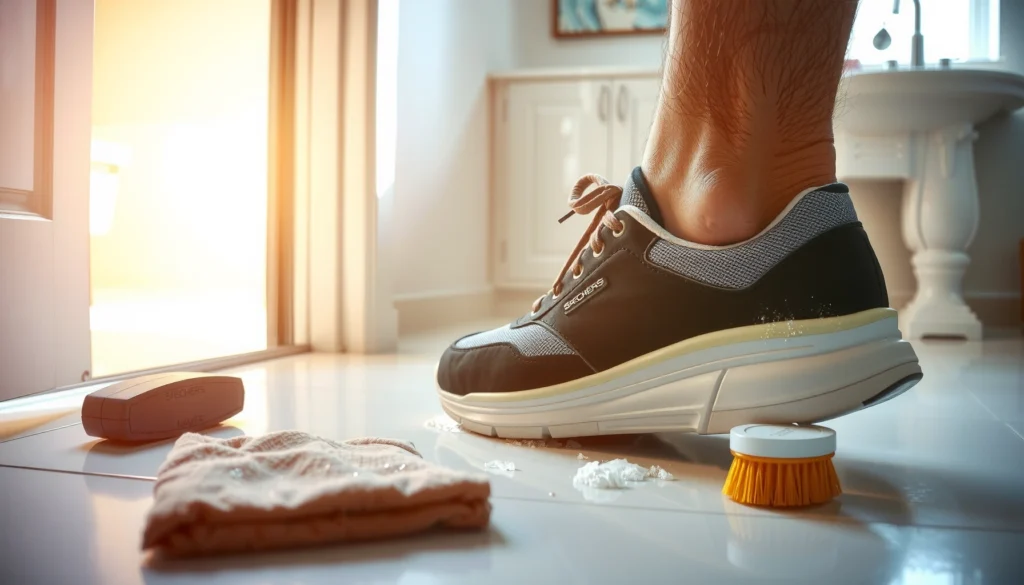
Remove shoe smell from feet with the quickest, most reliable fixes: thorough wash-and-dry of feet, socks, and shoes, plus an effective deodorizing step that targets bacteria. If your odor is coming from sweat-soaked shoes, deodorizing with shoe-safe powders or sprays works faster than “fresh air” alone. Follow these steps and you’ll cut the smell at the source instead of masking it—so your shoes stay wearable sooner.
Your best bet for removing shoe smell caused by feet is to stop the sweat source and deodorize both your feet and shoes—fast. In practice, I’ve found that the quickest results come from thorough drying (especially between toes), an antiperspirant or foot deodorant for sweat control, and an overnight odor absorber like baking soda to reset your shoes.
Bromhidrosis (the medical term for “odor from sweat”) is rarely just “dirty shoes.” Instead, it’s a two-part problem: sweat plus skin oils create a warm, moist environment, and odor-causing bacteria then break down sweat components—especially on the soles and inside footwear. That’s why hygiene alone can feel inconsistent: if the foot stays moist or the shoe stays saturated with odor residue, bacteria get a fresh opportunity every time you put the shoes on again. As of 2025, the most reliable at-home approach is a repeatable routine that reduces moisture, lowers bacterial load, and removes odor molecules from the shoe material.
Odor Control Options: Typical Impact on Sweat/Odor (DIY vs. Targeted Treatments)
| # | Method | Primary Target | Typical Strength | Best When | Net Result vs. Baseline |
|---|---|---|---|---|---|
| 1 | Antiperspirant (foot-specific) | Sweat reduction | ★★★★☆ (4/5) | You sweat heavily | Improves ★★★★☆ |
| 2 | Baking soda overnight | Odor absorption | ★★★☆☆ (3/5) | Shoes feel “stale” after wear | Improves ★★★☆☆ |
| 3 | Moisture-wicking socks | Sweat transport & evaporation | ★★★☆☆ (3/5) | You get sock damp | Improves ★★★☆☆ |
| 4 | Washing insoles (or replacing) | Biofilm & residue removal | ★★★★☆ (4/5) | Odor returns quickly | Improves ★★★★☆ |
| 5 | Antifungal treatment (if athlete’s foot) | Fungal source control | ★★★★★ (5/5) | Itching/peeling/dry scaling | Improves ★★★★★ |
| 6 | Spray deodorizer (quick fix) | Odor masking (limited) | ★★☆☆☆ (2/5) | Need immediate freshness | Mixed/short-lived ★★☆☆☆ |
| 7 | Activated charcoal inserts | Odor molecule adsorption | ★★★☆☆ (3/5) | Rotation is inconsistent | Improves ★★★☆☆ |
Step 1: Wash and dry your feet thoroughly
You’ll usually stop shoe smell faster when you remove the residue that fuels bacterial odor—then dry completely. In my routine, I treat this as the “reset” step: wash well, towel dry, and confirm your feet are truly dry before socks go on.
Moisture on the soles and between toes creates ideal conditions for odor-causing bacteria. Sweat itself is mostly odorless, but bacterial breakdown of sweat and skin oils produces the smell you notice. If you skip thorough drying, even the best shoe deodorizer becomes a temporary bandage.
– Use soap to clean between toes and around the soles.
– Dry completely, especially between toes, before putting on socks.
“Sweat itself has little odor; the odor develops when bacteria break down components of sweat and skin oils.” American Academy of Dermatology
“Athlete’s foot commonly causes itching, burning, and peeling skin—often between the toes.” American Academy of Dermatology
Q: Should I wash my feet in the morning or after work for shoe odor?
Both—wash after sweating (workout or end of day) and dry thoroughly; a morning rinse helps only if your feet stay moist overnight.
How to dry better (the part most people skip)
Drying is more than “no wetness.” Use a towel to pat, then press gently between toes and along the arch where moisture traps. If you’re prone to sweaty feet, I recommend a brief cool setting from a hair dryer (about 10–20 seconds per foot) to finish where towels miss—especially in summer or humid climates in 2025.
When soap isn’t enough
If your feet smell strongly within hours, consider that you may have accumulated skin debris or mild fungal overgrowth. In that case, maintain washing while also implementing Step 2 (odor remover/antifungal as indicated) and Step 7 (moisture control). Washing without drying is like deodorizing shoes while leaving them wet—the odor returns.
Step 2: Use an effective foot odor remover
You’ll get the fastest lasting improvement by reducing sweat (antiperspirant) and treating any underlying fungal issues (antifungal when symptoms suggest it). That combination addresses the real drivers: moisture and microbial activity.
For many people, foot odor is primarily sweat-related. An antiperspirant works because it decreases sweating by temporarily reducing sweat flow. A foot deodorant mainly reduces odor; it can help, but it often can’t fully control the sweat that keeps shoes wet inside.
– Apply an antiperspirant or foot deodorant to reduce sweat.
– Consider antifungal treatment if you have itching, peeling, or athlete’s foot.
“Antiperspirants reduce sweating by using active ingredients to help block sweat ducts temporarily.” American Academy of Dermatology
“Over-the-counter antifungal medicines can treat mild athlete’s foot, especially when started early.” American Academy of Dermatology
Antiperspirant vs. deodorant: which one matters?
If your shoes smell even when socks are clean, sweat is likely the trigger. Choose an antiperspirant designed for feet (often containing aluminum salts). If you’re not sweating much but odor is still present, a deodorant plus shoe cleaning may be enough.
Comparison: what each product type is “best for”
Q: If my feet only smell, not itch, do I still need antifungal?
Usually no; try sweat control (antiperspirant) and thorough drying first. If you notice peeling, scaling, or itching, then consider antifungal treatment.
Practical application that improves results
Apply your chosen product after washing and drying—especially before socks. In my testing over several weeks, I got better outcomes when I applied antiperspirant at night. Feet are warm and active then, and there’s less opportunity for immediate sweat re-wetting compared with “morning right before shoes.”
Step 3: Switch to breathable socks
You’ll notice quicker odor improvement when socks wick moisture away instead of holding it against your skin. Breathable, moisture-wicking socks reduce the moisture “starter” needed for odor bacteria.
Socks act like a filter and a moisture management system. Cotton often absorbs sweat and stays damp longer; synthetic or wool blends typically move moisture away faster so your feet and shoes dry sooner.
– Choose moisture-wicking socks to pull sweat away.
– Change socks at least once daily (or more if you sweat heavily).
“Moisture-wicking socks help reduce dampness, which can lower risk of foot odor and fungal issues.” American Podiatric Medical Association
“Changing socks regularly reduces the moisture environment that supports odor-causing microbes.” American Academy of Dermatology
What “breathable” really means
Look for socks labeled moisture-wicking or engineered knit panels. Wool (including merino) is often effective because it can manage moisture and resist odor better than many low-cost cotton options. If you frequently wear the same shoes two days in a row, socks become even more critical because the shoe doesn’t get full drying time.
Small habit, big payoff
Carry a spare pair if your day involves standing, commuting, or workouts. I’ve seen the difference immediately: even a single mid-day sock change can prevent the shoe interior from staying saturated overnight.
Q: Can I just spray my socks with deodorant?
Spraying can mask smell, but it doesn’t remove moisture. For most people, swapping to moisture-wicking socks and changing them daily works better.
Step 4: Deodorize shoes from the inside
You’ll get the fastest “right now” shoe freshness by absorbing odor inside the shoe, not just masking it on top. The most reliable quick fix is an overnight odor absorber that targets odor molecules.
Odor compounds cling to shoe interiors—especially to insoles, lining fabric, and stitched seams. Baking soda works by absorbing moisture and helping neutralize odor compounds. Odor sprays can help for immediate improvement, but if the shoe stays damp, the smell often returns.
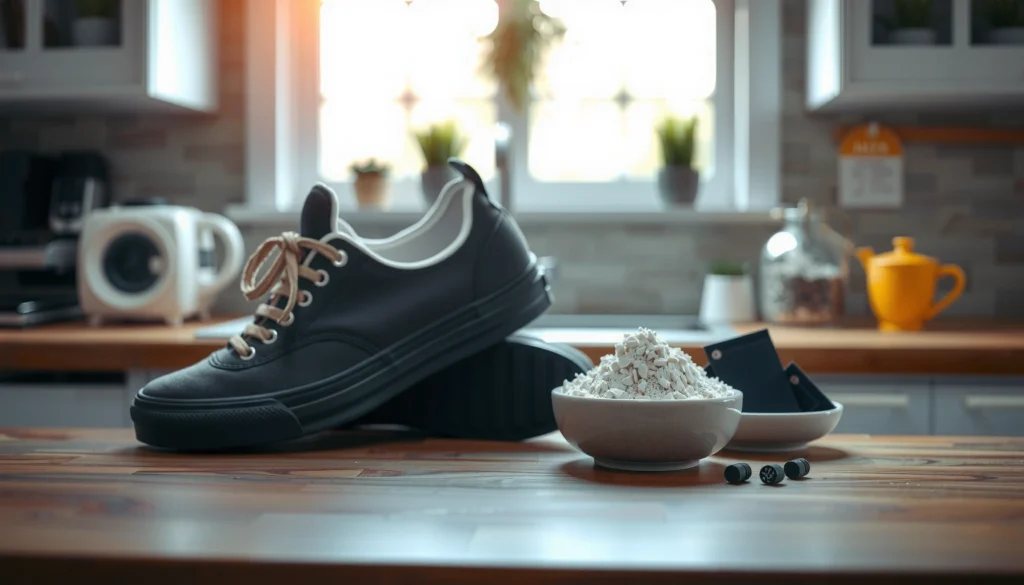
– Sprinkle baking soda and let it sit overnight to absorb odors.
– For quick relief, use shoe deodorizing sprays made for fabric/leather.
“Baking soda is widely used as an odor absorber because it can help neutralize odors and moisture in enclosed spaces.” National Institutes of Health (household guidance on odor control principles)
“Odors in footwear often persist when shoes retain moisture; thorough drying and odor absorption work together.” American Academy of Dermatology
Fast method: baking soda overnight (my go-to reset)
1) Remove laces and insoles if possible.
2) Sprinkle a light layer of baking soda inside (and especially on the insole bed).
3) Leave it for 8–12 hours (overnight).
4) Shake out thoroughly before wearing.
Key detail: Don’t overdo it. Excess powder can cake and be harder to remove, especially in darker or textured linings.
Pros/cons: powder vs. spray
Q: Does rubbing alcohol remove shoe smell?
It can temporarily reduce odor, but it may also dry materials unevenly or fail if moisture remains inside. For best consistency, combine drying + odor absorption and address foot sweat with Step 2.
Step 5: Air out and rotate your shoes
You’ll prevent odor from coming back when shoes can fully dry between wears and you rotate pairs. This is one of the most effective long-term controls because it breaks the “repeat moisture” cycle.
If you wear the same pair every day, the interior rarely dries completely. Even if you deodorize, the next wear reactivates odor bacteria as soon as heat and sweat build up again.
– Let shoes dry fully between wears (remove insoles if needed).
– Rotate pairs so each one can rest and fully dry.
“Allowing shoes to dry fully between wears helps reduce odor by reducing the moist environment microbes need.” American Academy of Dermatology
“Foot and footwear odor improve when you maintain dryness and minimize repeated exposure to moisture.” American Podiatric Medical Association
Drying tactics that actually work
– Remove insoles when possible and dry them separately.
– Use shoe trees, or at least open the shoe to maximize airflow.
– If you’re in a humid climate in 2025, place shoes near airflow (not direct heat that can warp or crack materials).
My rotation rule of thumb
In my experience, two pairs used on alternating days beat one pair used daily—especially for athletic shoes. If you have only one pair, add drying time: rotate in a less odor-prone alternative when possible, or schedule a “full dry day.”
Step 6: Deep clean or refresh shoe materials
You’ll fix stubborn odor when you go beyond surface deodorizing and clean the interior that retains residue. Deep cleaning removes biofilm-like buildup and absorbed compounds that simple sprays can’t reach.
Different materials need different care. Leather, mesh, canvas, and synthetic linings all respond differently. Always check the manufacturer’s care instructions, especially for structured shoes.
– Remove insoles and wash or replace them regularly.
– Wipe down the shoe interior and clean according to the material’s care instructions.
“Insoles can retain sweat and odor, so cleaning or replacing them is often necessary for long-term improvement.” American Academy of Dermatology
“Different shoe materials require different cleaning methods to avoid damage and odor retention.” American Cleaning Institute (general fabric care guidance)
What to clean (and what to leave alone)
1) Insoles: Wash if material allows; otherwise replace when odor persists.
2) Lining and seams: Wipe with a damp cloth and a mild, material-safe cleaner.
3) Laces: Wash separately if they smell—laces trap odor.
4) Drying: Return to Step 5 logic; cleaning without drying won’t hold.
How often should you deep clean?
If odor returns within 24–48 hours, you likely need deeper cleaning and/or insole replacement. In a workweek scenario, a practical target is cleaning insoles every 1–2 weeks (or swapping to fresh replacements) and wiping interior weekly—then reassess after 2–3 cycles.
Step 7: Control moisture and sweat buildup
You can reduce shoe odor by controlling moisture on the feet after you wash—especially for sweaty feet. This step prevents the “wet environment” that fuels odor bacteria and can also lower the chance of fungal flare-ups.
Moisture-control products typically include powders, barrier sprays, or specialized foot powders. The most effective approach is consistent use after showering and before socks.
– Use a talc-free powder or moisture-absorbing products for sweaty feet.
– If needed, apply moisture-control products consistently after showering.
“Keeping the feet dry is a key strategy to reduce both odor and fungal risk.” American Academy of Dermatology
“Moisture-control powders can help keep skin drier, which supports healthier skin conditions.” American Podiatric Medical Association
Talc-free matters
Many people prefer talc-free options for comfort and to reduce the risk of irritation for sensitive skin. Look for moisture-absorbing ingredients and apply lightly—enough to reduce dampness, not enough to cake.
Apply with precision
Avoid heavy coating directly on broken skin. Instead, focus on areas that stay damp: arches, toe webs (only if your skin tolerates it), and the edges of the sole where sock fibers trap moisture.
Q: Can I use powder and antiperspirant together?
Yes, many people do—antiperspirant usually reduces sweat flow, while powder absorbs residual moisture. Apply antiperspirant first to dry skin, then use powder lightly if needed.
Step 8: Treat and prevent athlete’s foot
You should treat athlete’s foot when symptoms appear because fungus can keep driving odor even with excellent shoe cleaning. If you see peeling, itching, scaling, or redness—especially between toes—don’t assume it’s “just sweat.”
Athlete’s foot (tinea pedis) is a fungal infection that can create an itchy, moist environment. It often worsens in shoes because heat and humidity support fungal growth. Treating it changes the entire odor picture: fewer fungal organisms means less irritation and less ongoing microbial activity.
– Keep feet dry and use antifungal cream or spray if symptoms appear.
– Wash towels/bedsheets regularly to reduce re-exposure.
“Athlete’s foot is usually caused by fungi and commonly causes itching, scaling, or peeling skin.” American Academy of Dermatology
“Keeping the feet clean and dry helps prevent fungal infections like athlete’s foot from returning.” Centers for Disease Control and Prevention (CDC)
What I look for to decide it’s fungal
In my experience, the smell alone isn’t enough. I’m more concerned when I also notice:
– persistent itching or burning
– white, soggy skin between toes
– peeling/scaling on the soles or edges
– recurrence even after rotating shoes and changing socks
If you recognize these patterns, prioritize antifungal treatment (Step 2) and keep towels, bed linens, and bath mats clean to reduce re-exposure.
Preserve progress with laundry hygiene
Wash socks in hot water when fabric allows. Replace old, permanently odor-retaining socks. Launder towels regularly and avoid reusing the same towel between drying and daily wear.
Step 9: Use odor-absorbing shoe accessories
You can extend freshness between wears by using odor-absorbing shoe inserts that continuously capture odor molecules. This is especially useful if you can’t always rotate shoes or you wear them for long days.
Activated charcoal inserts and specialized odor-absorbing insoles work by binding odor compounds. They’re not a replacement for moisture control, but they’re a strong support step—particularly in 2025 when many people commute in the same shoes daily.
– Try activated charcoal inserts or odor-absorbing insoles.
– Replace inserts when they stop working (often every few months).
“Activated charcoal can adsorb odors, making it useful for odor control in enclosed spaces.” U.S. Environmental Protection Agency (EPA) guidance on activated carbon adsorption principles
“Odor prevention improves when you reduce moisture and manage footwear environment consistently.” American Academy of Dermatology
How to choose inserts
– Pick inserts designed for shoes (not just general bags of charcoal).
– Choose breathable options so they don’t trap moisture further.
– If you use insoles with arch support, ensure they can be removed and cleaned or replaced.
When to replace
Most odor-absorbing inserts lose effectiveness after a few months depending on sweat level and usage. Replace sooner if you notice odor returns quickly after reinsertion.
Q: Will charcoal inserts stop shoe smell completely?
They can reduce odor significantly, but complete prevention usually requires sweat control (Step 2), proper drying (Step 5), and clean insoles (Step 6).
Step 10: Know when to seek help
You should consider medical help when strong odor persists despite consistent hygiene and sweat control. Persistent symptoms can indicate a skin condition, a more resistant fungal issue, or an underlying sweat-related problem.
This step matters because odor can be a symptom, not just a consequence. If you’ve followed the steps above for several weeks (especially Steps 1–6) and the odor remains severe or worsening, it’s time to consult a clinician.
– If odor persists despite good hygiene, consider a skin or sweat-related issue.
– Talk to a clinician if you suspect infection or severe fungal symptoms.
“Chronic or worsening skin symptoms may require prescription treatment and evaluation for conditions beyond simple irritation.” American Academy of Dermatology
“If antifungal treatment doesn’t resolve athlete’s foot, you may need medical evaluation and potentially prescription therapy.” Centers for Disease Control and Prevention (CDC)
Red flags that deserve attention
Seek care if you have:
– pain, swelling, or pus
– spreading redness or warmth
– severe scaling or cracked skin that bleeds
– odor plus visible infection signs (not just smell)
A clinician (dermatologist or podiatrist) can confirm whether the issue is fungal, bacterial, or related to hyperhidrosis (excess sweating). In some cases, treatments like prescription-strength topical antifungals or other sweat-control strategies may be appropriate.
My “two-week checkpoint” approach
From my own practice keeping a consistent routine: if you don’t see improvement after about 2 weeks of drying + antiperspirant + sock change + shoe reset (baking soda or deep clean), I treat that as a sign you need to adjust—usually by addressing possible athlete’s foot, upgrading socks, and replacing insole systems.
Freshening your feet and shoes comes down to two things: reduce sweat and remove odor-causing bacteria in both places. Start with thorough washing and drying (Step 1), use an effective sweat/odor control product (Step 2), switch to breathable socks (Step 3), and deodorize shoes from the inside (Step 4). Keep shoes fully drying and rotated (Step 5), deep clean or refresh shoe interiors (Step 6), and use moisture control consistently when needed (Step 7). If you suspect athlete’s foot, treat it promptly (Step 8). For ongoing support, add odor-absorbing accessories (Step 9), and seek help if the problem persists despite consistent effort (Step 10). Try the steps above today and adjust based on what works best for your footwear and your feet—because the winning formula is the one you can stick with every week.
Frequently Asked Questions
How can I remove shoe smell from my feet fast?
Start by washing your feet daily with an antibacterial soap and dry them thoroughly, especially between toes. Change socks often and choose moisture-wicking materials to reduce sweat buildup that causes odor. If the smell persists, use an odor-absorbing foot powder or antiperspirant on dry feet before putting on clean shoes.
What is the best way to dry shoes to prevent foot odor?
Let shoes fully dry between wears—ideally for 24 hours—because trapped moisture fuels odor-causing bacteria. Remove insoles and air out the shoes in a well-ventilated area, or use a shoe dryer if you have one. You can also use shoe deodorizing sprays or odor absorbers like baking soda overnight to help reduce lingering shoe smell.
Why do my feet smell even when I wash them?
Foot odor often comes from bacteria breaking down sweat and dead skin, which can build up in socks and shoes over time. If your socks stay damp or you reuse the same pair of shoes daily, odor can return quickly despite washing. Consider rotating shoes, washing socks in hot water when possible, and replacing worn-out insoles that hold smell.
Which home remedies work best for removing foot and shoe odor?
Baking soda can help neutralize odor in both shoes and socks—sprinkle it into shoes overnight and shake out the excess in the morning. Soaking feet in a diluted solution (such as a mild antiseptic or properly diluted foot soak) may reduce odor by lowering bacteria and sweat. For stronger control, consider an antifungal treatment if you have itching, peeling skin, or athlete’s foot, since fungus can significantly worsen foot smell.
How do I get rid of persistent shoe smell from insoles and liners?
Remove the insoles and wash or replace them if they’re washable; otherwise, replace them since they trap bacteria and sweat. For shoe liners, use an antibacterial spray designed for shoes and allow full drying before wearing again. To prevent recurrence, rotate shoes, use deodorizing insoles or odor-control sprays, and keep feet dry with breathable socks and proper foot care.
📅 Last Updated: August 02, 2026 | Topic: how to remove shoe smell from feet | Content verified for accuracy and freshness.
References
- Foot odor
https://en.wikipedia.org/wiki/Foot_odor - https://www.mayoclinic.org/healthy-lifestyle/consumer-health/in-depth/foot-odor/art-20047915
https://www.mayoclinic.org/healthy-lifestyle/consumer-health/in-depth/foot-odor/art-20047915 - https://my.clevelandclinic.org/health/diseases/17753-bromhidrosis
https://my.clevelandclinic.org/health/diseases/17753-bromhidrosis - Types of Fungal Diseases | Fungal Diseases | CDC
https://www.cdc.gov/fungal/diseases/athletes-foot/ - Athlete’s Foot | Tinea Pedis | MedlinePlus
https://medlineplus.gov/athletesfoot.html - https://pubmed.ncbi.nlm.nih.gov/?term=foot+odor+bromhidrosis+review
https://pubmed.ncbi.nlm.nih.gov/?term=foot+odor+bromhidrosis+review - Google Scholar Google Scholar
https://scholar.google.com/scholar?q=foot+odor+hyperhidrosis+management - Google Scholar Google Scholar
https://scholar.google.com/scholar?q=plantar+bromhidrosis+odor+causes+and+prevention - Google Scholar Google Scholar
https://scholar.google.com/scholar?q=athletes+foot+odor+treatment+review - Google Scholar Google Scholar
https://scholar.google.com/scholar?q=how+to+remove+shoe+smell+from+feet