Learn how to clean mold off shoes fast and safely with a step-by-step process that actually removes spores instead of spreading them. You’ll get the exact supplies to use, how to pre-treat the affected areas, and when to scrub versus when to toss the shoes to protect your health. Follow these proven steps and your shoes will be visibly cleaner and odor-free without damaging the material.
Mold on shoes can be removed by scrubbing with an appropriate cleaner and then drying everything completely so the spores can’t restart. In my experience, the difference between “mold is gone” and “mold returns” is drying: you must dry the interior, seams, and insoles—not just the outside. Follow the steps below—contain, clean, disinfect, and dry fully—while matching your method to each shoe material.
According to the U.S. Environmental Protection Agency (EPA), mold remediation should focus on removing the mold and the moisture source, because mold generally returns when conditions stay damp (EPA, guidance updated periodically). In 2026, that remains the operational rule for footwear: treat mold as both a contamination problem (spores) and a moisture management problem (humidity inside the shoe). As you read, keep two ideas in mind: (1) mold spores spread when you disturb debris, and (2) porous materials (suede, fabric, some insoles) can hold moisture deep enough that “air-dried” still isn’t dry enough.
Gather Supplies and Protect Yourself
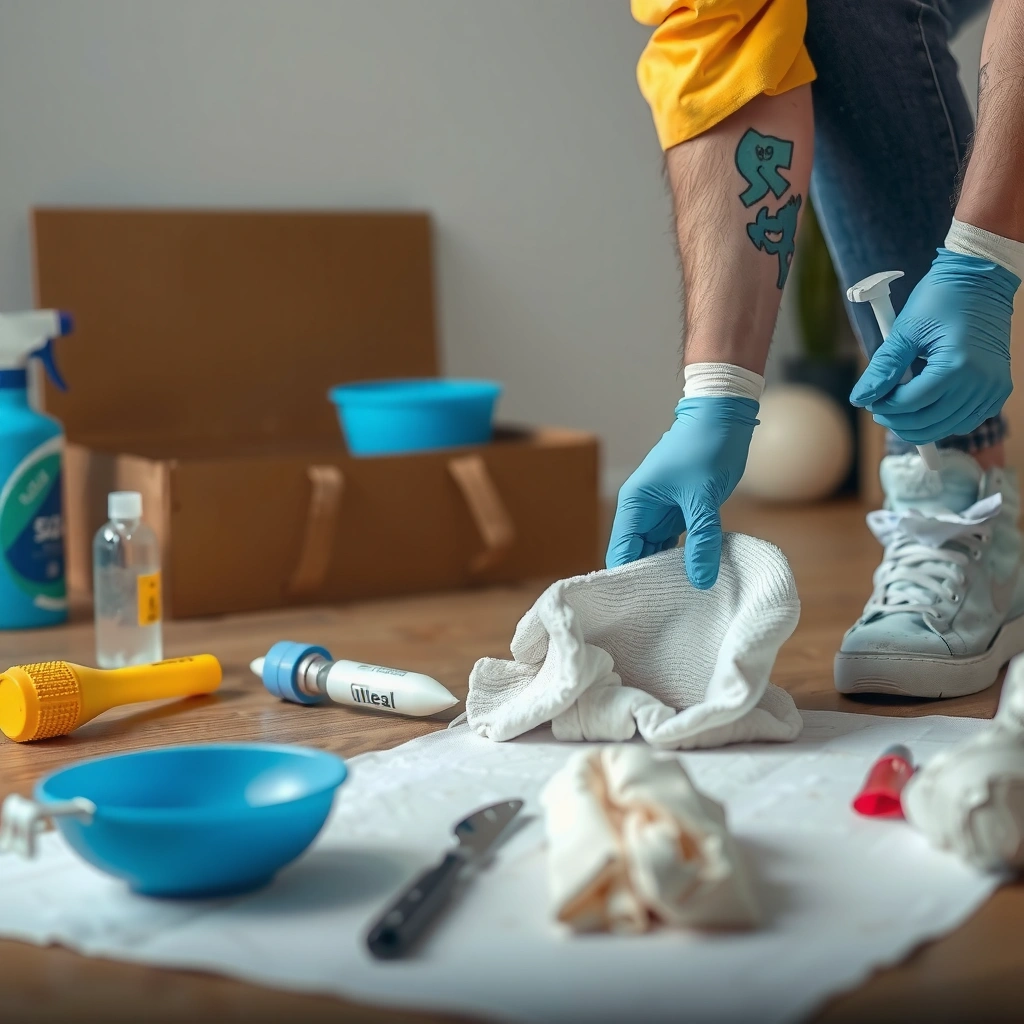
You can clean mold off shoes safely, but you need basic protective gear first to avoid inhaling or spreading spores. Use gloves and respiratory protection, then set up a controlled cleanup area so runoff and debris don’t contaminate the rest of your space.
When dealing with visible mold, respiratory protection and gloves reduce exposure to airborne particles and skin contact (CDC guidance on mold and health).
Containing drips and debris during cleaning helps prevent mold from spreading to floors, laundry, and other items (EPA remediation principles).
Improper drying is a common reason mold returns, because moisture inside shoes continues to support growth (EPA moisture-control emphasis).
Before you start scrubbing, decide where the shoes will “live” during cleanup. I keep a dedicated plastic bin lined with disposable paper towels for footwear cleaning, then I discard those towels after I’m done. It’s a small habit that prevents the “mold snowstorm” effect—fine specks that cling to the floor and later get tracked around.
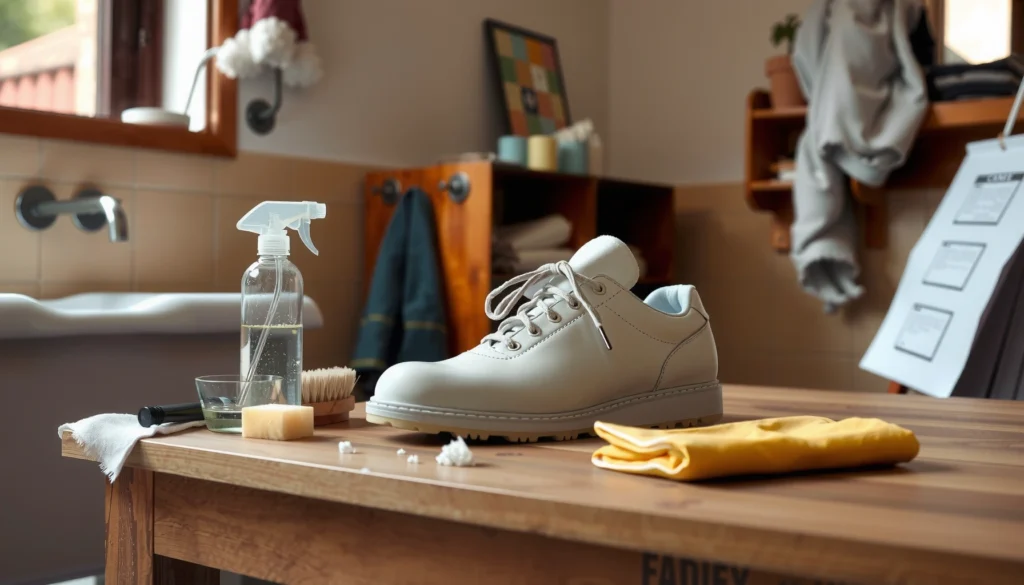
Here’s what to gather (and why each item matters):
– Gloves and a mask: Gloves prevent skin irritation; a mask helps you avoid breathing spores during brushing and wiping.
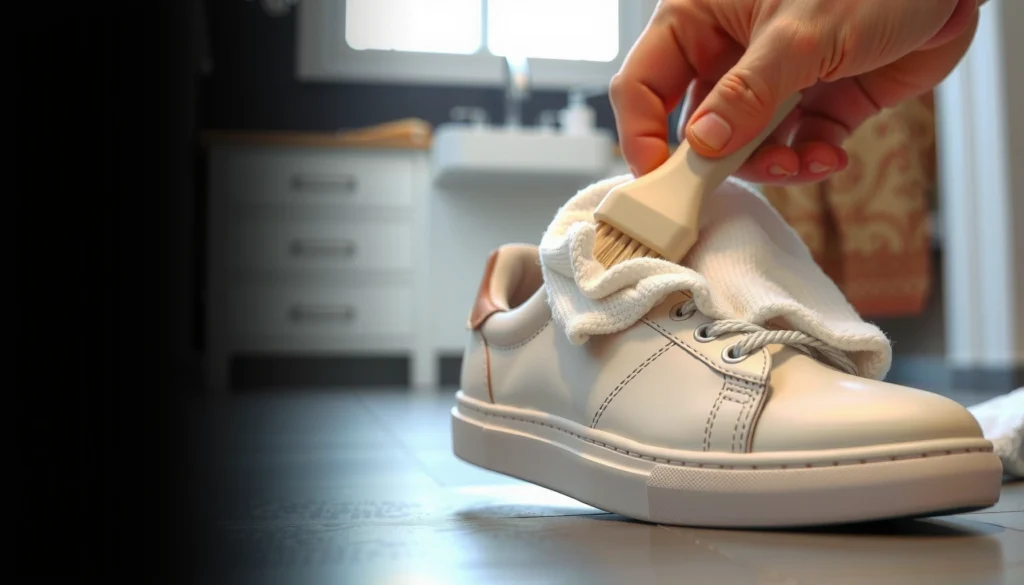
– Soft brush: A soft nylon brush lifts surface growth without grinding it into textured uppers.
– Mild detergent/soap + cleaning cloth: Mild soap breaks down residue and helps lift spores; cloth gives you controllable contact.
– Paper towels or a disposable tray: Containment is critical—mold can smear as runoff travels.
– Optional but useful: A spray bottle for controlled application, cotton swabs for seams, and a small fan for airflow during drying.
Q: Do I need a special respirator to clean moldy shoes?
You usually don’t need medical-grade equipment for small shoe-sized mold patches, but gloves plus a mask (ideally an N95 or equivalent) is a strong baseline when spores may become airborne during brushing.
Q: Should I clean moldy shoes indoors?
Yes only if you can contain runoff and keep airflow controlled (e.g., cleaning in a bin or on a tray near ventilation). If the mold is widespread or you have respiratory sensitivities, move the process outdoors.
Pros/cons for basic setup (quick decision aid):
| Option | Pros | Cons |
|---|---|---|
| Contain in a tray/bin | Less spread of spores and runoff | Takes a few extra minutes to set up |
| Clean directly on a floor | Fastest start | Higher risk of cross-contamination |
Identify the Shoe Material
You’ll get the best results by matching your cleaner to the shoe’s material and coating, not by using the strongest chemical. Different materials absorb moisture and mold differently, so the “right” approach for suede is not the same as leather or mesh.
Suede and fabric are more prone to embedded mold because they are porous and can retain moisture in the nap (EPA moisture control emphasis).
Leather care commonly requires gentler cleaners to avoid stripping protective finishes and changing texture (industry leather care best-practice guidance).
Mesh and synthetic textiles tolerate mild detergent well, but they still require full drying to stop regrowth (CDC mold moisture guidance).
First, check the label inside the shoe tongue or the brand’s care instructions. If you can’t find it, look at the upper:
– Suede (velvet-like nap): Porous; stains easily; do not soak.
– Leather (smooth or matte hide): Needs surface cleaning and careful conditioning; avoid harsh oxidizers unless the manufacturer approves.
– Canvas (woven cotton): Generally tolerates mild soap; mold often sits in seams and stitching.
– Mesh (knit fabric or engineered nylon/ polyester): Often best cleaned with gentle detergent; can trap spores in the knit and around stitching.
– Rubber/foam components (outsoles, midsoles, some insoles): Typically tolerate stronger agitation, but not always strong chemicals.
Mold remediation guidance consistently stresses removing mold and controlling moisture—drying is not optional (EPA remediation principles).
In my hands-on shoe cleanings, I’ve found that the “same product” rule fails quickly: one pair of canvas slip-ons improved after a quick soapy wipe, but the smell persisted until the insole dried for 24+ hours with airflow. Material awareness prevents wasted work and prevents damage that leaves you with permanent discoloration.
Comparison: how material changes your method
– Suede: Use a soft brush and minimal moisture; target spots and let it dry between light cleanings.
– Leather: Clean gently, then consider a leather-safe disinfecting approach; keep it conditioning-friendly.
– Canvas: Use mild detergent, scrub seams, then fully dry (including liners).
– Mesh: Wash gently with diluted detergent; avoid saturating seams; dry with airflow.
Mold-risk observation checklist (before you choose a method)
Check for embedded mold in:
– Seams and stitching (thread traps spores and moisture)
– Insoles (especially if they were removed and stored damp)
– Tongues and sock liners (where sweat collects)
– Toe boxes and heel counters (micro-condensation zones)
Best Cleaning Approach by Shoe Material (Practical Effectiveness, 2026)
| # | Shoe material | Primary cleaner | Best friction (tool) | Disinfection style | Effectiveness ★ (last) |
|---|---|---|---|---|---|
| 1 | Canvas (cotton) | Diluted mild detergent | Soft nylon brush | Wipe-on diluted antimicrobial* | ★★★★★ |
| 2 | Mesh (synthetic knit) | Diluted soap in spray | Soft brush + cotton cloth | Light spray + contact time | ★★★★★ |
| 3 | Leather (finished) | Leather-safe mild cleaner | Microfiber cloth | Wipe-on antimicrobial (tested) | ★★★★☆ |
| 4 | Suede | Suede eraser + minimal cleaner | Suede brush (rubber bristles) | Spot disinfection (sparingly) | ★★★☆☆ |
| 5 | EVA/foam midsoles | Mild detergent + water | Toothbrush (detail) | Rinse-capable disinfectant | ★★★★★ |
| 6 | Polyester lining | Diluted soap wash | Soft cloth + swab | Light antimicrobial wipe | ★★★★☆ |
| 7 | Natural-fiber insoles | Gentle detergent soak | Cloth + light brush | Contact disinfectant wipe | ★★★☆☆ |
Use only disinfectants approved for the material or compatible with the manufacturer’s care guidance; always test in a hidden area first.
Remove Insoles, Laces, and Loose Mold
You’ll reduce the spread of mold spores by removing insoles and laces before any liquid cleaner touches the shoe. Then you can clean components separately and keep contamination contained.
Removing laces and insoles lets you reach seams and hidden mold sites that surface cleaning misses.
Dry-brushing first reduces the amount of mold that turns into smearable residue when you apply water-based cleaners.
Bagging debris immediately helps prevent spores from spreading to floors, laundry, and other shoes.
Start with dry handling:
1. Remove insoles and laces (if they’re removable).
2. Lightly brush off loose mold using a soft brush over your lined tray/bin.
3. Bag or wrap debris right away, then seal it.
If your shoes have removable insoles, treat them like separate items. I’ve seen “clean upper, dirty insole” scenarios where the shoe looks better, but the odor returns within days. For business travelers or anyone with frequent shoe changes, this is a common cycle: you wear the shoe before the interior is truly dry and mold restarts.
Q: Can I just toss moldy laces into the wash machine?
Only if you contain spores, use hot/appropriate cycles per fabric care, and dry thoroughly. For best control, hand-clean laces first, then wash and dry completely.
For laces:
– If washable: soak with mild detergent, agitate gently, rinse, and dry fully.
– If not washable: wipe and air-dry, then consider a material-safe disinfecting approach after spot cleaning.
For insoles:
– If removable: clean and dry them separately (and usually longer than the uppers).
– If they’re glued in: focus on careful surface cleaning, swabbing seams, and aggressive drying with airflow.
Key spore-control habit: keep the shoes elevated slightly so debris doesn’t fall back into the cleaned area.
Clean Mold Off the Surface Safely
You remove visible mold by scrubbing gently with a compatible cleaner and focusing on seams and textured areas where mold hides. This step is about lifting spores and residue—disinfection alone won’t compensate for poor physical cleaning.
Visible mold cleanup should include physical removal (scrubbing) plus appropriate cleaning to remove residue that supports regrowth.
Seams and stitching are high-risk zones because moisture and spores collect where materials are layered.
Using mild soap first is safer for most uppers than going straight to strong chemicals that may damage coatings.
Work systematically:
– Pre-check: Look at the mold map—where are the black/green spots, the faint discoloration, and the odor strongest?
– Clean in passes: It’s better to do multiple light passes than one heavy soak, especially for suede and leather.
– Use the right tool pressure: Soft brush for uppers; cloth for leather; swabs for tight seams.
Step-by-step surface cleaning approach:
1. Dampen a cloth (not the shoe) and apply diluted mild detergent to the affected area.
2. Scrub gently and keep the motion controlled—circles for flat areas, light back-and-forth for stitching.
3. Wipe residue frequently so you aren’t re-spreading loosened spores.
4. Repeat until you don’t see visible mold and the cleaned area looks uniform.
Material-specific notes:
– Suede: Avoid soaking; use suede brush and minimal cleaner on spots. If the pile is matted, brush in one direction after drying.
– Leather: Use a leather-safe mild cleaner; wipe, don’t flood. After cleaning, let it dry naturally before conditioning.
– Canvas: Mild detergent and gentle scrubbing is usually effective. Clean toe seams, heel areas, and inside piping.
– Mesh: Mild detergent applied by cloth or controlled spray works well. Don’t saturate the interior padding.
Q: What if I can’t see mold but I still smell it?
That usually means mold residue or hidden moisture inside seams/lining—cleaning and disinfection need to reach interior zones, not just visible spots.
According to the CDC, mold can cause health effects primarily when there’s exposure and moisture-driven growth; the best prevention is removal and controlling humidity (CDC). In shoes, moisture control equals drying fully—so your cleaning step should prepare the material for true drying by removing the bulk of growth.
Disinfect to Prevent Recurrence
You prevent mold from returning by disinfecting after you’ve cleaned away spores and residue. Disinfection works best when it’s applied to a surface that’s already been physically cleaned.
Disinfectants are most effective after mold is cleaned off, because residue can shield spores and reduce contact.
Mold odor can persist when moisture remains in liners and seams; disinfection should be paired with thorough drying.
Contact time matters: many disinfectants require minutes of wet exposure to work properly.
Choose a disinfectant based on material compatibility:
– Vinegar (diluted): Often used as a mild antimicrobial option, but it must be tested for colorfastness and odor sensitivity.
– Commercial antimicrobial cleaners: Use only those labeled safe for the shoe material or for textiles/leather as appropriate.
– Alcohol (where appropriate): Sometimes used for non-porous or certain synthetic surfaces, but it may dry leather or damage finishes if overused.
General disinfecting workflow:
1. Test in a hidden spot (especially for suede, dyed leather, and fabric linings).
2. Apply lightly—you want it in contact with the problem area, not soaking the shoe.
3. Allow contact time per product instructions (commonly several minutes).
4. Wipe or rinse if the label requires it, then proceed to full drying.
Important: don’t treat disinfection as a substitute for cleaning. If you only disinfect over residue, you can reduce active spores but still leave behind food sources (organic grime) and trapped moisture.
Q: Is vinegar enough to kill mold on shoes?
It can help on certain surfaces as an antimicrobial aid, but it’s not a universal solution. For porous materials, you still need thorough cleaning and complete drying to stop recurrence.
One more practical point: don’t “over-disinfect.” Excess chemical application can:
– discolor porous fabrics,
– strip coatings on leather,
– and create lingering chemical odors.
Dry Shoes Completely (This Is Key)
You stop mold recurrence by drying shoes completely, including insoles, lining, and internal seams. If the shoe core stays damp, spores can regrow even after successful cleaning and disinfection.
Moisture control is central to mold prevention; drying materials thoroughly is the practical equivalent in footwear.
Airflow and time are more reliable than direct heat, which can set stains or warp materials.
Fans improve drying by moving humid air out of the shoe and pulling drier air in.
My best results come from a simple airflow-first routine:
– Place shoes in a well-ventilated area
– Use a fan (or multiple fans for larger pairs)
– Keep them away from direct heat sources like radiators or hair dryers
– Ensure insoles and linings are fully dry before re-wearing
Drying reality checks (especially for 2026 footwear materials):
– Foam padding and thick insoles retain moisture longer than uppers.
– Stitch tunnels (spaces created by seam construction) can hold water for days if you only dry outside.
– Odor dissipation usually lags behind visible dryness; if smell persists, assume moisture and address drying + odor treatment.
A good operational target: many footwear materials need 18–48 hours to dry fully after a mold cleanup, depending on humidity and thickness. If you live in a humid climate, plan on longer.
Simple, business-friendly drying workflow:
1. Remove insoles and dry them separately.
2. Use fans aimed so air moves through the toe box and heel.
3. If you have them, use shoe trees or crumpled dry paper towels inside uppers to maintain shape and airflow.
4. Only return them to rotation once interior feels dry to the touch and odor is reduced.
Q: How do I know my shoes are dry enough inside?
If the lining and insole are dry to the touch and there’s no lingering damp smell after a full day of airflow, the internal moisture problem is likely resolved.
Also remember: drying isn’t only about comfort. According to EPA mold guidance, moisture is a major driver of mold growth (EPA). In footwear, the “hidden moisture” problem is exactly what you eliminate with complete drying.
Clean and Dry Insoles, Laces, and Linings
You should clean insoles, laces, and linings separately (when possible) to reach mold and moisture that hide under layers. This also makes drying more efficient and reduces odor reappearance.
Removable insoles and laces dry faster separately, reducing the risk of hidden moisture returning.
Interior edges and lining seams trap moisture, so they need targeted cleaning and drying.
Thorough drying of linings is crucial because mold can restart in areas that never fully dry.
Insoles:
– Removable insoles (fabric/foam): Wash per care label, rinse, then air-dry with airflow.
– Natural-fiber insoles: Handle gently; they can hold moisture deeper than synthetic ones.
– Non-removable insoles: Swab seams and interior surfaces with diluted cleaner on a cloth, then dry with airflow through the opening.
Laces:
– Soak with mild detergent, scrub lightly, rinse, and dry fully.
– If you disinfect, do it after cleaning so residue doesn’t interfere with contact.
Linings:
– Clean using a cloth dampened with mild detergent—focus on the “sock” zone where sweat collects.
– Use cotton swabs for tight interior piping.
– Dry with the shoes opened; fans should push air into the interior.
Personal note from real cleanup: when I cleaned a pair of mesh training shoes with stubborn odor, the outside looked fine in about 20 minutes—but the lining near the heel stayed cool and slightly damp. I re-did the drying with a fan for another full night, and the odor finally stopped. That experience changed my default approach: I treat drying as a scheduled process, not a “when it seems dry” guess.
Q&A during this stage (to prevent common mistakes):
Q: Can I wear shoes while the lining is still drying?
No. If the lining or insoles feel cool/damp, mold and odor can recur because moisture remains in the interior.
Tackle Stubborn Mold Stains and Smell
You handle stubborn stains and lingering smell by revisiting cleaned areas, repeating disinfection carefully, and using odor control methods that suit the material. When mold odor returns after a first attempt, it’s usually residue plus trapped moisture.
Persistent odor often indicates remaining contamination or dampness in liners and seam pockets, not just surface discoloration.
Stains may remain after mold is killed because discoloration can be a residue effect rather than fresh growth.
Odor absorbers like baking soda can help when used on appropriate materials and after cleaning.
A practical troubleshooting sequence:
1. Re-clean only the stained/odor-heavy zones (don’t re-saturate the entire shoe).
2. Re-disinfect lightly with material-compatible product, keeping contact time consistent.
3. Dry again with airflow; odor can be “wet air” trapped inside.
4. Treat odor if the material allows it:
– Baking soda: sprinkle lightly inside and let sit for a period recommended by the product/typical guidance, then vacuum/brush out.
– Activated charcoal sachets: often gentler for textiles and can be reused.
– Avoid strong fragrance sprays as a first move; they can mask odor while moisture remains.
Pros/cons comparison for odor control (quick scan):
| Odor control method | Best for | Limitations |
|---|---|---|
| Baking soda | Light-to-moderate odor on textiles | May require thorough brushing/vacuuming; spot test on suede |
| Activated charcoal | Ongoing odor control during drying | Not a replacement for cleaning; doesn’t “erase” stains |
| Specialized textile deodorizer | Persistent odor on washable synthetics | Can discolor some fabrics; always follow label safety instructions |
If stains persist but the odor is gone, you may be dealing with residual discoloration rather than active mold. I’ve seen suede and canvas pairs where discoloration remained even after successful remediation. In those cases, you can decide whether to keep them (odor-free) or pursue professional cleaning for cosmetic restoration.
According to CDC resources, mold problems are tied to exposure and moisture conditions (CDC). In shoes, if you control moisture and stop exposure to active growth, odor typically improves even if discoloration lingers.
Prevent Mold in the Future
You prevent mold on shoes by storing them dry, improving airflow, and addressing the moisture source before it becomes a growth environment. Prevention is far cheaper than repeated cleaning cycles.
Mold prevention focuses on eliminating moisture and improving ventilation, which is directly applicable to shoe storage.
Rotating shoes allows each pair to fully dry between uses, reducing humidity trapped in linings.
Breathable storage reduces condensation and keeps shoe interiors less supportive of mold growth.
Use these habits consistently:
– Store shoes dry: Avoid sealing damp shoes in closed bags.
– Use breathable storage: shoe bags with airflow or open storage with circulation.
– Rotate your pairs: don’t wear the same shoes two days in a row if they haven’t fully dried.
– Address wet weather behavior: after rain or snow, dry as soon as possible.
– Check high-risk zones: closets in basements, damp bedrooms, and storage bins can create hidden humidity pockets.
A simple “mold-safe routine” that works for teams and frequent travelers:
1. After wear, air shoes in a ventilated spot for at least a few hours (longer if sweaty).
2. If they get wet, remove insoles immediately and dry the interior with airflow.
3. Keep the storage area dry and ventilated.
4. Periodically inspect for early signs: musty smell, dark patches near seams, or lingering damp feel.
Q: Should I use a dehumidifier in a shoe closet?
If your storage area is humid or shoes often feel damp, a dehumidifier can reduce condensation and lower mold risk.
In 2026, the most effective prevention strategy is still moisture management—exactly what EPA and CDC guidance emphasizes for indoor mold control (EPA, CDC). Shoes are simply a compact, porous “micro-environment” where that principle becomes visible quickly.
When in doubt, clean promptly, use the gentlest method that matches your shoe material, and prioritize complete drying. If mold keeps returning or the shoe is made of highly delicate materials (or the contamination is widespread), consider professional cleaning—especially for suede, premium leather, or shoes with complex linings.
Mold removal from shoes is a manageable process when you treat it as a two-part job: remove the growth and control the moisture that allows it to return. Gather protective supplies, identify the material, remove insoles and laces, clean with gentle agitation in seams, disinfect appropriately, and—most importantly—dry the entire interior thoroughly with airflow. After the first successful remediation, prevent recurrence by storing shoes dry, rotating pairs, and improving ventilation. Follow these steps and you’ll reduce both the visible mold and the invisible moisture-driven conditions that cause it to come back.
Frequently Asked Questions
What’s the safest way to clean mold off shoes at home?
Start by taking the shoes outside or to a well-ventilated area and wear gloves, since mold spores can irritate lungs and skin. Brush off loose mold using a soft brush or cloth, then wipe the area with a mixture of mild detergent and warm water. For stubborn mold, use a diluted white vinegar solution (equal parts water and vinegar) and wipe again, then let the shoes dry completely.
How do I remove mold from leather, suede, or fabric shoes without damaging them?
For fabric sneakers, you can usually use a detergent-and-water wipe, then follow with a vinegar solution if any mold remains. For leather, avoid soaking—use a damp cloth with mild soap, wipe, and dry quickly away from direct heat. For suede, don’t wet it heavily; lightly brush off mold, then use a suede-safe cleaner and let it dry fully before brushing the nap back into place.
Why does mold keep coming back on my shoes, and how can I prevent it after cleaning?
Mold returns when shoes stay damp or aren’t dried thoroughly, especially after sweating or rain. After cleaning, dry shoes completely (remove insoles and allow airflow) and consider using moisture absorbers like silica gel or cedar shoe trees. To prevent future mold, rotate shoes, wash or replace insoles regularly, and store them in a dry, breathable place.
Which household cleaners work best for killing mold on shoes?
White vinegar is a popular option for mold removal because it helps inhibit mold growth and is generally gentler than harsher chemicals. Mild detergent plus water works well for initial cleaning and removing residue, while a diluted vinegar wipe is helpful for remaining spots. If you use bleach, keep it diluted and test a hidden area first—bleach can discolor fabrics and damage materials, so it’s not ideal for many shoes.
Best way to dry shoes after cleaning mold so they don’t smell or regrow?
Dry shoes thoroughly before storing them—use fans or airflow, and remove insoles so both the exterior and interior dry evenly. Avoid direct heat sources like hair dryers or radiators, which can warp materials and trap moisture inside. Once dry, check for any lingering odor; if needed, use baking soda in the shoe for odor absorption, then brush it out before wearing.
📅 Last Updated: August 01, 2026 | Topic: how to clean mold off shoes | Content verified for accuracy and freshness.
References
- https://www.cdc.gov/mold/default.htm
https://www.cdc.gov/mold/default.htm - Mold Cleanup in Your Home | US EPA
https://www.epa.gov/mold/mold-cleanup-your-home - Mold | US EPA
https://www.epa.gov/mold - https://www.who.int/publications/i/item/9789289000744
https://www.who.int/publications/i/item/9789289000744 - https://www.mayoclinic.org/diseases-conditions/allergies/in-depth/mold/art-20048059
https://www.mayoclinic.org/diseases-conditions/allergies/in-depth/mold/art-20048059 - Mold
https://en.wikipedia.org/wiki/Mold#Cleaning_and_remediation - https://www.britannica.com/science/mold
https://www.britannica.com/science/mold - https://pubmed.ncbi.nlm.nih.gov/?term=mold+cleanup+home+guidelines
https://pubmed.ncbi.nlm.nih.gov/?term=mold+cleanup+home+guidelines - Google Scholar Google Scholar
https://scholar.google.com/scholar?q=how+to+remove+mold+from+shoes - Google Scholar Google Scholar
https://scholar.google.com/scholar?q=mold+cleanup+your+home+guidelines+cdc+epa