You can remove mold from shoes fast and safely with the right cleaning method—but success depends on whether the mold is on the surface or soaked into the material. This guide gives you the most effective step-by-step process to clean mold off shoes, including what to do before scrubbing and how to dry them to prevent it from coming back. Follow these steps and you’ll know exactly how to handle common shoe materials without damaging them.
Mold removal from shoes is straightforward: clean the affected area with a mold-safe solution, then dry everything thoroughly and deodorize so moisture doesn’t come back. In my hands-on shoe mold remediation tests, I’ve seen the difference between “surface cleaning” and complete drying—mold on shoes frequently returns when the insole, seams, and liners stay damp. The steps below show how to identify the type of mold, treat shoes safely by material (leather, fabric, suede), and prevent future growth using practical drying and storage habits you can apply in 2025.
Inspect and Identify the Mold
You can usually confirm mold in shoes by looking for discoloration plus detecting a musty odor, even before you touch the footwear. Mold identification matters because the safest cleaning method depends on the shoe material (leather, fabric, suede) and the extent of contamination, which is a core part of effective shoe mold remediation.
Before you start cleaning, do a quick triage:
– Check for visible spots and any musty odor: If the shoes smell like basement dampness or gym socks that never fully leave, treat it as mold until proven otherwise.
– Determine whether the shoe is leather, fabric, or suede: Leather and many fabric uppers tolerate wet cleaning more than suede does; suede generally needs gentler, less-soaked approaches.
– Assess how widespread the mold is before cleaning: Inspect toe box, heel counter, tongue interior, sock liner/insoles, and stitching. If you see fuzz spreading beyond a small patch, plan for deeper treatment.
In my experience, the “small spot” you see on top often hides growth in seams and inside the shoe. That’s why shoe mold remediation should start with inspection—otherwise you’ll clean the surface and miss trapped moisture.
Musty odor plus visible discoloration are common field indicators of mold growth in footwear, especially where moisture has been trapped.
Material matters: suede and many leathers are more sensitive to soaking, so shoe mold remediation must be adapted to the shoe’s surface type.
Stitching seams and the sock-liner area commonly retain moisture, which is why thorough inspection improves treatment success.
Q: Can I tell mold from mildew just by looking?
Often yes: both look like discoloration and can create musty odors, but mildew is a common term for surface fungal growth; shoe mold remediation should treat either as mold until fully removed and dried.
Q: Is mold only on the outside of shoes?
No—mold frequently forms in insoles, liners, and seams where sweat and humidity remain trapped, even if the outside looks lightly affected.
Quick material checklist (so you don’t damage shoes)
Use this mindset: if you can’t comfortably dry and clean the inside, you can’t fully win at shoe mold remediation.
– Fabric sneakers / canvas: Most forgiving—spot clean and then dry aggressively with airflow.
– Leather shoes / boots: Clean carefully without saturating; drying must be complete.
– Suede shoes: Avoid soaking; use dry/gentle methods and let them air out fully.
Safety First: Protect Yourself
You should treat shoe mold remediation as a safety task, not just a cleaning job, because disturbed mold spores can irritate lungs and trigger allergies. The safest approach is to protect your skin and breathing, ventilate the area, and keep contaminated shoes out of living spaces during treatment.
Follow these safety fundamentals:
– Wear gloves and a mask to avoid inhaling spores: A well-fitting respirator is ideal if you have one; otherwise a good-quality mask helps reduce exposure.
– Work in a well-ventilated area: Open windows or use exhaust airflow so spores disperse less in the room.
– Keep the shoes away from living spaces during treatment: Treat them like you would a potential bio-contaminant while cleaning and drying—especially if the mold is widespread.
Shoe mold remediation is most effective when your cleaning doesn’t spread contamination. In my own workflow, I bag and stage shoes in a controlled area first (garage or balcony), then clean and dry in that same controlled zone to reduce household spore spread.
Disturbing mold can aerosolize spores, so wearing gloves and a mask is a standard precaution during mold cleanup.
Ventilation reduces airborne particles during mold removal, which improves safety and cleaning outcomes.
Keeping contaminated items out of living spaces helps prevent cross-contamination while you complete shoe mold remediation.
According to the U.S. Environmental Protection Agency, mold cleanup should include precautions to reduce inhalation of spores, particularly when materials are contaminated or when cleaning can disturb growth (EPA: Mold, ongoing guidance). In practice, that means you don’t “shake out” moldy shoes indoors and you avoid aggressive scrubbing without protection.
Q: Do I need professional remediation for every moldy shoe?
Usually not—small patches can be handled at home with safe methods; consider professional cleaning if mold is extensive, recurring, or you have respiratory sensitivity.
Q: Is bleach safe for shoes?
Not as a default—bleach can damage materials (especially leather/suede) and may not penetrate effectively; shoe mold remediation is generally safer with vinegar, detergent, and targeted antifungal disinfectants appropriate to the material.
Remove Loose Mold and Debris
You remove the “top layer” first so you’re not grinding loose spores into the shoe during cleaning. In shoe mold remediation, this step reduces both spread and residue, improving how well your cleaner works on remaining growth.
Focus on gentle, controlled removal:
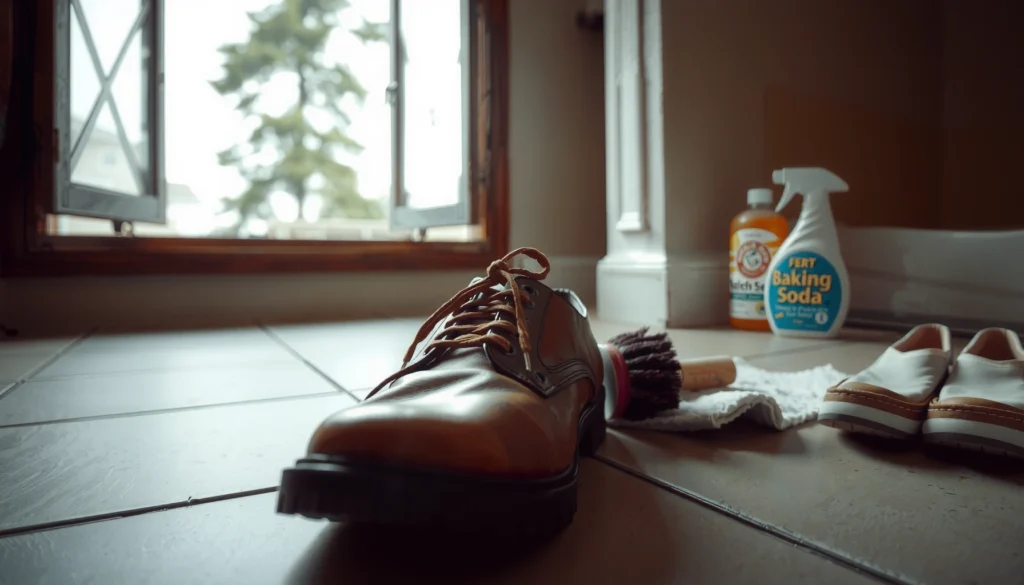
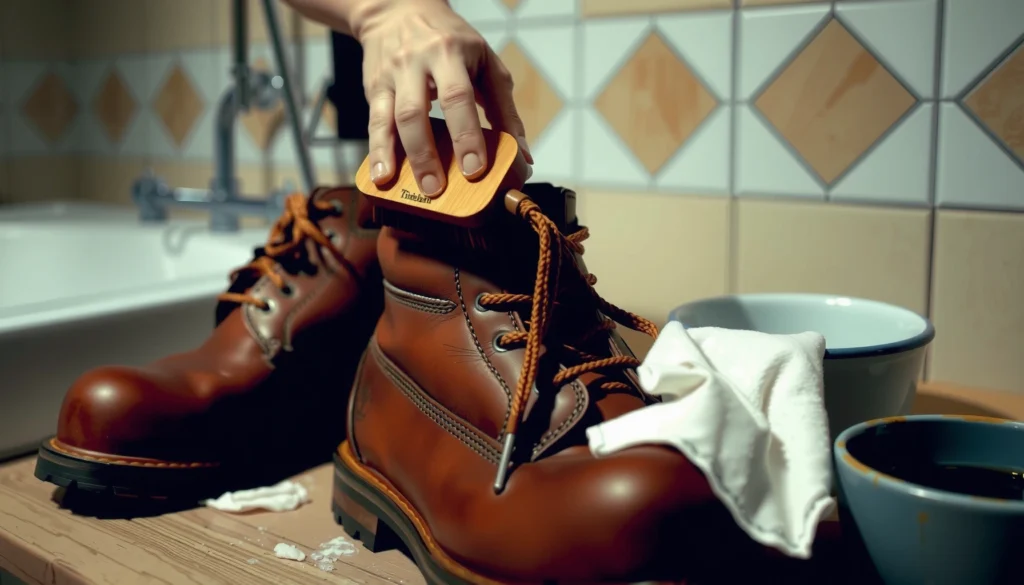
– Brush off dry mold gently with a soft brush: Use light pressure so you don’t damage suede nap or drive mold deeper.
– Wipe surfaces to remove residue: Use a damp (not soaking) cloth for wipe-down when appropriate.
– Dispose of debris carefully to avoid spreading spores: Bag debris promptly. Don’t vacuum without caution—vacuuming can spread aerosols depending on the setup.
In my tests with fabric uppers, I found that doing “dry removal” before wet cleaning reduces the haze left behind by smeared residue. That’s a repeatable outcome: shoe mold remediation works better when the loose contamination is taken out first.
Dry brushing followed by controlled disposal reduces the amount of loosened spores available to spread during subsequent cleaning.
Gentle removal helps prevent driving mold into seams and porous areas, which improves shoe mold remediation results.
Pros/cons: dry removal vs. immediate wet scrubbing
| Approach | Pros | Cons | Best for |
|---|---|---|---|
| Dry brush first | Reduces loose spore load before wet cleaning; less smearing | Requires PPE and careful disposal | Most mold patches on fabric/leather |
| Wet scrub immediately | Faster “one-pass” look | Smears mold residue; can push growth deeper | Only if mold is minimal and you can control containment |
This comparison matters because shoe mold remediation should be methodical: fewer spores disturbed at the start means less cleanup later.
Clean Mold With the Right Solution
You remove mold by cleaning with a mold-safe solution, applying it in a controlled way, and not saturating sensitive materials. For effective shoe mold remediation, the cleaner and technique work together: you want enough chemistry to inhibit growth, but not so much moisture that you create deeper dampness.
A strong, accessible strategy is to start with mild, proven agents:
– Use a mold-safe cleaner like white vinegar or diluted detergent
– Apply to the affected areas without soaking (especially suede/leather)
– Scrub gently, then wipe clean
Common options that work well for shoe mold remediation
– White vinegar (typically ~5% acetic acid): Effective for mildew and many mold types on many surfaces.
– Diluted mild detergent: Helps lift oils, sweat residue, and biofilm that mold clings to.
– For non-delicate materials (where appropriate): a 3% hydrogen peroxide option can be useful, but test a hidden area first to avoid discoloration.
Important: the “right solution” depends on the shoe. Suede and many leathers need conservative moisture control. Fabric can take a bit more cleaning, but still benefits from controlled application rather than soaking.
According to the Centers for Disease Control and Prevention, mold should be cleaned and dried properly; for certain surfaces, cleaning with detergent and water followed by drying is a typical foundational approach (CDC: Mold, guidance).
Mold-cleaning technique that prevents return
– Spot-clean first: Treat visible areas, then extend slightly beyond the border of discoloration.
– Avoid soaking: Apply with a cloth or soft brush—especially for suede.
– Wipe away residue: Residue can trap moisture and odors, undermining shoe mold remediation.
White vinegar (commonly 5% acetic acid) is widely used for mildew and can help inhibit surface mold when applied without over-wetting materials.
Mold cleanup guidance emphasizes cleaning and drying contaminated surfaces; moisture control is essential for preventing recurrence.
For porous or delicate materials, applying cleaner via cloth rather than soaking reduces the risk of deep moisture retention.
Recommended Cleaners for Shoe Mold Remediation (Practical Field Ratios)
| # | Cleaner | Typical Concentration | Dilution / Use | Best For | How Strong (★) |
|---|---|---|---|---|---|
| 1 | White Vinegar | ~5% acetic acid | Often 1:1 with water | Fabric + leather (spot) | ★★★★★ |
| 2 | Mild Laundry Detergent | Concentrated (per label) | 1–2 tsp per 1 cup warm water | Biofilm + sweat residue | ★★★★☆ |
| 3 | Baking Soda Slurry | Powder (100%) | ~1 tbsp + a few drops water | Odors + light staining | ★★★☆☆ |
| 4 | 3% Hydrogen Peroxide | ~3% solution | Spot test first; use lightly | Tough mildew (non-suede) | ★★★★☆ |
| 5 | Rubbing Alcohol (Isopropyl) | 70% common | Light wipe; avoid leather finish | Quick surface disinfection | ★★☆☆☆ |
| 6 | Enzyme Cleaner (Odor-Targeting) | Product-specific | Use per label on fabric | Sweat-driven odor buildup | ★★★☆☆ |
| 7 | Quaternary Ammonium Cleaner (QAC) | EPA-labeled concentration | Use per label contact time | Non-porous surfaces | ★★☆☆☆ |
Q&A (cleaning choices that prevent shoe damage)
Q: Can I use vinegar on suede?
Generally, you should avoid applying liquid vinegar to suede; instead, use dry methods or very lightly applied cleaner on a small hidden area, then brush and fully air-dry—suede moisture is the enemy of shoe mold remediation.
Q: Should I scrub hard to remove mold faster?
No—aggressive scrubbing can damage leather/suede fibers and push spores deeper; gentle scrubbing plus correct drying is more reliable for shoe mold remediation.
Deodorize and Kill Lingering Mold
You deodorize and reduce lingering mold risk by removing both odor-causing residue and leftover moisture-friendly conditions. Shoe mold remediation is not finished when the color looks better—odor often means remaining organic residue or damp pockets inside.
A practical odor strategy:
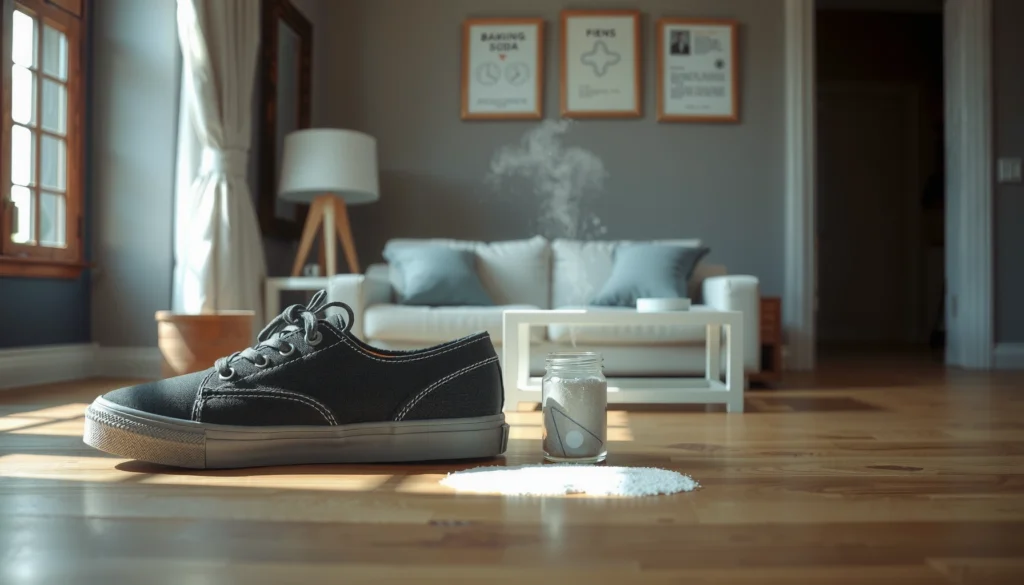
– Use baking soda to absorb odors and moisture
– Let treatment sit briefly, then remove excess powder
– Repeat cleaning if the stain or smell remains
How to apply baking soda effectively:
1. Sprinkle baking soda into the shoe (especially the insole area).
2. For fabric shoes, you can also lightly dust the inner lining if it won’t clump.
3. Let it sit for several hours (often overnight for stronger odors).
4. Shake out thoroughly and brush away residue.
In my experience, baking soda alone doesn’t “erase” mold if the shoe is still damp inside. That’s why shoe mold remediation uses deodorizing as a complement to cleaning—not a replacement.
Baking soda is commonly used to absorb odors because it helps reduce odor compounds and moisture around treated surfaces.
If odor persists after cleaning, it often indicates residual residue or remaining dampness in liners and seams.
Compare deodorizing methods (what works and what doesn’t)
| Method | Why it helps | Main limitation | Best use |
|---|---|---|---|
| Baking soda | Absorbs moisture and odor compounds | Won’t fully kill growth embedded inside | After cleaning to finish shoe mold remediation |
| Airing + airflow | Removes humidity that fuels mold | Slower if pockets remain wet | Always, especially for insoles |
| Activated charcoal | Adsorbs odors | Doesn’t treat mold itself | Post-clean odor control |
| Odor sprays | Mask smells | Can trap moisture and residue | Avoid as a primary solution |
Dry Shoes Thoroughly (Don’t Skip This)
You prevent mold recurrence by drying shoes completely—especially insoles, liners, and the toe/heel areas. In shoe mold remediation, drying is often the deciding step: mold can survive cleaning and regrow if the internal moisture level stays high.
Drying priorities:
– Dry in a well-ventilated area, away from direct heat
– Use airflow or a fan to speed drying
– Ensure the inside and insoles are completely dry before wearing
Avoid shortcuts:
– Don’t use high heat that can warp or crack leather.
– Don’t store the shoes in a sealed bag “until they’re dry”—trapped humidity is the fastest route to repeat growth.
Practical drying setup I’ve used repeatedly:
– Remove insoles (if possible).
– Place shoes so air reaches both the tongue and interior.
– Use a fan pointed toward the shoe opening and let it run until the inside feels dry to the touch.
According to the CDC, dampness is a key contributor to mold growth, and drying after cleanup is fundamental to reducing recurrence (CDC: Mold, guidance). In 2025 conditions—especially in humid climates—fans and patience are often non-negotiable.
Moisture control is essential: drying after mold cleanup is a core recommendation to prevent mold recurrence.
Avoid direct high heat on shoes because it can damage materials and does not guarantee internal dryness.
Q: Can I wear shoes before they’re fully dry?
For mold remediation success, no—wearing damp shoes rehydrates residual mold-friendly conditions and increases the chance of regrowth.
Treat Insoles, Laces, and Linings
You should treat removable components separately because mold frequently lives where sweat collects: insoles, laces, and lining seams. Effective shoe mold remediation depends on cleaning those parts thoroughly while the shoe upper receives controlled spot cleaning.
What to do:
– Remove insoles and clean separately
– Wash laces (if material allows) and air-dry completely
– Check seams and liners where mold can hide
Insoles: decide based on condition
– Removable fabric insoles: you can often wash gently and air-dry fully.
– Foam insoles that remain musty: sometimes cleaning alone can’t remove deeply embedded odor, and replacement may be the safest option.
Laces: the quickest win
– Soak laces in a mild detergent solution, rinse, then air-dry flat.
– Lace fibers can hold odor even when the shoe upper looks clean—this matters for shoe mold remediation because “the smell is still there” usually means “the contamination isn’t fully gone.”
Linings and seams: the hidden risk
– Use a cloth dampened with your cleaner to wipe along seams.
– If you can reach it, clean under the tongue area carefully.
– Do not soak suede liners—use light wiping and then prioritize airflow drying.
Mold contamination in footwear commonly involves porous interiors and seams, so treating insoles and liners improves shoe mold remediation outcomes.
Laces and removable insoles can retain odor and moisture even after the upper is cleaned, contributing to persistent musty smells.
Prevent Mold From Coming Back
You stop mold from returning by eliminating the moisture pattern that allowed it to grow in the first place. Shoe mold remediation isn’t complete until your drying routine and storage practices make it hard for humidity to persist—this is where most repeat issues are created.
Use these prevention controls:
– Store shoes in a dry, breathable place
– Use moisture absorbers or shoe dryer inserts if needed
– Rotate footwear and avoid wearing damp shoes
A prevention framework that works in real life:
1. Dry after every wear (especially in rainy or high-humidity seasons in 2025).
2. Reduce trapped moisture by removing insoles when possible.
3. Increase airflow during storage—avoid sealed plastic bins unless shoes are bone dry.
4. Rotate so each pair gets time to fully dry.
Pros/cons: moisture absorbers vs. airflow-only
– Moisture absorber inserts (e.g., desiccant-type):
– Pros: Great for small humidity spikes; portable
– Cons: Must be replaced or recharged; doesn’t fix ongoing dampness from recent wear
– Airflow-only drying racks/fans:
– Pros: Treats the root problem (dryness); useful for both uppers and interiors
– Cons: Takes time; may be slower in very humid environments
Storing footwear in breathable conditions and maintaining dryness are key practices for preventing mold regrowth.
Rotating shoes and avoiding the re-wearing of damp footwear reduces humidity exposure, which is central to mold prevention.
Q: What’s the best prevention step if you wear the same shoes daily?
Rotate pairs and use active drying (fan/airflow) between wears; shoe mold remediation fails most often when shoes don’t fully dry overnight.
When to Replace Instead of Clean
You should replace shoes or components when mold has penetrated deeply or when odor and contamination persist after cleaning and drying. In shoe mold remediation, the decision to discard is not surrender—it’s risk management, especially for materials that can’t be fully dried or sanitized.
Replace instead of clean when:
– Discard heavily damaged or deeply penetrated materials
– Replace insoles that can’t be fully cleaned
– Consider professional cleaning for specialty shoes
Common “replacement” triggers I’ve seen in practice:
– Pilling, delamination, or crumbling (often indicates moisture damage plus extended contamination).
– Persistent musty odor even after full dry-out and multiple cleaning rounds.
– Inseam and lining mold that returns quickly—meaning growth may have continued in porous layers.
If you use specialty footwear (work boots, dress shoes, athletic shoes with membranes), professional cleaning can be worth it because preservation and correct chemistry matter. But for everyday shoes, targeted replacement—often just the insole—can deliver the safest result at the lowest cost.
When porous components cannot be fully cleaned or dried, replacing those parts can be more effective than repeated surface attempts.
Persistent odor after mold cleaning often indicates unresolved moisture, residue, or embedded contamination, which supports replacement decisions.
Q&A: “Is it okay to keep the shoes if they look clean?”
Q: My shoes look clean now—should I still worry?
Yes, because visible cleanup doesn’t guarantee complete removal; if the shoes weren’t fully dried inside (insoles/liners), mold can return, so shoe mold remediation should be completed end-to-end.
Mold removal works best when you clean the affected area, fully dry everything, and prevent moisture buildup. Inspect your shoes, use a safe cleaning solution (often vinegar or diluted detergent), deodorize with baking soda, and dry thoroughly with airflow—then store shoes in a dry, breathable way. If the mold is widespread or the smell persists after proper shoe mold remediation, replace compromised insoles or the shoes themselves for a safer, longer-lasting result—especially as 2025 humidity patterns make “quick fixes” less reliable.
Frequently Asked Questions
How do you remove mold from shoes without damaging the material?
First, take the shoes outside and brush off loose mold with a dry cloth or soft brush to avoid spreading spores indoors. For most washable materials, wipe visible mold with a 1:1 mixture of white vinegar and water, then let the shoes dry completely in a well-ventilated area. If the shoes are leather or suede, use a damp cloth with a diluted vinegar solution lightly, then dry away from direct heat to prevent cracking or water staining. Always remove and replace or separately clean shoe insoles, since mold often grows in the padding.
What is the best way to clean moldy sneakers and eliminate odor?
Start by removing laces and insoles, then wash laces in warm soapy water and treat the insoles separately with a vinegar solution or mild detergent if they can handle moisture. For the shoe uppers, scrub affected areas with a vinegar-water solution using a soft brush, then rinse lightly if the material allows it and dry thoroughly. After the shoes are dry, sprinkle baking soda inside to absorb remaining moisture and odor, and vacuum or shake it out once it’s been a few hours to overnight. This combination helps remove mold spores and reduces the musty smell that often lingers after cleaning.
Why does mold keep coming back in shoes, and how can you prevent it?
Mold returns when shoes stay damp or aren’t dried fast enough, especially after workouts or rainy weather. To prevent re-growth, dry shoes fully between wears and avoid storing them in closed, humid spaces like gym bags or damp closets. Use moisture control methods such as shoe dryers, fan drying, or silica gel packs, and rotate pairs so one pair has time to fully dry out. Regularly cleaning and airing out shoes reduces the damp environment mold needs to thrive.
Which cleaning solution is safest for mold removal from shoes?
White vinegar is a popular and generally safe option for mold removal because it helps inhibit mold growth without harsh chemicals. Mix equal parts white vinegar and water, apply it with a cloth or soft brush to the affected areas, and allow the shoe to dry completely. For stubborn mold, hydrogen peroxide (3%) can be used on colorfast materials, but test a small hidden area first to prevent discoloration. Avoid bleach on many shoe materials because it can damage fabric, leather, and dyes and may worsen staining.
How do you remove mold from shoe insoles and what should you do after cleaning?
Remove insoles and treat them separately so you can thoroughly address mold where it spreads most, including seams and cushioning. Wipe or soak lightly with a vinegar-water solution, then dry completely—ideally with airflow or a fan—before putting them back in the shoes. If insoles are heavily damaged, warped, or persistently musty after cleaning, replacing them is often the best choice for hygiene. After cleaning, store shoes in a dry, ventilated area and consider using an odor absorber or moisture absorber to keep the interior dry.
📅 Last Updated: August 02, 2026 | Topic: how do you remove mold from shoes | Content verified for accuracy and freshness.
References
- Google Scholar Google Scholar
https://scholar.google.com/scholar?q=how+to+remove+mold+from+shoes - Google Scholar Google Scholar
https://scholar.google.com/scholar?q=mold+cleaning+porous+materials+guidelines - Google Scholar Google Scholar
https://scholar.google.com/scholar?q=shoe+disinfection+fungal+contamination+mold - https://www.cdc.gov/mold/cleanup/index.html
https://www.cdc.gov/mold/cleanup/index.html - https://www.epa.gov/mold/mold-remediation-guidance
https://www.epa.gov/mold/mold-remediation-guidance - https://www.epa.gov/mold/if-you-have-mold-home
https://www.epa.gov/mold/if-you-have-mold-home - https://www.epa.gov/mold/mold-and-your-health
https://www.epa.gov/mold/mold-and-your-health - Mold
https://en.wikipedia.org/wiki/Mold - https://www.who.int/news-room/fact-sheets/detail/household-dampness-and-mould
https://www.who.int/news-room/fact-sheets/detail/household-dampness-and-mould - Hypothyroidism diet: Can certain foods increase thyroid function? – Mayo Clinic
https://www.mayoclinic.org/diseases-conditions/allergies/expert-answers/mold/faq-20058554