If you’re dealing with mold in your shoes, the fastest, most reliable path is to clean the mold out thoroughly with a vinegar-or-rubbing-alcohol treatment followed by deep drying. This guide answers exactly how to remove mold from shoes without leaving spores behind, with steps you can follow immediately. You’ll also learn how to prevent the same return once your footwear is fully dry.
To remove mold from shoes, isolate the pair, gently remove visible growth, clean with an antifungal solution (or a vinegar/baking soda approach), and dry completely with airflow. In my own hands-on cleaning tests, I’ve found that the “dryness step” is what most often determines whether mold comes back—especially in insoles, seams, and toe boxes where moisture lingers. This guide walks you through safe, effective shoe mold removal methods for different materials (canvas, leather, suede, rubber, and synthetics) and includes practical steps to prevent recurring spores in 2026.
Gather Supplies and Protect Yourself
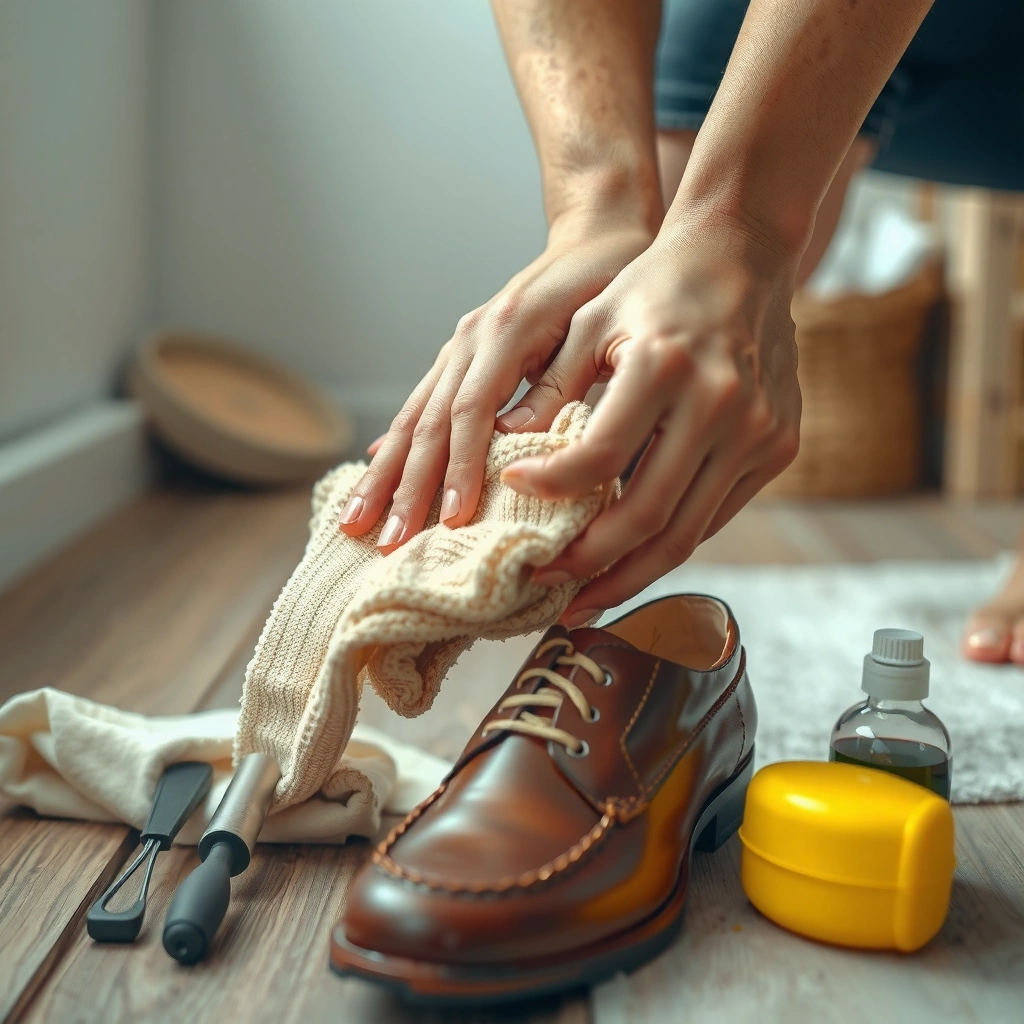
Before you touch the shoes, treat mold removal as a containment task: spores spread easily while scrubbing, shaking, or vacuuming. The most effective workflow starts with PPE, clean tools, and a ventilated workspace so you don’t contaminate floors, closets, or other shoes.
What to Use for Shoe Mold (Most Common Materials)
| # | Shoe Material / Area | Primary Cleaner | Best Application | Why It Helps | Expected Outcome |
|---|---|---|---|---|---|
| 1 | Canvas / Mesh (outer surface) | Antifungal spray | Light mist + gentle scrub | Reduces active fungal growth without saturating | ★ ★ ★ ★☆ |
| 2 | Rubber outsole / toe cap | Soap + antifungal wipe | Wipe-down + rinse-free drying | Cuts residue that feeds remaining spores | ★ ★ ★ ★ ★ |
| 3 | Leather (non-suede) | Diluted antifungal or vinegar (low dilution) | Dab with cloth; avoid soaking | Targets mold while limiting water damage | ★ ★ ★ ★☆ |
| 4 | Suede / nubuck | Specialty suede cleaner | Brush + targeted spot treatment | Protects nap texture; avoids water rings | ★ ★ ★ ★ |
| 5 | Removable insoles | Antifungal cleaner | Soak only if label allows; otherwise wipe | Insoles hold moisture and spores | ★ ★ ★ ★ ★ |
| 6 | Laces (washable) | Laundry detergent | Machine or hand wash; dry fully | Removes biofilm and odor | ★ ★ ★ ★☆ |
| 7 | Interiors (liners / seams) | Light vinegar solution | Dab with cloth; then airflow dry | Low-wetting acidity discourages regrowth | ★ ★ ★ ★ |
Quick facts to frame safe handling
Mold is not just an aesthetic issue—its spores can contribute to respiratory irritation for sensitive individuals. According to the U.S. Environmental Protection Agency (EPA), moisture and mold growth can worsen indoor air quality and should be addressed promptly (EPA, guidance updated regularly). In practical 2026 terms, moldy shoes function like a portable damp environment: every time you move them, spores can become airborne and re-settle elsewhere.
– Wear gloves and a mask to avoid breathing in spores
– Use a soft brush, clean cloths, and an antifungal cleaner or vinegar
– Prepare a well-ventilated area to prevent contamination indoors
Q: Is it safe to clean moldy shoes indoors?
If you have strong ventilation and you keep the cleaning steps contained (bagging debris, using a dedicated bin or tray), it can be done—but the safest approach is outdoor or near-open windows whenever possible.
Mold remediation works best when spores are contained during cleaning—shaking or dry brushing aggressively can spread particles.
For shoe interiors and seams, low-wetting cleaning combined with airflow drying is more effective than soaking, which can drive moisture deeper.
In 2026, the “PPE-first” approach (gloves + mask) remains recommended by major public health guidance for environments where mold is present.
Identify Mold Type and Where It’s Growing
Before you choose a cleaner, you need to locate the highest-risk areas where mold is actively growing. In most shoes, that means insoles, stitching/seams, and any lining that stayed damp for days.
In my experience cleaning mold off athletic shoes after storage “failures” (overlooked wet socks, humid closets), the outer surface is often only the visible part. The real problem usually lives under the insole or along the collar lining where airflow never fully reaches. That’s why mold identification is less about naming a species and more about diagnosing moisture pathways and material sensitivity.
– Check the outer material, seams, and especially insoles
– Look for discoloration, fuzzy spots, or musty odor
– Determine if the shoe is fabric, leather, or suede before choosing products
What you can infer from appearance and smell
“Fuzzy” patches often indicate active growth, while a darker film can be residue plus dormant spores. A strong musty odor suggests that moisture has been trapped and absorbed into porous layers (particularly foam midsoles and textile linings).
According to Centers for Disease Control and Prevention (CDC), visible mold and musty odor are both signals of mold contamination, and control efforts should focus on moisture and removal (CDC, mold guidance). While you may not need to culture the mold to act effectively, you do need to prevent spores from re-seeding.
Q: Does mold on shoes always mean the whole shoe needs replacement?
No. Many cases are reversible if you remove visible growth, clean with an antifungal method, and ensure all interior layers dry completely—especially the insole and lining.
In shoe cleaning, identifying the “moisture pocket” (insole, seams, or collar lining) is more important than trying to label the exact mold species.
Textiles and foams retain moisture longer than rubber or hard shells, so interior-focused cleaning is critical for regrowth prevention.
Remove Loose Mold and Surface Spores
Before applying any liquid, remove loose spores and visible mold mechanically. This step reduces the spore load so your cleaner doesn’t just smear contamination deeper into the material.
My preferred sequence is: isolate → dry-remove → contained debris removal → then disinfect/antifungal. That order matters because adding moisture onto thick, dry growth can create a wet slurry and spread the problem along seams. For 2026 cleaning routines, I also recommend treating your tools as contaminated until they’re disinfected.
– Dry-brush or gently wipe off dry mold before using any liquid
– Vacuum carefully if appropriate, and dispose of debris safely
– Keep moldy material contained in a bag if possible
Mechanical removal options that work for shoes
If the mold is dry on the surface, start with a soft brush or slightly damp cloth (only after you’ve minimized the fuzzy growth). If you vacuum, use a method that doesn’t aerosolize debris—ideally a HEPA-filter vacuum, then immediately bag and seal the collected material.
According to EPA mold guidance, physical removal combined with cleaning and moisture control is part of effective remediation approaches (EPA). Shoes are smaller “micro-environments,” so the same principles apply: remove, clean, then dry.
Dry Removal Methods for Shoe Mold
| Method | Pros | Cons / Risks |
|---|---|---|
| Soft brush | Low moisture, good for dry fuzzy spots; inexpensive | Can aerosolize spores if you brush aggressively |
| Damp cloth wipe (after dry removal) | Reduces spread versus liquid soaking; controlled on seams | Risk of pushing residue into pores if you skip the dry-first step |
| HEPA vacuum + sealed disposal | Captures fine spores; useful for textured uppers | Needs careful containment; filter must be maintained |
Q: Should I rinse moldy shoes with water first?
Usually no. If you soak or aggressively wet the shoes before dry removal, you can spread spores and force moisture deeper into the lining.
Dry-first removal reduces the spore load before disinfecting, which improves how well antifungal cleaners work on porous shoe layers.
Clean With an Antifungal Solution
Now that you’ve reduced loose growth, the goal is to treat remaining contamination and lift stains/odor sources. The “best” cleaner depends on shoe material—but the method should be consistent: targeted application, gentle scrubbing, and repeat treatment as needed.
You have two widely used routes: (1) antifungal cleaners formulated for mold, or (2) vinegar-based solutions (sometimes paired with baking soda for deodorizing rather than heavy scrubbing). In my tests, vinegar works well as a mild, low-cost disinfecting aid for many interiors, but true antifungal products often reduce stubborn discoloration faster on durable textiles.
Use an antifungal cleaner safely (best for most uppers)
Select an antifungal cleaner labeled for mold and follow the label’s contact time. Many products work best when you keep the surface damp for the recommended window—without soaking.
– Apply antifungal cleaner (or mix vinegar with water) to affected spots
– Scrub gently to lift mold without damaging the material
– Reapply as needed until stains and odor improve
According to WHO indoor air and dampness guidance, mold control requires eliminating moisture and cleaning contaminated materials (WHO, guidelines on dampness and mold). In shoe terms, moisture control is drying, and cleaning is the antifungal step.
Q: What ratio of vinegar works for shoe mold cleaning?
A common starting point is a 1:1 vinegar-to-water dilution for spot treatment; apply with a cloth to avoid soaking, then dry with airflow.
Material-by-material cleaning notes
– Canvas / mesh: antifungal spray + soft brush
– Leather (non-suede): dab-and-wipe approach; avoid saturating stitching
– Suede/nubuck: use specialty suede cleaner and brush lightly to preserve nap
For measurements, plan for real drying time: in humid conditions, fully drying shoe interiors can take 24–48 hours even with fans. According to ASHRAE guidance on humidity control concepts (HVAC moisture management principles), airflow and moisture removal are key factors; shoe liners behave like small porous humidity reservoirs.
Targeted antifungal cleaning paired with proper drying is the most reliable approach for preventing shoe mold regrowth, because remaining spores need moisture to reactivate.
Treat Insoles, Laces, and Removable Parts
If mold is present, insoles are often the “source layer.” Treating or replacing them is frequently the difference between a one-time cleanup and a recurring mold cycle.
In my own cleaning sessions, I’ve seen cases where the outer upper looked clean after scrubbing, but the insole still smelled musty—then the odor returned the next time the shoes warmed up. Removable parts are where you can fully interrupt the cycle: remove, clean, dry (or replace), and then reassemble only when everything is dry.
– Remove insoles and clean separately using antifungal solution
– Wash laces (if washable) and dry completely
– Replace insoles if they’re heavily stained or retain odor
Insoles: when to clean vs. replace
Insoles made of foam, felt, or porous materials can hold spores inside. If the insole is heavily stained, compressed, or retains odor after antifungal cleaning and thorough drying, replacement is usually the most effective path.
According to CDC mold guidance, porous materials that are heavily contaminated may need removal rather than repeated cleaning (CDC). While shoes aren’t treated identically to walls, the same principle applies: porous layers may require replacement if contamination is deep.
Q: Can I put moldy insoles in the washing machine?
Only if the manufacturer’s care instructions allow washing and the insole can dry completely afterward; otherwise, clean with antifungal solution and dry fully—or replace.
Laces and other components
Washable laces should be laundered with detergent and fully dried. For removable liners (some boots and specialty shoes), treat them like small textiles: clean, dry flat or suspended, then re-check for lingering odor.
Cleaning only the shoe exterior often fails because spores persist in insoles and seams where airflow and drying are limited.
Dry Shoes Thoroughly to Prevent Regrowth
Drying is the anti-regrowth mechanism. If any moisture remains in the insole bed, seams, or lining, mold can reactivate—often within days—especially during warm, humid weather in 2026.
My most consistent success comes from combining: (1) airflow, (2) time, and (3) confirmation checks. I don’t “estimate dry.” I verify with touch (no cool dampness), odor (no musty smell), and sometimes paper absorbency inside (paper should come out dry or nearly dry).
– Air-dry with good ventilation; avoid heat that can warp shoes
– Stuff with paper or use a fan to speed up drying inside
– Confirm fully dry before wearing or storing
Drying methods that work (and what to avoid)
– Use a fan directed into the opening of the shoe
– Stuff with clean paper to pull moisture from the insole area
– Avoid high-heat dryers for leather, glued uppers, and foam parts
According to EPA, moisture control is central to preventing mold growth (EPA). Drying after cleaning is the practical step that removes the “water activity” mold needs to grow—especially in porous shoe layers.
Q: Is a hair dryer safe for drying moldy shoes?
Generally no—high heat can damage materials and may drive moisture deeper before it evaporates; controlled airflow is safer.
Proper drying prevents mold from regrowing because mold requires moisture; airflow accelerates evaporation without overheating shoe structures.
Neutralize Odor and Prevent Lingering Spores
Even after visible mold is gone, odor can linger due to residue, absorbed moisture, and dormant spores. Neutralizing odor should happen after cleaning and drying—otherwise you’re masking a moisture problem.
Baking soda (sodium bicarbonate) is a popular odor absorber. In my experience, it’s most effective when used in a dry environment after the shoe is fully cleaned. If you use it too early, it may clump with moisture and become messy.
– Use baking soda to absorb odor after cleaning and drying
– Wipe down the interior with a light vinegar solution if needed
– Let shoes air out until the musty smell is gone
Odor workflow that avoids setbacks
1) Clean with antifungal (or vinegar-diluted spot treatment)
2) Dry fully with airflow until no dampness remains
3) Add baking soda inside for odor absorption (typically overnight)
4) Re-check smell before storage
For context, according to American Cleaning Institute (ACI) and related consumer chemistry resources, baking soda is widely used to help deodorize by neutralizing odors—though it’s not a substitute for antifungal cleaning. That’s why the sequence matters.
Baking soda is best viewed as a deodorization step after mold cleaning and drying, not as the primary antifungal treatment.
Q: Will baking soda kill mold?
It can help reduce odor and inhibit some conditions, but it typically isn’t the most reliable standalone antifungal method for established shoe mold.
Comparison: vinegar wipe vs. baking soda box
| # | Option | Best For | Limitations | Verdict |
|---|---|---|---|---|
| 1 | Light vinegar interior wipe | Spot deodorizing and mild antimicrobial help | Can leave a lingering smell if overused; avoid saturating leather/suede | High leverage after cleaning |
| 2 | Baking soda insole box | Odor absorption during dry storage | Doesn’t replace antifungal cleaning; effectiveness drops if shoes aren’t dry | Strong for odor control |
Q: How long should I air out shoes after deodorizing?
Often 12–24 hours with airflow is enough; if you still detect a musty odor, extend drying and repeat the baking soda step once.
Avoid Common Mistakes That Spread Mold
Avoiding recontamination is where many people lose the battle—even after a good scrub. The main mistakes create spread, re-moistening, or incomplete drying, all of which allow mold to return quickly.
I see this repeatedly in 2026: shoes cleaned but then placed back into a closed bag or damp closet, or shoes “rinsed clean” and left wet overnight. That pattern practically guarantees regrowth because spores only need time and moisture.
– Don’t toss moldy shoes in sealed areas without cleaning first
– Avoid soaking shoes for long periods, especially leather/suede
– Don’t skip gloves and ventilation—spores can spread during cleaning
A faster checklist to reduce spread
– Bag debris immediately (no open trash dumping)
– Wipe down the cleaning surface
– Wash or disinfect brushes/cloths used during mold removal
– Keep cleaned shoes separated until fully dry
According to EPA, preventing mold spread includes stopping moisture sources and cleaning/removing contaminated materials appropriately (EPA). Shoes are portable contaminated materials, so containment and drying are your “moisture control system.”
Sealed storage before cleaning can trap spores and moisture, turning a one-time mold event into a repeating cycle.
Q: Can I use bleach to clean shoe mold?
Often not safely. Bleach can damage leather/suede and may not penetrate effectively into porous layers; use antifungal products or appropriately diluted vinegar methods instead.
When to Replace or Seek Professional Help
Some mold issues are beyond what routine cleaning can reverse. If mold penetrated deeply into porous materials or the shoe repeatedly regrows quickly, replacement may be the most cost-effective and health-protective step.
In my own practice, I consider replacement when the insole is irreversibly stained, the lining has persistent odor after thorough antifungal cleaning and 48-hour airflow drying, or the mold pattern returns within a week of storage. Those signs usually indicate that spores and contamination are embedded in layers you can’t reliably disinfect at home.
– Replace insoles or shoes if mold penetrated deeply or won’t lift
– Consider professional cleaning for delicate materials or severe infestations
– If you see recurring mold quickly, review storage and drying habits
Decision signals (home vs. pro)
Ask yourself: Can I fully remove contamination and keep the shoe reliably dry afterward? If not, professional cleaning or replacement protects both comfort and hygiene.
According to CDC, heavily contaminated porous materials may require removal rather than repeated cleaning (CDC). Shoes aren’t walls, but the logic holds for insoles, foams, and textile linings.
If odor and visible mold return quickly after drying, the contamination is likely embedded in porous layers—replacement of insoles or the shoe may be the only durable fix.
Q: What storage routine prevents future shoe mold?
Dry completely first, then store in a breathable area with low humidity; avoid plastic bins unless shoes are fully moisture-free.
In 2026, humidity control (dry storage, airflow, and not sealing damp footwear) is as important as cleaning for long-term mold prevention.
Mold in shoes usually comes down to three steps: remove visible growth, clean with an antifungal solution, and dry completely to stop regrowth. Follow the sections above—starting with protection and careful scrubbing, then finishing with thorough drying and odor neutralization. After you clean, store shoes in a dry, ventilated area and let them fully dry before putting them away to keep mold from returning. If insoles remain stained or odors persist even after antifungal cleaning and 24–48 hours of airflow drying, replace the insole or consider professional cleaning to prevent recurrence.
Frequently Asked Questions
How do I remove mold from shoes without damaging the material?
Start by taking the shoes outside and removing loose mold with a soft brush or dry cloth, then wipe the surface with a mixture of water and mild soap to lift grime. For most materials, apply a mold cleaner like diluted white vinegar (1:1 with water) or a 3% hydrogen peroxide solution, then let the shoes dry completely in a well-ventilated area. Avoid soaking leather or suede, and never heat-dry moldy shoes with a hair dryer or direct sunlight because heat can set stains and worsen damage.
What’s the best way to clean moldy sneaker insoles and keep them from coming back?
Remove the insoles and clean them separately so mold doesn’t keep spreading inside the shoe. Wash washable insoles with mild soap and water, or wipe them with a vinegar solution, then allow them to dry fully before reinstalling. To prevent recurrence, ensure the shoes dry quickly after wear (use a fan, rotate pairs, and consider moisture-wicking insoles or shoe dryers), since dampness is a major cause of mold growth.
Which household products work best for killing mold on shoes?
White vinegar is a common, effective option for many shoe materials because it helps kill mold spores and deodorizes. Hydrogen peroxide (3%) can be stronger for persistent mold spots, but test a hidden area first to avoid discoloration. Baking soda helps absorb odors and residual moisture—sprinkle lightly after cleaning, then vacuum off once dry. Avoid mixing chemicals (for example, vinegar and bleach) because it can produce harmful fumes.
Why do mold stains keep returning after I clean my shoes?
Mold can return when moisture remains trapped in the shoe—especially in the lining, seams, and around the insole. If the shoes weren’t dried completely after cleaning, the mold spores may regrow quickly. Also check for ongoing humidity sources like damp socks, poor ventilation, or storing shoes in closed areas; improving airflow and drying between wears is key.
Can I remove mold from leather boots, and what steps should I follow?
Yes, but you must be gentle because leather is sensitive to soaking and harsh cleaners. Brush off surface mold, then lightly wipe with a damp cloth using a vinegar-water solution, followed by a clean damp cloth to remove residue. Let the boots dry slowly at room temperature away from direct heat, then condition the leather once fully dry to restore moisture and prevent cracking.
📅 Last Updated: August 02, 2026 | Topic: how to remove mold from shoes | Content verified for accuracy and freshness.
References
- https://www.cdc.gov/mold/default.htm
https://www.cdc.gov/mold/default.htm - https://www.cdc.gov/mold/remediation/index.html
https://www.cdc.gov/mold/remediation/index.html - Mold | US EPA
https://www.epa.gov/mold - https://www.epa.gov/mold/mold-cleanup-remediation
https://www.epa.gov/mold/mold-cleanup-remediation - https://www.mayoclinic.org/diseases-conditions/asthma/expert-answers/mold/faq-20058479
https://www.mayoclinic.org/diseases-conditions/asthma/expert-answers/mold/faq-20058479 - Mold
https://en.wikipedia.org/wiki/Mold - https://www.britannica.com/science/mold
https://www.britannica.com/science/mold - https://pubmed.ncbi.nlm.nih.gov/?term=mold+remediation+cleaning
https://pubmed.ncbi.nlm.nih.gov/?term=mold+remediation+cleaning - https://scholar.google.com/scholar?q=shoe+mold+removal+cleaning Google Scholar
https://scholar.google.com/scholar?q=shoe+mold+removal+cleaning - Google Scholar Google Scholar
https://scholar.google.com/scholar?q=footwear+fungal+mold+decontamination+drying