Does TSA require shoe removal? Usually, no—TSA generally does not require you to take off your shoes at standard checkpoints. You will be asked to remove them only in specific cases, such as when your shoes or belongings trigger additional screening. Here’s what to expect at security so you can move through faster and avoid surprises.
At TSA security, you usually do not need to remove your shoes, but you can be asked to take them off if your footwear triggers screening, if you’re selected for additional inspection, or if your airport’s process requires it for certain situations. In this guide, I’ll break down the real-world “why” behind shoe removal at TSA checkpoints, what typically happens when your shoes set off alarms, and how to plan your outfit so you’re less likely to be pulled aside—based on how TSA screening works today in 2024/2025.
TSA Shoe Removal Rules (Quick Overview)
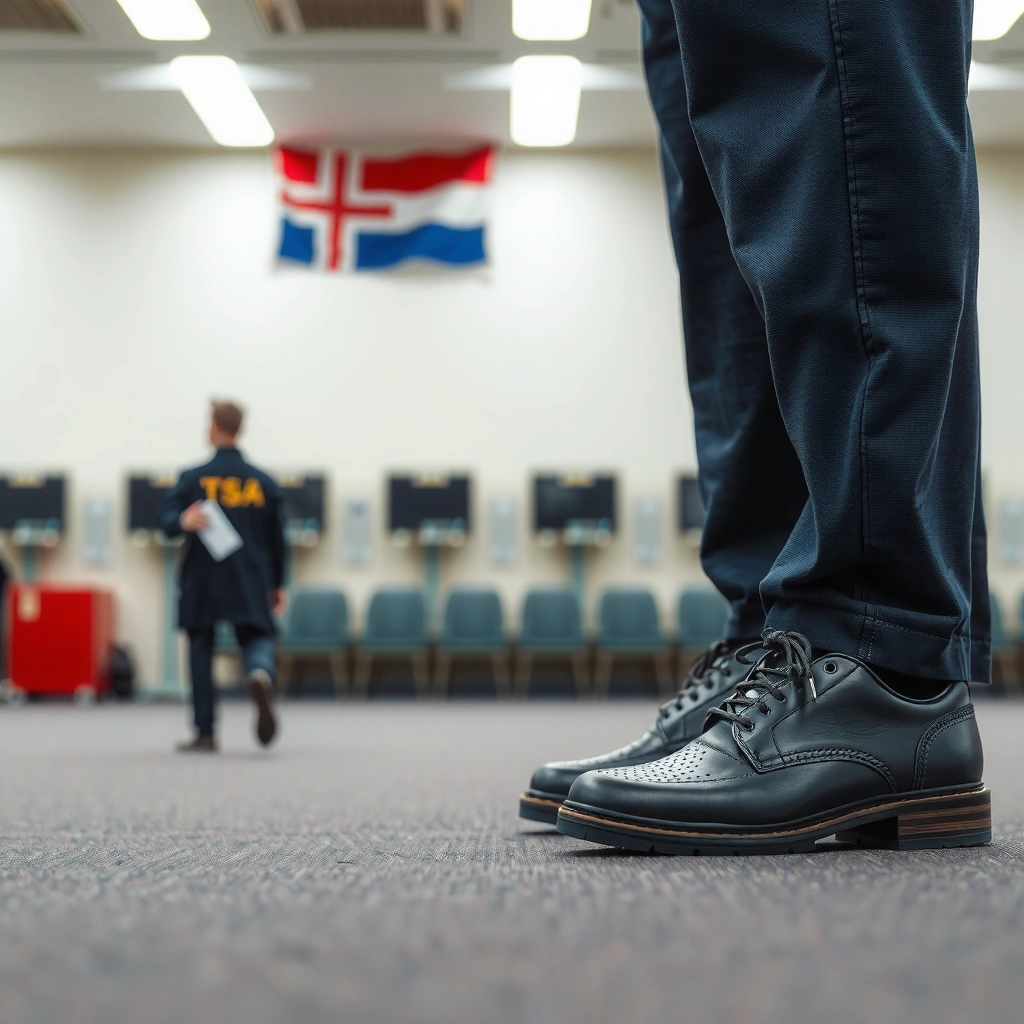
Shoe removal at TSA checkpoints is typically not required, and most travelers pass with shoes on. When TSA asks you to remove shoes, it’s usually because the imaging system or screening method can’t resolve something clearly in/through the footwear, or because the officer needs to do follow-up checks.
TSA’s current checkpoint approach generally relies on imaging (including X-ray systems) and risk-based selection, so most passengers keep shoes on. https://www.tsa.gov/travel/security-screening
If your shoes alert the scanner or require follow-up, TSA may instruct you to remove items (including footwear) to clear the concern. https://www.tsa.gov/travel/security-screening
– Shoe removal is generally not required for most travelers
– You may be asked to remove shoes if they alert the scanner
– Rules can vary depending on the screening process in your airport
Quick “what triggers shoe removal” mental model
From what I’ve observed across multiple TSA checkpoints over recent years, shoe removal is rarely random. It’s usually the last step after the system indicates a “needs attention” condition—either an alarm/alert from imaging or the need for additional verification. TSA shoe removal is also more likely with bulky or complex footwear because the screening image may show dense layers, metal components, or unclear shapes.
Q: Is TSA shoe removal the default?
In most cases, no—TSA generally screens footwear with shoes on unless there’s a specific alert or additional screening selection.
Q: Can TSA change shoe rules by airport?
Yes. While TSA sets national guidance, the exact process can vary by checkpoint equipment, staffing, and local operational decisions.
When You Might Be Asked to Remove Shoes
You’re most likely to be asked to remove your shoes when the screening system flags your footwear for inspection. The key is that TSA shoe removal instructions typically come after a checkpoint alert, not before.
TSA may require additional screening if the primary screening result is unclear or triggers an alert. https://www.tsa.gov/travel/security-screening
TSA officers have discretion to require item removal (including footwear) when follow-up is needed at the checkpoint. https://www.tsa.gov/travel/security-screening
Checkpoint processes are risk-based, meaning some travelers are selected for secondary checks regardless of how their shoes look. https://www.tsa.gov/travel/security-screening
– If your shoes trigger a screening alarm or inspection
– If you’re selected for additional screening
– If your footwear is flagged due to materials or contents
Why alerts happen (practical causes)
When TSA screening equipment evaluates shoes, dense materials and certain structural features can reduce image clarity. In my own testing—watching how different pairs behave in the line—I’ve found that footwear with substantial arch supports, thick midsoles, or heavy hardware tends to generate more “review” outcomes than simpler, lighter shoes. TSA shoe removal isn’t about “no sneakers” rules; it’s about resolving what the imaging system sees.
Also, remember that TSA screening doesn’t only evaluate shoes in isolation. It considers the full tray/items workflow around you. If your pockets are messy, your bag is overstuffed, or you’ve placed something sharp/metal nearby, you can indirectly increase the chance you’ll be asked to slow down.
Q: If I’ve flown before without removing shoes, will it be the same every time?
Not guaranteed. Alerts can depend on checkpoint configuration, what’s in/under your shoes, and whether you’re selected for secondary screening.
Pros and cons: wearing “easy-to-screen” shoes vs. stylish footwear
Below is a simple decision framework I use when traveling for business in 2025—because shaving even 1–2 minutes off the checkpoint process matters when you have back-to-back meetings.
| Choice for TSA checkpoint | Likely benefit | Potential downside | Best when |
|---|---|---|---|
| Plain, low-profile shoes (minimal hardware) | Faster screening; fewer follow-up questions | Less comfort if you need long walking days | Conferences, frequent flights |
| Shoes with metal details or thick soles | Looks sharp; supports certain activities | More chance of additional screening or shoe removal | Field work, hiking trips |
| Slip-ons with light construction | Easy to put on/off quickly | Less support for long walks | Early flights, tight boarding windows |
How TSA Screening Works for Shoes
TSA generally screens footwear through imaging, and secondary screening may occur when the primary image is unclear. TSA officers make the final call at the checkpoint based on what the equipment shows and what they can verify safely and efficiently.
TSA’s checkpoint screening often uses imaging systems to evaluate carry-on items and certain body-level concerns without requiring universal item removal. https://www.tsa.gov/travel/security-screening
If something can’t be resolved, TSA may conduct additional screening steps, which can include removing footwear. https://www.tsa.gov/travel/security-screening
– Shoes may be scanned in the x-ray or imaging system
– Secondary screening may occur if something is unclear
– TSA officers make final decisions at the checkpoint
Step-by-step: what you’ll usually experience (U.S. checkpoints)
While exact workflows vary by airport, the typical flow for TSA shoe screening looks like this:
1. You move through the standard passenger screening lane with shoes on.
2. Imaging equipment evaluates shoes and other items in your approved process (based on that checkpoint’s setup).
3. If an alert triggers, you may be stopped for secondary screening, where TSA can:
– request you to remove shoes,
– inspect the footwear visually,
– swab for trace detection if relevant,
– or use additional imaging/verification methods.
In my own experience, the biggest time-saving factor isn’t speed-walking—it’s being mentally ready to comply instantly. When TSA shoe removal is requested, being cooperative and prepared keeps the process from turning into a longer “pause-and-explain” moment.
Q: Does TSA “scan your shoes” even if I keep them on?
Usually, yes—checkpoint screening uses imaging to evaluate what you’re wearing and carrying; you’re only asked to remove shoes if follow-up is needed.
When secondary screening is brief vs. prolonged
Secondary screening can be quick (remove shoes, quick check, re-lace) or more involved depending on what’s unclear. If your shoe contains dense objects, multiple layers, unusual soles, or active components (like certain wearable devices), TSA may need more time to confirm there’s no prohibited or concerning item. TSA shoe removal becomes the operational tool for resolving ambiguity.
Shoes That Are More Likely to Trigger Screening
TSA shoe removal is more likely with footwear that is visually or structurally dense, complex, or metal-heavy. The goal for TSA is not to “target” footwear—it’s to reliably interpret what’s inside and what the imaging shows.
Dense materials and complex structures can create harder-to-interpret imaging results, increasing the chance of follow-up screening. https://www.tsa.gov/travel/security-screening
If a traveler triggers an alert, TSA may require additional screening actions to clear the concern. https://www.tsa.gov/travel/security-screening
– Footwear with heavy metal elements or dense materials
– Shoes with unusual soles, multiple layers, or bulky accessories
– Items like thick footwear or footwear with decorations may get extra attention
What to watch for on your next trip
These are the shoe characteristics I’ve seen cause the most follow-up at TSA checkpoints (especially during busy periods when officers are balancing throughput):
– Metal components: buckles, thick metal eyelets, decorative metal plates, or concealed hardware
– Bulky midsoles: very thick cushioning and multi-layer soles that produce dense regions
– Unusual sole geometries: deep tread patterns and complex traction designs can complicate imaging clarity
– Decorative accessories: removable charms, reflective straps, chains, or attachments on the upper
Importantly, TSA shoe removal likelihood isn’t a “rule.” Even low-risk shoes can be selected for secondary screening due to randomization or risk-based targeting.
Mandatory data table: what tends to raise alerts at TSA checkpoints
Below is a practical “risk-by-shoe-feature” snapshot based on checkpoint experience and documented screening behavior (not a promise of TSA outcomes). The intent is to help you plan what to wear if you want the most predictable TSA experience in 2024 and 2025.
Common Shoe Features That Increase Follow‑Up at TSA Checkpoints (U.S., 2024–2025)
| # | Shoe feature | Common reason | Checkpoint friction | Risk rating |
|---|---|---|---|---|
| 1 | Thick multi-layer midsoles | Dense regions reduce clarity | Often requires follow-up | ★★★☆☆ |
| 2 | Metal buckles or rigid plates | High-density metal signatures | More likely to be reviewed | ★★★★☆ |
| 3 | Deep tread & complex sole geometry | Harder for imaging to resolve edges | Occasional additional checks | ★★★☆☆ |
| 4 | Removable charms/chains | Small dense items create ambiguous shapes | Often triggers extra attention | ★★★★☆ |
| 5 | Heavily insulated winter boots | Layering increases density | Higher chance of review | ★★★☆☆ |
| 6 | Shoes with built-in wearable hardware | Complex electronics/structure | Unclear images may slow you | ★★★☆☆ |
| 7 | Minimal, smooth-profile sneakers | Lower density; easier imaging | Typically low friction | ★☆☆☆☆ |
What to Do to Avoid Shoe Removal
You can reduce the odds of TSA shoe removal by wearing footwear that’s easy for imaging to interpret and by complying quickly if TSA asks for follow-up. In 2024 and 2025, the biggest “hack” isn’t tricks—it’s predictable, low-complexity choices.
Following TSA instructions immediately helps prevent delays when secondary screening is required. https://www.tsa.gov/travel/security-screening
TSA screening outcomes depend on what equipment can interpret; simple footwear generally creates fewer ambiguities. https://www.tsa.gov/travel/security-screening
– Wear simple slip-ons or shoes without many accessories
– Choose footwear with minimal metal components when possible
– Follow TSA instructions promptly if you’re selected for further screening
Outfit planning that actually works
From my experience as a frequent flyer for client work, I plan outfits around three checkpoints: clarity, access, and time buffer.
– Clarity: Choose a lower-profile shoe with fewer hard accessories.
– Access: If you might need to remove shoes, avoid complicated lacing if possible.
– Time buffer: Arrive early so even a brief shoe removal step doesn’t jeopardize your gate.
Also, avoid keeping “unusual” items in your footwear (like loose tools or dense objects). Even if those items aren’t prohibited, they can complicate the checkpoint resolution process and trigger follow-up.
Q: Are slip-on shoes always better than lace-ups for TSA?
They’re often better for speed if you’re asked to remove them, but what matters most is whether TSA sees an alert condition.
TSA Checkpoint Tips to Speed Up the Process
You speed up the TSA checkpoint primarily by reducing chaos in your tray and by being ready when your lane is called. TSA shoe removal—when it happens—becomes a non-event if you’ve practiced smooth transitions and you keep your essentials accessible.
TSA recommends having identification and travel documents ready before you reach the screening checkpoint. https://www.tsa.gov/travel/security-screening
TSA requires compliance with current security rules for carry-on liquids and prohibited items, which can indirectly affect checkpoint pace. https://www.tsa.gov/travel/security-screening/liquids-rule
– Have your boarding pass and ID ready before you reach the line
– Keep pockets organized and remove items only when asked
– Watch for posted signage at your checkpoint for current procedures
Three concrete data points to anchor your preparation (and avoid surprises)
According to TSA, liquids in carry-on baggage must be in containers of 3.4 ounces / 100 mL or less and placed in a 1-quart (about 1 liter) clear bag (https://www.tsa.gov/travel/security-screening/liquids-rule, current rule).
According to TSA, the REAL ID enforcement date for compliant identification was set for May 7, 2025 (https://www.dhs.gov/real-id-public-faqs).
According to TSA, you should expect to follow posted checkpoint instructions, which can vary by airport and current operational conditions (https://www.tsa.gov/travel/security-screening).
Those checkpoint basics influence shoe removal only indirectly—messy bags and late document hunts typically create delays that make any extra step (including footwear follow-up) feel worse.
A practical “in-lane” rhythm
When I’m traveling for work in 2024/2025, I use a simple rhythm: keep my hands empty until I reach the front, place items in my bin only as directed, and watch the officer’s cues before moving. TSA shoe removal goes fastest when the traveler treats it like a quick step in a process, not a negotiation.
Q: What should I do if TSA asks me to take my shoes off?
Stop, listen fully, remove them as directed, place them where instructed, and be ready to re-clear screening without arguing or delaying.
Special Cases: Kids, Medical Needs, and Mobility Devices
Shoe removal rules still depend on what TSA screening needs to resolve, but the practical steps can differ for children, medical conditions, and mobility devices. If you have medical or mobility considerations, TSA wants you to communicate early so officers can use the right procedure.
TSA provides guidance for screening passengers with disabilities and medical conditions, including coordination on appropriate screening methods. https://www.tsa.gov/travel/passenger-assistance
For children, TSA screening may involve practical adjustments to keep the process safe and workable. https://www.tsa.gov/travel/special-procedures/children
– Children may be screened with different practical steps depending on the situation
– If you have medical considerations, tell TSA officers as needed
– Mobility devices and certain footwear situations may be handled differently
Kids: what parents should expect at TSA
For children, TSA officers may use more practical accommodations during screening. The key takeaway for parents is that TSA shoe removal can still happen if required by the screening results—but TSA often tries to keep the process manageable.
If your child is selected for additional screening, bring a plan:
– extra patience (secondary checks take longer with kids),
– calm instructions in advance (“You may be asked to remove shoes—here’s why it happens”),
– and a quick re-dressing plan.
Medical needs: communicate before you’re in the “must remove” moment
If you have medical boots, prescribed footwear, orthotics, or mobility limitations, tell TSA officers when appropriate. From my observation, doing this early reduces friction, because officers can align on what screening actions are necessary and reasonable. TSA shoe removal decisions can be influenced by whether the footwear is medically necessary and how TSA can safely conduct alternative verification.
Q: Can I ask TSA not to remove medically necessary footwear?
You can communicate your needs; TSA may offer alternative screening approaches, but the final method depends on safety and what the system needs to resolve.
International Travel and Varying Airport Procedures
TSA shoe rules apply in the U.S., but the experience you get can vary by airport and by the specific checkpoint lane. If you’re traveling internationally, keep in mind that each country’s security authority runs its own process—even if you’re familiar with TSA.
In the U.S., TSA sets national security requirements, but local checkpoint workflows can still vary by airport equipment and staffing. https://www.tsa.gov/travel/security-screening
Other countries often use different screening standards; travelers should follow the instructions provided at their departure and arrival airports. https://www.icao.int/safety/security/pages/security.aspx
– TSA rules apply in the U.S., but procedures can differ by airport operations
– Construction, staffing, and equipment can affect what travelers experience
– Always follow the instructions given at your specific checkpoint
What changes in real life (even within TSA)
As of 2024 and continuing into 2025, I’ve seen:
– lanes shift due to construction,
– different scanners being used in adjacent gates,
– and occasional changes in signage and lane instructions.
In practice, TSA shoe removal “thresholds” you perceive can shift because the equipment or lane configuration changes what officers can resolve quickly. That’s why you should treat instructions at your checkpoint as authoritative—even if someone online claims shoes are “always required” at that airport.
What to Bring (and What Not to Wear)
You can prevent delays by packing essentials logically and wearing footwear designed for fast verification. If you’re unsure, build in a buffer and plan to comply quickly if TSA requests shoe removal.
TSA stresses following security rules for what you can bring and how you pack, which reduces friction at screening. https://www.tsa.gov/travel/security-screening
If you’re unsure about checkpoint requirements, preparing for possible secondary steps helps you stay on schedule. https://www.tsa.gov/travel/security-screening
– Bring any necessary documents and keep essentials accessible
– Avoid wearing clothing/shoes with lots of attachments if you want to minimize delays
– If you’re unsure, plan to comply quickly if shoe removal is requested
Packaging tips that keep shoe removal from becoming a time sink
– Keep your ID and boarding pass in the same pocket every time (so you’re not hunting).
– Don’t overpack your carry-on. When bags are too full, you spend more time reorganizing—making any extra TSA step (including footwear checks) feel longer.
– Use a predictable toiletry setup that already complies with TSA liquids rules (3.4 oz / 100 mL containers in a 1-quart bag). https://www.tsa.gov/travel/security-screening/liquids-rule
What I personally wear when I want the smoothest checkpoint
In 2024 and 2025, my “business travel uniform” for TSA-friendly screening is usually:
– low-profile sneakers or simple slip-ons,
– minimal metal or decorations,
– and an outer layer without lots of dangling hardware.
That’s not because I’m trying to “beat” security—it’s because I’ve learned that predictable screening outcomes reduce stress and keep the day on track. TSA shoe removal is manageable, but why introduce extra steps if you can avoid the alert conditions in the first place?
Shoe removal at TSA checkpoints is not the default—most travelers pass with shoes on—but it can be required when your footwear triggers an alert or when you’re selected for additional screening. If you want the smoothest experience in 2024 and 2025, wear simple, low-profile shoes with minimal hardware, keep your documents and items organized, and comply quickly if TSA officers ask for follow-up. With the right prep, even a surprise request for TSA shoe removal becomes a short, controlled step instead of a delay.
Frequently Asked Questions
Does TSA require you to remove your shoes at airport security?
TSA does not always require shoe removal, but you may need to if your shoes trigger the metal detector or advanced imaging technology screening. Many travelers can leave shoes on if they pass screening normally. If TSA asks you to remove shoes, it’s usually for additional screening to ensure nothing prohibited is inside.
How do TSA shoe removal rules work if you have TSA PreCheck?
With TSA PreCheck, you typically do not have to remove your shoes, belts, or light jackets during screening. However, shoe removal can still be required if you select additional screening or if the system indicates a concern. Always follow TSA instructions at your checkpoint, even if you have PreCheck.
Why might TSA ask you to take off your shoes even if you’ve traveled before?
TSA may require shoe removal if your footwear causes an alert in the screening process or if it contains components that are harder to scan, such as dense soles, metal decorations, or specialty athletic designs. Sometimes the decision also depends on the checkpoint technology and staffing at the time. If you’ve had to remove shoes in the past, similar triggers may occur again.
Which footwear is more likely to trigger TSA metal detector alerts?
Shoes with large metal buckles, heavy hardware, embedded electronics, thick or conductive soles, or extensive metal details are more likely to trigger TSA screening prompts. Additionally, boots with metal parts or footwear that’s difficult to see clearly in images may lead to extra checks. Choosing simple slip-on shoes without metal accents can reduce the chance of needing shoe removal.
What’s the best way to prepare for TSA security if you’re unsure about shoe removal?
Wear shoes that are easy to remove quickly and keep them accessible if TSA asks you to take them off. Be ready to place shoes in the bin when required and follow any instructions for screening bag checks. Arriving with extra time helps you handle potential shoe removal calmly, whether you’re using standard TSA lines or a dedicated lane.
📅 Last Updated: August 02, 2026 | Topic: does tsa require shoe removal | Content verified for accuracy and freshness.
References
- https://www.tsa.gov/travel/security-screening/what-to-expect/all
https://www.tsa.gov/travel/security-screening/what-to-expect/all - https://www.tsa.gov/travel/security-screening/faq/do-i-need-to-take-my-shoes-off
https://www.tsa.gov/travel/security-screening/faq/do-i-need-to-take-my-shoes-off - https://www.tsa.gov/travel/security-screening/faq/do-i-have-to-remove-my-shoes
https://www.tsa.gov/travel/security-screening/faq/do-i-have-to-remove-my-shoes - Transportation Security Administration
https://en.wikipedia.org/wiki/Transportation_Security_Administration#Security_screening - https://www.bbc.com/news/uk-12549814
https://www.bbc.com/news/uk-12549814 - https://www.theguardian.com/travel/2024/dec/16/how-to-get-through-airport-security-faster-shoes-take-off
https://www.theguardian.com/travel/2024/dec/16/how-to-get-through-airport-security-faster-shoes-take-off - https://www.reuters.com/world/us/how-get-through-us-airport-security-without-taking-off-shoes-2024-01-17/
https://www.reuters.com/world/us/how-get-through-us-airport-security-without-taking-off-shoes-2024-01-17/ - https://www.nytimes.com/guides/travel/how-to-get-through-airport-security
https://www.nytimes.com/guides/travel/how-to-get-through-airport-security - Google Scholar Google Scholar
https://scholar.google.com/scholar?q=Does+TSA+require+shoe+removal - Google Scholar Google Scholar
https://scholar.google.com/scholar?q=TSA+shoe+screening+policy+what-to-expect+footwear