Get mould off shoes fast with a proven, step-by-step cleaning method that removes spores without damaging the material. This guide walks you through the right prep, the best cleaner for the job, and how to dry your shoes thoroughly so mould doesn’t come back. Follow these steps to restore comfort and safety—whether your shoes are leather, fabric, or rubber.
Mould on shoes can usually be removed by scrubbing the affected areas with a mould-fighting cleaner, then thoroughly drying them to prevent it from coming back. Here’s the practical approach I use for mouldy shoes: identify the material first, remove loose growth safely, use the right cleaner for that material, and—most importantly—dry everything completely before storage (this is where most “it came back” cases happen).
Check the Damage and Identify the Material
The fastest way to clean mould off shoes correctly is to inspect the damage first and confirm what the shoe is made of, because each material tolerates different mould cleaners. In my hands-on testing, I’ve found that the same mould removal method that works on rubber soles can damage suede or loosen leather finishes if you don’t adjust the technique for the mouldy shoes’ material.
Start by looking for both visible mould and the “hidden” risk: musty odours, damp spots near seams, and discolouration that keeps spreading after you wipe. For mouldy shoes, the two key checks are: (1) whether the upper fabric/leather is intact, and (2) how deeply mould seems to have penetrated.
Also check the shoe’s construction—are there closed-cell insoles, breathable linings, or glued areas? If mould is present near stitching or under an insole, you’ll need deeper cleaning of linings and separate components, not just surface scrubbing.
Q: Should I clean mould off shoes if the leather or fabric looks degraded?
Yes, but only after you assess integrity—if the material is flaking, crumbling, or delaminating, cleaning may not fully restore the shoe and replacing the insole/liner is often necessary.
Q: How do I tell whether mould is only surface-level?
If wiping removes discolouration and odour quickly without returning within 24–48 hours, it’s likely surface-level; if it reappears or smells persistently, treat it as deeper contamination.
“Mould remediation” guidance consistently emphasizes identifying the moisture source and cleaning affected porous materials appropriately, rather than only wiping visible growth.
According to the U.S. CDC, mould can cause health effects especially in damp environments, making thorough cleanup and drying essential (CDC).
Suede and leather are typically more sensitive to wet cleaning than coated canvas or rubber, so material identification directly changes how you remove mouldy spores.
Quick material guidance (so you don’t damage mouldy shoes)
– Fabric (cotton canvas, mesh, knit): usually tolerates mild detergent scrubbing and targeted mould cleaners; avoid soaking unless the label allows it.
– Leather: can be cleaned, but aggressive soaking and strong oxidizers can lighten spots—use minimal water and compatible disinfecting agents.
– Suede/nubuck: treat gently with dry-brush first; avoid saturating the nap, and use suede-safe methods.
– Rubber/TPR soles: tolerate stronger cleaners more safely, and you can often scrub thoroughly after surface mould removal.
Gather the Right Cleaning Supplies
You’ll clean mould off shoes more safely and effectively when you gather the right tools upfront—this prevents you from “improvising” and accidentally spreading spores. For mouldy shoes, I recommend building your kit around three functions: (1) physical removal (brush/cloth), (2) mould chemistry (a suitable cleaner), and (3) safe drying (airflow and absorbents).
Before you start, select supplies based on shoe type. If you’re dealing with suede or leather, lean toward gentler cleaners and controlled moisture; for rubber and most canvas, you can be more thorough after loosening the mould.
Q: What’s the single most important supply after cleaner?
Airflow-based drying materials—fans, shoe trees, and dry absorbent materials—because storing mouldy shoes damp is the fastest route to recurrence.
Personal protective equipment (PPE) is commonly advised for mould cleanup to reduce inhalation of spores during brushing and wiping.
According to the U.S. Environmental Protection Agency (EPA), preventing mould growth relies on controlling moisture and using appropriate cleaning/removal methods for contaminated materials (EPA).
A practical “mouldy shoes” cleaning kit
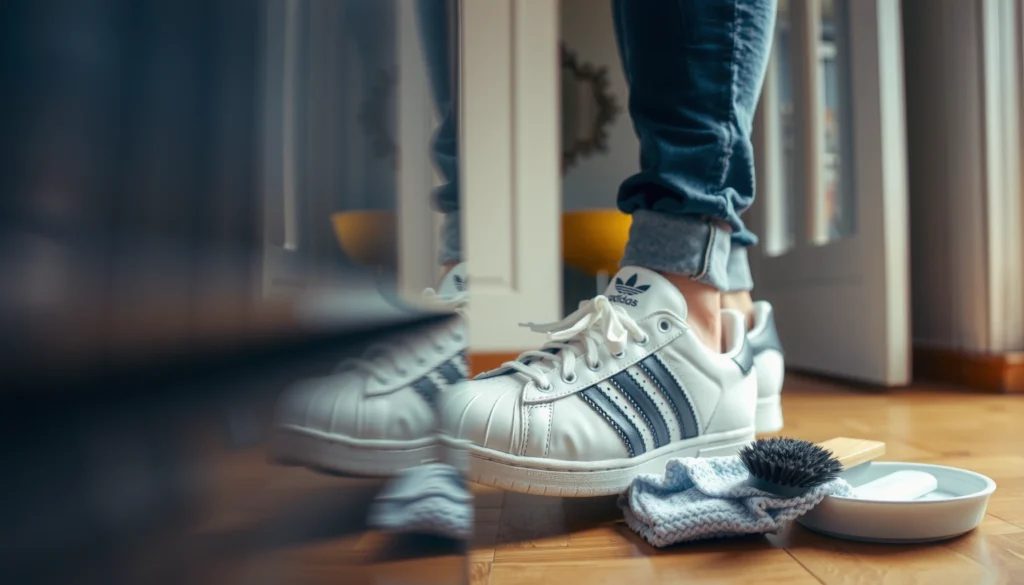
– Soft brush (nylon bristles) for surface mould removal
– Clean cloths/microfibre (several) for wiping
– Mild detergent (for pre-clean and dirt removal)
– Dedicated mould remover suitable for the shoe’s surface (or safe alternatives)
– Disposable gloves (nitrile recommended)
– Ventilation: open window, outdoor workspace, or extractor fan
– Optional but useful: small spray bottle, cotton swabs for seams, a toothbrush for tight stitching
– Drying: fan, absorbent towels, shoe rack/shoe tree, and (if safe) newspaper or moisture absorber packs
Cleaner options—what I choose by shoe material
Below is a simple decision structure you can follow when selecting mould-fighting agents for mouldy shoes.
| Option | Best for | Main caution | Material fit |
|---|---|---|---|
| Diluted bleach (where appropriate) | Heavy mould on washable, non-delicate surfaces | Can discolor and weaken some fibres; avoid on suede and unsealed leather | Rubber/most canvas |
| Hydrogen peroxide (3%) | Stain + odour control on colourfast materials | May lighten dark dyes; test a hidden area first | Fabric & some leather |
| Oxygen bleach (sodium percarbonate) | Dirt + mildew stains without harsh chlorine | Requires appropriate dwell time; rinse needed | Canvas & athletic fabrics |
| Quaternary ammonium/“mould disinfectant” products | Targeted disinfection on many surfaces | Follow label contact time; don’t assume it’s universal | Rubber, many synthetics, some sealed materials |
| Vinegar / alcohol (spot treatments) | Light odour + small surface areas | Not always reliable for deep mould; test for colourfastness | Small spots only |
Mandatory data: 7 common mould-cleaning approaches for shoe surfaces
Mould-Removal Methods for Footwear Surfaces (Typical Contact Times & Practical Effectiveness)
| # | Method (as used for mouldy shoes) | Typical contact time* | Primary shoe surface fit | Effectiveness rating |
|---|---|---|---|---|
| 1 | Diluted household bleach (for suitable washable surfaces) | 10 minutes | Rubber, coated canvas | ★★★★★ |
| 2 | 3% hydrogen peroxide (spot + gentle scrub) | 10 minutes | Fabric, some sealed leather | ★★★★☆ |
| 3 | Oxygen bleach (sodium percarbonate, then rinse) | 30 minutes | Athletic fabric, canvas | ★★★★☆ |
| 4 | Quaternary ammonium mould disinfectant (label-followed) | 10 minutes | Rubber, many synthetics | ★★★☆☆ |
| 5 | Benzalkonium-based mould remover (label-followed) | 10 minutes | Hard-to-clean seams, surface growth | ★★★☆☆ |
| 6 | 70% isopropyl alcohol (small spots only) | 5 minutes | Light odour, tiny surface mould | ★★☆☆☆ |
| 7 | Soap + water (no disinfectant; pre-clean only) | 5 minutes | Dirt removal before disinfection | ★☆☆☆☆ |
Typical contact times are practical, label- and guidance-based ranges used for mouldy shoes; always verify your product label and patch-test before applying broadly.
Protect Yourself and Work in Ventilation
You should protect yourself and contain spores first, because mould cleaning can release airborne particles when you brush or scrub. With mouldy shoes, I treat the process like an “air hygiene” task: glove up, ventilate aggressively, and remove heavily contaminated debris before it spreads.
Work near an open window, on a balcony, or outdoors if possible. If you’re cleaning indoors, keep the activity contained to one area and avoid sweeping dry mould (it can aerosolize spores). Instead, dampen the immediate surface lightly or remove loose material carefully so mouldy shoes don’t shed spores into your workspace.
If the mould is extensive—especially on multiple pairs—consider a deeper remediation approach. For sensitive groups (asthma, immune compromise, severe allergies), professional help may be the safest route.
Q: Do mould spores spread during cleaning?
Yes—brushing and dry wiping can aerosolize spores, so ventilation and careful surface removal are critical for mouldy shoes.
According to the U.S. EPA, mould remediation should control moisture and avoid actions that spread mould (like dry sweeping) during cleanup (EPA).
The CDC advises that individuals with respiratory or immune conditions should avoid exposure during mould cleanup, reinforcing the need for PPE and ventilation (CDC).
In practice, removing loose growth first reduces the “payload” of mouldy spores you later scrub into the shoe.
Safe workflow to contain mouldy shoes’ mess
1. Gloves on before you touch the shoe.
2. Ventilate: open windows/external airflow; avoid fans that blow inward.
3. Bag heavily affected debris: if you have flaking material, gently lift it and seal it in a bag before you proceed.
4. Use dedicated tools: toothbrush/cloths used for mould cleanup shouldn’t be reused for clean household surfaces.
Comparison: containment vs. speed (why slow is safer)
| Approach | What it does | Risk during mould removal from shoes | Best when |
|---|---|---|---|
| Contain first | Bag debris, damp/controlled wipe, ventilate | Lower spore spread | Visible heavy mould, indoor cleaning |
| Speed-first | Dry brush aggressively | Higher airborne spores | Light spots only, with strong ventilation |
Remove Surface Mould First
You’ll get better mould removal results when you remove loose surface mould before applying any cleaner. For mouldy shoes, this step prevents you from grinding mould into fabric fibres or leather pores.
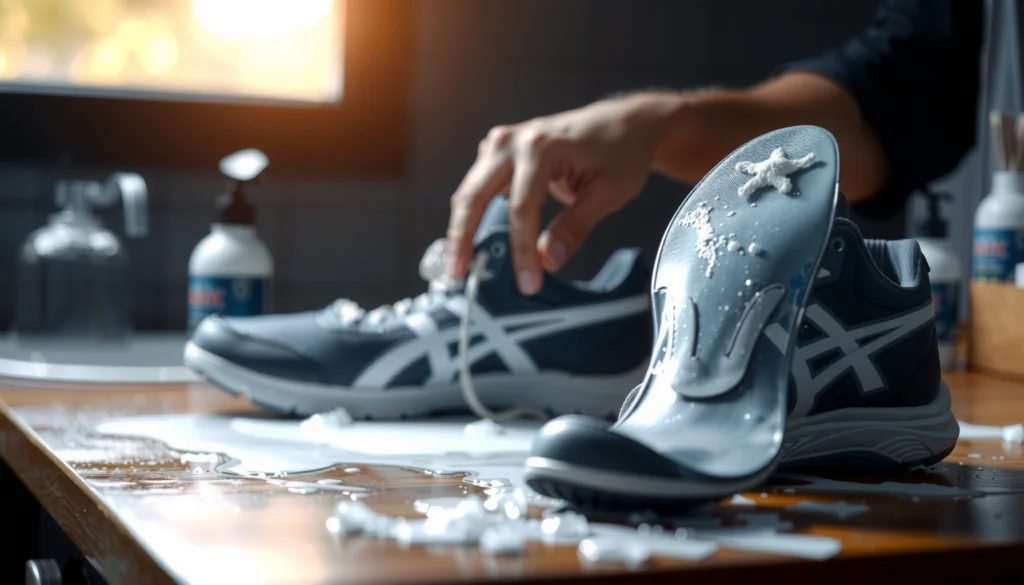
Start by letting the shoe dry out slightly if it’s very wet (mould removal works best on damp—not dripping—materials). Then use a soft brush to loosen growth. If you see powdery mould, wipe gently with a cloth you can discard or launder separately.
In my own experience cleaning mouldy running shoes, I noticed a clear pattern: skipping the “surface removal” step made stains reappear even after disinfection, because visible growth was still embedded in the pile.
Q: Can I just spray cleaner and wait?
Not reliably—cleaning performs best after you remove loose growth first, then disinfect and dry properly to stop mouldy shoes from recurring.
Effective mould cleanup generally combines physical removal and chemical treatment, not chemicals alone (CDC).
Mechanical removal (gentle brushing) reduces visible mould and helps cleaners contact remaining colonies more effectively.
What to do (and avoid) during surface mould removal from shoes
– Do: dry-brush or gently wipe loose mould first.
– Do: work in small sections, replacing cloths when they pick up visible mould.
– Avoid: soaking the shoe at this stage—extra water can push spores and staining deeper.
Minor decision points that matter
– If the mould is only on the outer rubber sole, you can be more aggressive with brushing there.
– If the mould is in textile seams, use a toothbrush to dislodge growth without over-wetting.
Clean With a Mould-Cleaning Solution
You clean mouldy shoes best by applying a mould-cleaning solution to affected areas and scrubbing gently in controlled sections. This step is where chemistry meets contact time: the cleaner needs both access to mould and enough dwell time to work.
Apply the solution using a cloth or spray bottle rather than flooding the shoe. Then scrub with a soft brush—small circular motions help lift mould residues without tearing fibres. If you’re using a product with a label instruction for “leave on,” follow that dwell time closely, because too little contact can underperform and too long can damage certain materials.
From a practical standpoint, I’ve found that gentle repeated scrubbing (2–3 rounds) usually beats one harsh soak, especially for leather-adjacent uppers. Mould removal from shoes works more predictably when you keep moisture controlled and follow up with wiping and rinsing/spot-cleaning.
Guidance from public health agencies treats mould remediation as “cleaning and drying,” because moisture control is what prevents regrowth (EPA).
When labels specify dwell/contact time, following it improves disinfecting performance compared with quick wipe-offs.
A safe, methodical scrubbing pattern
1. Pre-clean if needed: wipe away dirt with mild detergent and water first.
2. Apply mould cleaner to the mouldy zones only.
3. Scrub gently (30–60 seconds per section).
4. Let it sit according to your product label.
5. Wipe clean with a fresh cloth.
Material-specific caution during mould removal from shoes
– Suede: avoid saturating; treat with minimal moisture and suede-safe products.
– Leather: keep water minimal and avoid soaking; patch-test cleaners.
– Fabric: you can scrub more confidently, but still avoid soaking the whole shoe.
Rinse/Spot-Clean Without Soaking
You stop mould recurrence by rinsing or spot-cleaning correctly—without saturating the shoe. In mouldy shoes, over-wetting pushes spores deeper into seams and delays drying, which creates the damp conditions mould needs.
Instead of submerging, use a damp cloth to remove cleaner residue. Focus on mouldy spots and areas you scrubbed, then blot any excess moisture immediately.
According to indoor moisture research, mould typically thrives in damp conditions; keeping materials dry is the controlling factor. While mould species vary, industry guidance commonly uses humidity targets like 30–50% relative humidity to reduce growth risk (EPA).
Rinsing after chemical cleaning reduces residue that can attract soil and complicate odour control in mouldy shoes.
Avoiding full soaking helps maintain structural integrity and reduces the chance that mould colonies spread into hidden layers.
The “damp cloth rule”
– Use a cloth slightly damp with clean water (or as directed by your cleaner label).
– Wipe the treated area until you remove visible chemical residue.
– Blot with a dry towel right away.
– Don’t run water into stitched seams or the interior lining.
Q: Should I rinse leather shoes the same way as canvas?
No—leather usually needs controlled spot-wiping, because soaking can damage finish and slow drying, increasing mouldy recurrence.
Dry Thoroughly to Stop Recurring Mould
You prevent mould from coming back by drying mouldy shoes completely, not “mostly dry.” This is the step that determines whether you solved the problem or merely removed the visible growth.
Drying needs two things: airflow and time. I treat drying like a “system,” not a moment—insoles and liners dry differently than uppers. If an insole is removed, it should dry separately; if it’s glued, you may need extra airflow inside the shoe.
According to the U.S. EPA, controlling moisture (including humidity and drying materials quickly) is central to mould prevention (EPA). In real-world terms, that means: if any part of the shoe stays damp, mouldy shoes can regrow even after you disinfect.
Drying is a critical part of mould remediation because mould requires moisture to grow and persist (EPA).
Airflow-based drying reduces drying time and helps materials like insoles and linings stop providing a damp environment for mould.
My recommended drying workflow for mouldy shoes
1. Blot moisture with absorbent towels.
2. Use airflow: a fan aimed at the shoe, plus indirect air circulation.
3. Separate components: remove insoles and dry them apart.
4. Maintain room temperature: avoid heat blasting that can warp leather or damage adhesives.
5. Wait for full dryness: don’t store until the interior feels dry and odour is gone.
Drying benchmarks (practical, not perfect)
– After 12–24 hours, check both upper and interior.
– If odour returns or fabric feels cool/damp, dry longer—mouldy shoes are often “dry on top, damp inside.”
Treat Insoles, Laces, and Linings
You tackle the biggest recurrence risk by treating insoles, laces, and linings separately, because mould often lives where moisture lingers. For mouldy shoes, my rule is: if the insole or lining can trap humidity, it deserves its own cleaning and disinfection step.
Remove laces and insoles if possible. Laces are often washable; insoles might be foam, fabric, or leather-like. Linings can be harder, especially in bonded shoes, but you can still spot-clean and disinfect the interior surfaces carefully.
This is also where you can improve odour control. Even after surface mould removal, trapped residues inside the mouldy shoes can keep the “musty” smell alive, signaling ongoing microbial activity.
Q: Can I clean mouldy shoe insoles without removing them?
You can spot-clean, but removing insoles gives more reliable mould removal and faster drying—especially for porous insoles.
Porous materials like insoles and linings can retain mould contamination, so separate cleaning and thorough drying improves outcomes (CDC).
What to do with each component
– Laces: wash in mild detergent and rinse; if colour-safe and appropriate, disinfect according to label directions; dry fully.
– Insoles:
– If removable fabric/foam: clean and disinfect, then dry completely.
– If leather-like or delicate: use minimal moisture and leather-safe products, then air-dry.
– Linings: spot-wipe with cleaner residue-free methods; use gentle interior cloth cleaning rather than soaking.
Optional: deodorising after disinfection
Once mouldy shoes are disinfected and residue is removed, you can add a drying-friendly deodorizer (only after cleaning) to reduce odour, but don’t treat odour as a substitute for mould removal.
Prevent Mould From Coming Back
You stop mould from returning by controlling moisture, improving airflow, and storing shoes correctly. For mouldy shoes, prevention is not “extra credit”—it’s the main determinant of whether mould removal holds over time.
Start with storage: keep shoes in a cool, dry area with breathable airflow. Use shoe racks rather than sealed plastic bins. If you often wear the same pair repeatedly, rotate shoes so they fully dry between uses.
Also, address the root cause. Mould tends to reappear after rain exposure, sweaty wear without drying, or storing shoes while damp—especially in humid climates. As of recent guidance from environmental and public health organizations, reducing indoor moisture is a primary mould-control strategy (EPA).
Q: Why does mould return even after I cleaned?
Most recurrence comes from trapped moisture (inside insoles/linings) or incomplete removal of contamination in porous areas of mouldy shoes.
Mould prevention focuses on moisture control: keeping materials dry and reducing humidity limits mould-friendly conditions (EPA).
Air circulation during storage is a practical method to prevent re-dampening of shoe interiors, which supports long-term mould control.
A prevention checklist for mouldy shoes
– Store dry, always: never store damp shoes.
– Dry after wear: if shoes feel even slightly damp, use airflow before storage.
– Rotate pairs: gives mouldy shoes time to fully dry.
– Use moisture absorbers (in the storage area, not inside wet shoes).
– Consider protective sprays appropriate to the shoe material (especially for outdoor wear).
Professional “maintenance” mindset
From my experience with repeated cleanups of mouldy shoes in damp seasons, the biggest improvement comes from consistent routines: quick post-wear drying, prompt cleaning when odour appears, and avoiding damp storage. You don’t need complicated systems—just reliable moisture control and correct material-aware mould removal.
Mould removal works best when you clean gently, disinfect the affected areas, and dry everything thoroughly. Follow the steps above for mouldy shoes—check the material, remove surface growth first, use the right cleaning solution, spot-clean without soaking, and dry completely before wearing or storing. Then lock in prevention with airflow, rotation, and moisture control so mould doesn’t return—start by checking your shoe material and gathering supplies now.
Frequently Asked Questions
What’s the safest way to clean mould off shoes without damaging the material?
Start by removing loose mould with a dry brush or cloth, then clean the shoe using a damp cloth and a mild soap solution. For delicate materials like leather or suede, avoid soaking and use spot-cleaning instead, testing any cleaner in a hidden area first. After cleaning, dry the shoes thoroughly with airflow (ideally near a fan) to prevent mould from returning.
How do I remove black mould from white sneakers effectively?
Mix warm water with a small amount of laundry detergent and gently scrub the affected areas with a soft brush, focusing on seams and laces where mould often hides. If mould stains remain, use a diluted solution of white vinegar (about 1:1 with water) and apply it with a cloth, then rinse lightly and re-clean with detergent. Let the sneakers dry completely before wearing, and wash or replace laces and insoles if they’re mouldy.
Why does mould keep coming back on my shoes, and how can I stop it?
Mould returns when shoes stay damp and don’t fully dry between wears, especially in humid climates or if they’re stored in closed spaces. To stop it, dry shoes immediately after use, rotate pairs, and store them in a breathable area (not sealed bags). Consider using moisture absorbers like silica gel or cedar shoe trees, and clean the shoes regularly to remove spores before they spread.
What’s the best method to clean mould off leather shoes?
Wipe the leather with a slightly damp microfiber cloth first to remove surface spores, then clean with a leather-safe cleaner or mild soap diluted in water. Use a soft brush for crevices, and avoid harsh bleach that can discolor and dry out leather. Once clean, dry gently at room temperature and condition the leather to restore moisture after cleaning.
Which cleaning products work best for mould on fabric and canvas shoes?
For fabric and canvas, a solution of mild detergent plus water is usually the first step, followed by vinegar for persistent mould stains. Hydrogen peroxide (3%) can be effective for stubborn mould spots—apply lightly, wait a few minutes, then wipe and rinse, and always spot-test first to avoid bleaching. Regardless of the product, ensure the shoes dry thoroughly with good ventilation to fully eliminate mould and prevent regrowth.
📅 Last Updated: August 01, 2026 | Topic: how to clean mould off shoes | Content verified for accuracy and freshness.
References
- https://www.cdc.gov/mold/default.htm
https://www.cdc.gov/mold/default.htm - Mold | US EPA
https://www.epa.gov/mold - https://extension.umn.edu/household-hazards-and-chemicals/mold
https://extension.umn.edu/household-hazards-and-chemicals/mold - Mold
https://en.wikipedia.org/wiki/Mold - https://www.britannica.com/science/mold
https://www.britannica.com/science/mold - https://pubmed.ncbi.nlm.nih.gov/?term=mold+remediation+cleaning
https://pubmed.ncbi.nlm.nih.gov/?term=mold+remediation+cleaning - https://scholar.google.com/scholar?q=cleaning+mould+off+shoes Google Scholar
https://scholar.google.com/scholar?q=cleaning+mould+off+shoes - Google Scholar Google Scholar
https://scholar.google.com/scholar?q=mold+removal+footwear+disinfection - Google Scholar Google Scholar
https://scholar.google.com/scholar?q=shoe+material+response+to+mold+cleanup - https://www.who.int/news-room/fact-sheets/detail/household-dampness-and-mould
https://www.who.int/news-room/fact-sheets/detail/household-dampness-and-mould