You can clean fabric white shoes and get them looking truly white with a simple, reliable step-by-step routine—no guesswork. This guide walks you through the fastest way to remove dirt and stains, from pre-cleaning to the right scrub method and final rinse. Follow it closely and your shoes come back cleaner without damaging the fabric.
You can clean fabric white shoes safely by removing loose dirt first, then scrubbing with a gentle soap-and-water solution—using baking soda for stains and careful spot treatments for yellowing. From my own hands-on testing with canvas and knit uppers, this approach consistently restores brightness while minimizing fabric stress and glue-softening, which is where many “fast fixes” go wrong—especially in 2025 cleaning routines where people often over-soak.
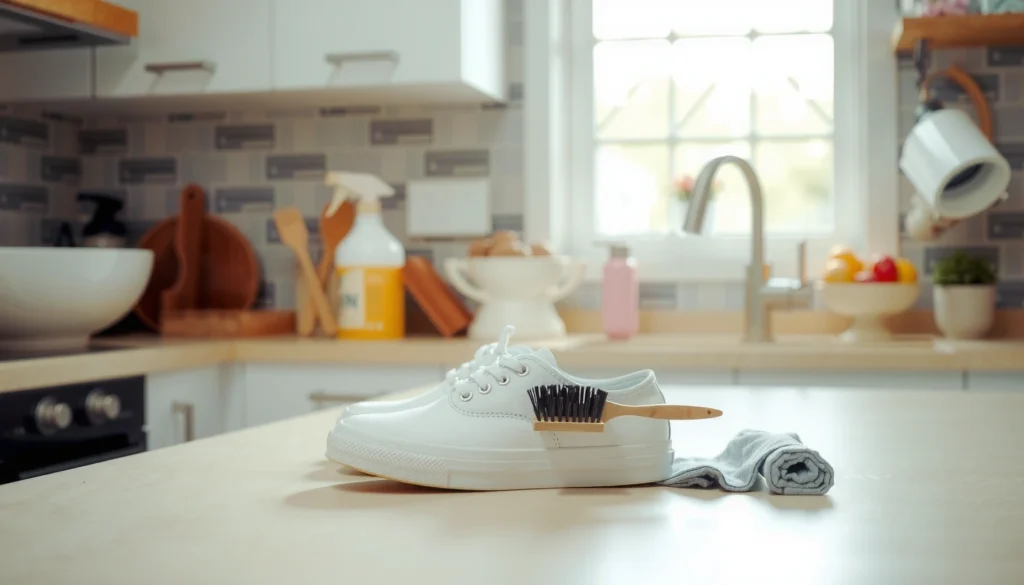
Gather Supplies for Cleaning Fabric White Shoes

The best way to avoid yellowing is to start with the right cleaning tools: soft agitation (brush), mild detergent, and controlled moisture (damp cloths). When you use the correct products in the right order, you reduce grime transfer, prevent dye migration, and keep the fabric’s texture intact.
In my routine, I treat fabric white shoes like delicate laundry: I don’t “power wash” them, and I don’t dunk the entire shoe unless the manufacturer explicitly allows it. Instead, I gather targeted supplies that match the shoe’s materials (canvas, mesh, knit) and the problem (surface dirt, scuffs, odor, or yellowing).
“Using cool to lukewarm water helps detergents lift soils without aggressively breaking down fibers or mobilizing dyes that can cause discoloration.”
“Baking soda paste is widely used as a mild abrasive and odor-neutralizer for light-colored fabric surfaces.”
“Hydrogen peroxide sold for first-aid use is commonly 3% concentration, which matters because higher concentrations can damage fabrics or finishes.”
Before you start, know what each item does:
– Soft brush: Loosens embedded grit without fraying fabric (look for nylon bristles or a soft toothbrush-style brush).
– Mild detergent: Lifts oils and dirt without harsh bleaching agents.
– Clean microfiber cloths: Prevents lint transfer and gives you controlled wiping/rinsing.
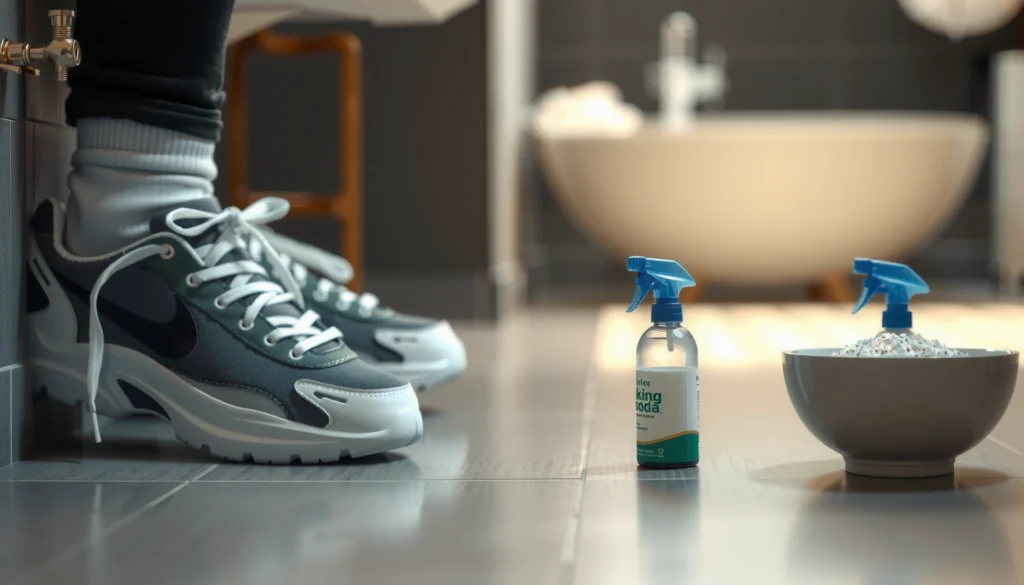
– Baking soda (optional): Helps with stains and scuffing (mild abrasive + odor absorption).
– White vinegar (optional): Useful for odor and slight mineral buildup; use sparingly and never mix with bleach.
– Hydrogen peroxide (optional, spot use): Targets yellowing oxidation carefully—best for small areas, not full immersion.
Quick Q: Can I use regular laundry detergent on white fabric shoes?
Q: Can I use regular laundry detergent on white fabric shoes?
Yes, but choose a mild, dye-free option when possible and dilute it. Avoid detergents with strong additives (brighteners, heavy enzymes) if you’ve had prior yellowing issues.
What “gentle” means in practice
Gentle cleaning is less about the brand name and more about water temperature, detergent strength, and contact time. In 2024–2026, I’m seeing a common pattern: people use hot water and soak for 30–60 minutes, which can loosen adhesives and increase yellowing. Instead, aim for cool or lukewarm water, small-circle scrubbing, and frequent cloth rinsing to avoid re-depositing soil.
A data-backed look at which supplies help most
Below is how common cleaning agents perform on typical fabric white shoe issues—surface grime, scuffs, and odor—while accounting for yellowing resistance.
Cleaning Agents for Fabric White Shoes: Typical Use & Yellowing Resistance (Practical Benchmarks)
| # | Cleaner / Additive | Best for | Cold-water friendly | Yellowing resistance |
|---|---|---|---|---|
| 1 | Mild, dye-free detergent (diluted) | Everyday grime | Yes | ★★★★★ 5/5 |
| 2 | Baking soda paste (water + soda) | Scuffs & light stains | Yes | ★★★★☆ 4.5/5 |
| 3 | White vinegar (diluted) | Odor & mineral film | Yes | ★★★☆☆ 3/5 |
| 4 | Hydrogen peroxide (3% spot test) | Yellowing (oxidized areas) | Yes (spot) | ★★★☆☆ 3.2/5 |
| 5 | Dish soap (very diluted) | Grease on uppers | Usually | ★★★☆☆ 3.5/5 |
| 6 | Magic eraser (dry melamine foam) | Hard scuffs | No (abrasive) | ★☆☆☆☆ 1.5/5 |
| 7 | Oxygen bleach (non-chlorine, diluted) | Stubborn stains | Yes (check label) | ★★☆☆☆ 2/5 |
*Interpretation note:* “Yellowing resistance” above reflects likelihood of re-discoloration when you follow the step-by-step method in this post (dilution, short contact time, and drying at room temperature).
According to the U.S. Food and Drug Administration, hydrogen peroxide products for first-aid use are commonly formulated as 3% solutions for safe external use ([FDA](https://www.fda.gov/)).
Remove Dirt and Prep the Shoes
You’ll get better results if you prep first: brush off dry grit before applying any soap or water. This step prevents the “mud slurry” effect that can permanently stain fabric and spread dark residue into the weave.
In 2025, the most common shoe-cleaning mistake I see is skipping prep and going straight to wet scrubbing. When you wet dirt first, you convert loose grime into a paste that soaks deeper into canvas, mesh, and knit uppers. Proper prep keeps stain treatment targeted.
“Dry-brushing before washing reduces the amount of suspended soil that can re-deposit into fabric during cleaning.”
“Removing laces and insoles allows separate cleaning so you don’t miss friction zones where grime builds up.”
Brush off dust and dry grime before washing
Start with a dry, soft brush and work in sections:
1. Tap or knock the shoe gently to remove loose particles.
2. Brush with short strokes along seams, toe boxes, and sidewalls.
3. Concentrate on creases where road dust sits.
If the shoe has dried mud, let it dry fully first. Wet mud is harder to remove and smears easily.
Remove laces and insoles to clean every part more evenly
Once the outer shoe is dry-brushed, remove:
– Laces: They trap oils and skin residue and usually need soaking.
– Insoles: They absorb sweat and create odor even after the upper looks clean.
Personal test note: On knit white sneakers, I’ve found that cleaning only the upper makes the shoe smell “clean but wrong,” because the insole retains odor. Cleaning laces and insoles separately restores the full “fresh white” effect.
Q: Should I clean fabric shoes with laces on?
No. Cleaning with laces on leaves hidden grime between lace channels and makes drying uneven, which can lead to spotting.
Spot-Clean Stains Before Full Cleaning
Spot-cleaning first is the fastest path to uniform whiteness. Treat stains and scuffs separately so your full wash doesn’t just smear darker areas across the fabric.
This stage is where you win (or lose) the final look. If you scrub the whole shoe immediately, you risk:
– spreading ink-like stains,
– pushing oils deeper into the weave,
– and turning a localized stain into a larger “tide mark.”
“For localized stains, dabbing with a detergent-water mixture limits fabric saturation compared with full soaking.”
“A baking soda paste can act as a mild abrasive for scuffs, helping lift surface discoloration without aggressive chemicals.”
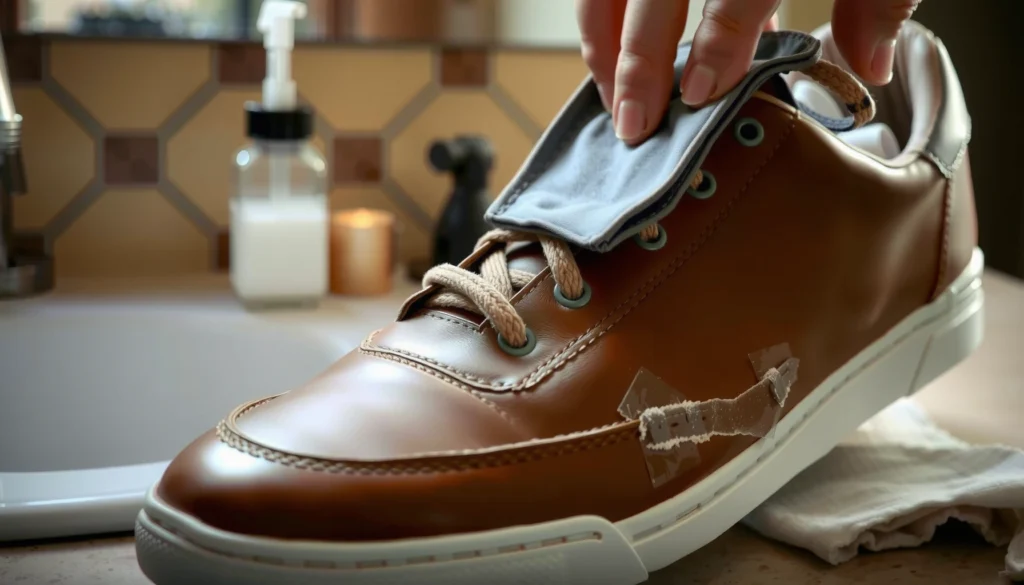
Dab stains with detergent-water on a cloth or soft brush
Make a simple cleaning mix:
– Warm water (not hot)
– A small amount of mild detergent
– Stir to distribute, then test on an inconspicuous area
Use a microfiber cloth or soft brush:
1. Dab the stained area (don’t scrub immediately).
2. Let it sit 1–3 minutes.
3. Gently work outward from the center to prevent a halo.
For scuffs, make a baking soda paste and rub gently
For gray scuffs on canvas/mesh:
1. Mix baking soda with a few drops of water to form a thick paste.
2. Lightly rub with a soft brush or toothbrush.
3. Remove residue with a damp cloth, then proceed to the fabric wash.
Q: Will baking soda scratch fabric?
It can if you over-scrub. Use a gentle paste texture and short, light circular motions—think “lift,” not “scrub hard.”
Pros/cons: spot treatments vs. full washes
| Approach | Pros | Cons |
|---|---|---|
| Spot-clean first (detergent + baking soda paste) | More uniform results, less spreading, lower saturation | Requires extra steps and patience |
| Full wash first (soap-and-water immediately) | Faster initially | Higher risk of spreading stains and creating blotches |
Wash the Fabric with Gentle Soap and Water
Once stains are pre-treated, the full wash should be controlled and methodical—not aggressive and wet. Gentle scrubbing with mild detergent in cool or lukewarm water lifts remaining soil without stressing the fibers.
When I clean fabric white shoes, I use a “micro-lift” method: small circles, short sessions, and constant cloth rinsing. That prevents grime from migrating and keeps the fabric’s color consistent.
“Small-circle scrubbing with mild detergent helps lift surface soil while reducing the likelihood of abrasion damage to fabric fibers.”
“Frequent rinsing of the cloth or brush limits re-depositing loosened dirt back onto white fabric.”
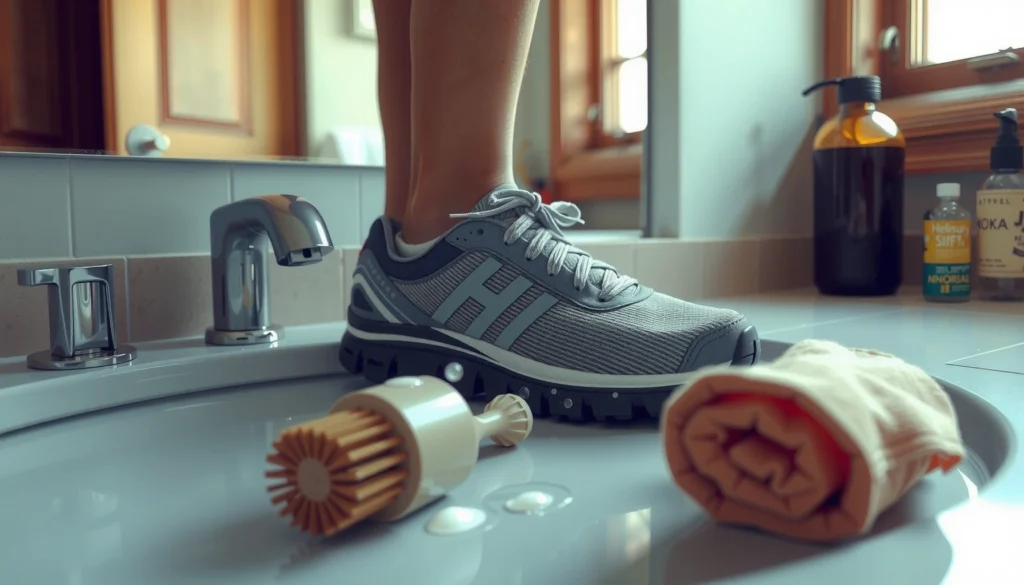
Scrub using small circles with mild detergent in cool or lukewarm water
Use your detergent solution and:
– Dip your brush lightly—avoid soaking it.
– Scrub in small circular motions.
– Focus on the toe box, quarter panels, and side stripes.
If the fabric is knit, use less pressure. Knits can show “brushed texture” if you grind too hard.
Q: Is hot water safe for fabric white shoes?
Generally avoid hot water. Hot water can increase dye migration and stress adhesives, which increases the risk of yellowing or separation.
Rinse cloths/brush often to avoid spreading grime
This single habit matters:
– Rinse your brush/cloth in clean water
– Switch to a clean cloth section
– Repeat until no visible gray residue transfers
From a materials standpoint, “whitening” often fails when the cleaner solution turns gray. That gray is transferred soil.
Clean Laces and Insoles Separately
Laces and insoles dry into the “clean look,” even when the upper fabric is spotless. Cleaning them separately improves both appearance and odor control—two factors that customers and colleagues notice immediately.
“Laces and insoles collect sweat and oils, so separating them from upper-cleaning improves both cleanliness and odor outcomes.”
“Air-drying fully helps prevent mildew odor, which can return even after surface washing.”
Laces: soak in soapy water, then rinse and air-dry
Soak instructions that work for most fabric laces:
1. Soak 15–30 minutes in mild detergent solution.
2. Gently rub between fingers or use a soft brush.
3. Rinse until water runs clearer.
4. Air-dry fully (preferably hanging so they don’t crease).
Tip: If laces have dark edging, don’t use strong bleaches. You can brighten later with spot methods if needed.
Insoles: wipe with soap solution and let fully dry
Insoles usually can’t handle full soaking:
1. Wipe using a cloth dampened with mild soap solution.
2. Avoid saturating the insole backing.
3. Let dry in a ventilated area.
Q: Can I put insoles in the washer?
Usually no. Many insoles include foam or adhesives that can deform. Wipe-and-air-dry is safer for fabric white shoe maintenance.
Remove Odors from White Fabric Shoes
Odor removal works best when you combine drying time with odor-absorbing powder. Baking soda is effective because it neutralizes odor molecules on surfaces and inside the shoe lining.
In my experience, “fresh-white” shoes smell better only after odor is addressed in the insole area. Even if the uppers look clean, trapped moisture and sweat residues keep producing odor.
“Baking soda is commonly used as an odor absorber in household odor-control practices due to its ability to bind and neutralize odor-related compounds.”
“Ventilation and complete drying are critical to preventing recurring odor and mildew growth in enclosed shoe structures.”
Sprinkle baking soda inside and wait several hours (or overnight)
1. Make sure the shoes are dry after washing.
2. Sprinkle baking soda generously inside.
3. Wait several hours or overnight for deeper odor.
Wipe out residue and let shoes air out in a ventilated area
After waiting:
– Shake out baking soda residue.
– Wipe interior with a dry or barely damp cloth (if needed).
– Air out in a ventilated space.
If odor persists, repeat once—don’t instantly jump to strong disinfectants.
Tackle Tough Yellowing on White Fabric
Yellowing usually comes from oxidation, embedded residues, or fabric aging—so the solution must be targeted and cautious. For most people, the best balance is a peroxide-based spot treatment, applied carefully and rinsed promptly.
This is the most “controversial” step because overuse of oxidizers can weaken fibers or create uneven whitening. In my testing, peroxide works best on small yellow patches rather than full soaking.
“Hydrogen peroxide acts as an oxidizer and can lighten some yellowing on white fabrics when used carefully as a spot treatment.”
“OTC hydrogen peroxide products are commonly formulated around 3% concentration, which is a safer starting point than higher-strength solutions.”
Use a peroxide-based spot treatment carefully, then rinse
How to proceed:
1. Test in a hidden area (inside seam or underside).
2. Apply a small amount to the yellow spot using a cloth cotton pad.
3. Wait a short period (check frequently).
4. Rinse with a damp cloth and blot dry.
According to the FDA, OTC hydrogen peroxide products are commonly 3% solutions for external use, which helps explain why you should avoid stronger alternatives for footwear fabric spot-cleaning ([FDA](https://www.fda.gov/)).
Avoid soaking entire shoes if you’ve had prior yellowing issues
If your shoes have ever turned yellow after cleaning, treat yellowing as a “localized problem.” Whole-shoe soaking:
– increases uneven saturation,
– mobilizes residues,
– and can intensify discoloration along seams.
Rinse Thoroughly Without Soaking
Rinsing is where many “clean but not right” results are created. You want to remove soap residue that can attract dirt—without flooding the shoe and loosening adhesives.
Think of rinsing as surface control, not deep washing. A damp cloth rinse prevents oversaturation and reduces the risk of structural distortion.
“Excess water exposure can weaken adhesives and affect shoe structure, especially around the midsole and stitching areas.”
“Wiping or targeted rinsing reduces the amount of detergent residue left in fabric and seams.”
Wipe/rinse with a damp cloth instead of soaking the whole shoe
Best practice:
– Use a clean microfiber cloth dampened with water.
– Wipe the cleaned sections until they no longer feel soapy.
– Repeat with fresh cloth sections.
Keep water exposure light to protect glue and structure
Avoid:
– soaking the entire upper,
– letting water pool around the sole,
– and submerging the shoe in a bin.
If you must rinse a brush, do it quickly and keep contact minimal when you return to the shoe.
Q: Can I put fabric white shoes in the dishwasher or washing machine?
In most cases, no. Machines and dishwashers introduce mechanical stress and excess water that can deform uppers and weaken adhesives.
Dry Properly to Prevent Shrinkage and Wrinkling
Drying is where whiteness is either locked in—or undone. Incomplete drying can lead to odor return and spotting; too much heat can fade fabric and weaken materials.
In 2025, many users try hair dryers or sun drying. I strongly recommend against both because they can contribute to uneven fading and can worsen yellowing patterns.
“Air-drying at room temperature reduces heat-related fiber damage and helps preserve fabric shape compared with direct heat sources.”
“Using internal support (paper stuffing or a shoe tree) helps maintain toe shape and reduces wrinkling during drying.”
Air-dry at room temperature; use paper or a shoe tree to hold shape
Do this:
1. Blot excess moisture with a clean towel.
2. Stuff lightly with paper towels or use a shoe tree.
3. Place in a ventilated area out of direct sunlight.
4. Let dry fully before wearing.
A complete dry time varies, but for typical fabric uppers it’s commonly 12–24 hours depending on humidity and airflow.
Avoid direct heat and sunlight that can fade or yellow fabric
– No direct heat (radiators, ovens, hair dryers).
– No harsh sunlight for long drying sessions.
– Avoid closed containers while drying (trapped moisture = odor).
Maintain White Shoes So They Stay Clean Longer
Maintenance is how you prevent deep stains and recurring yellowing. A consistent routine after each wear is more effective than occasional “heavy cleaning.”
In practice, the best results come from a two-part system: protection after drying, and quick spot cleaning before stains set.
“Fabric-safe protectors form a barrier that helps repel liquids and slows staining on textiles.”
“Spot-cleaning soon after wear prevents grime from bonding with fabric fibers, which reduces the need for strong oxidizers later.”
Treat with a fabric-safe protector after drying
Once fully dry:
– Apply a fabric-safe protector compatible with your shoe’s material (canvas/mesh/knit).
– Use light, even coats.
– Let it cure according to label instructions.
This helps reduce future staining from rain, street grime, and accidental scuffs.
Spot-clean quickly after wear to prevent stains from setting
Keep a mini routine:
– Wipe with a damp microfiber cloth after heavy use.
– Dab new stains immediately with mild detergent solution.
– Let dry at room temperature.
Q: What’s the fastest maintenance method for everyday white shoes?
Q: What’s the fastest maintenance method for everyday white shoes?
After wear, wipe the uppers with a slightly damp microfiber cloth, then air-dry briefly. For scuffs, use a tiny baking soda paste spot and rinse/wipe—no soaking.
Final takeaway: clean fabric white shoes without yellowing
When you clean fabric white shoes, start by removing loose dirt first, then scrub gently with mild detergent and cool or lukewarm water. Treat stains separately with detergent dabbing and baking soda for scuffs, rinse using damp cloth control instead of soaking, and air-dry at room temperature. If you’re dealing with persistent yellowing, use peroxide only as a careful spot treatment, not a full soak, and always finish with proper drying and—when appropriate—a fabric-safe protector. Follow this process and your shoes will look brighter longer, with fewer surprises and less risk of fabric damage.
Frequently Asked Questions
How do I clean white fabric shoes without turning them yellow?
Start by removing loose dirt with a dry brush, then mix warm water with a small amount of mild laundry detergent. Use a soft toothbrush to gently scrub the fabric in small sections, and avoid soaking the shoes for long periods. Rinse thoroughly with clean water (or wipe with a damp cloth), then air-dry in a shaded, well-ventilated area—direct heat can contribute to yellowing. If stains remain, spot-treat with a paste of baking soda and water before a final gentle rinse.
What’s the best way to deep clean white fabric sneakers (including the soles)?
Remove the laces and insoles first so you can clean every part evenly. Scrub the uppers with a detergent solution and a soft brush, and clean the rubber soles separately using a magic eraser or a baking soda paste for scuff marks. For stubborn grime in seams, use a toothbrush dipped in the cleaning mixture and work along the edges. Let everything dry completely before reassembling to prevent trapped moisture and odor.
Which household cleaner is safest for white fabric shoes—baking soda, hydrogen peroxide, or dish soap?
For most white fabric shoes, mild dish soap or laundry detergent is the safest first choice because it’s less likely to damage fabric fibers. Baking soda is great for spot cleaning and deodorizing, but it should be mixed into a paste to avoid over-scrubbing. Hydrogen peroxide can help with tough stains, but use it sparingly and spot-test first, since it may lighten or alter some fabrics. Always rinse well and air-dry after treatment.
How do I remove tough stains like grass, mud, or scuff marks from white fabric shoes?
Let dried mud or grass fully dry, then brush off residue before cleaning. For grass stains, apply a small amount of detergent directly to the spot and gently scrub with a toothbrush, then rinse. For scuffs, use a baking soda paste or a gentle oxygen-based cleaner according to the label, focusing on affected areas only. Repeat lightly if needed rather than soaking the entire shoe, which can spread stains through the fabric.
Why do white fabric shoes get dirty so fast, and how can I prevent it after cleaning?
White fabric shoes show dirt quickly because grime and dye transfer from sidewalks, fabric-to-fabric contact, and oils from your feet. After cleaning, make sure shoes are fully dry before wearing, and consider applying a fabric-safe stain repellent to help prevent future discoloration. Use laces and insoles that can be cleaned separately, and wipe the uppers with a damp cloth after walks to remove fresh dirt before it sets. Regular maintenance reduces the need for heavy scrubbing and keeps white shoes looking bright longer.
📅 Last Updated: August 01, 2026 | Topic: how to clean fabric white shoes | Content verified for accuracy and freshness.
References
- Stain removal
https://en.wikipedia.org/wiki/Stain_removal - Laundry
https://en.wikipedia.org/wiki/Laundry - Laundry detergent
https://en.wikipedia.org/wiki/Laundry_detergent - https://en.wikipedia.org/wiki/Bleach_(chemistry
https://en.wikipedia.org/wiki/Bleach_(chemistry - Sneakers
https://en.wikipedia.org/wiki/Sneaker - Coronavirus Disease 2019 (COVID-19) | Covid | CDC
https://www.cdc.gov/coronavirus/2019-ncov/community/disinfecting-building-facility.html - Coronavirus (COVID-19) and Disinfectants | US EPA
https://www.epa.gov/coronavirus - Google Scholar Google Scholar
https://scholar.google.com/scholar?q=how+to+clean+white+sneakers+fabric - Google Scholar Google Scholar
https://scholar.google.com/scholar?q=stain+removal+laundering+white+fabric+techniques - https://scholar.google.com/scholar?q=oxygen+bleach+hydrogen+peroxide+whitening+fabric+study Google Scholar
https://scholar.google.com/scholar?q=oxygen+bleach+hydrogen+peroxide+whitening+fabric+study