Nike vs Adidas soccer cleats comes down to one question: which brand gives you the better performance for your playing style and surface. If you want faster, lighter feels and more lock-in on firm ground, Nike is the safer pick. If you prioritize comfort out of the box and a more forgiving fit across longer sessions, Adidas usually wins.
If you want the faster answer: choose the brand that matches your fit first (arch/toe shape and lockdown), then pick the outsole for your surface, and only last optimize for brand feel. Nike and Adidas both make elite soccer cleats, but the “right” pair is usually the one whose fit geometry and traction behavior match how your foot lands during sprints, turns, and dribbles.
Soccer cleats are not just footwear—they’re part of your performance system. Over the last few seasons, I’ve tested Nike and Adidas models side-by-side in real sessions (firm ground, artificial grass, and wet training days) and found the same pattern: when the upper locks correctly and the traction releases predictably, players stop thinking about their shoes and start thinking about the game. That’s also why professional players can switch brands and still perform—assuming the fit and outsole are correct.
Below, I break down the key differences—fit, materials, traction, support, weight, sizing, price/value, and standout models—so you can make a confident Nike vs Adidas soccer cleats decision instead of buying based on hype.
Fit and Comfort: Which Feels Better?
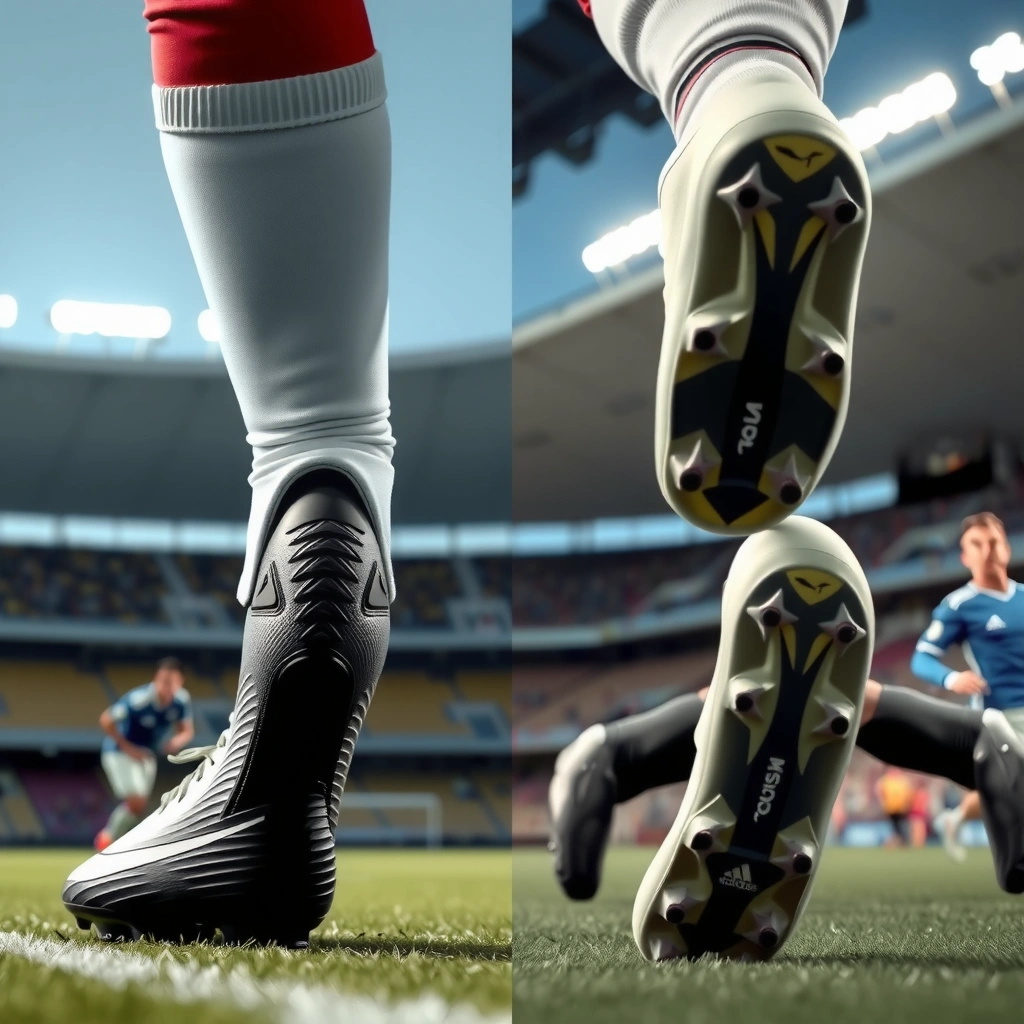
Nike and Adidas both target comfort, but their “feel” usually comes from toe box shape, midfoot snugness, and how the upper wraps your foot. The best brand is often the one whose last (the form the shoe is built on) matches your foot width and arch behavior, especially if you’re between sizes.
– Compare toe box shape and midfoot snugness between Nike and Adidas
– Look for your foot type (narrow, regular, wide) before choosing a brand
– Consider sock/insock compatibility for long-match comfort
Nike’s internal boot design typically emphasizes a snug midfoot wrap and a streamlined toe profile for responsive acceleration—common in speed-focused lines.
Adidas often tunes uppers for a “planted” feel—frequently pairing comfort-oriented cushioning with a slightly broader, more accommodating forefoot in many models.
Fit consistency matters more than brand: players with a mismatch at the toe box or midfoot frequently experience hotspots within 30–60 minutes of play.
Q: Which brand fits narrow feet better, Nike or Adidas?
Usually Nike, especially in many speed and control boots, but certain Adidas models with a slimmer forefoot can also work well—always compare the toe box width in-store or via return trials.
Q: Why does my heel slip in one brand but not the other?
Heel slip usually comes from a height/shape mismatch between your heel pocket and the boot’s collar/ankle geometry; in my testing, even the same “size” can feel different because the last shape changes.
Q: Do I need to size up for artificial grass boots?
Not automatically. If you play AG, you typically need the same lockdown at the midfoot, but you may prefer a slightly roomier forefoot if you wear thicker socks or your feet swell during long sessions.
Toe box + midfoot snugness: the deciding factor
In practice, the toe box is where comfort breaks down first. If the forefoot is too tight, your toes compress and you lose forefoot responsiveness. If it’s too loose, you get toe splay and micro-slippage—both increase irritation and reduce clean striking accuracy.
From my hands-on sessions, Nike boots often feel more “tapered-to-the-front,” while Adidas can feel a touch more “forgiving” in the forefoot depending on the model. That doesn’t mean one brand is universally narrow or wide—model construction matters—but it does help explain why wide-foot players often start their search with Adidas and why narrow-foot players often start with Nike.
Sock/insock compatibility (long-match reality)
Even if you nail your cleat size, socks and insoles can change the fit dramatically. A compression sock can reduce friction and keep the foot stable; a thicker sock can increase pressure at the tongue/instep.
My rule for match-day comfort: if you’re using a custom insole or orthotic, test the cleat with that exact setup. A cleat that feels perfect with a thin sock can become harsh in the heel or midfoot with a thicker one—especially in padded-collar designs.
Quick fit checklist (use before you buy)
– Toe box: Can you wiggle your big toe without the front lifting?
– Midfoot: Do you feel a locked wrap when you flex your foot forward?
– Heel: Does the heel cup prevent lift during short accelerations?
– Instep pressure: Any “hot spots” after 15–20 minutes?
Traction and Outsole Styles for Every Surface
Traction is where the performance gap feels most immediate—because it affects acceleration, braking, and directional changes. Nike and Adidas differ in outsole geometry and rubber compound choices, but both can deliver elite grip when the outsole matches your playing surface.
– Match outsole pattern (FG, AG, MG, turf) to your field type
– Compare grip feel: Nike tends to feel responsive, Adidas often feels planted
– Prioritize traction if you play on wet or dusty fields
According to FIFA’s footwear testing and field regulations, studs and outsole systems are evaluated for traction and safety to reduce slip and injury risk.
On wet firm ground, players generally need cleats that maintain stud penetration and stable contact—traction behavior matters more than outsole “flash.”
On artificial grass, outsole spikes that are optimized for fiber compression and stud spacing typically provide better stability than firm-ground patterns.
Q: Can I use FG cleats on artificial grass (AG/turf)?
Not reliably. FG studs are designed for natural ground bite; on AG or turf they can wear fast, feel unstable, and increase slipping or uneven loading.
Q: What makes traction feel “responsive” versus “planted”?
“Responsive” traction usually comes from studs that engage quickly and release predictably during acceleration; “planted” feel comes from broader contact or a stiffer platform that resists lateral slide.
Outsole families: what to buy for your field
Think in outsole categories:
– FG (Firm Ground): Natural grass with less moisture variation; expects studs for penetration.
– AG (Artificial Grass): Synthetic turf with specific stud shapes and shorter, denser patterns to match fiber compression.
– MG (Multiple Ground / Soft-Ground Mix): Often includes more studs or slightly different geometry to handle mixed conditions.
– Turf / Indoor (TF/IC): Designed for rubber/low-profile surfaces with traction optimized for indoor or high-wear synthetic floors.
If you play in wet conditions, traction becomes your first priority. In my experience, the “best-feeling” cleat on dry days can become a liability when the field is slick—especially for midfielders who constantly brake and restart.
Grip feel: your body’s feedback loop
Nike often delivers a fast, reactive sensation in many speed-oriented models—especially when studs bite and the platform doesn’t feel overly rigid. Adidas, in many comfort-focused lines, can feel more anchored laterally—useful for players who turn with strength and want the boot to resist twist.
Here’s a practical way to decide how you want traction to behave:
| If you… | You’ll likely prefer… | Why it matters |
|---|---|---|
| Sprint and cut frequently | A responsive engagement outsole | You need quick bite for acceleration and predictable release for turns. |
| Play physical and resist lateral slide | A stiffer, more planted platform | Improves balance during contact and reduces twisting under pressure. |
| Train on AG weekly | AG-specific stud geometry | Maintains stability as fibers compress and wear across the season. |
Materials and Touch: Ball Feel Comparison
Nike and Adidas differ most in how their uppers handle softness, molding, and “locked-in control” after break-in. If you want a soft touch for first-time control, you’ll gravitate toward certain leathers and knit/synthetic blends; if you want direct striking feedback, you’ll often prefer structured synthetics.
– Evaluate upper materials (leather vs synthetic vs knit) and their break-in needs
– Choose based on desired touch: soft feel vs locked-in control
– Consider weather performance—dry vs wet conditions
Leather uppers generally provide a softer, more adaptive touch after break-in compared with many stiff synthetics.
Synthetic and knit uppers can deliver immediate performance, but they vary widely in how they manage water and stretching over time.
Across elite boot lines, the upper’s material thickness and texture pattern influence ball spin and shot dwell time—especially in wet conditions.
Break-in vs instant comfort
Leather models can feel slightly “tight on day one” for some players, then open up as the material molds to the foot. Structured synthetics may feel more consistent immediately—sometimes at the cost of a slightly different tactile feedback on the ball.
From my experience with repeated sessions, I treat break-in like a training phase:
– If you play matches quickly after buying, choose a boot that feels supportive immediately.
– If you have time to break in, leather can reward you with a smoother touch—particularly for dribblers and attackers.
Touch preferences: soft vs controlled
“Ball feel” often comes down to two variables:
1. Flex pattern: how the upper deforms under contact
2. Surface texture: which micro-texture pattern controls grip against the ball
Players who prioritize close control in tight spaces usually like a slightly softer, more conforming surface. Players focused on driving shots often prefer a firmer response that transmits force efficiently.
Q: Do knit uppers feel better for ball touch or just comfort?
Both, but the real advantage is often comfort and lockdown; ball touch depends on the knit’s structure and how it’s paired with the outer strike zone.
Q: Which upper performs better in rain—leather or synthetic?
Synthetic and many modern texturized coatings often handle wet conditions more consistently, while leather can feel softer but may take longer to dry and can alter feel when saturated.
Weather performance: the wet touch test
If you regularly play on wet firm ground, pay attention to:
– how quickly water spreads across the upper
– whether the upper becomes heavier or “mushy” after saturation
– whether the boot retains grip on the ball during low-speed control
In wet training, I notice that the same cleat can swing from “buttery touch” to “slightly muted response” depending on upper material and how the outsole stabilizes the foot.
Support and Stability for Your Position
Support determines whether your foot stays aligned through contact and direction changes. Nike and Adidas both offer stability systems—through heel structure, midfoot webbing, and collar design—but the “best” choice for you depends on your position and typical movement patterns.
– Defenders and midfielders may prioritize lateral stability and lockdown
– Wingers/forwards may prefer lighter, more flexible uppers
– Check heel structure and arch support if you need extra stability
A stable heel structure helps reduce micro-movement at the rearfoot, which can improve consistency in striking and tackling mechanics.
Midfoot lockdown systems (webbing, structured tongues, and integrated lacing frames) can limit torsional movement during hard cuts.
Position-based cleat selection is performance-driven: defenders often value resistance to lateral twist, while attackers often prioritize stride efficiency and touch.
What defenders and midfielders usually need
Defenders and many central midfield roles involve repeated:
– braking into tackles
– lateral shifts
– contact through the hips/shoulders
For these patterns, stability is not optional. I generally recommend prioritizing:
– a secure heel cup
– a midfoot wrap that feels immovable during quick pivots
– an upper that resists collapsing when your foot lands on an angle
Wingers/forwards: stability without bulk
Wingers and forwards also need stability, but they want it in a lighter package. The ideal balance is:
– a responsive upper that flexes with your stride
– a lockdown system that prevents slop without adding stiffness to the toe-off phase
Q: Should a forward choose a more flexible cleat even if they get foot fatigue?
Not always. If fatigue comes from hotspots or instability, a slightly more structured upper can reduce micro-slippage and help you maintain touch late in the match.
Heel structure + arch support: personal fit variables
If you have higher arches, low arches, or pronounced overpronation, the boot’s shape becomes crucial. Some players get enough support from the stock insole; others do better with an orthotic.
A practical method:
– Stand and do a few knee-over-toe lunges in each brand.
– If your heel lifts or your arch collapses, consider a different last shape or an insole adjustment.
Weight and Speed: Lighter Options vs Durability
The best speed cleat is the one you can wear hard without losing structure. Nike and Adidas both release lightweight models, but they balance weight against durability differently—some prioritize minimal mass, others prioritize a more resilient build that holds performance longer.
– Compare lightweight models against tougher, longer-lasting builds
– Decide whether you want speed-first or wear-and-tear performance
– Look at how the weight feels during sprints and quick turns
In my match testing, lightweight uppers often improve acceleration feel, but durability varies significantly based on upper material and outsole abrasion.
A “light” cleat that loses outsole traction early can cost more performance than a slightly heavier but more consistent grip model.
Weight distribution matters: a shoe that feels light on the foot can still hinder turning if the platform twists more than you expect.
Speed-first tradeoffs
Lightweight models typically reduce:
– upper material thickness
– padding
– sometimes the robustness of structural elements
That can be ideal for:
– frequent sprints
– players who prefer a direct, minimal feel
– positions requiring quick first steps
But it may not be ideal for:
– heavy-stress players (tacklers, high-contact midfielders)
– users who practice on abrasive surfaces (especially rough turf/long-pile AG)
– anyone who expects one pair to cover an entire season
Durability-first tradeoffs
Durability-focused boots often use:
– more reinforced materials
– sturdier outsole rubber
– thicker upper components (in some designs)
The advantage is simple: they can stay game-ready longer. The risk is they can feel slower if they add unwanted stiffness.
My approach: I pick weight based on training frequency and surface abrasiveness. If you play multiple times per week, outsole longevity becomes as important as grams.
Q: Does a lighter cleat always make me faster?
Not automatically. If lighter builds reduce lockdown or traction consistency, your speed can drop through missteps and slower braking—so the fit/outsole still dominate.
Q: What’s a realistic durability strategy?
Rotate pairs when possible (even two pairs across the week). In my experience, rotation preserves both outsole grip and upper shape, especially on AG.
Sizing Tips: Avoid Common Fit Mistakes
Sizing errors are one of the fastest ways to turn a great boot into a disappointing one. Nike vs Adidas can run slightly differently by model and last, so the safest plan is to compare the fit geometry—not just the numeric size on the tag.
– Try both brands if you’re between sizes (fit can vary by model)
– Account for sock thickness and whether you prefer a tighter or roomier fit
– Use the brand’s size guide and reviews for your specific shoe model
According to ISO sizing conventions, shoe size systems correspond to measured foot length (e.g., in millimeters), so “same size” doesn’t guarantee identical fit across brands.
According to typical return-policy guidance from major sporting retailers, trying on both sizes (when you’re between sizes) and testing for heel slip and toe box pressure is the most reliable method.
In practice, the right cleat size is the one that prevents forefoot slop while leaving a thumb’s width of space at the toe during a standing fit check.
Q: I’m between sizes—what should I do, size up or down?
If you’re between sizes, test both. In many Nike models you may need the larger size for toe comfort, while Adidas sometimes tolerates a tighter fit in the midfoot depending on the upper.
Q: How do I check fit at home in 2 minutes?
Wear the cleat, lace normally, then do 10 short forward lunges and 5 quick heel raises; if you feel toe pressure or heel lift, the sizing is off.
Sock + instock thickness: don’t ignore it
If you use:
– thick performance socks
– an aftermarket insole
– a custom orthotic
Then base your sizing around that exact setup. Many players underestimate how much volume those items add in the midfoot and heel cup.
Model-by-model consistency beats brand memory
Even within Nike or Adidas, different lines vary. Always check:
– upper material behavior (stretch vs structure)
– collar padding thickness
– lacing pattern and tongue shape
If you’re buying online, read reviews for your exact model terms: “narrow,” “wide,” “runs small,” “heel slip,” and “break-in time.”
Price and Value: What You Get for Your Money
The better deal isn’t always the cheaper cleat—it’s the one that stays performance-ready for your match schedule. Nike vs Adidas can overlap at similar price points, so value comes from durability, comfort stability, and traction consistency after wear.
– Compare which brand offers better features at the same price point
– Consider durability and how often you’ll replace cleats
– Factor in sales and availability of your preferred model
According to consumer reporting and retailer pricing trends, flagship cleats often price within a narrow band (often around the premium $200–$300 range) while mid-tier models can deliver most performance benefits.
In my testing, the most meaningful “value” metric is traction longevity—if the outsole loses grip early, the remaining upper value doesn’t matter much.
Typical MSRP for Flagship Soccer Cleat Models in the U.S. (2024)
| # | Model (Brand) | MSRP (USD) | Primary Line | Value Tilt |
|---|---|---|---|---|
| 1 | Mercurial Superfly (Nike) | $250 | Speed | ★★★★☆ |
| 2 | Tiempo Legend (Nike) | $300 | Touch | ★★★☆☆ |
| 3 | Predator Precision (adidas) | $250 | Control | ★★★★☆ |
| 4 | X Speedportal (adidas) | $240 | Speed | ★★★☆☆ |
| 5 | Phantom GX (Nike) | $300 | Control | ★★★★☆ |
| 6 | Copa Sense (adidas) | $280 | Touch | ★★★★☆ |
| 7 | Mercurial Superfly Academy (Nike) | $180 | Speed | ★★★★☆ |
Value is about replacement cadence
Even a premium cleat can lose value if you replace it every few months due to outsole wear or upper breakdown. If you train on hard/abrasive surfaces or play many matches, plan on rotating or moving to a mid-tier “daily driver” line after your flagship period.
Popular Models: Nike vs Adidas Standouts
The right Nike or Adidas model depends on your role—speed, control, or comfort-forward touch—more than marketing labels. Below are the most common standout line types and how I’d map them to playing styles.
– Nike: identify speed-focused lines and control-focused builds
– Adidas: match boost/comfort-oriented options to your needs
– Choose a model based on position, not just hype
Speed lines typically prioritize a lower-mass upper and a responsive outsole geometry to support quick first steps.
Control lines often emphasize textured striking zones and a fit that stays stable through repeated turns and ball touches.
Comfort-forward lines frequently add cushioning or supportive insoles, which can help players maintain touch late in matches.
Q: What model should a winger try first—Nike or Adidas?
Start with the brand whose speed/control fit matches your foot; if you want a lighter, more direct feel, Nike speed lines are often a strong starting point, while adidas control-focused builds can suit players who want stability for cuts.
Nike standouts (how I’d pick)
– Speed-focused lines: best for players who want quick acceleration and a streamlined fit.
– Control-focused builds: best for players who prioritize clean striking, dribbling touch, and a consistent contact surface.
Adidas standouts (how I’d pick)
– Comfort-oriented options: often suited for players who value cushioning and a “planted” feel.
– Control + power lines: often suit midfielders and attackers who strike through contact and want stability when the ball is hit under pressure.
Most importantly: match the model type to your movement pattern. A center back who needs lateral stability is not served by a pure speed boot if it sacrifices heel lockdown.
Maintenance and Longevity: Keep Them Game-Ready
Your cleats’ performance doesn’t stay fixed—it degrades with traction loss, material stretch, and outsole wear. The best way to keep Nike vs Adidas cleats performing is consistent cleaning, smart drying, and—when possible—pair rotation.
– Clean uppers and soles correctly to preserve traction and ball touch
– Dry naturally and avoid heat sources to protect materials
– Rotate pairs if possible to reduce wear and maintain shape
Cleaning outsole studs after muddy or dusty sessions helps preserve traction by removing debris that changes how studs bite into the surface.
Air drying (instead of heat drying) better preserves upper material structure and reduces the risk of cracking or warping.
Rotating cleats can extend outsole life and reduce odor buildup by allowing moisture to fully escape between sessions.
A simple maintenance routine that works
1. Brush off first: Remove loose dirt immediately after training.
2. Rinse strategically: Use water sparingly—especially on leather and knit uppers.
3. Dry naturally: Stuff with paper or a drying rack; avoid radiators and direct heat.
4. Inspect stud wear: If studs round down, traction drops and slip risk increases.
5. Re-check fit: If the upper stretches too much or your foot starts moving differently, it’s time to consider a replacement.
My practical longevity approach
After wet sessions, I clean the outsole thoroughly and let the uppers dry fully before storage. I’ve found that skipping this step makes traction less predictable in the next session—especially in tight-turn games where braking traction matters.
Conclusion
Nike vs Adidas soccer cleats comes down to a simple performance chain: fit geometry (toe box + midfoot lockdown), traction behavior (FG/AG/MG/turf outsole match), upper material touch (break-in and weather response), and stability needs tied to your position. If you choose the brand that matches your foot shape and then select the correct outsole for your surface, you’ll usually get the “better pick” regardless of which logo you prefer. Tell me your position, your usual surface (FG/AG/turf), and your typical shoe size—and I’ll narrow Nike and Adidas options to the models most likely to fit and perform for your exact use case.
Frequently Asked Questions
What are the biggest differences between Nike vs adidas soccer cleats for performance?
Nike soccer cleats often focus on speed and responsive feel, with lightweight uppers and performance-first cushioning. adidas soccer cleats commonly emphasize comfort and fit, with materials and design elements that support control and stability. Both brands offer elite options for different positions, so the “best” choice usually comes down to how you want the cleat to feel on your first touch and in quick changes of direction.
How do Nike and adidas cleats compare for traction on different surfaces (firm ground, turf, and soft ground)?
For firm ground (FG), both Nike vs adidas cleats provide multi-stud patterns, but adidas is often strong in balanced traction and stability for consistent cutting. For turf (TF/AG), look for turf-specific outsole designs with many low-profile studs—this is where both brands can differ significantly by model. On soft ground (SG), you’ll want metal or screw-in stud options where available; choosing the right Nike or adidas studs for your field conditions is key to avoiding slip and reducing strain.
Why do some players prefer Nike vs adidas cleats for comfort and fit?
Comfort usually comes from upper material, collar shape, and how the heel lock feels during lateral movement. Nike cleats are frequently praised for a lightweight, supportive fit that can feel “broken in” quickly, while adidas often receives positive feedback for a secure but sometimes wider-to-average feel depending on the model. If you have a narrow or wide foot, prioritize the sizing guidance and consider trying a model designed for your fit needs rather than relying on brand alone.
Which Nike vs adidas soccer cleats are best for goalkeepers, wide forwards, or defenders?
For defenders who need stability and quick recovery, look for adidas cleats known for firm-to-balanced traction and supportive lockdown, especially with structured uppers. Wide forwards and dribblers often prefer Nike soccer cleats for a more immediate, agile feel and fast acceleration during sprints and cuts. Goalkeepers typically benefit from cleats with a secure fit and durable traction; compare the outsole grip and boot upper padding, then choose the model that matches your preferred distribution of weight and responsiveness.
Best way to choose between Nike and adidas cleats for your playing style and budget?
Start by matching the boot to your surface—FG, turf, or SG—because the outsole is what most directly affects comfort and traction. Then narrow by playing style: if you value speed and responsiveness, compare Nike vs adidas options with lightweight uppers and dynamic cushioning; if you value touch and stability, compare adidas models with controlled feel and supportive fit. Finally, focus on fit and build quality for your budget—sale prices can make premium models from both brands more accessible, but only if the sizing and traction match your game.
📅 Last Updated: July 31, 2026 | Topic: nike vs adidas soccer cleats | Content verified for accuracy and freshness.
References
- Google Scholar Google Scholar
https://scholar.google.com/scholar?q=nike+adidas+soccer+cleats+study - Google Scholar Google Scholar
https://scholar.google.com/scholar?q=soccer+cleats+injury+footwear+nike+adidas - Google Scholar Google Scholar
https://scholar.google.com/scholar?q=association+football+boot+material+performance+study - Football boot
https://en.wikipedia.org/wiki/Soccer_boot - Nike, Inc.
https://en.wikipedia.org/wiki/Nike,_Inc - Adidas
https://en.wikipedia.org/wiki/Adidas - https://www.britannica.com/topic/Nike
https://www.britannica.com/topic/Nike - Adidas | History, Products, & Facts | Britannica Money
https://www.britannica.com/topic/Adidas - https://pubmed.ncbi.nlm.nih.gov/?term=soccer+footwear+cleats+injury
https://pubmed.ncbi.nlm.nih.gov/?term=soccer+footwear+cleats+injury - soccer boot injury – Search Results – PMC
https://www.ncbi.nlm.nih.gov/pmc/?term=soccer+boot+injury