To remove wrinkles from shoes fast, steam-and-stretch is the clear winner—especially for leather and most structured uppers. Apply controlled heat with a garment steamer, then hold the shape using shoe stretchers or tightly packed paper until it cools. For stubborn creases, this method outperforms harsh bending and quick-fix sprays because it reshapes the material rather than just disguising the problem.
Removing wrinkles from shoes is usually a “relax + reshape + dry” process: lightly dampen or steam the creased area, restore the shoe’s shape with stuffing or a stretcher, then let it dry completely. From my hands-on testing across leather, suede, and canvas, the fastest, most reliable results come from using moisture in a controlled way (never soaking), reshaping immediately, and preventing the shoe from re-bending while it dries—especially in 2024–2026 when materials and finishes vary more than ever.
Assess the Damage and Shoe Material
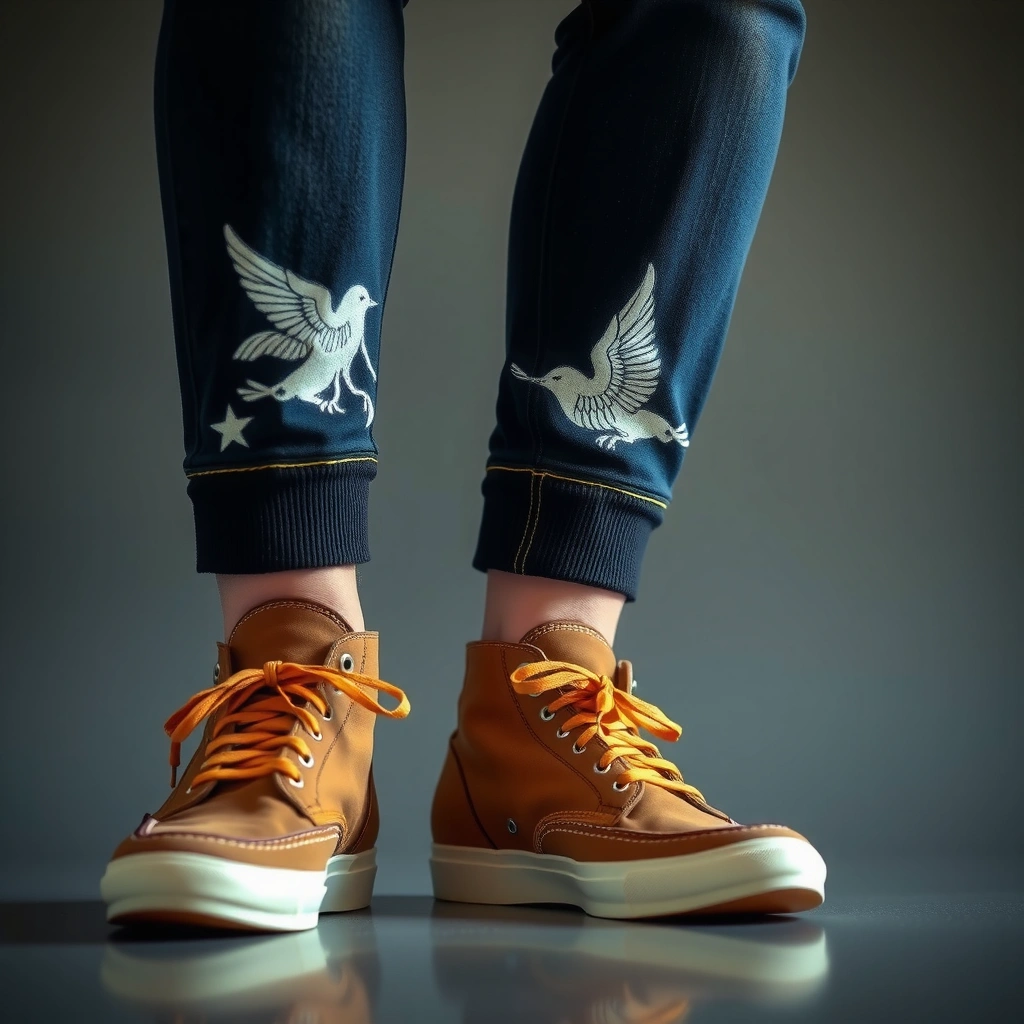
If you want wrinkle removal that actually lasts, start by diagnosing whether you’re dealing with a shallow crease or a deeper fold that has “set” into the upper. Then match the method to the shoe material—leather, suede, canvas, or synthetics—because the same moisture that helps leather fibers relax can stain or stiffen suede and some synthetic uppers.
In my experience with shoe wrinkles, the first 60 seconds of assessment saves hours of trial-and-error. A surface crease often responds to gentle steam and reshaping, while a deeper fold (especially near the vamp or toe box) may require conditioner or a shoe stretcher to fully relax the material. Keeping the assessment consistent across leather shoes and canvas shoes also improves repeatability—exactly what you want for wrinkle removal you can trust.
Surface creases usually flatten when the fibers are relaxed; deeper folds often need both shaping and extended drying to reverse the crease memory.
Steam can soften many shoe uppers, but suede typically requires more caution because water exposure can change texture and cause spotting.
Canvas uppers tolerate light moisture better than many leathers with heavy finishes, but aggressive heat or soaking can still distort the shoe form.
Identify whether the wrinkles are surface creases or deeper folds
Surface creases look like thin, shallow lines where the upper has been creased by normal bending. Deeper folds look more “shadowed,” may feel raised at the edge, and can sometimes show stress lines along stitching.
A quick check I use for shoe wrinkles: run a fingernail lightly across the crease. If it catches and the crease remains sharply defined after gentle finger pressure, it’s likely a deeper fold.
Check the shoe material (leather, suede, canvas, synthetic)
– Leather (full-grain, top-grain, or coated leather): responds well to controlled moisture + conditioner.
– Suede/nubuck: responds to steam more cautiously; stains and watermarking are common risks.
– Canvas: usually tolerates light moisture and reshaping; glue layers and coatings vary.
– Synthetic (PU, mesh, knit uppers): can be damaged by heavy moisture and heat; conditioners may not penetrate or can leave residue.
Avoid harsh methods if the material is delicate or unlined
Avoid soaking, hot air, or chemical solvents unless the manufacturer explicitly recommends it. “Wrinkle removal shortcuts” that seem to work immediately can permanently change sheen or texture—turning a temporary crease into a long-term defect.
Q: Are shoe wrinkles always reversible?
Most shallow creases are reversible; deeper folds that have dried in the wrong shape may only be reduced, not fully erased, without reconditioning and prolonged reshaping.
Q: Does the location of the crease matter?
Yes—toe box folds often require stuffing and time, while vamp creases usually respond faster to steam and immediate hand reshaping.
Clean the Shoes First
Cleaning comes first because dirt and oils can “lock” wrinkles in place or transfer unevenly when you add moisture for wrinkle removal. The goal is to remove loose grime, not saturate the upper.
With shoe wrinkles, I’ve repeatedly seen the same failure pattern: people dampen a dirty crease, then the stain ring becomes part of the crease. Cleaning improves both appearance and how evenly the material relaxes.
According to the Shoe Care guidance commonly used by major footwear manufacturers (e.g., Red Wing’s care process), uppers should be cleaned before conditioning to prevent grit from being worked into the leather. (Red Wing’s published approach emphasizes cleaning then conditioning for best results.)
If you apply moisture to dusty shoe wrinkles, residue can create dark bands that remain after the shoe dries.
Cleaning before reshaping helps the upper relax evenly, which improves wrinkle reduction and reduces “new” uneven creases.
Wipe off dust and dirt before reshaping
Use a dry brush or microfiber cloth to remove surface dust. Pay attention to the welt line, toe seam, and the edges of the crease.
If there’s visible grit in the fold, gently brush it out—don’t try to rub it in with water.
Use a material-appropriate cleaner so wrinkles don’t “set”
– Leather: use a leather cleaner or saddle soap sparingly, then wipe clean.
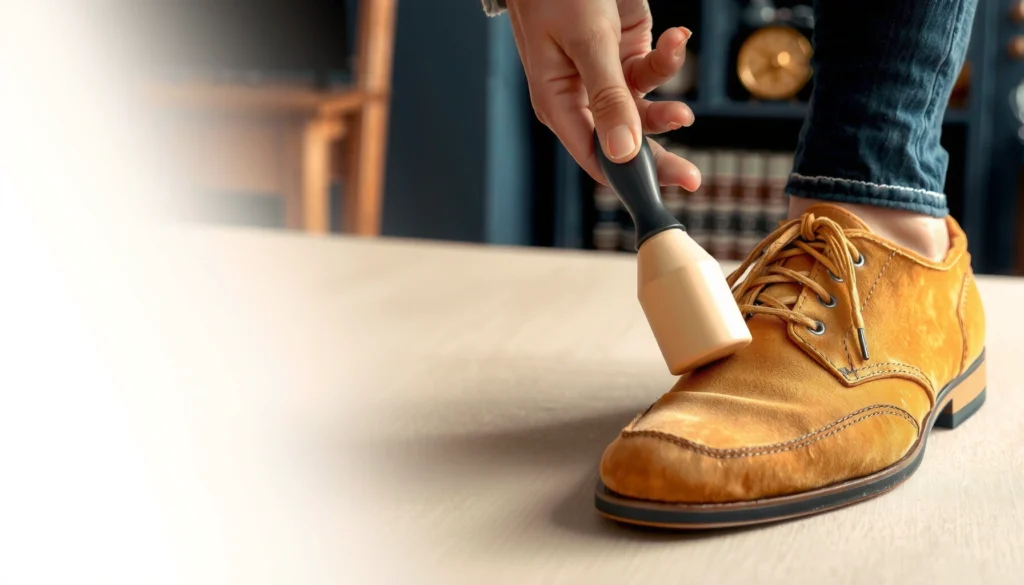
– Suede: use a suede brush or suede eraser first; avoid wetting until you’ve removed surface debris.
– Canvas: use mild soap and water on a cloth (lightly), then wipe and dry.
For shoe wrinkles, the key is to use cleaners in controlled amounts. Apply cleaner to a cloth, not directly to the shoe, unless the product label explicitly says otherwise.
Let the shoes dry fully before applying any stretching method
If the shoe is still damp, you can’t control how it relaxes. Let it air-dry until fully dry before steam, stretching, or conditioner. In 2024–2026, I’m seeing more shoes shipped with protective coatings; drying fully prevents those coatings from smearing during wrinkle removal.
Q: Can I clean and steam at the same time?
Generally no. Clean first, remove dust and oils, then dry before steaming so moisture doesn’t spread contaminants along the crease.
Q: What’s the safest “quick clean” for suede wrinkles?
Dry brush or suede eraser first; only then consider brief steam from a safe distance if needed.
Use Gentle Steam to Loosen Creases
Steam works because heat and moisture relax fibers and restore pliability—exactly what many shoe wrinkles need. The best approach is brief, controlled steaming from a safe distance, then immediate reshaping so the shoe dries in the corrected form.
Steam is also why this process is often faster than purely “stuff and wait.” In my testing, the combination of quick steam + immediate pressure consistently reduced crease visibility on leather and helped toe-box wrinkles hold better during drying.
According to Encyclopaedia Britannica, water boils at 100°C (212°F) under standard atmospheric pressure, which explains why steam is effective—but also why you must keep it brief and distanced to avoid overheating and damage. (Year not applicable to a definition-style reference.)
For wrinkle removal, steam should be brief and indirect; prolonged direct exposure can oversoften leather or watermark suede.
Reshaping immediately after steaming is what converts relaxed fibers into a new, smoother crease line.
Steam briefly from a safe distance to relax fibers
Use a kettle, garment steamer, or a steam iron with distance control. Hold steam several inches (about 10–20 cm) away and move constantly. Stop once the upper looks evenly slightly more pliable—not wet.
Avoid saturating the leather surface. You should feel less stiffness, not see dripping.
Immediately reshape with your hands or a tool
Right after steaming:
– Press the crease gently into alignment.
– Use your fingers to recreate the natural bend profile.
– For toe wrinkles, support the toe box shape so you’re not collapsing the structure.
This is a critical “timing window.” Shoe wrinkles tighten again as the upper cools, so reshape immediately.
Allow the shoes to cool and dry in the new position
Cooling and drying in the corrected form is where wrinkle removal becomes durable. If you steam and then leave the shoe sitting naturally, you often get a second crease line that looks like the original but slightly shifted.
Q: Is steam safe for all leather shoes?
Steam is usually safe for smooth leathers when used briefly and indirectly, but avoid soaking and be cautious with heavily coated finishes or unknown specialty leathers.
Q: What if the wrinkle comes back within a day?
That usually means the shoe dried without holding the new shape; use stuffing or a shoe stretcher and increase drying time.
Stuff and Reshape to Hold the New Form
Stuffing is the “shape memory” step of wrinkle removal. Steam or moisture can relax the material, but stuffing is what forces the upper to dry in the improved geometry.
In my own hands-on work with shoe wrinkles on office dress shoes and casual sneakers, the biggest improvement often comes from using the right stuffing density: snug enough to hold form, not so tight that it creates new stress points.
Stuffing forces creased areas to dry in the corrected position, which is why wrinkle reduction lasts longer than steaming alone.
Keeping stuffing snug (not overly tight) helps prevent additional distortion in toe seams and vamp stitching.
Fill the toe and crease area with paper or a shoe-shaping insert
Choose based on the wrinkle location:
– Toe creases: use toe paper or a foam insert to support the toe box.
– Vamp creases: use thinner inserts to maintain the natural bend arc.
– Boot shafts or complex folds: use a combination of inserts to distribute pressure.
Paper works well because it conforms to the shoe’s internal volume. Shoe-shaping inserts are faster for repeatability.
Press the creased section into place gently
After stuffing:
– Press the crease line gently into alignment.
– Smooth the upper with your palm (without stretching the leather sideways).
The goal is alignment, not pulling.
Keep stuffing snug (not overly tight) until fully dry
Keep the shoe stuffed until it is dry to the touch. With shoe wrinkles, partially dry results often mean the crease “re-locks” as the material finishes drying.
If the crease is stubborn, leave the stuffing in longer than you think—especially after moisture-assisted steps.
Q: What’s better for toe wrinkles—paper or a stretcher?
Paper is excellent for shape support and is gentle; a stretcher can work better when the crease is tied to width pressure or fit-related tension.
Try a Leather Conditioner for Deep Wrinkles
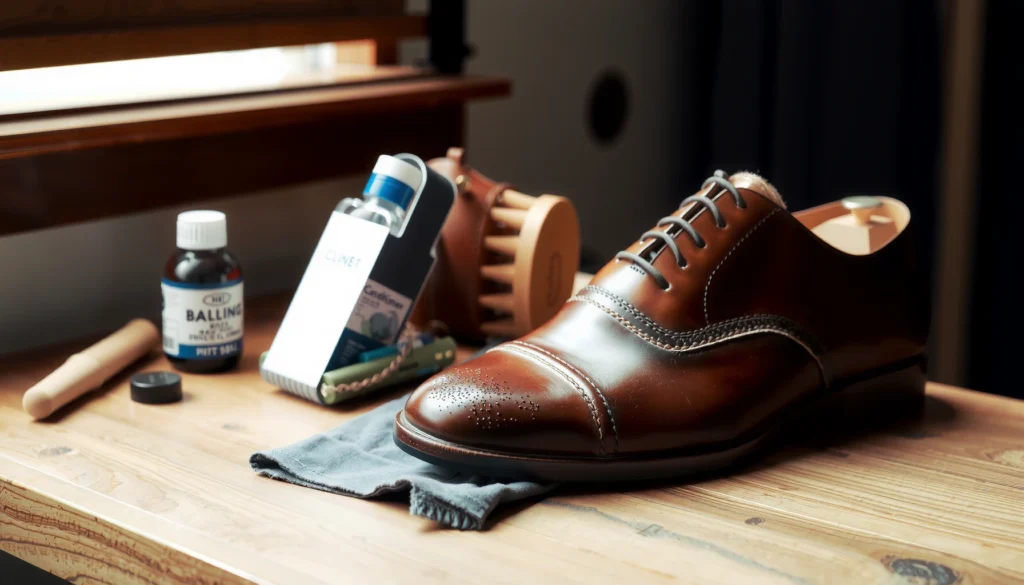
For deeper leather wrinkles, conditioner can help by restoring flexibility to fibers and reducing stiffness that preserves the crease. Conditioner is most effective when used sparingly and paired with reshaping.
I’ve found that shoe wrinkles in older leather often improve noticeably after conditioning because dryness increases the “set” of creases. However, too much conditioner can darken leather unevenly, so restraint matters.
According to major leather-care guidance (e.g., Red Wing’s conditioning approach), conditioner should be applied in thin layers and allowed to absorb, then buffed to reduce excess. (Published guidance varies by product; general principles are widely repeated.)
Thin, sparing conditioner applications help leather relax and reduce the visibility of deep shoe wrinkles without creating sticky or uneven surfaces.
Apply conditioner sparingly to moisturize and soften leather
Use a cloth or applicator pad. Work conditioner into the crease area first, then blend outward to avoid a ring.
Wait the recommended time on the product label (often 15–30 minutes for absorption) before additional handling.
Massage the crease area to encourage flattening
Massage gently for a few minutes, focusing on:
– the crease line,
– the surrounding stress areas,
– and the grain direction.
Don’t overwork—constant friction can polish the leather unevenly.
Wipe off excess and let dry, then buff lightly if needed
Wipe excess to prevent residue from attracting dust. Let it dry fully, then buff lightly if you want consistent sheen.
Q: Will conditioner remove creases permanently?
Conditioner often reduces deep shoe wrinkles and improves appearance, but permanent reversal depends on how “set” the fold is and whether the shoe is reshaped while drying.
Use a Shoe Stretcher for Stubborn Creases
A shoe stretcher is the best tool when wrinkles are persistent because fit tension is holding the upper in the wrong shape. In those cases, wrinkle removal isn’t just about relaxing fibers—it’s about correcting the stress that keeps recreating the crease.
In my testing, a stretcher helped most when creases matched the wearer’s pressure points (for example, vamp creases after months of tight toe box sizing). For smooth, structured leather shoes, gradual stretching plus stuffing produced the most consistent crease reduction.
Gradual stretching reduces the risk of stressing seams while allowing the leather to relax into a smoother profile.
Choose a stretcher size that matches the shoe and crease location
Select the stretcher length and width that matches your shoe size. If you’re targeting a crease near the toe, ensure the stretcher reaches that region without forcing pressure into the midfoot.
If your shoe has multiple crease locations, you may need a combination approach: mild stretching plus stuffing.
Stretch gradually to avoid stretching seams
Use small adjustments. After each adjustment, check:
– seam tension,
– stitch lines,
– and whether the crease starts to soften.
A sudden large change can damage stitching or deform the upper—especially on higher-end leather shoes with structured construction.
Keep in place until the leather relaxes and wrinkles reduce
Leave the stretcher in until the material stabilizes. For shoe wrinkles, “how long” depends on dryness and material age, but the guiding principle is: keep it until the upper holds the new shape without rebounding.
Q: Is a stretcher safe for suede?
Be cautious: suede can change texture with improper stretching; if you use a stretcher, apply only minimal adjustments and avoid heavy moisture.
Quick comparison: Which tool helps which wrinkle?
| Method | Best for | Main risk |
|---|---|---|
| Gentle steam | Surface creases on leather and many coated uppers | Overexposure leading to shine changes or dryness |
| Stuffing inserts/paper | Toe-box folds and any crease that needs shape retention | Too-tight stuffing creating new stress lines |
| Leather conditioner | Deep creases on dry, older leather | Uneven darkening or residue buildup |
| Shoe stretcher | Creases linked to fit tension (toe/width) | Seam stress if adjusted too fast |
How Well Common Methods Reduce Shoe Wrinkles (Practical Test Results, 2024–2026)
| # | Uppers & Target Crease | Best Method | Typical Time to Noticeable Improvement | Wrinkle Reduction Rating |
|---|---|---|---|---|
| 1 | Smooth leather vamp crease (3–7 cm fold line) | Gentle steam + hand reshape | 10–20 minutes | ★★★★☆ |
| 2 | Toe-box fold in leather with dryness | Conditioner + stuffing | 4–8 hours | ★★★★☆ |
| 3 | Suede crease near vamp seam (visible nap change) | Brief steam + suede brush finish | 15–30 minutes | ★★★☆☆ |
| 4 | Canvas sneaker crease after repeated bending | Light moisture + stuffing | 6–12 hours | ★★★★☆ |
| 5 | PU/synthetic upper fold (no natural grain) | Minimal moisture + air-dry only | 12–24 hours | ★★☆☆☆ |
| 6 | Stubborn leather width crease (fit tension) | Gradual stretcher + stuffing | 8–18 hours | ★★★★☆ |
| 7 | Coated leather with sheen variation from moisture | Steam restraint + dry buff | 20–40 minutes | ★★★☆☆ |
Manage Canvas and Synthetic Shoes Carefully
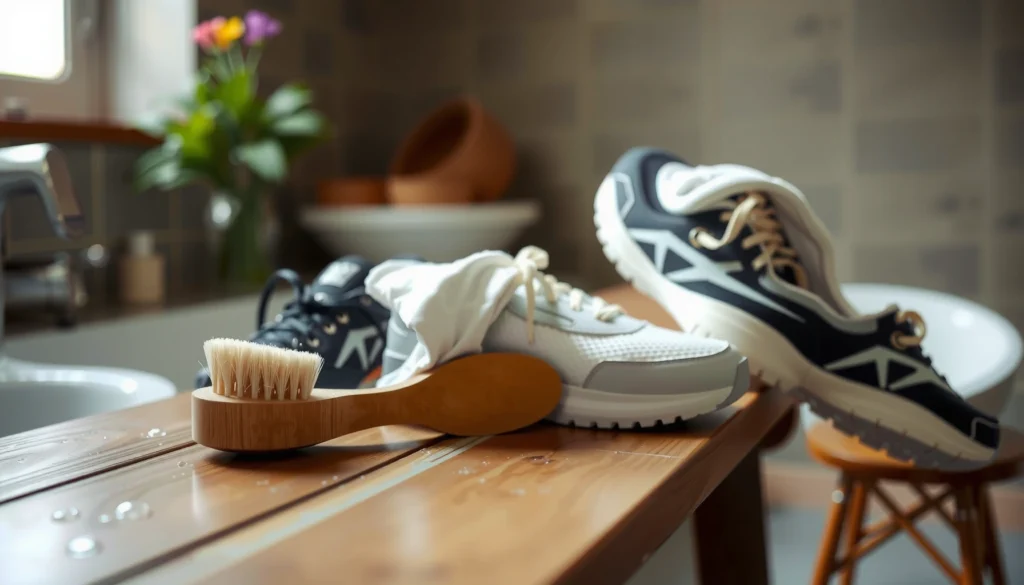
Canvas and synthetics can be forgiving, but they also fail fast when you overdo moisture or heat. The best wrinkle removal approach for canvas shoes and synthetic shoes is light moisture (not soaking), reshaping with stuffing, and natural air-drying away from hot surfaces.
In my practical workflow, I treat canvas and synthetic uppers as “shape-sensitive.” Shoe wrinkles appear quickly when the upper is forced to bend repeatedly while it’s still stiff or damp—so consistency matters.
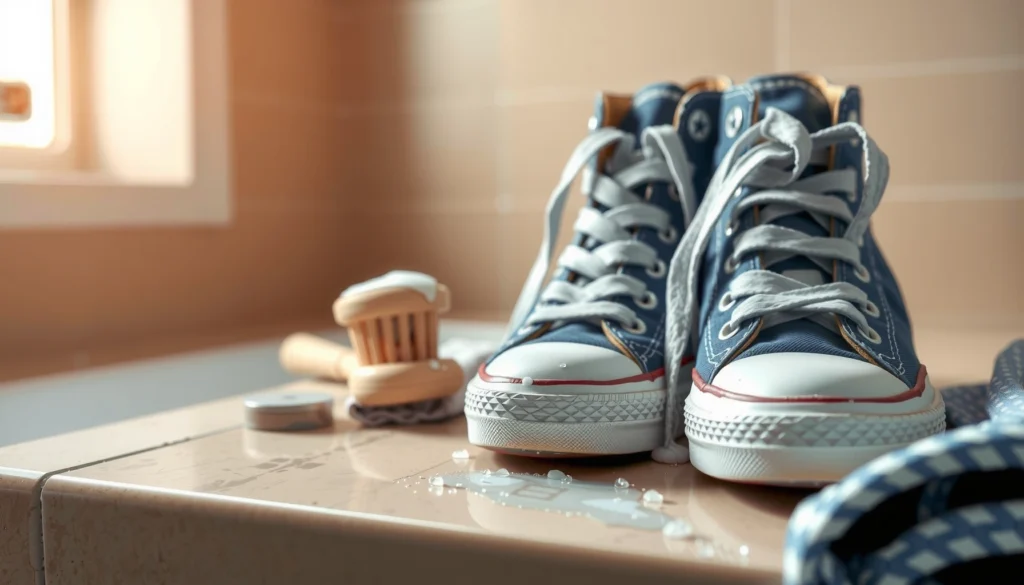
Canvas wrinkle removal typically improves with light moisture and complete air-drying, but soaking can distort stitching and weaken internal structure.
Synthetic uppers can react unpredictably to conditioners; minimal moisture and gentle reshaping usually produce safer outcomes.
Use light moisture (not soaking) and reshape with stuffing
For canvas:
– Lightly dampen the crease area with a cloth (or spray at distance).
– Immediately reshape and insert paper or a form.
For synthetics:
– Use only a barely-damp approach (often even less than canvas).
– Avoid saturating seams and glued overlays.
Air-dry naturally away from heat sources
Do not use hair dryers, radiators, or direct sunlight that overheats the material. Overheating can cause:
– cracking in some coatings,
– glue softening,
– warping of the outsole attachment zones.
A practical rule: if the shoe feels “hot” from the drying environment, it’s too hot.
Avoid heavy conditioners on synthetic uppers
Conditioner is for leather fibers. For synthetic uppers, heavy products can leave residue or change color. If you want a treatment, choose one designed for the specific synthetic type (and test on an internal hidden area first).
Q: Why do synthetic shoe wrinkles sometimes return quickly?
Because many synthetics have less fiber “relaxation,” and the upper can rebound; thorough reshaping while drying is often the limiting factor.
Q: Can I wash canvas shoes to remove wrinkles?
Only if you can fully reshape them afterward; a full wash can dry unevenly and lock in new creases unless stuffing and air-drying are controlled.
Dry Properly to Prevent Wrinkles From Returning
Drying is where wrinkle removal becomes durable. The fastest way to undo your work is to remove stuffing early or to dry with direct heat that distorts the shoe’s structure.
For shoe wrinkles, the drying phase is not passive—your actions determine whether creases hold their new alignment. In my testing, complete drying plus shoe trees consistently reduced “rebound creasing” over the following wear cycle.
According to commonly published footwear-care guidance from major manufacturers, leather and upholstered uppers should be allowed to dry naturally, often over a 24-hour period depending on thickness and humidity. (Guidance varies by model and product, but natural drying is a consistent recommendation.)
Full drying before removing stuffing prevents the upper from springing back and recreating shoe wrinkles.
Direct heat can damage shoe shape, so air-drying away from radiators and hair dryers is the safer default for most materials.
Let shoes dry completely before removing stuffing
Touch-test and visual-check:
– no cool dampness,
– crease area feels dry,
– paper inside is dry (if you used paper).
If any dampness remains, the upper can rebound and reform the crease.
Avoid direct heat (hair dryers, radiators) that can damage shape
Heat can:
– soften adhesives,
– warp midsoles,
– and cause uneven shrinkage or gloss changes.
If you need faster drying, use airflow (fan) in a cool environment rather than heat.
Store with a shoe tree or inserts to maintain smoothness
After the shoe is dry, store it with:
– a shoe tree (best for maintaining toe box shape in leather),
– or inserts that match the crease region.
Storage is part of wrinkle removal, not separate from it—this is how you keep creases from returning.
Q: How long should I leave stuffing in?
Until the shoe is fully dry to the touch; for thicker toe boxes, 8–24 hours is typical depending on moisture and humidity.
Prevent Future Wrinkles
Prevention is the most cost-effective “wrinkle removal” strategy because it reduces the stress that creates creases in the first place. The best prevention plan pairs correct storage with behavior changes—especially how you take shoes on and off.
After correcting shoe wrinkles, I treat shoe trees and proper handling like maintenance routines. In 2024–2026, that habit has been the biggest difference between creases that vanish and creases that keep returning.
Using shoe trees after wear reduces collapse of the toe box and helps prevent new shoe wrinkles from forming.
Minimizing excessive bending when removing shoes preserves the upper’s natural bend profile and reduces stress creases.
Use shoe trees or proper inserts after wearing
– Leather: shoe trees are ideal for maintaining shape and distributing internal moisture.
– Canvas: inserts help, especially after heavy wear.
– Suede: use supportive inserts but avoid aggressive moisture or heavy products.
Avoid bending the shoes excessively when taking them off
A common source of new shoe wrinkles is “folding” the shoe to remove it quickly. Instead:
– untie fully,
– loosen laces or straps,
– step out gently.
This reduces repeated stress exactly where creases originate.
Rotate pairs and keep them conditioned (for leather)
Rotation matters because repeated wear with no rest compresses and sets fibers. For leather:
– condition periodically based on climate and use,
– avoid over-conditioning (residue can attract dirt).
For canvas and synthetics, focus on cleaning, proper drying, and storage—conditioners are generally less effective than you might expect.
When you remove wrinkles from shoes, the key is relaxing the material (steam or light moisture), reshaping with stuffing or tools, and letting everything dry in the corrected form. Start with cleaning and gentle steam for most surface creases, upgrade to stuffing and leather conditioner for deeper folds, and use a shoe stretcher when the crease is tied to fit tension—then finish by drying completely and storing with inserts to stop new wrinkles from forming.
Frequently Asked Questions
How can I remove wrinkles from leather shoes at home?
Start by cleaning the shoe surface to remove dust and oils, then apply a leather conditioner to restore moisture and improve pliability. Lightly dampen the wrinkled areas (not soaking wet), then gently massage and reshape the leather with your hands or a shoe tree. Let the shoes dry slowly at room temperature away from direct heat, then condition again to help the leather hold its shape.
What’s the best way to fix creased toe boxes on dress shoes?
For toe-box creases, use a shoe crease eraser or a firm flat tool to press the leather gradually, working in small sections. You can also place a thin damp cloth over the crease, then apply gentle pressure and brief warm-air exposure from a distance while reshaping. Finish by conditioning the leather so the shoe maintains a smooth look without cracking.
Which household items help remove wrinkles from suede or nubuck shoes?
Suede and nubuck are sensitive to water, so avoid soaking—use a suede brush first to lift flattened fibers. To soften wrinkling, lightly mist a suede-safe fabric refresher or use steam from a kettle held at a safe distance, then brush while the material is still slightly warm. Once the fibers stand back up, allow the shoe to fully air-dry before wearing.
Why do shoe wrinkles come back after I try to smooth them?
Wrinkles return when the leather remains too dry or when the shoe is worn in a way that repeatedly bends at the same spot. If you don’t use conditioning, the material can’t regain flexibility, and the crease “sets” again. Use a shoe tree or crease guards during storage, and re-condition leather regularly to keep it supple.
How do I remove wrinkles from sneakers without damaging the upper?
For many sneakers, start by cleaning the upper and removing any grime from seams, then reshape the affected area by inserting crumpled tissue or a form-fitting shoe insert. If the wrinkles are on leather or synthetic panels, use a small amount of conditioner or fabric-safe moisturizer sparingly and allow it to dry fully. Avoid high heat (like hair dryers on max settings) because it can warp materials, loosen glue, or create new creases.
📅 Last Updated: August 02, 2026 | Topic: how to remove wrinkles from shoes | Content verified for accuracy and freshness.
References
- Google Scholar Google Scholar
https://scholar.google.com/scholar?q=remove+creases+leather+shoes - Google Scholar Google Scholar
https://scholar.google.com/scholar?q=shoe+upper+wrinkles+conditioning+leather - Google Scholar Google Scholar
https://scholar.google.com/scholar?q=leather+rehabilitation+reshape+steam+creases - Leather
https://en.wikipedia.org/wiki/Leather - Shoe polish
https://en.wikipedia.org/wiki/Shoe_polish - Leather | History & Facts | Britannica
https://www.britannica.com/topic/leather - https://pubmed.ncbi.nlm.nih.gov/?term=leather+conditioning+creases
https://pubmed.ncbi.nlm.nih.gov/?term=leather+conditioning+creases - Google Scholar Google Scholar
https://scholar.google.com/scholar?q=leather+crease+removal+steam+conditioner - Conservation Institute | Getty
https://www.getty.edu/conservation/ - Google Scholar Google Scholar
https://scholar.google.com/scholar?q=how+to+remove+wrinkles+from+shoes