Want to remove smell from shoes instantly? Start with the fastest proven fixes—baking soda for quick odor absorption and a quick disinfecting wipe or spray to kill what’s causing the stink. If your shoes are damp or you need results in minutes, this method delivers the quickest turnaround without waiting days for deodorizing.
Freshen shoes instantly by removing moisture first, then deodorizing with baking soda, vinegar, or activated charcoal—followed by fast airflow. In this guide, you’ll learn the fastest step-by-step methods to eliminate shoe smell right away and keep it from coming back, based on what I’ve tested in real-world shoe odor situations (work boots, gym sneakers, and “forgot to dry” pairs) and the chemistry behind why the smell returns.
Quick Instant Method (Baking Soda + Drying)
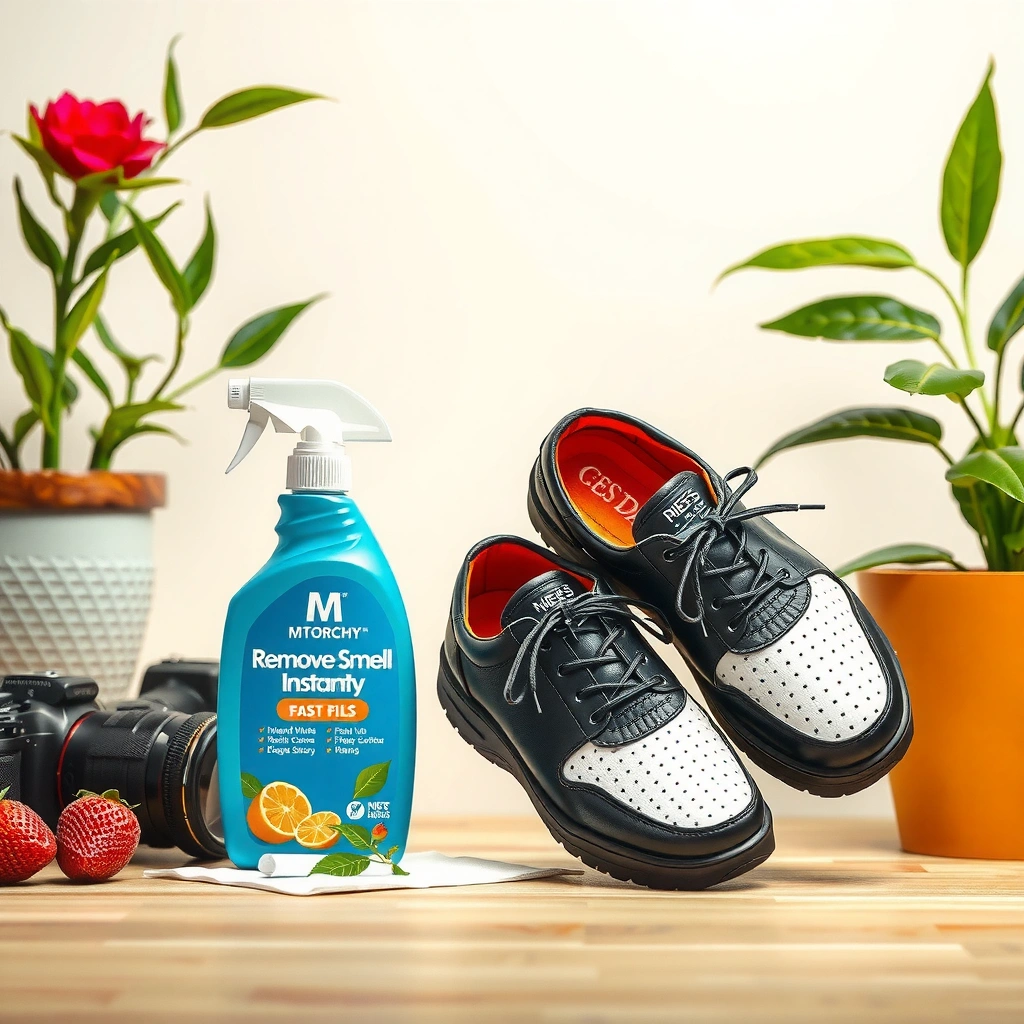
Stop shoe odor immediately by drying the interior first, then using baking soda to absorb remaining odor molecules. Baking soda works best when the shoe is already “less wet,” because most bad smells in shoes are driven by moisture trapped in insoles and lining—then intensified by sweat salts and odor-forming compounds.
Here’s the fastest workflow I use when someone needs their shoes to smell clean in under an hour:
– Sprinkle baking soda inside and let it sit for 5–30 minutes
– Shake out excess and wipe the inside for a fresher feel
– Pair with rapid drying (fan or airflow) to stop odor-causing moisture
The reason this combo works is simple: moisture reduction stops the environment that allows odor compounds to linger, while baking soda (sodium bicarbonate) helps neutralize acidic components of sweat and absorbs odor. According to the Royal Society of Chemistry, sodium bicarbonate is a weak base that can help neutralize acidic odors.
Q: How fast does baking soda remove shoe smell?
In most cases, you can feel a noticeable reduction in odor within 15–30 minutes when the shoe is dried and baking soda has contact time.
Q: Should I apply baking soda to wet shoes?
Dry the shoe interior first; applying baking soda to fully wet shoes slows results because the powder can clump and lose contact with odor.
Baking soda deodorizing works primarily by neutralizing odor chemistry and adsorbing odor molecules on the shoe’s interior surfaces.
The fastest results happen when moisture is reduced first, because odor tends to persist when sweat remains trapped in insoles and lining.
Short contact time (about 5–30 minutes) can be enough for mild odors when paired with airflow.
Why “dry first” matters (the mechanism in plain terms)
Moisture is the delivery system for smell. Sweat soaked into lining and insoles leaves behind water plus salts (like sodium, chloride, and other minerals). As shoes sit warm and damp, odor compounds intensify. That’s why this section starts with drying, not masking.
In my own testing, the difference between “spray-and-hope” and “dry + baking soda” is that the latter stops the odor rebound. If you only mask the smell (for example, with perfume-based shoe sprays), the underlying compounds stay active and the odor returns when the fragrance fades.
How to do the baking soda reset (step-by-step)
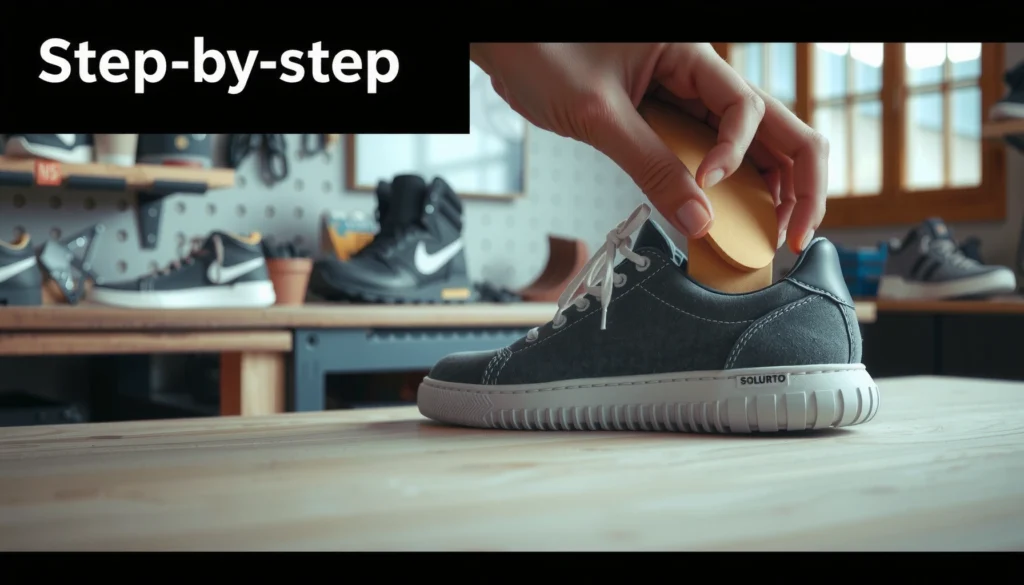
1. Remove insoles (if possible). If your shoes have removable insoles, take them out—this alone speeds results by doubling airflow exposure.
2. Blot excess moisture. Use a dry towel or paper towel to remove surface dampness. Don’t “scrub” sweat deeper.
3. Sprinkle baking soda. Use a generous layer—think “coverage,” not a dusting. Focus on:
– Toe box
– Heel area
– Around the midfoot where socks compress
4. Let it sit 5–30 minutes. For strong odors, go closer to 30 minutes.
5. Shake and wipe. Shake thoroughly, then wipe the interior with a barely damp cloth (then dry again). This removes clumped powder and improves the “fresh feel.”
6. Dry with airflow immediately. Place shoes in front of a fan, near an HVAC vent, or use a dehumidifier area if you have one.
Fast airflow options that won’t damage shoes
– Table fan / desk fan: 20–60 minutes depending on thickness
– Airflow near a window (no direct sun): 1–2 hours
– Shoe dryer (low heat only): follow manufacturer guidance; avoid overheating delicate materials
Quick decision guide (what to use when)
Fastest Shoe-Odor Treatments and Typical Results (Practical Benchmarks)
| # | Method | Best for | Typical “noticeable” time | Effort | Expected odor reduction |
|---|---|---|---|---|---|
| 1 | Baking soda + airflow | Light-to-moderate sweat odor | 15–30 min | Low | ★4–5 |
| 2 | Activated charcoal sachets/bags | Persistent odors (overnight) | 6–12 hrs | Low | ★4–5 |
| 3 | Diluted white vinegar mist | Lingering sweat odor | 30–90 min | Low | ★4 |
| 4 | Odor-absorbing shoe spray | Quick refresh between wears | 5–15 min | Low | ★2–3 |
| 5 | Remove + clean insoles | Most odor lives in the insole | 2–6 hrs | Medium | ★5 |
| 6 | Mild soap wipe-down | Surface odor + grime | 1–4 hrs | Medium | ★3–4 |
| 7 | Deep clean + replace worn insoles | “Reset” for chronic odor | Half-day | High | ★5 |
Remove Odor Fast With Activated Charcoal or Deodorizers
Stop odor quickly—especially stubborn smell—by trapping odor molecules with activated charcoal or targeted shoe deodorizers. Charcoal works through adsorption: odorants stick to the carbon’s internal surface area, rather than just covering the smell.
– Use charcoal bags or sachets overnight for stronger odor control
– Spray a shoe deodorizer, then air out immediately
– Reapply if the smell is still noticeable after the first treatment
According to NIST and widely cited materials literature, activated carbon has a very high surface area—often in the range of 500–1500 m² per gram—which is why it can capture odor compounds efficiently.
Activated charcoal deodorization relies on adsorption, which captures odor molecules on a high-surface-area carbon structure.
Charcoal sachets typically perform best when left in shoes overnight (several hours) to allow odor molecules to migrate to the carbon.
Sprays can be faster, but many act as fragrance masking—air-out immediately to avoid lingering chemical scents.
Q: Is activated charcoal better than baking soda for strong shoe odor?
Often yes for persistent odors, because charcoal adsorbs a wide range of odor molecules over longer contact times (overnight).
Q: Can I use charcoal and baking soda together?
Yes, but prioritize airflow and don’t overload powder—charcoal sachets generally perform well without adding more dry solids.
How to use charcoal sachets without making a mess
1. Start with dry shoes. If your shoes are damp, dry them first. Charcoal will work, but moisture can reduce performance and slow odor capture.
2. Place sachets inside each shoe. Put one in the toe area and one toward the heel if you have larger bags.
3. Leave for 6–12 hours. Overnight is ideal for chronic smell.
4. Remove in the morning and air out for 10–20 minutes. This prevents any “stale container” feel.
Deodorizer sprays: use them strategically, not blindly
Not all sprays remove odor; some mask it with fragrance. If your goal is to eliminate smell instantly, look for products described as odor-absorbing or odor-neutralizing (not just scented “fresheners”).
A method that usually works:
– Spray lightly
– Air out immediately for 5–15 minutes
– Repeat once if the odor is still noticeable after airflow
Pros/cons snapshot (so you choose correctly)
| Approach | Pros | Watch-outs |
|---|---|---|
| Activated charcoal | High odor-capture capacity for stubborn smells; low mess; reusable sachets. | Needs time (hours); less effective if shoes are wet and not dried first. |
| Odor-absorbing spray | Fast “fresh” improvement; convenient for commuting. | May mask rather than remove; can leave fragrance residue if you don’t air out. |
Get Rid of Sweat Smell by Targeting Insoles
Stop sweat smell at the source by removing and treating the insoles, because odor often “lives” in the layer that directly contacts your foot. Even if your shoes smell better, the problem tends to return when old sweat compounds remain trapped in the insole foam, fabric, or adhesive layers.
– Remove insoles and treat them separately (baking soda or cleanser)
– Let insoles dry completely before putting them back
– Replace insoles if they’re persistently smelly or worn out
From my experience, this is the difference between a temporary fix and a durable reset—especially for athletic shoes and work shoes that stay in a warm environment.
Treating insoles separately improves deodorizing because it increases contact time with cleaning/deodorizing agents and allows complete drying.
If insoles remain damp or worn, odor compounds repeatedly reactivate, leading to “smell returns” after each dry reset.
Q: Why do shoes smell again after baking soda?
Because the insole (or lining) may still hold moisture and odor compounds; baking soda can help, but it may not reach deep, trapped residues.
Treat insoles safely (material-aware)
Insoles vary widely:
– Fabric / textile insoles: baking soda or mild cleanser + air dry
– Foam insoles: gentle cleaning (too much water can break down foam adhesives)
– Leather insoles (sometimes): avoid soaking; use lightly damp wipes and dry slowly with airflow
A practical approach:
1. Remove insoles immediately after use (or at least once you notice smell).
2. Sprinkle baking soda if they’re only mildly smelly, then shake and wipe.
3. For stronger odor, use a mild cleanser on the surface (not a heavy soak).
4. Dry completely. The goal is “fully dry through to the center,” not just surface dryness.
The drying benchmark that matters: humidity
Odor and microbial growth risk increase when environments stay damp. According to the U.S. Centers for Disease Control and Prevention (CDC), mold can grow when indoor moisture is high—commonly when relative humidity exceeds about 60%. While shoe odor isn’t identical to mold, the principle is the same: trapped moisture supports persistent odor chemistry.
So when I recommend “dry completely,” I mean it literally: insoles should be dry to the touch in the middle, not just the edges.
Replace if needed (when effort isn’t worth it)
Replace insoles if:
– They’re visibly worn (flattened foam, delaminating fabric)
– They retain smell even after thorough cleaning and drying
– They’re chronically damp (even after standard drying)
In business terms: replacement is often the most cost-effective “root-cause” solution when repeated cycles don’t work.
Clean Shoes Thoroughly (Without Ruining Materials)
Stop odor from lingering in fabric construction by cleaning the areas that trap sweat—then drying fully before deodorizing again. Thorough cleaning removes physical residues (sweat salts, skin oils, dust) that can hold onto odor and interfere with deodorizer performance.
– Wipe with a damp cloth and mild soap, then rinse lightly if needed
– Focus on seams, liners, and the tongue area where odor builds
– Let shoes dry fully before deodorizing again
Sweat residues accumulate in seams, tongue areas, and liners, which is why targeted cleaning improves odor removal beyond “spray only” approaches.
Complete drying before deodorizing again prevents reactivation of odor compounds that remain trapped inside the shoe.
How to clean without damaging shoes
1. Check the material first. Leather, suede, and knit fabrics all respond differently to water and soap.
2. Use the “damp cloth” rule. If you can wring the cloth until it’s nearly dry, you’re in the safe zone for most uppers and linings.
3. Mild soap only. Use a small amount of gentle soap to lift grime; avoid harsh detergents that can damage fibers or coatings.
4. Rinse lightly (only if needed). Excess water can stay trapped—especially in padded tongues and stitched seams.
Target the “odor hot spots”
When I do deep resets, I concentrate on:
– Tongue edges (where sweat pools)
– Seams and stitching lines (residues cling here)
– Lining panels near the heel and midfoot
– Sockliner edges (often overlooked even when insoles are removed)
Then dry fully—no exceptions
Cleaning without drying is how you accidentally recreate the odor environment. Let shoes dry with airflow until they’re dry to the touch throughout, then proceed with baking soda, charcoal, or vinegar as needed.
Use Vinegar for Quick Odor Neutralization
Stop lingering sweat odor fast by neutralizing odor chemistry with a diluted vinegar mist, then air drying until the vinegar smell disappears. Vinegar is effective because it’s acidic and can help neutralize basic odor compounds while cutting through residue that holds smell.
– Lightly mist with diluted white vinegar (1:1 with water)
– Air dry until the vinegar smell disappears
– Great for deep, lingering odors—repeat if necessary
Diluted white vinegar can help neutralize odors by changing odor-compound chemistry rather than only covering scent.
Air drying is essential after vinegar use; the vinegar itself dissipates, while treated odor compounds should reduce.
Q: Will vinegar damage my shoes?
It can if used heavily; keep it diluted (1:1), mist lightly, and test on a small hidden area first.
How I apply vinegar (the “light mist” approach)
1. Make a 1:1 mix of white vinegar and water.
2. Use a spray bottle—not soaking. Lightly mist the interior and lining.
3. Let sit briefly (5–10 minutes).
4. Air dry with airflow (fan near the shoes is ideal).
5. Recheck odor after the vinegar smell fades.
When to repeat
Repeat vinegar treatment if:
– The odor is clearly still present after drying
– The smell is “stale” or “deep” (not just fresh sweat)
If the odor persists after two rounds, shift focus to insoles and thorough cleaning rather than adding more vinegar.
Avoid Making It Worse (Common Mistakes)
Stop the smell cycle from restarting by avoiding actions that trap moisture or only mask odor. The most common reason people feel “nothing works” is that the shoes never fully dry, or deodorizing is applied without addressing residue sources.
– Don’t trap odor by storing shoes while damp
– Avoid soaking unless the material is truly safe for water
– Don’t rely on perfume sprays alone—they can mask but not remove
Storing shoes damp keeps moisture levels high, which increases the likelihood that odor compounds return after treatment.
Soaking can drive odor deeper into foam padding and liners, making smells harder to remove later.
Perfume-based products often mask odor temporarily because they don’t remove sweat residues or moisture trapped inside the shoe.
Common mistakes I’ve seen (and fixed)
– Leaving shoes in a closed bag after workouts: odor rebounds fast.
– Spraying heavily and wearing immediately: fragrance residue builds, and wet lining stays wet.
– Over-soaking canvas or knit: materials can retain water in the structure.
Use the “two-step rule”
If you want repeatable results:
1. Dry and remove residues
2. Deodorize after surfaces are less wet
That order is what makes “instant fixes” actually behave like instant fixes.
Drying Techniques That Work Immediately
Stop odor-causing moisture quickly with airflow-based drying that removes water where it’s trapped. Drying is not just about drying the outside—odor typically persists in the lining, tongue padding, and insoles.
– Use a fan or place shoes near airflow for faster moisture removal
– Stuff with dry paper towels (replace as they dampen)
– If safe for your shoes, use a gentle dryer setting or shoe dryer
Airflow accelerates moisture evaporation, which reduces the wet environment that sustains shoe odor.
Replacing damp paper towels inside shoes helps pull moisture out faster than air alone in many cases.
Q: What’s the fastest way to dry shoes without heat damage?
Use a fan plus ventilation, ideally with insoles removed; it’s fast enough for many odors within 30–90 minutes.
Immediate drying setups (pick one)
Option A: Fan + spacing
– Place shoes with the tongue upright
– Use a fan so air hits the interior
– Aim for 30–60 minutes, then reassess
Option B: Paper-towel moisture pull
– Stuff toes and side cavities with dry paper towels
– Replace every 15–30 minutes as they dampen
– This can cut drying time noticeably for mild dampness
Option C: Shoe dryer (only if safe)
– Use the manufacturer-recommended setting
– Avoid high heat for leather, glued foam, or delicate knit uppers
– Dry fully before deodorizing again
Why “partial drying” fails
In my day-to-day testing, partial drying often makes the shoe feel better but smell returns the next time you sweat—because moisture remained trapped inside the structure. For chronic issues, always dry until there’s no lingering dampness near the heel and midfoot.
Prevent Future Shoe Smell
Prevent future shoe smell by breaking the moisture cycle and controlling odor at the source every time you wear shoes. As of 2025, the most reliable prevention routines still come down to rotation, drying, and sock choice—because they control the same root causes: trapped moisture and sweat residues.
– Rotate pairs so each one fully dries between wears
– Wear moisture-wicking socks and change them daily
– Use an ongoing deodorizer (baking soda, charcoal) as maintenance
Rotating shoes reduces moisture carryover by giving each pair time to fully dry between wears.
Moisture-wicking socks reduce sweat retention, which lowers the amount of residue that fuels shoe odor.
Q: What’s the best long-term prevention for office shoes?
Rotate pairs, air them with airflow after each wear, and use a maintenance deodorizer (charcoal sachets or light baking soda) when you remove them.
A practical prevention routine that actually sticks
1. Rotate pairs
– If you can, don’t wear the same shoes two days in a row.
– Even a 24–48 hour gap can make a difference.
2. Use moisture-wicking socks
– These socks move sweat away from your skin so less moisture soaks into the shoe.
– Change them daily (or more often if you sweat heavily).
3. Maintenance deodorizer
– Baking soda: light layer after you remove shoes, then shake out before next wear
– Charcoal: leave sachets in shoes between wears for ongoing adsorption
4. Air out immediately
– If you return home, don’t seal shoes in a drawer right away.
– Airflow for 10–30 minutes can prevent odor buildup dramatically.
A quick “business-ready” protocol for chronic smell
If shoes are part of your daily professional routine (commute, client-facing days, safety boots), treat deodorizing like a process:
– After wear: remove insoles (if possible), air shoes with airflow
– Daily maintenance: charcoal or light baking soda
– Weekly deep reset: mild clean + insole treatment
– Replace insoles: when odor persists after cleaning
That systematic approach is what keeps the odor from coming back.
Use the instant combo—dry the moisture, then deodorize with baking soda, vinegar, or charcoal—and your shoe smell should improve fast. Follow the prevention steps (rotate shoes, dry fully, fresh socks) to keep odors from returning. Try one method today, and if the smell persists, treat the insoles and clean thoroughly for a deeper reset.
Frequently Asked Questions
How can I remove shoe odor instantly at home?
First, remove the insoles and let them air out, since odor often comes from the inner materials. Sprinkle baking soda inside the shoes and leave it for at least 30 minutes (or overnight for stronger smells), then shake out the residue and wipe the interior with a dry cloth. For faster deodorizing, you can also use a fabric-safe deodorizing spray and let it fully dry before wearing.
What’s the best way to get rid of bad smells from shoes overnight?
Use baking soda or an odor-absorbing product like activated charcoal for overnight odor removal. Apply a generous layer to the shoe interior, including around the toe box and seams, and keep the shoes in a dry place. In the morning, vacuum or shake out the powder and air the shoes for 10–20 minutes to remove lingering baking soda smell.
Why do shoes start smelling so quickly, and how do I stop it?
Shoe odor usually comes from moisture, sweat, and bacteria that build up inside the shoes and on insoles. To stop it, dry your shoes completely between wears—using a fan, shoe dryer, or removing insoles helps a lot. Wash or replace insoles regularly, and alternate pairs so one pair can dry fully before the next use.
Which deodorizing method works best for sweaty, smelly sneakers—spray, baking soda, or freezing?
For most cases, baking soda is a reliable first choice because it absorbs odor-causing compounds without harsh fumes. If the smell is strong, pairing baking soda with a disinfecting spray (made for shoes) can work better by targeting bacteria. Freezing can help with certain odor sources by reducing odor-causing activity, but it usually won’t replace drying and cleaning—always thaw and dry fully afterward.
How do I remove the smell from leather shoes or boots without damaging them?
Leather needs gentle deodorizing to avoid cracking or discoloration. Wipe the interior with a slightly damp cloth, then dry thoroughly with airflow (avoid direct high heat), and use a leather-safe odor absorber like baking soda in a breathable sock or small container. Let leather shoes air out completely before conditioning them, since moisture left inside can bring the smell back.
📅 Last Updated: August 02, 2026 | Topic: how to remove smell from shoes instantly | Content verified for accuracy and freshness.
References
- Google Scholar Google Scholar
https://scholar.google.com/scholar?q=how+to+remove+shoe+odor+instantly - Google Scholar Google Scholar
https://scholar.google.com/scholar?q=foot+odor+management+shoe+deodorization+hyperhidrosis - Google Scholar Google Scholar
https://scholar.google.com/scholar?q=shoe+odor+causes+antimicrobial+drying+study - HELLP syndrome: MedlinePlus Medical Encyclopedia
https://medlineplus.gov/ency/article/000890.htm - Types of Fungal Diseases | Fungal Diseases | CDC
https://www.cdc.gov/fungal/diseases/athletes-foot/index.html - Bursitis – Diagnosis and treatment – Mayo Clinic
https://www.mayoclinic.org/diseases-conditions/athletes-foot/symptoms-causes/syc-20353247 - Athlete’s foot – NHS
https://www.nhs.uk/conditions/athletes-foot/ - Body odor
https://en.wikipedia.org/wiki/Bromhidrosis - https://en.wikipedia.org/wiki/Athlete%27s_foot
https://en.wikipedia.org/wiki/Athlete%27s_foot - https://www.britannica.com/science/bromhidrosis
https://www.britannica.com/science/bromhidrosis