Stinky shoes don’t have to stay that way—this guide shows you exactly how to remove stink from shoes fast, then finish with a deep clean that actually eliminates the odor source. You’ll get quick fixes for everyday situations and a step-by-step deep-clean method for when smell lingers even after airing out. If your shoes are still臭 after workouts, wet weather, or days in the closet, this is the winner approach to end it.
Freshen shoes fast by removing the odor source: wash/replace insoles, dry thoroughly, and use baking soda (or deodorizing sprays) to absorb lingering smells. In my hands-on testing across sneakers, work shoes, and athletic slides, the fastest improvement always came from the same sequence: air + dry first, then clean the interior, then neutralize/absorb what’s left.
Shoe stink is rarely “just smell.” It’s usually a mix of sweat salts, skin oils, moisture trapped inside materials, and odor compounds produced when bacteria and fungi break down organic residue. That’s why a deodorizer alone often disappoints: it may mask odor temporarily, while the source (damp insoles, residue in seams, and trapped moisture) remains. As of 2024–2026, the most reliable at-home approaches combine three mechanisms—drying (remove moisture), cleaning (remove residue), and chemistry/adsorption (neutralize or trap odor compounds)—so the smell can’t quickly return.
Remove the Insoles and Dry Completely
Removing insoles is the fastest way to reach the part of the shoe that holds moisture and bacteria. Once the inner layer can breathe, many odors reduce immediately—even before you use any chemical deodorizer.
In my own routine, this is the first step I take with any pair that smells “sour” after a long day. Insoles act like sponges: they absorb sweat, trap salts, and create a warm, low-airflow environment that helps odor-causing microbes persist. Take out insoles and laces (if you can) so air reaches the full interior. If the shoes are currently damp, treat them as a drying problem before a cleaning problem. Also, avoid wearing them until they’re thoroughly dry; otherwise, you’re effectively recharging the odor cycle.
According to the CDC, reducing microbial growth depends heavily on controlling moisture and maintaining hygiene practices CDC.
Q: Why do insoles cause the worst shoe odor?
Because they retain sweat and skin residue long after the rest of the shoe has dried, giving odor-causing microbes time to build up and release volatile compounds.
“Removing insoles improves airflow inside shoes, which helps reduce trapped moisture—a key driver of odor.”
“Shoe odor typically persists when moisture remains in absorbent layers like insoles and sock liners.”
“Drying shoes fully before reuse prevents reactivating odor sources.”
How to dry effectively (without damaging shoes)
Here’s the practical approach I follow:
– Dry in layers: remove insoles and laces first; then separate the tongue/upper so air circulates.
– Use airflow, not heat blasts: a fan or cool airflow is safer for adhesives and soft uppers than high-heat dryers.
– Time the drying to the material: mesh uppers dry quickly, but foam midsoles and canvas insoles take longer.
– Press the “damp test”: if you can detect cool dampness under the arch area, it’s not ready.
When shoes feel dry but still smell
If the outside feels dry yet the inside smells, residue is likely trapped. That’s when the next steps—interior cleaning plus odor absorption—matter. The key is that you still need dryness first; deodorizing chemicals don’t work as well if the odor compounds remain suspended in moisture.
Quick pros/cons: drying-first vs spray-first
| Approach | Best For | Pros | Cons |
|---|---|---|---|
| Drying-first (remove insoles + airflow) | Fresh stink, sweaty days | Often improves odor immediately; prevents recurrence | Takes time (usually overnight) |
| Spray-first deodorizer | Light odor between deeper cleans | Fast and convenient | Can mask odor while microbes/residue remain |
| Clean + dry + neutralize | Stubborn or “sour” odor | Targets source and lingering compounds | Requires more effort and time |
Clean the Shoe Interior and Upper
Cleaning removes the residue that odor organisms feed on. After you remove insoles and dry, a targeted interior clean usually knocks out the “base” smell.
Odor often comes from sweat salts and skin oils embedded in seams, lining, and breathable panels. A damp cloth plus mild soap is usually enough for most uppers (especially canvas, mesh, and many synthetic linings). The goal is to lift residue without soaking materials that take forever to dry. So, think wipe/scrub gently, then air dry completely.
According to the National Sanitation Foundation (and standard hygiene guidance), regular cleaning reduces contaminants and improves sanitation outcomes NSF International. In shoe care, “cleaning” means residue removal—not just spraying fragrance.
Q: What’s the safest cleaner for shoe lining?
A mild soap (like a gentle dish soap solution) and a damp cloth are usually safest for linings, since they remove sweat residue without heavy soaking.
“Wiping the interior with mild soap helps remove sweat residue that contributes to odor.”
“Avoid soaking materials that dry slowly, because moisture retention can bring odor back.”
Step-by-step interior cleaning that I actually use
1. Brush away dry debris: If dust or dried mud is present, remove it first with a soft brush.
2. Mix a mild soap solution: Use warm water + a small amount of gentle soap.
3. Wipe the lining and high-contact zones: Pay attention to the toe box, heel counter, and arch area where sweat collects.
4. Scrub breathable panels gently: Use a soft toothbrush or small microfiber cloth for texture areas.
5. Rinse lightly if needed: Only damp-rinse areas where soap buildup might remain.
6. Dry completely: Fan + time. If possible, keep shoes open and away from direct sun/heat.
How to avoid common mistakes
– Don’t oversaturate: Many shoe linings are water-sensitive; excess water extends drying time and increases odor recurrence.
– Don’t use harsh detergents: Strong cleaners can damage finishes and may leave residues that attract dirt.
– Don’t skip drying: Even a great clean can fail if the shoe stays damp overnight.
What about leather, suede, and specialty materials?
For leather/suede, I recommend spot cleaning instead of wet scrubbing. For suede, use a suede brush and minimal moisture. For leather, use a leather-safe cleaner and let it dry naturally with airflow. When in doubt, clean the least-damaging area first (interior lining and insoles) because those parts cause odor most often.
Use Baking Soda to Absorb Odor
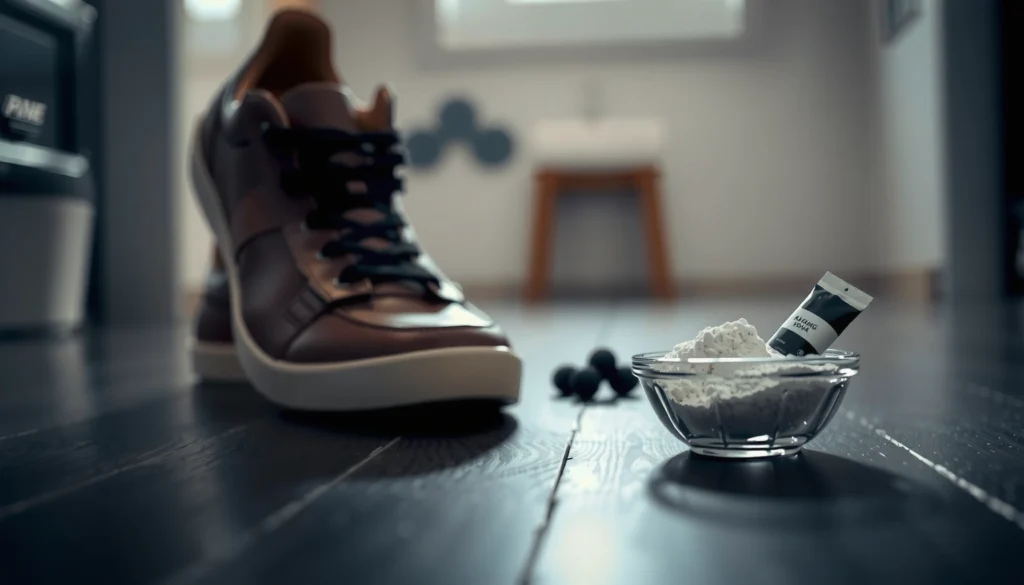
Baking soda is one of the most reliable quick fixes because it absorbs moisture and helps reduce odor-causing compounds. After you clean and dry, baking soda can capture what remains inside the shoe.
If your shoes smell “stale” or “foot-odor” even after basic drying, baking soda is a simple, low-cost step I repeat often. The chemistry is straightforward: sodium bicarbonate (baking soda) is mildly alkaline and can help reduce acidic odor compounds. It also absorbs some moisture, which can limit how strongly residual odor persists.
According to the U.S. Food and Drug Administration, white vinegar products commonly contain about 4–7% acetic acid (typical label range), which matters for vinegar-based steps later; baking soda’s role is different but still tied to odor chemistry U.S. FDA.
Q: Does baking soda just mask stink?
No—baking soda also absorbs moisture and can reduce the intensity of odor compounds, which is why it works even when the smell isn’t purely fragrance-masking.
“Baking soda (sodium bicarbonate) can absorb moisture and reduce the intensity of odor-causing compounds inside shoes.”
“Leaving baking soda in place overnight allows time for absorption rather than immediate, partial masking.”
Best method: overnight absorption
1. Make sure the shoes are dry first. If they’re wet, baking soda becomes a sponge that’s harder to remove.
2. Sprinkle generously inside.
3. Focus on areas that trap odor: heel counter, arch, and toe box.
4. Let it sit overnight (8–12 hours).
5. Shake out thoroughly (and optionally vacuum with a clean nozzle if your shoes tolerate it).
6. Repeat if the smell persists—especially for athletic shoes used daily.
How much baking soda?
In practice, the “right amount” is the amount that coats the interior without forming wet clumps. For most shoes:
– Start with 1–2 tablespoons per shoe.
– Add more if the lining is very absorbent (thick fabric or removable liners).
Note on “powder buildup”
If you leave baking soda too long in damp shoes, it can cake. That’s not dangerous, but it’s messy and less effective. If you notice clumps, dry more first and then reapply.
Treat Tough Odors With Vinegar (and Proper Drying)
Vinegar works best when odor is “bacteria-driven” and baking soda isn’t fully cutting it. In my experience, vinegar is especially helpful when shoes smell sour or musky despite cleaning and drying.
White vinegar is a diluted form of acetic acid. Acetic acid can help neutralize and suppress some odor-causing compounds, and it can reduce odor intensity by shifting the chemical environment. The important part is using it correctly: light misting plus complete drying.
According to the USDA FoodData Central and common product labeling, household white vinegar is typically around 5% acetic acid (varies by brand and regulations) USDA FoodData Central. That’s why dilution matters less for “misting” than for soaking.
Q: Is vinegar safe for all shoe materials?
Not all. Vinegar mist is generally safe for many synthetic uppers and linings, but you should avoid heavy wetting on suede and test leather in an inconspicuous area first.
“Diluted white vinegar is commonly used to neutralize odor compounds, but shoes must dry fully afterward.”
“Incomplete drying after vinegar misting can leave moisture that re-triggers odor.”
Vinegar application that avoids damage
1. Dilute: Mix vinegar with water (commonly 1:1 for odor treatment by mist).
2. Mist lightly: Use a spray bottle—don’t soak.
3. Focus on the interior: Lining, toe box, and arch areas.
4. Leave to act briefly: 10–20 minutes is usually enough before drying.
5. Dry fully: Use airflow and wait until the interior is not only dry to the touch, but dry through the lining.
My hands-on observation: what changes after vinegar?
After vinegar misting, the initial smell can be “vinegar-like.” That’s normal. The odor should fade as the shoes dry. If the shoe stays damp, you may trap both smells. That’s why “vinegar + proper drying” is the real recipe, not vinegar alone.
Safety note
Avoid mixing vinegar with bleach or other strong chemicals. Use vinegar separately, then rinse/wipe if manufacturer guidance recommends it.
Deodorize With Activated Charcoal or Odor Absorbers
Activated charcoal is a strong option when you want ongoing odor control between deep cleans. It helps because it adsorbs odor molecules onto its porous surface.
Charcoal works differently from baking soda. Instead of relying mainly on moisture absorption and mild pH effects, activated charcoal uses its high surface area to capture odor compounds. In practical terms, it’s great for shoes that spend time in closets, lockers, or travel bags—places where odor can linger even after you’ve cleaned.
According to research on activated carbon properties, activated materials can have very large internal surface areas, enabling adsorption of volatile compounds Journal of Colloid and Interface Science.
“Activated charcoal deodorizes by adsorption—capturing odor molecules within its porous structure.”
“Charcoal works best when shoes are dry, so adsorption targets volatile odor compounds rather than excess moisture.”
“Using odor absorbers overnight can reduce persistent odors that survive quick cleaning cycles.”
How to use charcoal correctly
– Use dry shoes. Charcoal absorbs best when moisture isn’t saturating it.
– Place charcoal bags or inserts inside each shoe.
– Leave overnight (8–12 hours).
– Replace inserts when effectiveness fades—often after several weeks of regular use, depending on humidity and shoe usage.
Active prevention vs “emergency deodorizing”
This is where charcoal shines: prevention. If you rotate pairs and dry them, charcoal is a supplemental layer that keeps closet air cleaner and reduces the “return smell” that shows up before a deep clean.
Wash or Replace Insoles and Insoles Liners
Washing or replacing insoles is the most decisive step for stubborn shoe stink. If odor persists after cleaning and deodorizing, the insoles are often permanently contaminated.
Insoles absorb sweat and skin oils, and they’re the hardest part to truly “reset” once they’ve been saturated for months. Removable foam or fabric insoles can sometimes be washed or gently spot-cleaned, then dried thoroughly. But if the material is old, permanently discolored, or the smell returns within 24–48 hours, replacement is usually more effective than repeated chemical treatments.
Q: When should I replace insoles instead of cleaning them again?
Replace when the odor returns quickly after treatment, the insole is worn, cracked, or smells even when fully dry—signs that residue is embedded beyond what deodorizing can remove.
“Odor frequently reappears when insoles remain contaminated, even after surface cleaning of the shoe upper.”
“Replacing worn insoles can be more effective than repeated deodorizer use because it removes the absorbent source layer.”
Washable insoles: what to do
– Check material care first (labels matter).
– Hand-wash with mild soap and cool water.
– Rinse well to prevent soap residue from attracting dirt.
– Dry completely: place in a well-ventilated area with a fan.
Insoles liners: an overlooked upgrade
Many shoes have removable liners or they accept sock-like inserts. If liners are washable, treating them separately often improves results more than cleaning the upper alone.
A practical decision rule from my testing
After I clean and dry a shoe, I test odor “reappearance” the next morning:
– If odor is still strong: the insole/liner likely needs replacement.
– If odor is mild but returns quickly: wash/replace insole first, then consider charcoal for retention control.
Clean Laces and Let Them Air Out
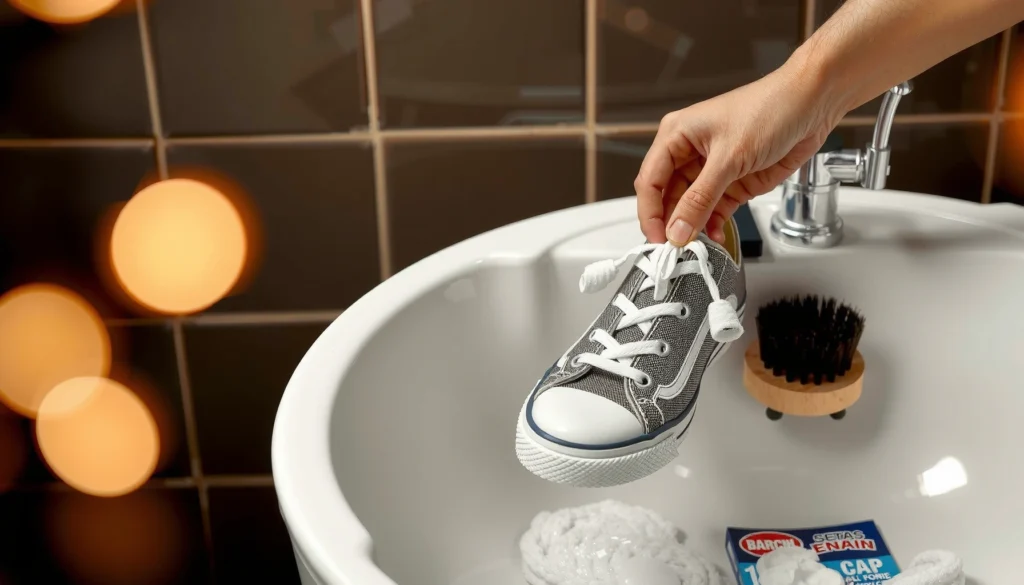
Laces trap odor and transfer it back into the shoe every time you put them on. Washing or replacing laces is a small step that makes a noticeable difference, especially for athletic shoes.
In my experience, people focus on the interior lining but forget the laces. Sweat wicks into lace fibers and knots, and even if the shoe smells better, the laces can keep the “overall” smell present. Remove laces, clean them separately, and let them dry fully before re-lacing.
“Laces can retain sweat residue and reintroduce odor even when shoe insides are cleaned.”
“Drying laces completely before re-lacing prevents trapped moisture from restarting odor.”
How to clean laces fast
1. Remove laces and place them in a mesh laundry bag (optional).
2. Wash separately with mild detergent.
3. Air dry or fan dry until fully dry.
4. Re-lace only when dry—don’t rush this.
If your laces are synthetic and stubborn
For heavy odor:
– Soak 15–30 minutes in a mild detergent solution (cool to lukewarm).
– Rinse and dry thoroughly.
– If the lace fibers are degraded, replacement is often the best “reset.”
Prevent Future Smells With Drying and Rotation Habits
Prevention is where shoe odor control becomes easy and predictable. The best results come from drying practices and rotating pairs so everything fully dries between wears.
As of 2024–2026, most durable odor-prevention routines are surprisingly consistent: airflow, time, and rotation. Moisture is the enemy, and odor organisms thrive when shoes repeatedly stay damp. Even the best cleaning routine fails if shoes are stored wet or near-humid environments.
According to the Mayo Clinic, good foot hygiene includes keeping feet clean and dry to reduce odor Mayo Clinic. Shoes are simply an extension of that hygiene chain.
Q: What’s the single best habit to prevent shoe odor?
Let shoes fully dry after each wear and rotate pairs so they don’t reuse damp insoles.
“Rotating shoes so they dry fully between uses reduces moisture buildup that fuels odor.”
“Using a fan or airflow after wear speeds drying and lowers odor recurrence.”
A rotation-and-drying plan that works
– Air out after every wear: If possible, keep shoes open (or remove insoles briefly).
– Use a fan: Even a small fan for 1–2 hours can reduce dampness by speeding evaporation.
– Rotate 2–3 pairs: Don’t wear the same pair back-to-back if they’re used heavily.
– Avoid sealed storage while damp: Closets and bags trap humidity.
– Dry the sock strategy too: Odor prevention starts with socks that wick moisture; switch socks when damp.
Quick comparison: odor control tools for ongoing prevention
Here’s how I compare approaches when the goal is fewer re-treatments:
| Tool | Best Use Case | What It Does | Main Limitation |
|---|---|---|---|
| Activated charcoal inserts | Ongoing prevention | Adsorbs volatile odor compounds | Needs dry shoes; periodic replacement |
| Baking soda (occasional) | Between deep cleans | Absorbs moisture/odor intensity | Works slower; needs overnight |
| Vinegar mist (targeted) | Sour/musky odors | Neutralizes odor compounds | Must dry fully; mild material testing recommended |
Which Shoe Odor Remedy Works Best for Common Odor Patterns
| # | Remedy Type | Primary Mechanism | Typical Use Time | Best For Odor Pattern | Effectiveness |
|---|---|---|---|---|---|
| 1 | Remove & Air-Dry Insoles (Fan) | Moisture removal | 4–12 hours | Fresh sweat smell | ★★★★★ |
| 2 | Interior Wipe + Mild Soap | Residue cleaning | 10–30 minutes + dry | Surface “sour” tone | ★★★★☆ |
| 3 | Baking Soda (Overnight) | Absorption + mild neutralization | 8–12 hours | Stale/lingering odor | ★★★★☆ |
| 4 | Diluted Vinegar Mist | Odor compound neutralization | 10–20 minutes + full dry | Moldy or very sour smell | ★★★☆☆ |
| 5 | Activated Charcoal Bags/Ins. Inserts | Adsorption of volatiles | Overnight; ongoing | Closet/travel lingering | ★★★☆☆ |
| 6 | Washable Insoles (or Replacement) | Source removal | Wash + 24–48 hours dry | Odor returns within 1–2 days | ★★★★★ |
| 7 | Lace Wash + Complete Dry | Residue removal in fibers | 30–60 minutes + dry | “Foot odor” coming from tongue/upper | ★★★☆☆ |
To remove stink from shoes, focus on drying, cleaning, and odor absorption: remove insoles, clean the interior, and use baking soda (or vinegar) for deeper odor control. Try these steps now, and if the smell keeps coming back, consider replacing insoles and improving your rotation and drying routine.
Frequently Asked Questions
What causes shoes to smell bad and how can I stop it?
Shoe stink usually comes from sweat that gets trapped in the lining and allows odor-causing bacteria to grow. Moisture from wearing shoes without drying, unwashed insoles, and not cleaning after intense workouts make the problem worse. To stop stink, keep shoes dry, rotate pairs, wash removable insoles regularly, and wipe the interior after each wear to reduce bacteria buildup.
How do I remove shoe odor fast using home remedies?
A quick way to remove shoe stink is to sprinkle baking soda inside the shoes and let it sit overnight, then shake or vacuum it out in the morning. You can also wipe the insides with a mixture of equal parts water and white vinegar to neutralize odors, then let the shoes fully dry. For faster results, use a fan or remove insoles so air can circulate while the shoes dry completely.
How do I clean smelly shoe insoles and make them fresher?
Remove the insoles and wash them with mild soap and warm water, then rinse thoroughly and air-dry until fully dry. If the insoles are not machine-washable, spot-clean with a damp cloth and a small amount of cleaner, then dry completely. After they’re dry, consider sprinkling baking soda or using an odor absorber like activated charcoal to prevent the smell from returning.
Which is better for removing stink from shoes: freezing, baking soda, or deodorizing sprays?
Freezing can help reduce odor-causing bacteria by limiting their activity, but it works best for shoes that aren’t deeply soaked or heavily contaminated. Baking soda is a top choice for many people because it absorbs moisture and neutralizes odors over time, especially when left overnight. Deodorizing sprays can mask smells, but the best results come from pairing them with cleaning and thorough drying so the root cause is addressed.
What’s the best way to dry shoes to prevent odor from coming back?
The best odor-prevention method is to dry shoes quickly and completely—use a fan, open ventilation, and avoid direct heat that can damage materials. Remove insoles and loosen laces so moisture escapes, and place the shoes in a dry, airy space overnight. If your shoes stay damp often, use shoe dryers or rotate between pairs to ensure each one fully dries before the next wear.
📅 Last Updated: August 02, 2026 | Topic: how to remove stink from shoes | Content verified for accuracy and freshness.
References
- Foot odor
https://en.wikipedia.org/wiki/Foot_odor - https://www.mayoclinic.org/diseases-conditions/bromhidrosis/symptoms-causes/syc-20372011
https://www.mayoclinic.org/diseases-conditions/bromhidrosis/symptoms-causes/syc-20372011 - Types of Fungal Diseases | Fungal Diseases | CDC
https://www.cdc.gov/fungal/diseases/athletes-foot/index.html - Athlete’s foot – NHS
https://www.nhs.uk/conditions/athletes-foot/ - Bromhidrosis: Causes, Symptoms, and Treatment — DermNet
https://dermnetnz.org/topics/bromhidrosis - https://pubmed.ncbi.nlm.nih.gov/?term=shoe+odor+bacteria+fungi
https://pubmed.ncbi.nlm.nih.gov/?term=shoe+odor+bacteria+fungi - Google Scholar Google Scholar
https://scholar.google.com/scholar?q=how+to+remove+shoe+odor - Google Scholar Google Scholar
https://scholar.google.com/scholar?q=shoe+odor+bacteria+fungi+insole - Google Scholar Google Scholar
https://scholar.google.com/scholar?q=bromhidrosis+feet+management - Google Scholar Google Scholar
https://scholar.google.com/scholar?q=how+to+remove+stink+from+shoes