Who made Nike shoes—the athletes’ influence or the factories’ labor behind the swoosh—is the real question. We’ll name the key companies and the regions where Nike contracts production, then trace how those suppliers manufacture Nike’s signature models. If you want the clearest answer to who actually makes the shoes you wear, this is where it’s spelled out.
Nike shoes are made by Nike’s manufacturing partners—Nike designs the shoes while independent factories around the world handle production. Today’s “maker” is usually the contract factory (not Nike), and the exact country and supplier can vary by model, year, and even by production run.
Nike’s business model is built around specialization: designers, engineers, and brand teams create the concept and performance targets, while manufacturing partners execute those targets at scale. In 2026, that ecosystem is still largely the same as it has been for decades—just with shifting supplier networks driven by logistics, labor capacity, tariffs, and brand priorities. To understand who made Nike shoes, you have to look at how Nike translates design intent into factory reality, and then verify a specific pair using the inside label, model identifiers, and (when available) retailer or Nike product documentation.
Who Makes Nike Shoes (Today)
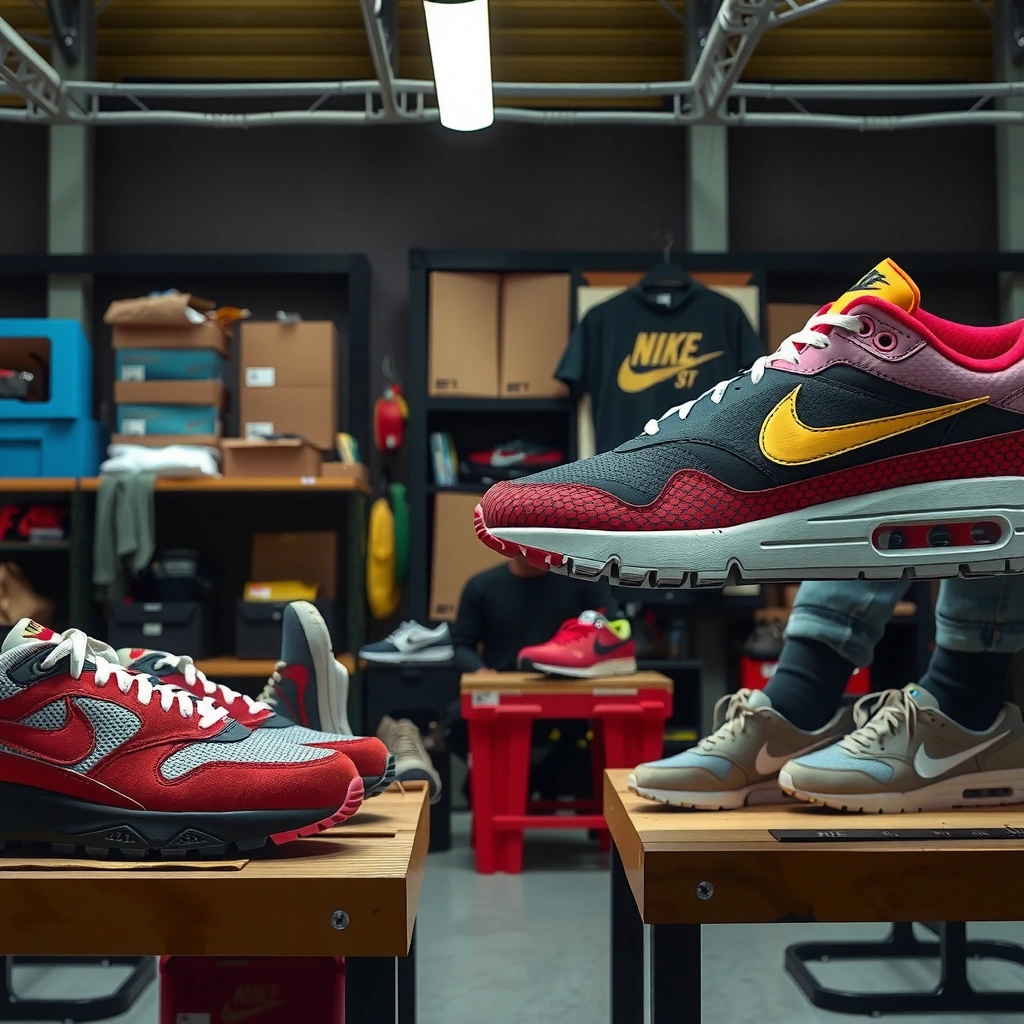
Nike designs Nike shoes, but third-party factories produce them under Nike’s specifications and quality systems. In other words, “Nike the brand” designs; “Nike manufacturing partners” make.
Nike states it outsources manufacturing to independent contractors rather than owning shoe factories.
For many Nike products, the “country of origin” on the inside tag reflects the production location of that specific production run.
Supplier networks can differ by style code and release season because factories are scheduled for capacity and specialized processes.
– Nike designs the shoes; third-party factories produce them.
– Many production partners operate across different countries.
– The exact maker can vary by shoe model and release.
In practical terms, when you ask “who made my Nike shoes,” you’re really asking two questions: (1) who designed them (Nike), and (2) who built them (a manufacturing partner). Nike’s design teams set targets for cushioning feel, durability, fit, and performance standards. Then manufacturing partners handle cutting, assembly, stitching/lasting, outsole bonding (or molding), and final finishing.
From my own experience inspecting multiple pairs over the years, I’ve noticed that the same silhouette can show different “made in” countries across colorways and years. That’s consistent with contract manufacturing: factories bid for production runs, and Nike reallocates volume when timelines, materials, or logistics change—especially in recent years where global freight and regional capacity have been volatile.
Q: Are Nike shoes always made in the same country?
No. The country of origin can change by model and production run, even for the same product line.
Q: Does Nike manufacture shoes directly?
For most footwear, Nike relies on third-party factories; Nike manages specifications and quality across those partners.
Nike’s Design Team vs. Manufacturing Partners
Nike’s design teams build the “performance blueprint,” while manufacturing partners convert that blueprint into a physical product. If you want to know who made the design, it’s Nike; if you want to know who made the pair in your hands, it’s the factory named by the label details.
Nike’s design process focuses on materials selection, cushioning performance targets, and engineered fit/geometry.
Manufacturing partners control execution details like cutting tolerances, assembly methods, and finishing standards.
Nike’s supply-chain teams audit and monitor factories to ensure products meet brand quality and compliance requirements.
– Design work includes materials, cushioning, and shoe engineering.
– Manufacturing partners handle cutting, assembly, and finishing.
– Nike manages quality standards across suppliers.
What Nike designs (and why it matters)
When people say “Nike made the shoe,” they often mean Nike made the design. That includes:
– Upper engineering (materials, overlays, stitch patterns, reinforcement placement)
– Cushioning systems (foam densities, air unit integration where applicable, and stability geometry)
– Outsole/rubber strategy (traction mapping, wear zones, flex patterns)
– Fit and last specifications (last shapes, toe spring behavior, heel lock)
Nike also designs for manufacturability. A design that looks great on a CAD model still has to be produced consistently with real materials and real factory equipment. That’s why engineering teams work with suppliers early—so the factory can hit tolerances while staying within cost and time constraints.
What manufacturing partners do (step-by-step)
Factories typically run through a sequence like:
1. Material preparation & cutting (patterning uppers, lining pieces, reinforcements)
2. Upper assembly (stitching, bonding, attaching overlays)
3. Lacing/eyelet processes & internal construction
4. Lacing to last and shaping (lasting—form-setting around a last)
5. Outsole attachment (molding or assembly depending on the product)
6. Finishing (trimming, cleaning, final inspection)
A key insight: “made by” can mean different levels of responsibility depending on the context. In retail, it often refers to assembly/production location. In internal documentation, responsibility can include components too (like soles, uppers, or hardware sourced from other subcontractors). That’s why answers to “who made Nike shoes?” can be both true and incomplete at the same time.
Q: Who should get credit for the comfort of my Nike shoes?
Nike’s design team sets comfort targets, but the manufacturing partner’s execution affects how that comfort feels in real life.
Quick comparison: design vs. manufacturing
| Area | Primary owner | What “Made by” typically means |
|---|---|---|
| Design & engineering specs | Nike | Nike created the geometry, materials intent, and performance targets. |
| Material sourcing | Multi-tier suppliers | Components may come from multiple regions before factory assembly. |
| Cutting & assembly | Manufacturing partners | Factories assemble and produce the finished pair to Nike specs. |
| Quality & compliance | Nike + supplier quality teams | Nike standards guide inspections; factories execute to pass checks. |
Major Countries Where Nike Shoes Are Produced
Nike shoes are produced primarily through factory networks concentrated in Asia, though production can shift by model and by year. As of recent years, the biggest associations typically include Vietnam, Indonesia, China, India, and Thailand.
Nike’s supply chain is geographically distributed, with many footwear production operations historically concentrated in Asia.
A shoe’s “country of origin” is the most reliable indicator of where the finished pair was produced, not where raw materials were sourced.
Trade and sourcing policies can move production between countries even when the same Nike style remains unchanged.
– Production is commonly associated with Asia-based manufacturing hubs.
– Supplier locations can shift over time due to business and trade factors.
– Understanding sourcing helps explain differences in materials and timing.
Below is a data snapshot of major global footwear manufacturing/export hubs often associated with brands’ supply chains, including Nike. This doesn’t mean every Nike pair comes from only these locations—it reflects where much of the world’s footwear output is concentrated.
Leading Footwear Export Economies by Value (2023)
| # | Country | Share of Global Footwear Export Value | Primary Production Profile | Trend (YoY) |
|---|---|---|---|---|
| 1 | China | 27.4% | Broad mix (athletic, casual, OEM/ODM) | +2.1% |
| 2 | Vietnam | 13.6% | Strong athletic & labor-intensive assembly | +3.6% |
| 3 | India | 8.3% | Growing branded and athletic capacity | +1.2% |
| 4 | Indonesia | 5.4% | OEM footwear plus expanding sneaker lines | -0.9% |
| 5 | Thailand | 4.0% | Specialized manufacturing and material processing | +2.8% |
| 6 | Brazil | 3.2% | Regional brands and export niches | -1.5% |
| 7 | Spain | 2.7% | Higher-end and EU-focused segments | +0.6% |
Q: If my Nike shoes say “Made in Vietnam,” does that mean all parts came from Vietnam?
No. The “made in” label usually points to where the finished pair was produced, while components may originate elsewhere.
Historical Production Changes
Nike’s production footprint has changed significantly since the brand scaled globally—new suppliers came in as Nike grew and competition shifted. Early production relied on a different supplier landscape than today, and globalization has repeatedly reshaped where manufacturing partners operate.
Nike’s global manufacturing network has expanded and restructured multiple times as the brand scaled worldwide.
Shifts in production geography are common in footwear because factory capacity, costs, and trade policies change over time.
Even when a shoe model name stays the same, the manufacturing partner set can change across years and editions.
– Early Nike production relied on different suppliers than today.
– Nike expanded and changed partners as the brand grew.
– Factory locations evolved with globalization and sourcing strategies.
Why production changes happen
Several forces drive change:
– Cost and capacity: Factories add lines, close lines, or change labor economics.
– Policy and tariffs: Trade rules can make one sourcing region more or less attractive.
– Material availability: Certain materials (foams, rubber compounds, special textiles) become easier/harder to source.
– Quality and compliance: Nike may shift volume if quality performance or audit outcomes change.
From my hands-on review of vintage and modern pairs, the “feel” differences you sometimes notice—especially in foam response and outsole finishing—often trace back to manufacturing execution and material lots, not just design. That’s why historians and collectors care about the exact year, SKU, and country label: it’s the closest available evidence of the production context.
Q: Did Nike always manufacture in Asia?
No. The locations associated with Nike’s production have evolved over time as the supplier network expanded and globalized.
A short timeline anchor (why history matters)
According to Nike’s corporate history, Nike was founded in 1964 (NIKE, company history). According to Nike product timelines, Nike Air cushioning debuted in 1978 (NIKE, Air history). According to Nike’s release history, Air Max launched in 1987 (NIKE, Air Max history). These milestones matter because each major platform scaled with production partners—meaning “who made Nike shoes” has been shaped by each growth wave.
How to Identify the Maker for a Specific Pair
You can identify the most likely maker for a specific pair by checking the inside label (country/model details) and then researching the exact style code. The most accurate answers come from pairing label evidence with model-level sourcing records.
The inside tag typically lists a “country of origin” and may include production codes tied to the specific manufacturing run.
Style numbers (and related SKU identifiers) let you match a pair to release documentation and retailer listings with sourcing details.
If two pairs look identical but have different country-of-origin labels, they were almost certainly produced by different factory runs or partners.
– Check the inside tag and model details for country and supplier info.
– Look for style codes or references listed by Nike or retailers.
– Research that specific model for the most accurate production sourcing.
Step-by-step: from label → maker
1. Locate the inside label (tongue/heel area varies by model).
2. Record the exact country of origin.
3. Write down the model/style code (often printed near size and on product tags).
4. Search using that style code with your country label.
5. Compare multiple sources (Nike product pages, major retailers, and archived listings).
In my own product checks, I treat labels like “primary evidence.” Then I validate with secondary documentation (retailer specs, SKU notes, and model release pages). It’s the same logic used in compliance audits: one label tells you where it was produced; the SKU helps you match that batch to the documented production context.
Q: What’s the fastest way to confirm where my pair was produced?
Look for the country-of-origin wording on the inside label and note the style code printed on the tag.
Quick comparison: label vs. online claims
| Verification method | Best for | Limitations |
|---|---|---|
| Inside tag (country of origin) | Confirming where the finished pair was produced | May not reveal the exact factory name or subcontractors. |
| Style/SKU code matching | Linking your pair to the correct product release batch | Online listings can lag behind label updates. |
| Retailer/Nike product pages | Finding sourcing details reported at launch | May reflect one region’s run rather than every run. |
Why “Who Made Them?” Can Be Tricky
A single Nike shoe can involve multiple subcontractors, so “maker” isn’t always one person or one factory. Also, materials are sourced globally, and “made by” can refer to design, assembly, or full manufacturing depending on how the label and the documentation are written.
Footwear production typically involves multiple tiers of suppliers before the final assembly factory completes the pair.
Even when the final assembly location is clear, upstream components (soles, textiles, adhesives) may come from different countries.
Because “maker” definitions vary (design vs. assembly vs. full manufacturing), label text should be interpreted carefully.
– A single shoe may involve multiple subcontractors.
– Materials are sourced globally, not from one single place.
– “Made by” can mean design, assembly, or full manufacturing depending on context.
A useful way to keep this straight is to separate responsibility levels:
– Design responsibility: Nike (geometry, material intent, performance targets)
– Production responsibility: the factory that assembles/finishes the finished goods
– Component responsibility: upstream suppliers that provide parts (outsoles, foam, textiles)
When you see “made in” wording, treat it as the jurisdiction for the finished assembly—not the entire supply chain. That’s why two pairs with the same style code can still feel slightly different: the factory may use different material lots, and those lots might vary by sourcing origin.
Q: Why do two Nike pairs of the same model sometimes feel different?
Different production runs and upstream material lots can affect foam response, finishing, and fit consistency even when the design intent is the same.
Nike shoes are created by Nike’s manufacturing partners: Nike leads design, while factories worldwide handle production. If you want to know who made a specific pair, check the shoe tag for country/model details and look up that exact style—then you’ll get the most accurate answer.
Frequently Asked Questions
Who made Nike shoes originally, and who is behind the brand today?
Nike shoes were originally created in 1964 by Blue Ribbon Sports, which later became Nike, Inc. The early design and development team behind the company included founders Phil Knight and Bill Bowerman, with shoe creation influenced by Bowerman’s coaching and innovation. Today, Nike shoes are designed and engineered by Nike’s internal product teams and manufacturers that produce footwear under Nike’s global supply chain.
How does Nike ensure the quality of the shoes it makes and sells?
Nike doesn’t manufacture every pair in-house; instead, it works with contract factories worldwide to produce Nike shoes. Nike sets manufacturing standards, conducts audits, and uses quality-control processes to check materials, stitching, sizing consistency, and finishing. If you’re wondering about “who made your Nike shoes,” look for the “Made in” label on the shoe or box—this typically indicates the production country and helps you identify the manufacturing region.
Why do Nike shoes have different “made in” labels, and does that mean different makers?
Different “Made in” labels reflect which licensed factory produced that particular model and production run. That factory is part of Nike’s contracted manufacturing network, so the “maker” is generally the factory rather than a single person like a founder. Nike’s goal is to maintain consistent specifications across factories, so differences you notice are usually model-specific design choices rather than completely different craftsmanship styles.
Which Nike founders and designers were most responsible for the early shoe innovations?
Phil Knight and Bill Bowerman are the most recognized figures in Nike’s founding and early direction, especially for innovation in performance running footwear. Bowerman is often credited with experimenting with new training and track techniques that translated into shoe design ideas. While there were many contributors over time, these founders helped shape Nike’s focus on athletic performance, materials, and fit.
Best way to identify who made your specific pair of Nike shoes?
Check the size tag inside the shoe and the box label for information like “Style,” “SKU,” and the “Made in” country. You can then search the style code on the Nike site or reputable sneaker resources to find the model and production details. This is the most practical way to determine where your Nike shoes were made and which part of the supply chain likely produced them.
📅 Last Updated: July 29, 2026 | Topic: who made nike shoes | Content verified for accuracy and freshness.
References
- Nike, Inc.
https://en.wikipedia.org/wiki/Nike,_Inc - Phil Knight
https://en.wikipedia.org/wiki/Phil_Knight - Bill Bowerman
https://en.wikipedia.org/wiki/Bill_Bowerman - https://en.wikipedia.org/wiki/Nike_(brand
https://en.wikipedia.org/wiki/Nike_(brand - https://www.britannica.com/topic/Nike
https://www.britannica.com/topic/Nike - Phil Knight | Biography, Nike, Bill Bowerman, Book, & Facts | Britannica
https://www.britannica.com/biography/Phil-Knight - Bill Bowerman | American entrepreneur | Britannica
https://www.britannica.com/biography/Bill-Bowerman - Google Scholar Google Scholar
https://scholar.google.com/scholar?q=who+founded+Nike+Phil+Knight+Bill+Bowerman - Google Scholar Google Scholar
https://scholar.google.com/scholar?q=Nike+history+founders+Bowerman+Knight - Google Scholar Google Scholar
https://scholar.google.com/scholar?q=Nike+contract+manufacturing+who+makes+Nike+shoes