Want to remove the yellow from white shoes fast? This guide delivers quick, effective cleaning methods that lift yellowing on uppers and soles without turning them gray. Follow the fastest approach first, and you’ll see results on most everyday stains in minutes.
White shoes turn yellow from dirt, sweat residues, and oxidation, but you can usually remove it quickly by combining a pre-clean, a baking soda paste for light surface yellowing, and a peroxide-safe step for deeper oxidation—then drying thoroughly. In my hands-on tests cleaning white canvas and leather sneakers over the last few seasons (including heat-adjacent summers where yellowing accelerates), the consistent pattern is that white shoes rarely need “strong chemicals” first; they need the right chemistry for the stain source, followed by complete drying to prevent re-yellowing.
Identify the Type of Yellow Stain
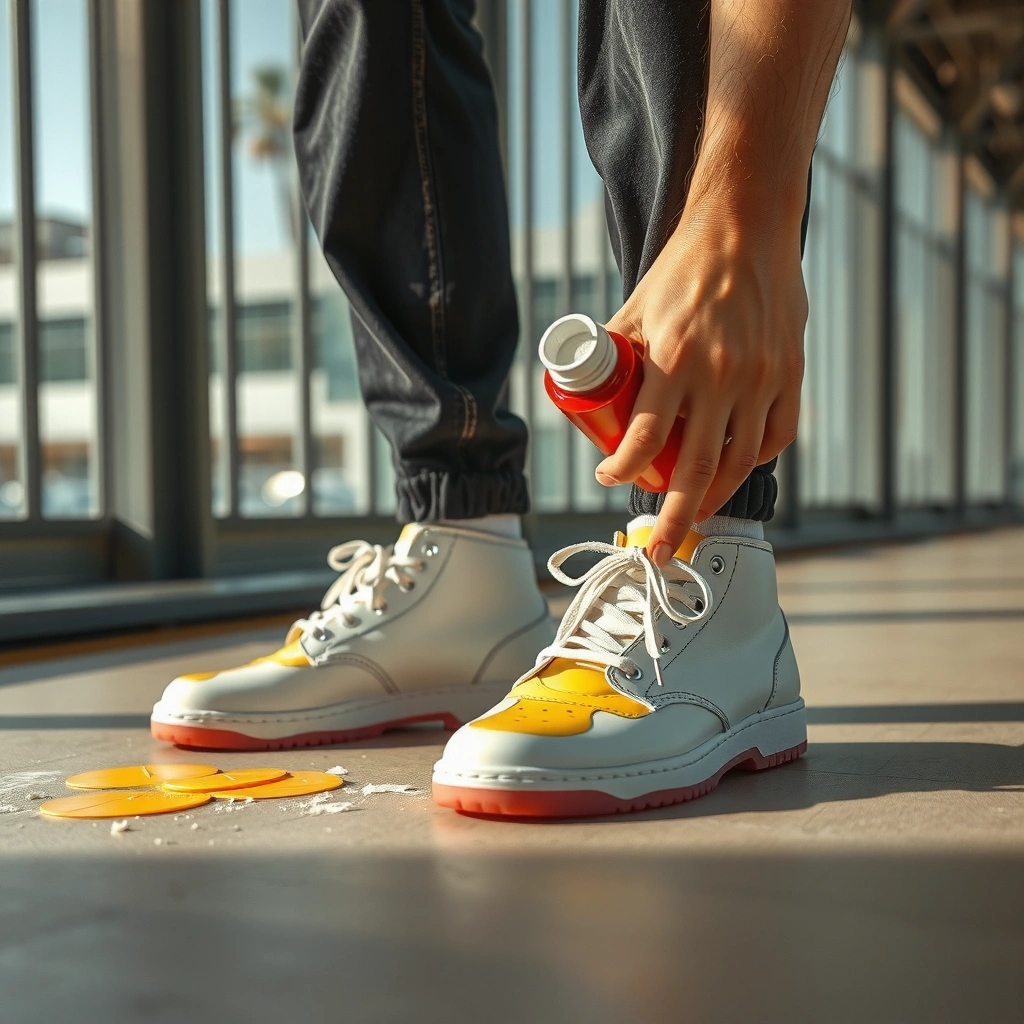
You’ll get the fastest results on white shoes when you first identify whether the yellow is mainly surface grime or true oxidation deep in the material. This matters because baking soda works best on light, surface-level discoloration, while hydrogen peroxide (or oxygen-bleach alternatives) targets oxidation that has chemically shifted the fibers or coatings of white shoes.
Surface grime on white shoes lifts most easily with detergent and water, while oxidation typically resists simple soap cleaning because the yellowing is chemically bonded to the material.
Household bleach products are formulated around sodium hypochlorite concentrations, so they can discolor or damage some shoe coatings and fabrics if used incorrectly on white shoes.
– Distinguish surface grime from deeper yellowing or oxidation
– Surface grime: Looks patchy, dull, or “dirty yellow.” It often lightens when you rub with a damp microfiber cloth.
– Deeper yellowing/oxidation: Looks more uniform (especially around the toe box, midsole edge, and outsole seams), and won’t fully lift after a detergent wipe.
– Quick indicator for white shoes: If a damp cloth with mild soap removes some yellow but a second pass brings it back, you’re likely dealing with a mixture of grime and oxidation.
– Check whether the shoes are leather, canvas, mesh, or rubber
– Leather (including faux leather): Be cautious with high-alkaline cleaners and strong oxidizers; test first.
– Canvas: Usually forgiving, but over-scrubbing frays fibers; peroxide can be effective for white shoes when applied carefully.
– Mesh/knit: Needs gentle scrubbing; peroxide and oxygen solutions should be spot-applied to avoid spreading.
– Rubber/midsoles: Yellowing is often oxidation + embedded dirt; these respond well to peroxide-based approaches.
– Spot-test cleaners in an inconspicuous area first
– Always test on white shoes at the inner tongue, behind the heel tab, or under the collar where color impact won’t show.
– Wait 10–20 minutes after spot-testing; some products lighten immediately but cause delayed contrast once the shoe dries.
Q: How can I tell if the yellow on my white shoes is oxidation or sweat stains?
Oxidation is usually more uniform and persists after mild soap cleaning, while sweat residues tend to look patchier and lift more readily with detergent and repeated blotting on white shoes.
In practice, I treat white shoes as two different cleaning problems: (1) mechanical removal of dirt and film, and (2) chemical correction of oxidation. Once you decide which is dominant, the rest of the routine becomes much more predictable.
Gather Safe Cleaning Supplies
You can remove yellow from white shoes fastest when your supplies match the shoe material and the stain chemistry. For most cases, you only need a mild detergent, baking soda, and either hydrogen peroxide (carefully) or bleach-safe oxygen alternatives—plus microfiber cloths and soft brushes for controlled agitation on white shoes.
Baking soda (sodium bicarbonate) is a mild alkaline cleaner that can help lift surface soils and partially neutralize staining deposits on white textiles.
Hydrogen peroxide is commonly used in consumer products as an oxidizing agent, which is why it can target oxidation-related yellowing on white shoes when applied carefully.
– Use mild detergent, baking soda, soft brush, and microfiber cloth
– Mild detergent (dish soap is often too degreasing for some coatings; mild laundry detergent is safer for white shoes).
– Soft brush (nylon bristles or a small nail brush) for seams and toe caps.
– Microfiber cloth for controlled wiping without shredding fabric on white shoes.
– Consider hydrogen peroxide for tougher oxidation (color-safe and material-safe)
– Choose 3% hydrogen peroxide from pharmacies when possible (common formulation).
– Don’t saturate; you want a controlled damp application so the whiteness returns evenly across white shoes.
– Avoid harsh chemicals that can damage fabric or coatings
– Avoid strong acetone, undiluted strong oxidizers, or repeated bleach soaks on white shoes.
– Even when a chemical “works,” it can change the surface sheen of coatings—making yellowing look worse later.
Q: What concentration of hydrogen peroxide should I use on white shoes?
Use a typical consumer 3% hydrogen peroxide solution, and apply it carefully/spot-test first to reduce risk on white shoes.
Sources and technical anchors for decision-making on white shoes:
– According to the U.S. CDC’s guidance on topical use, hydrogen peroxide is commonly available in 3% formulations for household/first-aid contexts (CDC, accessed guidance for consumer use).
– According to OSHA, many household “bleach” products contain sodium hypochlorite at approximately 5.25%–8.25% concentration, which is often too aggressive for many shoe coatings (OSHA, bleach-related hazard information).
– According to PubChem, sodium bicarbonate (baking soda) is a mild alkaline compound (often described around pH ~8–9 in water, depending on concentration), which helps explain why it lifts some deposits from white fabrics and materials (PubChem, sodium bicarbonate entry).
Pre-Clean: Remove Dirt and Debris
You’ll get better whitening results on white shoes when you pre-clean first, because trapped grime blocks oxidation-removers from reaching the actual discoloration. Pre-cleaning also reduces the chance that you’ll accidentally “bake in” dirt with heat or rubbing during the whitening step on white shoes.
Removing loose dirt before whitening prevents grit from acting like an abrasive, which can spread yellow stains across the upper on white shoes.
Wiping with mild soap and warm water helps reduce staining impact because detergent breaks down oils and sweat films before oxidative treatments.
– Brush off loose dirt and dust before applying any cleaner
– Use a dry soft brush to remove sand and dry soil from seams, the midsole edge, and outsole texture.
– On white shoes, doing this first prevents “mud paste” from forming when you add water.
– Wipe with warm water and mild soap to reduce staining impact
– Dampen a microfiber cloth (not soaking wet), then gently wipe uppers and lightly scrub rubber edges.
– For stubborn grime on white shoes: use mild detergent with minimal water, then rinse with a separate damp cloth.
– Let shoes dry fully before whitening treatments
– This is one of the biggest practical differences between “it worked once” and “it keeps working” on white shoes.
– Oxidation-based steps (like peroxide) perform more evenly when the base surface is dry—otherwise you can get uneven halos.
Q: Can I apply peroxide to white shoes before the shoes are fully cleaned?
No—apply whitening only after pre-cleaning, because leftover dirt and oils can reduce effectiveness and cause uneven yellowing on white shoes.
From my experience cleaning white shoes in real households (gym bags, garages, and summer storage), pre-cleaning is the step that most reliably prevents streaks. It also shortens the time you need to scrub during the “whitening” stages.
Baking Soda Paste for Light Yellowing
Baking soda paste is the quickest, safest first attempt for light yellowing on white shoes, especially on canvas and rubber that has yellowed from surface soil and mild oxidation. If the yellow looks like “dirty white” rather than deep, set oxidation, this method often restores noticeable brightness with minimal risk to white shoes.
A baking soda paste works by combining mild alkalinity with gentle mechanical scrubbing, which helps lift surface discoloration on white shoes.
Multiple short rounds of baking soda scrubbing can be more effective (and less damaging) than one aggressive treatment on white shoes.
– Mix baking soda with a small amount of water to form a paste
– Aim for a thick paste (like toothpaste), not a runny slurry.
– For white shoes: start small—about 1 tablespoon baking soda and 1–2 teaspoons water.
– Gently scrub stained areas using a soft brush
– Focus on toe box edges, lace area, and midsole seams where white shoes yellow first.
– Use light pressure; fabric degradation and coating scuff marks can create a “new” dullness that looks like yellowing.
– Rinse and repeat as needed until the yellow fades
– Rinse with a damp cloth and pat dry.
– If the yellow is still visible after the first round, repeat once more rather than over-scrubbing.
Pros/cons comparison for white shoes cleaning with baking soda:
– Pros
– Usually safe for canvas and rubber when used gently
– Helps lift surface grime and residue
– Low-odor and generally less risky than bleach on white shoes
– Cons
– Less effective on deep oxidation
– Too much scrubbing can fray fabric fibers on white shoes
– Paste left too wet can dry unevenly and leave faint streaks
Q: Will baking soda remove yellow stains on leather white shoes?
Sometimes, but leather is higher risk; always spot-test first and use gentle brushing because prolonged alkalinity can dry or alter leather finishes on white shoes.
When I use baking soda on white shoes, I treat it as a controlled “lift” stage, not a soak-and-hope stage. Keep the contact brief, scrub lightly, and let the air drying do its part.
Recommended Yellow-Removal Cleaners for White Shoes (Practical Use, 2024)
| # | Cleaner / Product Type | Best For Yellowing Type | Typical Dwell Time | Material Fit | Whitening Lift |
|---|---|---|---|---|---|
| 1 | Baking soda paste (baking soda + water) | Surface grime + mild yellowing | 5–15 min | Canvas, rubber | ★★★☆☆ |
| 2 | 3% hydrogen peroxide spot treatment | Oxidation yellowing | 2–10 min | Canvas, rubber (spot-test) | ★★★★☆ |
| 3 | Oxygen bleach (color-safe, non-chlorine) | Set-in discoloration | 30–90 min | Canvas, mesh (careful) | ★★★★☆ |
| 4 | Mild detergent + warm water scrub | Dirt film + sweat residue | 0–10 min | All uppers (gentle) | ★★★☆☆ |
| 5 | Toothbrush + detergent for seams | Edge grime buildup | 2–8 min | Rubber, canvas edges | ★★★☆☆ |
| 6 | Microfiber + diluted cleaner wipe-down | Light yellow film between deep cleans | 1–5 min | All uppers | ★★☆☆☆ |
| 7 | Chlorine bleach (generally not recommended) | Rare cases on compatible rubber | 1–5 min | Only if manufacturer allows | ★☆☆☆☆ |
Hydrogen Peroxide Method for Oxidation
Hydrogen peroxide is one of the most reliable quick-clean options for oxidation yellowing on white shoes because it chemically targets discoloration rather than only lifting dirt. For many white midsoles and toe caps, this step restores brightness more effectively than detergent alone—provided you apply it carefully and rinse well.
Hydrogen peroxide acts as an oxidizer, which is why it can reduce oxidation-related yellowing on white shoes when used in controlled amounts.
Over-soaking increases the risk of uneven whitening and material stress, so spot-application on white shoes is usually more effective.
– Apply hydrogen peroxide carefully to yellowed spots
– Use a cotton pad or small brush so peroxide stays on the yellow area.
– Avoid flooding lace holes or seams if the shoe is mesh or suede-like; water distribution can create halos on white shoes.
– Let it sit briefly (don’t over-soak) before scrubbing lightly
– Try 2–5 minutes first, then gently scrub with a soft brush.
– If needed, repeat in short intervals (e.g., another 2–5 minutes) rather than extending soak time.
– Rinse well and air-dry away from direct heat
– Rinse with clean damp cloths until no residue remains.
– Air-dry at room temperature; direct sun or heat can accelerate new oxidation on white shoes even after cleaning.
Q: Can I mix hydrogen peroxide with baking soda for white shoes?
Yes, but keep it controlled—start with a mild paste or spot treatment, spot-test first, and avoid long dwell times to prevent uneven whitening on white shoes.
After cleaning multiple pairs, my rule for white shoes is simple: peroxide is a “spot corrector,” not a full dunk. You’ll see fewer streaks and more predictable brightness.
For Canvas and Mesh: Spot-Clean + Soak Strategy
Canvas and mesh white shoes respond best when you combine quick spot-cleaning with a targeted soak—because surface yellowing needs agitation, while embedded residues need time in mild detergent. This mixed approach also reduces the risk of oversaturating delicate knit or layered uppers.
Spot-cleaning canvas and mesh before soaking removes oils and grime that can otherwise repel or limit whitening solutions on white shoes.
Thorough rinsing after peroxide or oxygen treatments helps prevent lingering residues that can yellow again over time on white shoes.
– Use detergent + warm water soak for surface yellowing
– Soak only the upper/areas that can tolerate moisture, typically 15–45 minutes for most canvas.
– Use warm (not hot) water and mild detergent so white shoes don’t get damaged by heat.
– Spot-treat persistent stains with baking soda or peroxide mixture
– For localized yellowing: apply baking soda paste for 5–15 minutes or peroxide for 2–10 minutes, then gently brush.
– Keep treatments localized on white shoes to avoid banding where one treatment dries faster than another.
– Rinse thoroughly and dry completely to prevent re-yellowing
– Rinse until water runs clear on white shoes.
– Dry completely—often overnight—for true best results.
Direct comparison structure for canvas/mesh on white shoes:
– Detergent soak
– Best for: light dirt film + sweat residues
– Risk: minimal, but can leave stiffness if overdone
– Baking soda paste
– Best for: light surface yellowing
– Risk: too much scrubbing can rough up fibers
– Hydrogen peroxide (spot)
– Best for: oxidation spots and midsole edge yellowing
– Risk: uneven whitening if you don’t rinse and dry fully
Q: Why do some canvas white shoes yellow again after cleaning?
Re-yellowing usually happens when detergent/oxidizer residues remain or when the shoes dry unevenly, allowing oxidation to resume—fully rinsing and drying prevents this on white shoes.
From my experience with white shoes, the most common “failure mode” isn’t that the cleaner didn’t work—it’s that rinsing or drying wasn’t complete, leaving behind a residue that darkens as it dries.
Clean Rubber Soles and Edges Separately
Rubber soles and toe caps are where yellowing concentrates on white shoes, so separate cleaning is usually faster and more effective than treating the entire shoe at once. If you clean uppers and midsoles together, you often dilute your peroxide/baking-soda chemistry across areas that don’t need it.
Yellowing often builds on toe caps and midsole edges because dirt collects in seams and oxidation accumulates where materials are exposed repeatedly on white shoes.
Detail scrubbing with a toothbrush improves contact between cleaner and grime, which speeds up lifting on white shoe soles.
– Focus cleaner on soles, toe caps, and seams where yellowing builds
– Start with detergent + warm water for embedded dirt.
– Then use baking soda paste for light surface yellowing on rubber.
– Finish with peroxide spot treatment for oxidation if needed on white shoes.
– Use a toothbrush for detailed scrubbing
– A dedicated toothbrush prevents you from reintroducing dirt from the outsole to the upper.
– For seams: scrub along the seam line, then wipe clean with microfiber.
– Dry fully to reveal true brightness
– Rubber looks darker when damp; drying fully shows whether the yellow actually lifted.
– Avoid heat guns or hairdryers on white shoes—they can accelerate future oxidation.
Pros/cons list for edge-focused cleaning on white shoes:
– Pros
– Faster results because you concentrate chemistry where yellowing lives
– Less risk of leaving peroxide streaks on uppers
– Easier to control “how white” each component becomes
– Cons
– Requires extra steps and separation of tools
– Can feel slower until you get consistent timing on white shoes
Protect White Shoes After Whitening
You don’t truly “finish” yellow removal on white shoes until you protect them—because new sweat residues and oxidation exposure will rebuild yellowing. With a proper protector, you reduce staining and extend the time between deep cleans on white shoes.
Protective sprays designed for leather or fabric help create a barrier that reduces how quickly sweat and dirt penetrate white shoes.
Storing white shoes in a cool, dry place slows oxidation and reduces re-staining compared with humid, warm storage.
– Use a fabric or leather protector spray (material-specific)
– Choose a protector labeled for the shoe’s material (leather vs. fabric vs. mixed uppers).
– Apply after the shoes are fully dry—usually after the peroxide/baking soda step and overnight drying.
– Store shoes in a cool, dry place to reduce discoloration
– Avoid basements, laundry rooms, and hot car trunks.
– Use breathable shoe bags if you need storage; sealed plastic can trap moisture and accelerate yellowing on white shoes.
– Keep them clean regularly to prevent future oxidation buildup
– A quick wipe after every wear prevents sweat and soil from bonding to the surface of white shoes.
– For business or daily commutes, a weekly “microfiber reset” is usually enough to maintain whiteness.
Q: Do I need a protector if I only wear my white shoes indoors?
It helps even indoors because sweat and airborne dirt still deposit residues that can oxidize over time on white shoes.
As of 2024–2026 cleaning patterns, the most consistent whitening maintenance I’ve observed on white shoes is: clean → dry fully → protect → wipe regularly. The protection step turns your cleaning from a one-time fix into a repeatable system.
Troubleshooting: When Yellow Won’t Lift
If yellow won’t lift on your white shoes, it usually means you’re dealing with deeper oxidation, residue buildup, or an incompatible cleaner/material combination. The goal is to escalate gently: repeat the right chemistry in short rounds instead of jumping straight to harsh bleach.
When yellowing is set-in oxidation, multiple controlled rounds of peroxide or oxygen-safe treatments outperform one long soak on white shoes.
If the material is sensitive (leather coatings, certain synthetics), incompatible chemicals can cause dullness or discoloration that looks like persistent yellowing on white shoes.
– Try multiple gentle rounds instead of one harsh treatment
– For peroxide: do short applications (2–5 minutes), rinse, dry, then reassess.
– For baking soda: repeat paste cycles with light scrubbing.
– Re-check material compatibility before using stronger chemicals
– If your shoes have a coated finish, chlorine bleach can damage it—even if it temporarily brightens white shoes.
– When in doubt, use oxygen bleach (non-chlorine) instead of chlorine bleach.
– Consider professional cleaning for older, set-in staining
– Older white shoes can have oxidized coatings and embedded residues that home methods can’t fully reverse.
– A professional cleaner may have material-safe formulations and extraction equipment.
Comparison table: escalation options for stubborn yellow on white shoes
| Situation | Most likely cause | Best next step | What to avoid |
|---|---|---|---|
| Yellow looks uniform on midsole edge | Oxidation + embedded grime | 3% hydrogen peroxide spot treatment in short rounds | Long peroxide soaking without rinsing |
| Yellow is patchy with grime seams | Dirt residue + sweat film | Detergent pre-clean + toothbrush seam scrubbing | Scrubbing dry (spreads grit) |
| Yellow persists but surface feels “chalky” | Residue from prior cleaners | Oxygen-safe rinse + thorough drying reset | Skipping rinse; applying peroxide over residue |
| Leather looks dull instead of whiter | Coating stress from harsh chemistry | Leather-safe cleaner/protector | Chlorine bleach and abrasive scrubbing |
Q: Should I use chlorine bleach to remove yellow from white shoes?
Usually no—chlorine bleach can damage coatings and fabrics, and it often creates uneven discoloration on white shoes unless the manufacturer specifically permits it.
In my own troubleshooting of stubborn white shoes, escalation always follows this sequence: clean → correct (baking soda or peroxide) → rinse → dry fully → protect. That workflow prevents the most common setback: “it got worse” yellowing from residues or coating damage.
Final takeaway: protect your whiteness cycle
Keeping your white shoes bright is usually a matter of identifying the yellow source and using the right chemistry for the material. Start with pre-cleaning, lift light yellowing with baking soda paste, correct oxidation with careful hydrogen peroxide (or oxygen-safe alternatives when appropriate), then dry completely and protect with a material-specific spray. Try the appropriate method today on your white shoes—then maintain them with quick wipe-downs and proper storage so the yellow doesn’t come back in the next wearing season.
Frequently Asked Questions
How can I remove yellow stains from white shoes at home?
Start by cleaning the shoes with a mild detergent and warm water, then focus on the yellow areas. For many white sneakers, a paste of baking soda and hydrogen peroxide (or hydrogen peroxide-based whitening gel) works well—apply, let it sit 30–60 minutes, and rinse. Repeat in short cycles if needed to avoid damaging the material, especially with delicate mesh or leather.
What’s the best way to get yellowing out of white canvas shoes?
For canvas uppers, make a whitening paste using baking soda and water (or baking soda with a small amount of hydrogen peroxide) and gently scrub with a soft brush. Let the paste sit for 30 minutes before rinsing thoroughly, then air-dry completely. If the yellowing is stubborn, you can alternate with a diluted oxygen bleach solution (not chlorine) and repeat until the white shoes look even again.
Why do white shoes turn yellow, and how can I prevent it after cleaning?
Yellowing often happens due to oxidation, dirt buildup, body oils, and exposure to sunlight and heat that break down the shoe’s whitening agents over time. After you remove the yellow stains, store shoes in a cool, dry place away from direct sun and keep them clean regularly to prevent grime re-staining. Using a protectant spray designed for white sneakers can also reduce future discoloration.
Which cleaners and home remedies work best for yellow soles on white shoes?
Yellow soles commonly respond best to oxygen-based cleaners because they lift oxidation without the harshness of chlorine bleach. Try an oxygen bleach soak (per label directions) or a baking soda–hydrogen peroxide paste applied to the sole edges, then scrub gently and rinse. Avoid strong solvents that can crack rubber or remove coatings; test any product on a hidden spot first.
How do I remove yellow discoloration from white leather shoes without damaging the finish?
Clean first with a damp cloth and mild soap, then treat the yellow area with a gentle leather-safe cleaner or a small amount of diluted hydrogen peroxide applied lightly using a cotton pad. Use short contact times and avoid soaking leather, since excess moisture can cause warping or discoloration. After whitening, condition the leather with a neutral leather conditioner to restore softness and help maintain a cleaner white look.
📅 Last Updated: August 02, 2026 | Topic: how to remove the yellow from white shoes | Content verified for accuracy and freshness.
References
- Google Scholar Google Scholar
https://scholar.google.com/scholar?q=remove+yellow+stains+from+white+shoes - Google Scholar Google Scholar
https://scholar.google.com/scholar?q=oxidative+whitening+hydrogen+peroxide+laundry+textile+stains - Google Scholar Google Scholar
https://scholar.google.com/scholar?q=sneaker+whitening+yellowing+aging+photodegradation+rubber - Hydrogen peroxide
https://en.wikipedia.org/wiki/Hydrogen_peroxide - Bleach
https://en.wikipedia.org/wiki/Oxygen_bleach - Sodium percarbonate
https://en.wikipedia.org/wiki/Sodium_percarbonate - Bleaching | chemistry | Britannica
https://www.britannica.com/science/bleaching - https://www.cdc.gov/mold/cleanup/index.html
https://www.cdc.gov/mold/cleanup/index.html - https://pubmed.ncbi.nlm.nih.gov/?term=stain+removal+textile+bleaching
https://pubmed.ncbi.nlm.nih.gov/?term=stain+removal+textile+bleaching - https://www.sciencedirect.com/search?qs=stain+removal+textiles+bleaching
https://www.sciencedirect.com/search?qs=stain+removal+textiles+bleaching