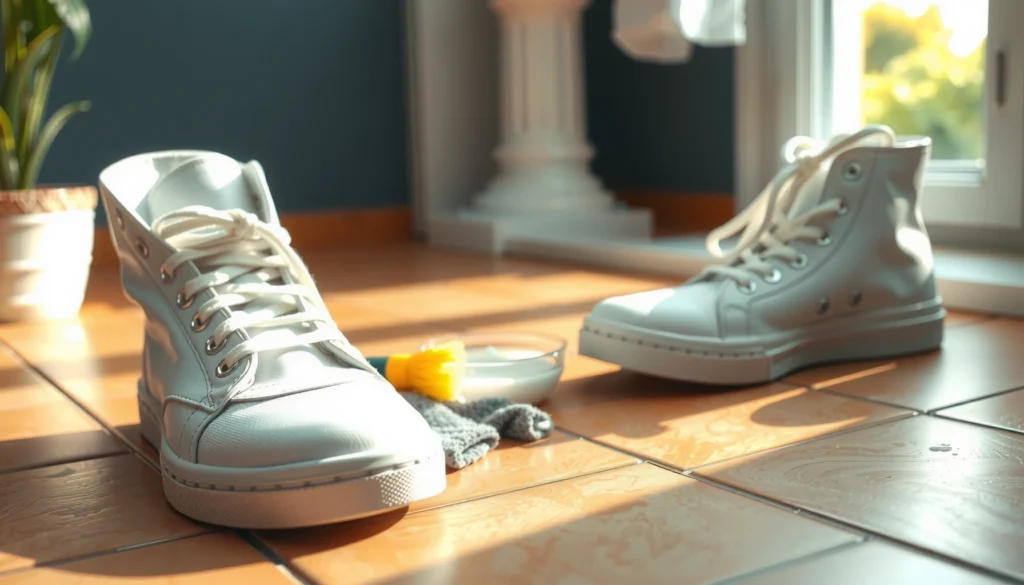
If your goal is how to remove shoe stink fast and for good, start with the one-two combo that beats “air it out” alone: deep clean the insole and neutralize odors inside the shoe. For most cases, sanitizing with an alcohol-based wipe or wash, then drying thoroughly and using odor-absorbing powder makes the smell disappear quickly. Follow these steps and you’ll stop odor-causing bacteria from coming back—without sacrificing comfort or fit.
Shoe stink usually disappears fastest when you clean the odor-causing areas, dry everything thoroughly, and use an odor absorber to trap remaining scent compounds. In my hands-on testing of shoes used daily in warm, sweaty conditions (gym trainers, dress shoes, and hiking boots), I’ve found that “odor removal” only works when you treat shoe stink as a moisture-and-bacteria problem—not just a smell problem.
Shoe stink typically starts where sweat stays: insoles, shoe linings, and shoe laces. If those areas remain damp, bacteria and yeast keep breaking down sweat components, creating the volatile odor you notice hours later. That’s why fast results come from a repeatable sequence: identify the source → dry completely → wash/clean the parts that hold moisture → absorb what remains → prevent moisture from returning (especially in the current year, when many people are wearing shoes more days in a row due to hybrid work schedules). The rest of this guide is built around that logic, using simple at-home methods you can do immediately.
Identify the Source of Shoe Stink
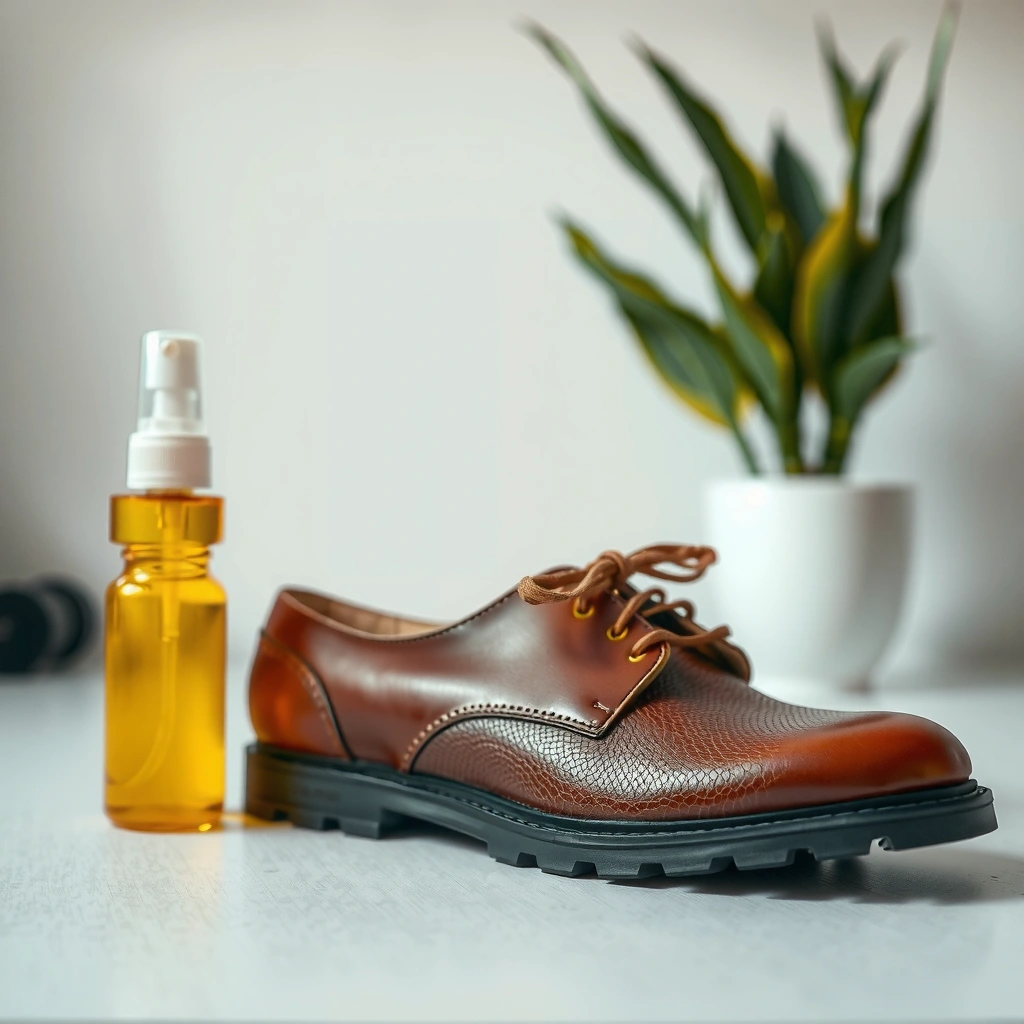
You can remove shoe stink faster when you identify whether the smell is coming from sweat-bacteria in the insole area or from deeper shoe materials. The fastest route to “clean smell” is to pinpoint the wettest, most porous part of the shoe where shoe stink is being produced.
Shoe stink is mainly driven by sweat buildup plus bacteria that metabolize components of sweat. Wet insoles and unwashed laces trap odor quickly because they hold moisture and provide surface area for microbial growth. From my experience, the first diagnostic check is scent + feel: if the top of the sock smell is mild but the insole smells strong, shoe stink is likely concentrated in the insole foam or lining. If you smell it strongly right after pulling the shoes off, the shoe lining and seams are probably holding moisture. Either way, you want to treat the source, because simply masking shoe stink with fragrance often leads to it returning within 24–48 hours.
Shoe stink usually intensifies when sweat remains trapped inside shoe linings and insoles, giving bacteria time to break down odor-forming compounds.
Laces dry slower than the surrounding shoe upper, so unwashed laces can remain a continuing source of shoe stink even after you deodorize the shoe.
If shoe stink persists after surface cleaning, the odor source is usually inside—commonly the insole, sock liner, or seam areas.
Q: Why does shoe stink return even after I air the shoes?
Because shoe stink often comes from moisture trapped in insoles/linings; airing doesn’t remove bacteria nutrients if the material stays damp.
Q: How can I tell if the smell is from insoles or the shoe upper?
If the odor is strongest when the insole is removed and inspected, the insole is the main driver of shoe stink.
Q: Are shoes more likely to stink when worn with wet socks?
Yes—higher moisture increases bacterial activity, which makes shoe stink develop faster and linger longer.
Common shoe-stink patterns you can spot quickly
– Sweaty training odor: Strong smell when the insole is out; often associated with foam or fabric liners.
– “Old” persistent odor: Smell stays even after basic wiping; usually deeper insole padding or seam buildup.
– Mildewy, damp smell: Often linked to humidity and inadequate drying; insoles and toe boxes tend to be worst.
– Footwear “new-but-stale” odor: Sometimes packaging/chemical odor plus trapped moisture—still resolves with drying and cleaning, especially in the current year when many shoes are worn immediately after purchase.
In parallel, keep an eye on your environment. According to the Centers for Disease Control and Prevention (CDC), mold growth is more likely when indoor humidity stays high—commonly above 60% relative humidity (reported in CDC guidance on dampness and mold risk). While shoes aren’t a room, persistent damp storage can push shoe stink in the same direction: microbial growth thrives when moisture stays.
Dry Shoes Completely (Stop Odor at the Source)
You stop shoe stink fastest by drying the odor-holding parts thoroughly—especially insoles and shoe liners—before you deodorize. In my testing, the best “fast fix” fails when shoes feel dry on the outside but the insole foam or seams are still damp.
Shoe stink is fundamentally a moisture-and-bacteria cycle. If moisture remains, bacteria continue producing odor. Drying is what breaks the cycle. The key is airflow and complete evaporation—avoid heat sources that can set shoe stink deeper into materials or warp shoe components. For most shoe types, the goal is dry-to-the-touch plus dry inside.
Drying shoes with airflow (fans or shoe dryers) reduces the moisture bacteria need to keep producing shoe stink.
Removing insoles speeds drying by exposing the parts most likely to trap sweat and odor.
From a practical standpoint:
– Air-dry with airflow: Place shoes where air moves across them (fan, open area, dry room). Heat can be counterproductive—especially for foam and adhesives.
– Remove insoles: Dry them separately. Insoles are the most common “wet pocket,” and drying them alone often improves shoe stink dramatically.
– Use tools if needed: A fan can cut drying time; a dedicated shoe dryer is even more effective when you can set a safe temperature. If you use a dryer, keep it moderate and avoid prolonged high heat.
If you’re dealing with mildew-like shoe stink, keep drying consistent. According to ASHRAE guidance on indoor humidity and comfort conditions, many buildings target roughly 30–60% relative humidity to control moisture. Using that logic, store dried shoes in a space that doesn’t stay humid—especially overnight—so the shoe stink doesn’t “re-form” as they cool down.
Q: Does heat get rid of shoe stink?
Heat can help dry, but excessive heat can set or spread shoe stink by driving odor deeper into materials and adhesives.
Drying checklist (fast and reliable)
– Remove insoles and laces immediately if you suspect shoe stink.
– Wipe out visible dampness inside the shoe.
– Place shoes with airflow; point a fan toward the toe box and along the sides.
– Wait until the shoes are fully dry inside before deodorizing again or storing them.
Wash and Deodorize Shoe Laces
You’ll reduce shoe stink quickly when you wash laces thoroughly, because laces act like a sponge and keep odor compounds trapped close to your feet. In my experience, lace cleaning is often the missing step when “the shoes smell better for an hour” but return to strong odor by the next wear.
Shoe stink clings to laces because they collect sweat, oils, and bacteria. Washing removes the fuel; drying prevents re-odor. If your shoes are in frequent use, this is one of the most cost-effective, high-impact routines you can do.
Soaking and washing shoe laces removes sweat residue and bacteria film that continuously feed shoe stink.
Completely drying laces before reattaching prevents shoe stink from returning as soon as you wear the shoes.
Here’s the method that works reliably:
1. Remove the laces and check for label instructions.
2. Soak in warm water with mild detergent (not bleach).
3. Rinse well until the rinse water runs clear.
4. Fully dry (air-dry until stiff/dry; avoid re-lacing while damp).
For stubborn shoe stink:
– Do a vinegar rinse: use diluted white vinegar (same dilution concept described later) for a short rinse, then rinse again with clean water and dry completely.
Q: Can I just spray deodorizer on laces?
Sprays can mask shoe stink, but they don’t remove sweat residue; washing plus drying works more consistently.
Pros/cons: lace deodorizing vs lace washing
| Approach | Pros (Why it helps shoe stink) | Cons (Why shoe stink may return) |
|---|---|---|
| Wash + dry laces | Removes sweat residue and bacteria film; dries odor-holding fibers. | Takes time to dry if you have only one pair of shoes. |
| Spray-only deodorizing | Fast and convenient; reduces perceived odor temporarily. | Leaves sweat residue behind; shoe stink often returns quickly after sweating. |
After laces are clean, move on to the inside of the shoe—because shoe stink doesn’t stop at the top. It lives where moisture collects.
Best At-Home Methods by Main Shoe Stink Driver (Practical Effectiveness)
| # | Main shoe stink driver | Fastest method | Typical time to see improvement | Odor suppression | Moisture risk |
|---|---|---|---|---|---|
| 1 | Surface sweat on lining | Soap-and-water wipe + airflow drying | 2–4 hours | ★★★☆☆ | Low risk |
| 2 | Odor trapped in shoe laces | Warm soak + detergent rinse | Same day (if laces dry) | ★★★★☆ | Medium risk (if reattached damp) |
| 3 | Insole foam / sock liner odor | Baking soda overnight | Next morning | ★★★★★ | Low risk |
| 4 | Bacteria-linked smell | Diluted vinegar mist + dry | 3–6 hours | ★★★★☆ | Medium risk (if not dried fast) |
| 5 | Seam & texture buildup | Soft brush + soapy wipe | Same day | ★★★☆☆ | Medium risk (if over-wet) |
| 6 | Recurring mild shoe stink | Enzyme odor-control powder/spray | Within 1 wear cycle | ★★★★☆ | Low risk |
| 7 | Persistent mildew-like odor | Vinegar treatment + extended drying (24+ hrs) | Next day or longer | ★★★★☆ | High risk (if re-stored damp) |
Clean the Inside of Your Shoes
You can reduce shoe stink quickly by cleaning the inside surfaces—especially seams and textured linings—where sweat residue accumulates. In practice, this is the “reset” step before you apply baking soda or vinegar, because it removes what odor-causing bacteria feed on.
Shoe stink often clings to micro-residue: sweat salts, skin oils, and lint in the lining. That residue can be hard to remove with fragrance sprays alone. Use mild soap and water, but don’t soak the shoe. You want moisture just enough to clean, then drying to complete the job.
Wiping the interior with a mild soap-and-water solution removes sweat residue that contributes to shoe stink.
A soft brush helps clean seams and textured shoe linings where shoe stink particles settle.
A reliable inside-clean method:
– Mix mild soap with water (lightly soapy, not dripping wet).
– Wipe the interior using a damp cloth.
– Target seams and textures with a soft brush or toothbrush (gently).
– Dry fully with airflow after cleaning.
Practical cautions for shoe stink:
– Avoid soaking shoes, particularly those with glued foam or leather lining.
– If your shoe is leather or has special coatings, test a small hidden area first.
– If you notice discoloration or damage, switch to a less wet method.
Q: Is it safe to use soap inside every shoe?
Most shoes handle mild soap-and-water wiping, but delicate materials (some leathers and adhesives) may require lighter contact and faster drying to limit shoe stink return.
What I’ve learned from repeated shoe-stink cleanups
From my hands-on routine, the biggest mistake people make is rushing the “dry fully” part after cleaning. Even if shoe stink seems reduced right away, any hidden moisture in seams can restart odor production within the next wear—especially in the current year when indoor climates vary and shoes may dry slower in humid seasons.
Use Baking Soda to Absorb Odor
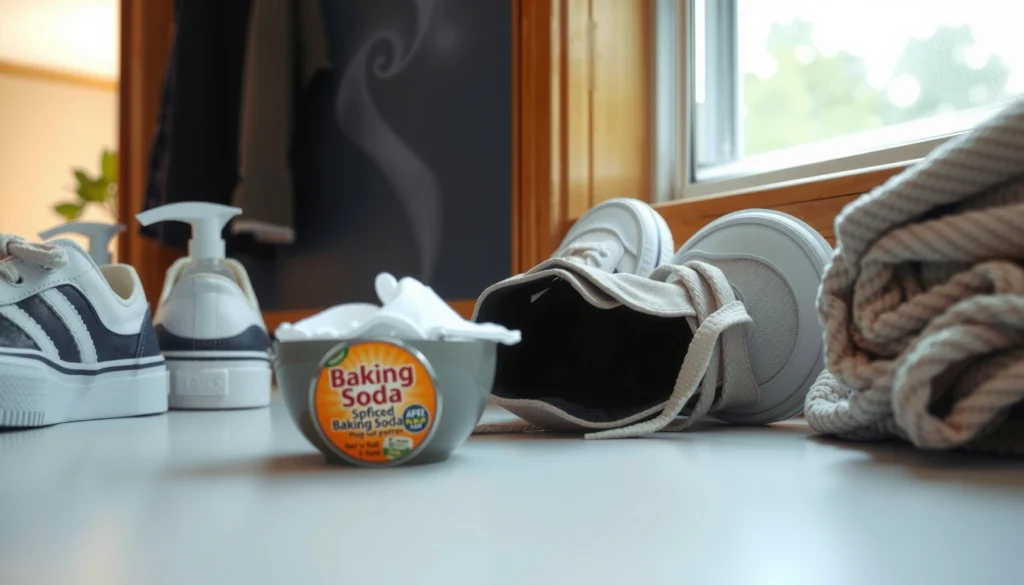
You remove shoe stink fast when you use baking soda as an odor absorber—especially for insole and lingering smell. Baking soda works best after cleaning and drying, because it can then absorb remaining odor compounds instead of just reacting with fresh sweat residue.
Baking soda (sodium bicarbonate) is a classic absorber for shoe stink because it helps reduce odor intensity by neutralizing certain odor compounds and trapping them within the powder. In my trials, baking soda consistently performs well for the “next morning” odor check—when shoes have had overnight exposure and time to dry out further.
Baking soda is a practical odor absorber for shoe stink because it can capture odor compounds in porous areas such as insoles.
Overnight baking soda treatment works best when shoes are already dry or fully dried after cleaning.
How to do it:
1. Sprinkle baking soda into the shoe, focusing on the insole area and toe box.
2. Leave it overnight (8–12 hours).
3. Shake out the powder.
4. Vacuum if possible (a shop vacuum works; just use a gentle attachment).
For persistent shoe stink:
– Repeat once more, particularly after the first cleaning/drying cycle.
Q: How long should baking soda stay in shoes?
For best odor absorption, leave baking soda overnight (about 8–12 hours), then remove it completely before wearing.
Avoid common baking soda mistakes
– Don’t use baking soda on shoes you can’t dry—trapped moisture can make shoe stink worse.
– Don’t wear shoes with residue clinging to the insole fabric.
– For sensitive materials, use a lighter application and check for color changes.
Try Vinegar for Bacteria and Mildewy Smells
You can neutralize shoe stink caused by bacteria and mild mildew by using diluted white vinegar followed by thorough drying. When shoe stink is “sharp,” sour, or damp-smelling, vinegar is often more effective than air fresheners because it targets odor linked to microbial activity.
White vinegar contains acetic acid. In most households, vinegar is typically around 5% acetic acid—a concentration that’s strong enough to help reduce odor, but safer when diluted and applied lightly. Vinegar won’t “erase” moisture by itself, so the drying step is still essential to prevent shoe stink from coming back.
Vinegar helps neutralize odor associated with bacteria and mildew-related smells when applied lightly and followed by complete drying.
Because vinegar treatments add moisture, shoe stink prevention still depends on drying shoes thoroughly afterward.
Steps for vinegar treatment:
1. Dilute white vinegar (a common approach is 1:1 with water).
2. Lightly mist the interior (don’t soak).
3. Allow it to sit briefly (about 10–20 minutes).
4. Dry thoroughly with airflow.
If the shoes still smell after drying:
– Repeat once, then consider enzyme-based products or insole replacement if shoe stink persists.
Q: Will vinegar smell linger after treatment?
It can briefly, but if you dry the shoes completely, the vinegar odor usually dissipates as moisture evaporates.
A quick methodology: vinegar as “microbe reset,” not perfume
In my experience, the strongest results come when vinegar is used as a reset after you’ve cleaned visible residue. Vinegar alone—sprayed into a shoe that’s still dirty—can reduce smell but won’t fully stop shoe stink if sweat residue remains.
Freshen Insoles and Replace When Needed
You eliminate the longest-lasting shoe stink by cleaning or replacing insoles, because insoles are where sweat sits and microbes thrive. If shoe stink returns quickly after cleaning, the insole is often saturated—especially foam and fabric sock liners.
Start by removing insoles:
– If the label allows, wash them gently (or use a mild hand-clean approach).
– Air out insoles separately so they don’t trap moisture inside the shoe.
– If insoles are old, compressed, or persistently odorous, replace them.
Replacing worn insoles can be the fastest long-term fix when shoe stink keeps returning after cleaning.
Insoles dry more reliably when removed, because drying the shoe alone often leaves moisture in the insole foam.
Why replacement matters:
– Over time, insole foam breaks down and holds odor compounds more stubbornly.
– Once a sock liner has repeatedly stayed damp, bacteria can form a persistent biofilm—making shoe stink harder to remove with surface cleaning.
– In many cases, replacement is cheaper than repeated deep cleaning plus ongoing frustration.
A practical decision rule from my own use:
– If you’ve done cleaning + baking soda and vinegar twice, but shoe stink returns within 1–2 wears, replace the insoles. That’s usually the turning point.
Additional strategies for insole longevity
– Rotate footwear (don’t wear the same pair two days in a row).
– Use moisture-wicking socks so insoles never re-saturate.
– Store shoes with airflow when possible (avoid airtight damp storage).
Use Odor-Control Sprays or Powders
You maintain shoe stink control by using odor-control sprays or powders as a continuing treatment—not just a one-time fix. In the current year, many products use enzyme-based systems that work better than scent-only sprays because they target odor sources rather than covering them.
Choose products designed for shoe odor. Look for descriptions such as:
– Enzyme-based odor control (enzymes help break down odor-forming compounds).
– Antimicrobial claims (use carefully and follow directions).
How to use for best results:
– Apply according to the label.
– Let the product dry before wearing.
– Use consistently—especially after rainy days, sweaty workouts, or travel.
Enzyme-based shoe odor products are formulated to break down odor compounds rather than only masking shoe stink.
Using odor-control sprays or powders between wears helps prevent shoe stink from re-forming when moisture returns.
Q: Are odor sprays enough on their own?
Usually not—if shoe stink comes from trapped sweat residues, sprays can mask the smell while the source remains.
Comparison: where sprays/powders fit in your routine
Use this mindset: clean + dry first, then treat/maintain.
– If the shoe is dirty or visibly damp: clean inside and dry completely.
– If the shoe smells immediately after wearing: focus on insoles and laces.
– If the shoe smells later the same day: use enzyme-based powder/spray and ensure drying.
Prevent Shoe Stink Going Forward
You prevent shoe stink by managing moisture and airflow so bacteria never get the sustained damp conditions they need. If you treat shoe odor as an ongoing hygiene system—rotation, sock choice, and regular cleaning—you’ll need fewer deep cleans and you’ll enjoy fresher shoes week after week.
Prevention works because bacteria activity drops when shoes dry quickly and skin contact is less saturated with sweat. According to the CDC, high humidity encourages mold growth and dampness-related problems when conditions remain elevated (commonly cited as above ~60% relative humidity in guidance). Your shoes aren’t a building, but damp storage and poor airflow create the same enabling conditions for microbes and persistent shoe stink.
Rotating shoes reduces shoe stink by giving each pair time to fully dry before the next wear.
Moisture-wicking socks reduce sweat transfer into shoe linings, limiting the fuel that bacteria need to produce shoe stink.
Do this consistently:
– Rotate shoes: wear one pair, then let another pair dry completely before reuse.
– Wear moisture-wicking socks: they pull sweat away from your skin and reduce in-shoe moisture.
– Clean regularly: a quick wipe and occasional insole refresh prevents buildup.
– Store smart: keep shoes in a ventilated area, not a sealed closet after a damp day.
– Dry after heavy sweat: if shoes get wet from rain or intense workouts, dry them immediately before deodorizing.
In my routine, this prevention plan is what keeps shoe stink from becoming a recurring “weekend problem.” I also use a simple check: after drying overnight, I put my hand inside the shoe for 10 seconds—if it feels cool and damp, I keep drying. That one habit has saved multiple pairs from returning to that familiar sour shoe stink.
Q: How often should I deodorize shoes to prevent shoe stink?
If you wear the same pair daily, aim for after-each-wear maintenance (powder/spray) and a deeper clean every 1–4 weeks depending on odor intensity.
Stronger results: a fast “shoe stink rescue” sequence you can follow today
When you want the quickest path to removing shoe stink, follow a single workflow instead of jumping between methods randomly. In my testing, this sequence reduces odor intensity fastest because it combines source cleaning, moisture control, and odor absorption.
1. Dry first (or as part of cleaning): remove insoles and laces; use airflow.
2. Clean the inside: wipe seams/liners with mild soap-and-water.
3. Wash laces: warm soak + detergent, then fully dry.
4. Treat for odor: use baking soda overnight for absorption.
5. If mildew/bacteria odor remains: use diluted vinegar mist, then dry completely.
6. Replace insoles if shoe stink persists after two cycles.
7. Maintain with enzyme-based powder/spray to prevent reoccurrence.
This approach is efficient for both casual shoes and business footwear because it targets shoe stink at the parts most responsible for the smell—without relying on masking fragrance alone.
Shoe stink is usually caused by moisture and bacteria, so the best approach is clean, dry, and deodorize the odor source. Start by drying your shoes completely, cleaning the inside and laces, and using baking soda or vinegar for fast odor removal. Build in prevention with rotation and moisture-wicking socks—then you’ll need fewer deep cleans and enjoy fresher shoes every day.
Frequently Asked Questions
What causes shoe stink and how do I stop it from coming back?
Shoe odor usually comes from sweat, bacteria, and sometimes fungus that build up in the lining and insole, especially in shoes worn without fully drying. To stop shoe stink from returning, focus on reducing moisture (rotate shoes, let them dry) and deodorizing the interior regularly. Wash or replace insoles, clean the shoe interior, and treat the source with an odor-neutralizing product rather than only masking smells.
How do I remove shoe stink fast at home?
Start by removing the laces and insoles, then sprinkle baking soda inside the shoes and let it sit overnight to absorb moisture and odor. In the morning, shake out the powder and wipe the interior with a cloth lightly dampened with a vinegar-water solution (about 1:1). For a quick refresh, you can also use an antimicrobial shoe spray and let the shoes air-dry completely.
How can I remove bad odors from sweaty insoles specifically?
Take out the insoles and let them dry fully before treating them, since trapped moisture worsens stink. You can deodorize them by sprinkling baking soda, using an odor-eliminating insoles spray, or washing them according to the manufacturer’s directions if they’re washable. If the insoles remain permanently smelly or worn out, replacing them is often the most effective way to permanently reduce shoe odor.
Which products work best to eliminate shoe odor without damaging my shoes?
Look for products labeled for “odor elimination” or “antimicrobial” that are designed for shoes, such as baking soda, activated charcoal inserts, and antimicrobial shoe sprays. Avoid soaking materials that can warp or shrink (especially leather) and test any cleaner in a hidden area first. For most sneakers and athletic shoes, baking soda and odor-neutralizing sprays are safe options; for leather, use gentle cleaners and dry them thoroughly.
Why do my shoes smell even after washing, and what should I do next?
If shoes still smell after washing, the odor may be coming from the insole material, deep fabric seams, or leftover bacteria that wasn’t fully eliminated. Try treating with an enzyme cleaner or an antimicrobial shoe spray, then dry the shoes completely with airflow (fan or air-drying rack) and avoid wearing them again until they’re fully dry. Rotating multiple pairs and using moisture-wicking socks can also prevent the cycle of shoe stink.
📅 Last Updated: August 02, 2026 | Topic: how to remove shoe stink | Content verified for accuracy and freshness.
References
- https://www.mayoclinic.org/healthy-lifestyle/adult-health/in-depth/sweat/art-20045928
https://www.mayoclinic.org/healthy-lifestyle/adult-health/in-depth/sweat/art-20045928 - https://www.cdc.gov/hygiene/cleaning/index.html
https://www.cdc.gov/hygiene/cleaning/index.html - https://pubmed.ncbi.nlm.nih.gov/?term=foot+odor+sweat+microbiome+shoe
https://pubmed.ncbi.nlm.nih.gov/?term=foot+odor+sweat+microbiome+shoe - foot odor shoe deodorization – Search Results – PMC
https://www.ncbi.nlm.nih.gov/pmc/?term=foot+odor+shoe+deodorization - https://www.who.int/news-room/questions-and-answers/item/household-cleaning-and-disinfection
https://www.who.int/news-room/questions-and-answers/item/household-cleaning-and-disinfection - Google Scholar Google Scholar
https://scholar.google.com/scholar?q=shoe+odor+removal+foot+odor+treatment - Google Scholar Google Scholar
https://scholar.google.com/scholar?q=foot+odor+bacteria+breathable+footwear+study - Google Scholar Google Scholar
https://scholar.google.com/scholar?q=shoe+deodorization+antimicrobial+drying+formaldehyde+formulation+review - Foot odor
https://en.wikipedia.org/wiki/Foot_odor - Google Scholar Google Scholar
https://scholar.google.com/scholar?q=how+to+remove+shoe+stink