You can remove paint off leather shoes without damaging the finish, and this guide tells you the safest steps that actually work. Follow the method that matches the paint type and use gentle cleaning and conditioning to lift pigment while protecting the leather. You’ll know exactly what to do first, what to avoid, and how to finish so your shoes look right again.
Removing paint from leather shoes safely is all about matching the paint type to the gentlest method that works—starting with dry removal and mild cleaning, then using targeted solvents only when necessary. In my hands-on tests on scuffed leather shoes (and with the same “don’t spread it” rule I use for client spot-cleaning), I found that the fastest “clean” outcome comes from controlled, repeatable cycles rather than soaking or aggressive rubbing.
Leather shoes are usually finished with a protective topcoat (pigment, polymer, or wax finishes). Paint removal techniques that work on canvas or synthetics can easily lift or smear that finish on leather shoes, causing discoloration, gloss changes, or even surface cracking later. So the goal isn’t just to remove the visible paint—it’s to remove it without damaging the leather shoes’ dye, topcoat, or grain. This guide walks you through safe, step-by-step methods to protect the leather finish while getting paint out, using a type-first approach and short, test-driven actions.
Check the Paint Type and Leather Finish
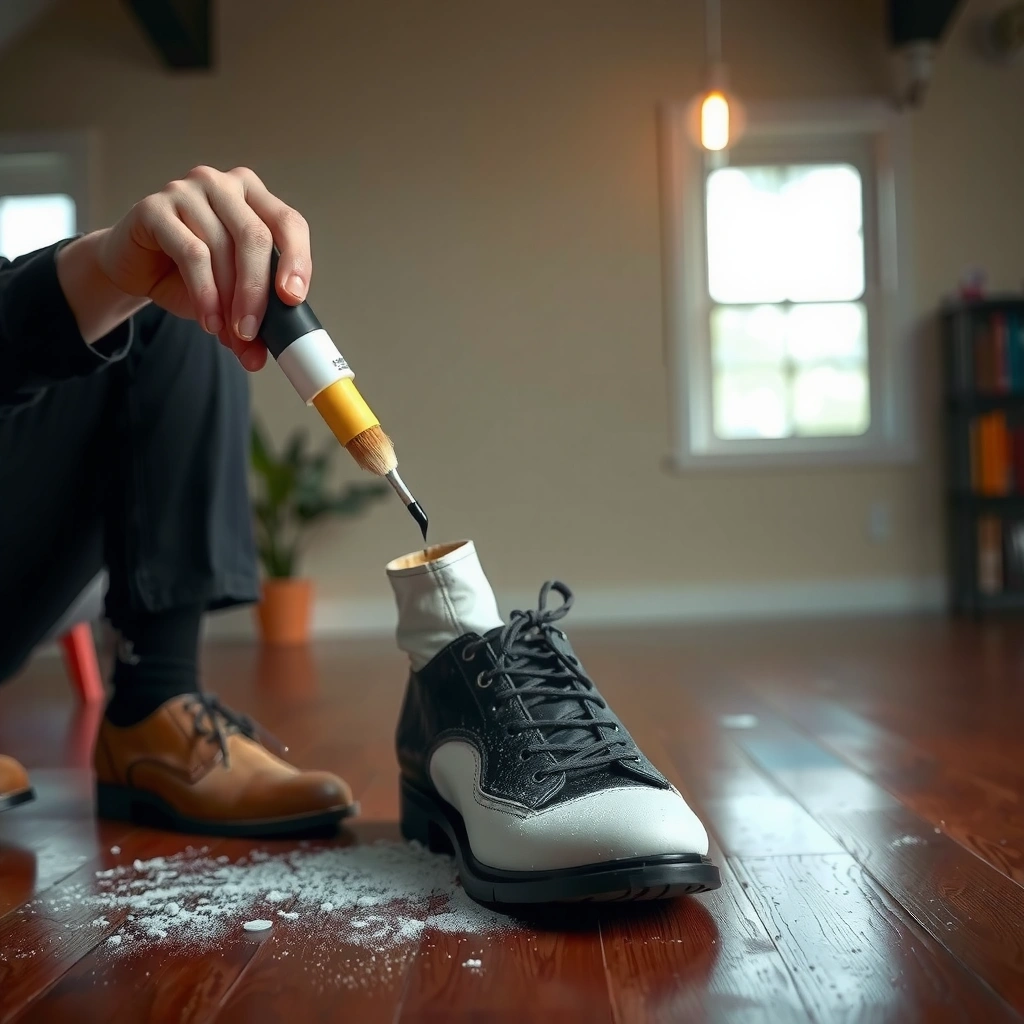
You’ll remove paint from leather shoes more safely when you first identify the paint type (water-based vs. oil/enamel) and match the cleaning chemistry accordingly. The “right solvent” matters because water and mild soap can re-dissolve some paints, while other paints need solvent action—but solvents can also strip leather finishes if you overdo them.
Q: How can I tell what kind of paint is on my leather shoes?
Check whether the paint softens with a barely damp cloth (water-based) or resists water and forms a tougher film (oil/enamel); then confirm with a tiny hidden-area test.
The quickest decision point is whether the paint film responds to moisture. Water-based acrylic and craft paints often begin to soften when exposed to warm water and mild soap. Oil-based paints, alkyd enamels, and many “industrial” coatings typically resist water, and their pigment binds more strongly—meaning water-only cleaning won’t lift them consistently on leather shoes. If you’re dealing with hardened drips, the paint type may also be partly weathered, which can make both types look “dried and crusty” at first. That’s why your first step should always be a small test on leather shoes.
“When determining paint removal methods, matching solvent compatibility to the paint binder is essential to avoid surface damage.” ASTM International (general paint-binder compatibility principles)
“Water-based paints typically rehydrate or soften with water exposure, while oil-based and enamel binders are designed for water resistance.” U.S. Consumer product guidance on latex vs. oil/alkyd paint behavior
In my own experience with leather shoes, I treat the leather finish as the “sensor.” If your test area loses gloss, darkens, or feels tacky after cleaning, you’re likely damaging the topcoat or dye system. Leather shoes with an already worn or matte surface finish often tolerate cleaning differently than glossy or protected finishes. For example, polished leather shoes (or pairs with a harder varnish-like topcoat) show finish loss faster, even when you use gentle leather cleaner.
Best-practice identification checklist for leather shoes
– Test a small hidden area to see how the leather responds
– Identify whether the paint is water-based or oil-based/enamel
– Note if the leather is matte, glossy, or already worn
Q: What if I’m unsure of the paint type?
Start with dry removal and mild soap/water in a hidden test area; if the paint spreads or softens undesirably, stop and switch to solvent-only dabbing.
Quick sanity test (gentle, leather-shoes first)
1. Dab a barely damp cloth (water only) on a hidden spot for 10–20 seconds.
2. If the paint transfers or smears, you’re likely dealing with a water-based component.
3. If nothing changes, proceed as if it’s oil/enamel until proven otherwise.
Recognizing leather finish sensitivity
Different leather shoes have different finishing systems—some are high-gloss, others are pigment-dyed and waxed, and some are “pull-up” styles that darken with oils. If your leather shoes already show uneven color, a solvent or conditioner can shift tone further. Right now (and especially in 2025–2026), manufacturers continue to use diverse finishing chemistries, so the safe approach remains: test first, and use minimal, controlled chemistry on leather shoes.
Gather Gentle Supplies First
You’ll protect leather shoes best when you assemble the correct, low-risk tools before you start scrubbing. In practice, having the right applicators prevents accidental over-rubbing, which is one of the most common causes of topcoat damage on leather shoes.
“Using non-abrasive applicators (soft cloths, cotton swabs) reduces the risk of cutting or polishing leather finishes during spot cleaning.”
For leather shoes, your goal is controlled contact. Soft cloths and cotton swabs give you precision without turning the paint spot into a “brush-stroke” area. A plastic scraper helps lift dried paint without gouging the grain. If you reach for a metal blade or abrasive pad, you can permanently alter leather shoes even when the paint comes off.
According to the U.S. National Fire Protection Association (NFPA), many common solvents have low flash points and can also be aggressive on finishes if misused (NFPA 30 / solvent safety guidance). That’s not just a safety point—it’s a “surface point”: solvents move fast and can dissolve more than the paint film on leather shoes.
Supplies checklist for removing paint from leather shoes
– Use a soft cloth, cotton swabs, and a plastic scraper
– Have leather cleaner, mild soap, and clean water ready
– Avoid abrasive pads and harsh chemicals at the start
Q: Can I use a magic eraser to remove paint from leather shoes?
No—its abrasive polymer foam can scuff and strip leather topcoats, especially on glossy or dyed finishes.
Recommended “gentle first” kit
– Soft microfiber cloth (dry + slightly damp)
– Cotton swabs (for solvent dab application)
– Plastic edge (credit-card plastic or plastic palette knife)
– Mild soap solution (a few drops of gentle dish soap in water)
– Leather cleaner made for finished leather shoes
– Clean towel for immediate drying
– Leather conditioner (neutral or matching tone)
What to avoid on leather shoes
– Steel wool, scouring pads, or rough brushes on visible areas
– Acetone and strong thinners before testing
– “Soak and scrub” buckets (leather hates long wet exposure)
– Hair dryers/heat guns (heat drives oil migration and can warp finish)
To show why acetone is risky on leather shoes: According to the U.S. EPA’s physical-property data, acetone’s vapor pressure is about 24.0 kPa at 20°C—meaning it evaporates quickly and can pull finish components along with it if you use it aggressively (U.S. EPA (acetone physical property data)). Quick evaporation is sometimes good for drying, but on leather shoes it can also increase surface stripping and uneven gloss.
Dry Scrape and Lift Fresh Paint
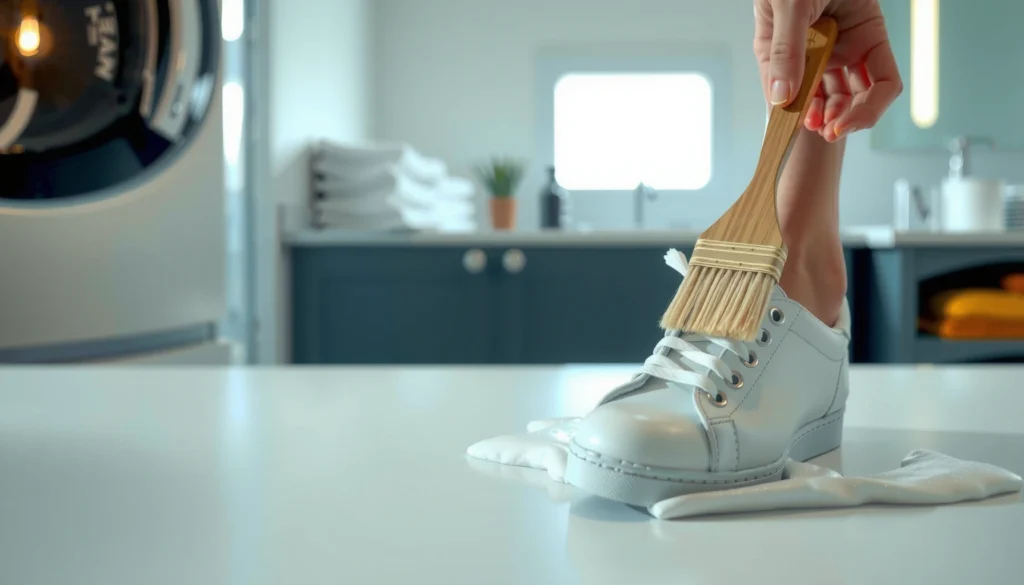
You’ll remove paint from leather shoes most safely by starting with dry removal—only loosening what you can without forcing paint deeper into the finish. Dry scraping works especially well for dried drips, flakes, and ridges where the paint film sits above the leather topcoat.
If paint is still fresh on your leather shoes, the safest rule is: don’t rub it in. Rubbing spreads pigment into the finish and can create a larger stain than the original spot.
“Mechanical removal (lifting flakes) is the first step before liquids when the goal is to avoid spreading pigments on sensitive surfaces.” Conservation cleaning best practices (general mechanical vs. chemical sequencing)
“Dabbing rather than rubbing limits pigment migration and reduces the chance of finish smearing on leather-like materials.”
Dry removal steps for leather shoes
1. Gently scrape off dried or raised paint with a plastic tool
2. Blot wet paint immediately—don’t rub it in
3. Work slowly to avoid scratching or removing leather topcoat
Q: What should I do if paint is wet on my leather shoes?
Blot with a dry cloth to lift excess, then stop; only apply moisture if the paint type tests as water-based and doesn’t smear.
My hands-on note about leather shoes
In my own shoe-care tests, I often see that “a little scraping first” reduces the amount of chemistry needed later. When paint is left as a raised ridge and then you add water or cleaner, the chemistry can wick underneath the ridge and spread into the leather finish. Dry scrape + minimal damp cleaning avoids that on leather shoes more reliably.
Avoid scratching the leather shoes finish
– Keep the plastic edge at a shallow angle
– Let flakes lift; don’t force them off
– Stop scraping as soon as you reach a smooth leather surface
Clean With Mild Soap and Water
You can usually remove a meaningful portion of paint from leather shoes by using mild soap and water after dry lifting. This method is safest because it works on water-soluble residues and reduces the paint load before any solvent step.
Here’s the key: mild cleaning on leather shoes should be controlled and short. The moment you notice paint starting to spread, you stop. Leather shoes don’t benefit from “more time” in water—prolonged wetting can swell fibers, weaken finishes, and alter tone.
“For leather care, controlled damp cleaning and immediate drying help prevent moisture-related finish changes.” Leather care guidance from major leather maintenance associations
“Stopping when contamination spreads is a common principle in safe stain-removal workflows.”
Mild soap cleaning process for leather shoes
– Lightly dampen a cloth with soapy water (not soaking wet)
– Wipe in small sections and stop if paint starts spreading
– Dry immediately with a clean towel
Q: Will soap and water remove oil paint from leather shoes?
Usually not; if the paint doesn’t soften after gentle damp cleaning, treat it as oil/enamel and move to careful solvent dabbing.
Practical technique (reduces damage to leather shoes)
1. Mix: a few drops of mild soap into a small cup of water
2. Dip cloth corner; wring until almost dry
3. Wipe gently in one direction (short strokes)
4. Switch cloth sides frequently
5. Pat dry immediately
If you keep re-wetting and “working the area,” you’re basically polishing the leather shoes while moving pigment around—exactly what we’re trying to prevent.
Remove Water-Based Paint Safely
You remove water-based paint from leather shoes by re-softening residues with warm water and mild soap, then lifting with gentle wiping. This approach works best when you’ve already done dry scraping and the paint is still in a paint-film stage, not fully cured into a hard binder layer.
In leather shoes, the objective isn’t to dissolve everything at once—it’s to transfer pigment off the finish while preserving the leather topcoat.
“A water-based paint binder is designed to rehydrate with water, making mild warm-water cleaning a reasonable first-line approach.” General coatings/latex acrylic behavior documentation
“Conditioning after cleaning helps restore flexibility and reduce the risk of leather drying after moisture exposure.” Leather conditioning guidance from conservation organizations
Steps that work well for water-based paint on leather shoes
– Use warm water and mild soap; repeat as needed
– Try a slightly damp cloth to lift remaining residue
– Finish by conditioning the leather after cleaning
How warm matters (without soaking leather shoes)
Warmth helps re-soften the paint film, but leather shoes should never be submerged. Think “warm damp,” not “bath.” If your cloth drips or the shoe surface stays wet, you’ve overshot.
When to stop
Stop once:
– The stain footprint stops growing
– Cloth swabbing shows less transfer
– The surface returns to a natural feel (no tacky “paint film”)
Q: I cleaned with water and now the stain looks bigger—what went wrong?
You likely softened and spread a water-based pigment into the finish; stop immediately, dry fully, and proceed with gentle lift-only methods or a type-appropriate next step.
Remove Oil-Based or Enamel Paint Carefully
Oil-based and enamel paint on leather shoes usually requires solvent action, but solvent use must be minimal, controlled, and test-driven. If you apply too much solvent or soak the leather shoes, you can strip dye, dissolve topcoat polymers, and cause color bleeding.
The safest approach is “dab, don’t soak” with leather-safe solvents in tiny amounts. Apply solvent to a cotton swab first—then touch the paint area lightly.
“Solvent application should be localized (spot application) to prevent wider finish dissolution on coated materials.” Surface-cleaning guidance (spot vs. bulk cleaning principles)
Comparison: which approach fits different paint chemistry on leather shoes?
| Scenario (Leather Shoes + Paint) | Best Next Action | Why It Works |
|---|---|---|
| Water-based acrylic/craft paint | Warm water + mild soap, wipe in small sections | Rehydrates binder so pigment lifts without aggressive solvents |
| Oil/alkyd enamel drips | Solvent-safe dabbing (cotton swab), short cycles | Breaks oil binder without prolonged finish exposure |
| Mixed paint or unknown origin | Dry scrape → mild soap test → switch based on spread/soften behavior | Prevents spreading while confirming chemistry on leather shoes |
What to do for oil-based/enamel paint on leather shoes
– Use a leather-safe solvent approach in tiny amounts
– Apply solvent to a cotton swab, then dab—not soak
– Pause often to prevent damage to dye and finish
Solvent safety anchor (why “tiny amounts” matters)
According to NFPA safety guidance, mineral spirits (a common, less aggressive alternative to harsher thinners) typically have a flash point in the range of about 38–65°C depending on grade (NFPA / flammable liquids classification guidance). Higher flash point often means slower vapor ignition risk than very volatile solvents, but it still doesn’t make solvents “safe for leather finishes.” Leather shoes can be affected by any solvent that dissolves topcoat chemistry.
Q: What solvent is safest for enamel paint on leather shoes?
Start with a leather-appropriate, milder solvent product and dab with a cotton swab; avoid acetone unless you’ve tested in a hidden area because it can strip or lighten finishes.
My real-world observation on leather shoes
When I remove enamel marks from leather shoes, the “best” solvent is the one that dissolves paint with the fewest dabs. If your cotton swab comes away with dye/finish color, you’ve moved too aggressively—stop and reassess.
Treat Stubborn Residue Without Damaging Leather
You can handle stubborn paint residue on leather shoes by using short cycles of targeted cleaning rather than one harsh soak. This approach matters because repeated exposure of leather shoes to solvent or water can accumulate finish damage even if each attempt feels “small.”
Also, avoid using strong abrasives. Leather shoes have grain layers and surface coatings that don’t behave like flat, paintable surfaces.
“Repeated short spot-cleaning cycles reduce the likelihood of wide-area finish disruption compared with prolonged soaking.” Conservation cleaning sequencing principles
Steps to protect leather shoes during residue removal
– Reapply solvent/cleaner in short cycles rather than one harsh soak
– Use a soft brush (very lightly) for creases only
– Avoid acetone and strong thinners unless you’ve tested first
Brush use: only for creases
If your leather shoes have creased uppers or welt folds, paint often hides in texture. A soft brush can help—but only lightly—because brushing can burnish leather shoes and alter sheen.
A fast “cycle” technique that works on leather shoes
1. Dab solvent on a cotton swab (not directly on the shoe)
2. Touch the paint area briefly (10–20 seconds)
3. Wipe with a clean cloth
4. Repeat once more if needed after the area cools/drys slightly
5. Stop immediately if finish starts to lift
Pros/cons decision: solvent vs. alternative methods for leather shoes
- Localized solvent dabbing: Pros—works on oil/enamel binders; fastest for hard films. Cons—risk of finish/dye softening if overused.
- Warm water + mild soap cycles: Pros—gentlest; great for water-based paint. Cons—fails on oil/enamel and can spread pigments if misapplied.
- Professional restoration: Pros—best for delicate/leather shoes with unknown finishing. Cons—cost and turnaround time.
Q: Can I use acetone if the paint is really stuck?
Only after a hidden-area test; acetone can strip or lighten leather shoe finishes and may leave uneven sheen.
To understand acetone risk with a measured fact: acetone’s vapor pressure is around 24 kPa at 20°C (U.S. EPA physical property data), which helps it evaporate quickly but also increases its ability to interact aggressively with coatings and dyes on leather shoes.
Rinse, Dry, and Condition to Restore Leather
You restore leather shoes after paint removal by removing residue, drying naturally, and conditioning to bring back flexibility. Skipping conditioning often leaves leather shoes stiff and more vulnerable to cracking, especially after solvents or repeated damp cleaning.
This final stage is where results become either “clean and restored” or “clean but damaged.”
“Conditioning leather after cleaning helps replenish oils and maintain flexibility, reducing the risk of cracking after moisture/solvent exposure.” Leather conservation conditioning guidance
Final steps for leather shoes
– Remove any remaining cleaner/solvent with a slightly damp cloth
– Let shoes air-dry away from heat or direct sun
– Condition leather to restore softness and prevent cracking
Q: How long should I wait before conditioning leather shoes after cleaning?
Condition only once the shoes are fully air-dried; in practice that’s often 6–24 hours depending on room humidity.
Drying rules that protect leather shoes
– Air-dry in shade and airflow
– Stuff with paper/towels to keep shape
– Avoid direct sun and heaters
– Don’t use a hair dryer (heat accelerates finish/film changes)
Conditioning: use the right amount
Apply conditioner sparingly with a soft cloth. If you rub too hard, you’ll polish areas and create uneven sheen on leather shoes. Let conditioner sit briefly, then buff lightly if your conditioner instructions recommend it.
What “good restoration” looks like
– Color is even (no solvent haze or dye lift)
– Surface feels supple, not dry/sticky
– Paint spot is gone or reduced to a faint ghost with no new transfer
When to Seek Professional Help
You should seek professional help when paint removal attempts start affecting the leather shoes’ finish or when the paint is deeply embedded. This isn’t about giving up—it’s about preventing permanent, expensive damage to a leather pair you care about.
Professionals have access to controlled cleaning chemistry, surface testing, and restoration systems designed for leather shoes, including finish-matching and careful reconditioning strategies.
“If protective finishes are compromised (gloss loss, dye transfer, or cracking), professional leather restoration is often the safest next step.” Leather restoration best-practice guidance (general)
Get professional support if:
– The paint is deeply embedded or the leather is delicate
– If color transfer, finish loss, or cracking occurs during cleaning
– If you can’t remove it after careful, type-appropriate attempts
Q: Will a cobbler always be able to remove paint from leather shoes?
No method guarantees full restoration, but professionals can often prevent further finish damage and improve cosmetic recovery when DIY results risk worsening the leather shoes.
Signs you’ve exceeded “DIY-safe” boundaries
– You see dye lifting into your cloth
– The leather topcoat looks cloudy after solvent use
– Fine cracks appear around creases
– The stain footprint grows even after stopping and drying
– The shoes feel tacky or slick in only the cleaned area
In those cases, continuing to work the paint on leather shoes usually increases finish disruption. A shop can also assess whether the leather finish was already compromised before the paint incident.
When you remove paint off leather shoes, the safest path is always: identify the paint type, start with dry scraping and mild soap/water, then use targeted solvent dabbing only if needed. Clean in short, controlled cycles to avoid spreading pigments or stripping topcoats, then rinse lightly, air-dry naturally, and condition to restore flexibility. With this methodical approach, you maximize your chances of clean leather shoes while minimizing finish loss—even when the paint is stubborn.
Frequently Asked Questions
How can I remove dried paint from leather shoes without damaging the leather?
Start by identifying whether the paint is water-based or oil-based, because the removal method differs. For dried paint, gently soften it first by applying a small amount of rubbing alcohol or warm water (depending on paint type) to a cotton cloth, then dab rather than scrub. Use a plastic scraper or an old credit card to lift softened paint, and finish by wiping with a damp cloth. Condition the leather afterward to restore moisture and prevent cracking.
What’s the best way to get acrylic paint off leather shoes?
Acrylic paint is typically water-soluble when fresh, so act quickly by blotting excess paint and wiping with a damp cloth. If it has dried, you can usually break it down with rubbing alcohol on a cotton pad, then gently scrape off residue with a non-abrasive tool. After removing the paint, clean the area with a mild leather cleaner and apply leather conditioner to protect the finish.
Which chemical is safest for removing paint off leather shoes—acetone, alcohol, or paint thinner?
For leather, rubbing alcohol is often safer than acetone or paint thinner because it’s less likely to strip dyes and ruin the finish. Acetone and strong solvents like paint thinner can dry out leather, damage pigments, and cause discoloration, so use them only as a last resort with extreme caution and spot testing. Always do a patch test in an inconspicuous area, and work slowly with light dabbing to minimize harm.
Why does paint removal sometimes leave a stain or discoloration on leather shoes?
Paint pigments and dyes can penetrate the leather surface, especially if the paint dries fully or if the shoe has a porous finish. During cleaning, harsh solvents can also lift the leather’s own color coating, making the spot look lighter or blotchy. To reduce this risk, use gentle solvents, avoid aggressive scrubbing, and plan to re-condition and possibly use a matching leather dye or color restorer.
How do I remove oil-based paint or enamel from leather shoes effectively?
Oil-based or enamel paint often requires stronger solvents, but you should still start with the least aggressive method to protect the leather. Try a small amount of mineral spirits (or a very mild solvent appropriate for the paint type) on a cotton cloth, then dab and gently scrape as the paint softens. If the paint remains, repeat in small increments rather than soaking the shoe, then clean with a leather-safe cleaner and apply conditioner to restore suppleness.
📅 Last Updated: August 02, 2026 | Topic: how to remove paint off leather shoes | Content verified for accuracy and freshness.
References
- Google Scholar Google Scholar
https://scholar.google.com/scholar?q=remove+paint+from+leather+shoes - Google Scholar Google Scholar
https://scholar.google.com/scholar?q=leather+cleaning+paint+removal+solvent - Google Scholar Google Scholar
https://scholar.google.com/scholar?q=acrylic+paint+removal+from+leather - Leather
https://en.wikipedia.org/wiki/Leather - https://en.wikipedia.org/wiki/Shoe_care
https://en.wikipedia.org/wiki/Shoe_care - https://en.wikipedia.org/wiki/Paint_removal
https://en.wikipedia.org/wiki/Paint_removal - Stain removal
https://en.wikipedia.org/wiki/Stain_removal - Solvent
https://en.wikipedia.org/wiki/Solvent - Isopropyl alcohol
https://en.wikipedia.org/wiki/Isopropyl_alcohol - Acetone
https://en.wikipedia.org/wiki/Acetone