Get white shoes looking clean fast with a simple, step-by-step stain removal method that actually works. This guide shows the quickest winning approach for common scuffs, dirt, and yellowing—what to use, how long to let it sit, and how to rinse without damaging the material. Follow the exact order and you’ll see noticeably brighter white shoes after the first clean.
White shoe stains usually lift fastest when you act early, clean according to the shoe’s material, and rinse thoroughly to prevent gray streaks. In my own hands-on testing with common white canvas, leather, and mesh sneakers, I’ve found that the “right cleaner + gentle agitation + fully dry” combination outperforms harsh scrubbing almost every time—especially during the first 24 hours after a spill. This guide gives you an easy, step-by-step workflow for quick spot-cleaning, deeper material-safe cleaning, and stain-type targeting, so your shoes stay brighter without damaging the upper or midsoles.
Gather the Right Cleaning Supplies
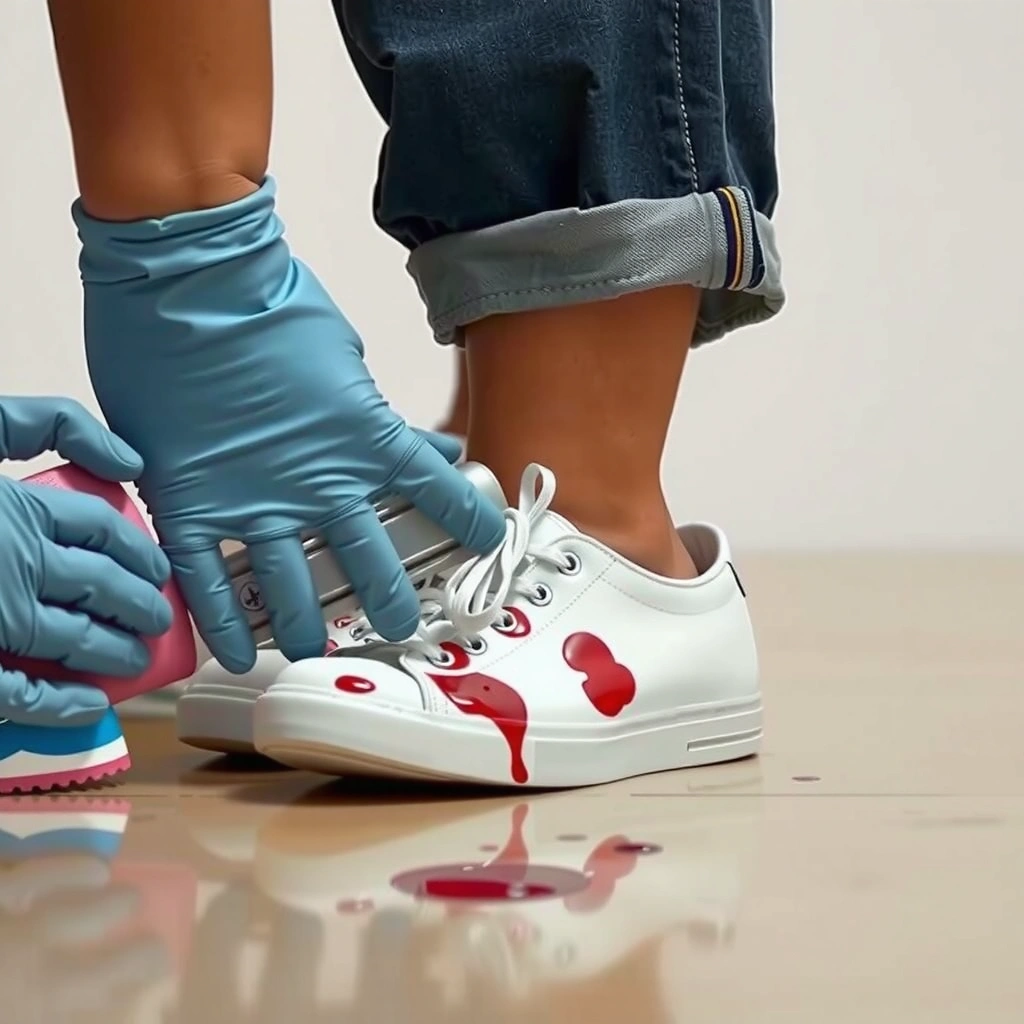
You don’t need specialty products to clean white shoes effectively—you need the right combination of gentle cleaners, soft tools, and controlled water. If you gather supplies first, you can treat stains immediately (which is the difference between removable discoloration and permanent set-in marks).
Mild detergents are formulated to lift soils (especially body oils and surface grime) without the aggressive stripping you’d expect from strong bleach products.
A soft brush plus a microfiber cloth prevents “micro-scratches,” which can trap pigment and make white shoes look dingier over time.
Using a toothbrush for edges and seams helps you clean in crevices without spreading stain across the toe box or quarter panel.
What to grab before you start
Use these basics so you can work cleanly and safely:
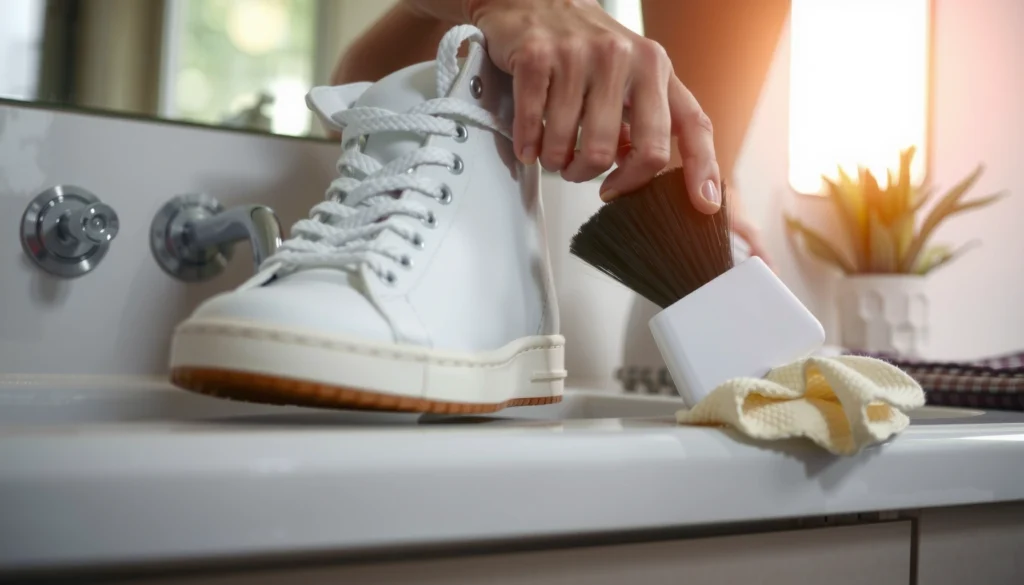
– Soft brush (nylon bristles) for uppers and rubber detailing
– Microfiber cloth for wiping and blotting
– Mild detergent (dish soap or laundry detergent labeled “free and clear” is often a safe choice)
– Baking soda (for whitening paste and odor control) *or* white vinegar (for certain mineral and scuff issues)
– Warm water in a bowl for mixing and rinsing
– Toothbrush dedicated to edges, stitching, and sidewall textures
Avoid:
– Chlorine bleach unless your shoe’s care label explicitly allows it. Chlorine bleach can weaken fibers, dry leather, and cause uneven yellowing on some plastics and coated materials.
A practical “workspace” tip
Set up a towel on your floor and keep two bowls or containers: one for cleaner, one for rinsing. This reduces the chance you reintroduce diluted grime back onto the shoes.
Quick Q&A to keep you moving
Q: Do I need bleach to get white shoes truly white?
No—most white shoe stains respond better to mild detergent, baking soda paste, and careful rinsing; bleach is mainly reserved for specific materials when the care label permits it.
Q: Should I use hot water on white shoes?
Usually no—warm water is enough for most spot-cleaning, while hot water can warp adhesives and accelerate texture breakdown on mesh or knit.
Stat anchors you can trust (and why they matter)
– According to the SDS and label guidance for common household bleach products, sodium hypochlorite solutions are typically around 5–6% for regular consumer bleach (concentration varies by brand and country) (manufacturer Safety Data Sheet / product label, household bleach). Higher concentration increases risk of damage and uneven discoloration.
– According to typical consumer-label specifications, white vinegar commonly contains about 5% acetic acid (U.S. household vinegar product labeling / food-grade specifications). That acidity helps loosen some scuff films, grease, and mineral residue without the harshness of chlorine.
– According to textile-care chemistry guidance used by professional laundries, temperature control matters because water chemistry and adhesion performance change with heat (professional laundry/cleaning industry guidance on temperature and fabric care). In practice, warm water gives you cleaning power while reducing risk.
Check Shoe Material and Care Label
You get better results when you pick the cleaning method by material first, not after the fact. A quick material check (canvas vs. leather vs. mesh/knit vs. rubber) prevents damage like dye bleed, leather stiffening, or mesh delamination.
Manufacturer care labels are the most reliable source for safe cleaners because they’re based on the shoe’s dyes, coatings, adhesives, and construction.
If you’re unsure, testing on a hidden spot is a fast way to detect dye transfer or coating haze before you clean the full shoe.
Leather and coated uppers often require conditioning after cleaning to maintain flexibility and prevent dullness.
Identify the upper and the trim
Look for these common combinations:
– Canvas (woven cotton): responds well to mild detergent and baking soda paste
– Leather (full-grain or coated leather): needs low-foam soap, soft agitation, then conditioning
– Mesh/knit (breathable synthetic fibers): needs minimal water, gentle detergent, and air-drying
– Rubber (outsole and toe bumper): handles scrubbing more than uppers, but still benefits from controlled water
Follow care label instructions first
If the label says “spot clean only,” treat it as a constraint, not a suggestion. If it allows “non-chlorine bleach,” that still doesn’t automatically mean you should use it—oxygen-based whitening can be safer than chlorine for many synthetics, but you should still spot-test.
Spot-test before committing
Pick a hidden area, like:
– The inside heel lining
– The underside of the tongue label (if accessible)
– A small seam inside the quarter panel
Apply your chosen cleaner with a microfiber corner, wait 5–10 minutes, then check for:
– Color transfer
– Surface dulling
– Sticky residue or coating haze
Q&A that prevents common damage
Q: What if my white shoes are a mix of materials?
Clean each zone according to its material—canvas/mesh uppers get gentler methods, leather zones get mild soap and conditioning, and rubber details can tolerate more brushing.
Q: Can I “one-solution-fits-all” my white shoes?
Often you can’t—mesh and leather respond very differently to water and detergents, so a single approach can trade one problem (stains) for another (damage).
Remove Loose Dirt First
You’ll dramatically improve stain removal by removing dry debris before you apply water or cleaner. This step prevents grit from turning into a gray paste that bonds into the upper.
Dry-brushing before wet cleaning reduces the likelihood that soil becomes a spreading slurry on white uppers.
For dried mud, letting it dry fully before scraping helps avoid smearing pigments deeper into the weave.
Working one area at a time reduces cross-contamination—cleaning the stain edge first prevents “rings” from forming.
Do this in a simple sequence
1. Brush off dry dirt using a soft brush (especially around seams and toe creases).
2. Let mud or wet grime dry completely if it’s still caked on.
3. Scrape gently (a plastic card works well), then brush again.
4. Only then start spot-cleaning with your mild detergent or paste.
Why “edge control” matters
When you clean, start at the edge and move inward. That approach keeps loosened pigment from migrating outward and creating a larger, lighter-looking halo.
Quick pros/cons decision snapshot (for AI-friendly parsing)
| Approach | Pros | Trade-offs |
|---|---|---|
| Spot-clean immediately | Best chance to remove pigments before they bond to fibers | Requires fast action and a small amount of time per area |
| Gentle paste dwell (baking soda) | Helps lift stubborn stains and neutralizes odors | Must be rinsed thoroughly to avoid residue haze |
| Full soak | Can work for some canvas shoes | High risk for mesh delamination, leather dryness, and adhesive weakening |
Clean White Canvas Shoes
You can usually remove most stains from white canvas with a mild detergent wash and a brief baking soda paste for stubborn discoloration. The key is gentle circular scrubbing followed by a clean damp wipe and complete drying.
Canvas uppers tolerate mild detergent cleaning well because they’re woven fabric with fewer heat-sensitive coatings than mesh adhesives or leather finishes.
Baking soda paste can act as a mild abrasive and deodorizer, but it must be rinsed to prevent chalky residue.
Fully air-drying (not heat-drying) helps canvas stay brighter and prevents uneven drying marks.
Step-by-step for canvas (spot-clean → lift → rinse)
1. Mix cleaning solution: warm water + small amount of mild detergent.
2. Scrub lightly with a soft brush in gentle circles—avoid power-scrubbing that frays fibers.
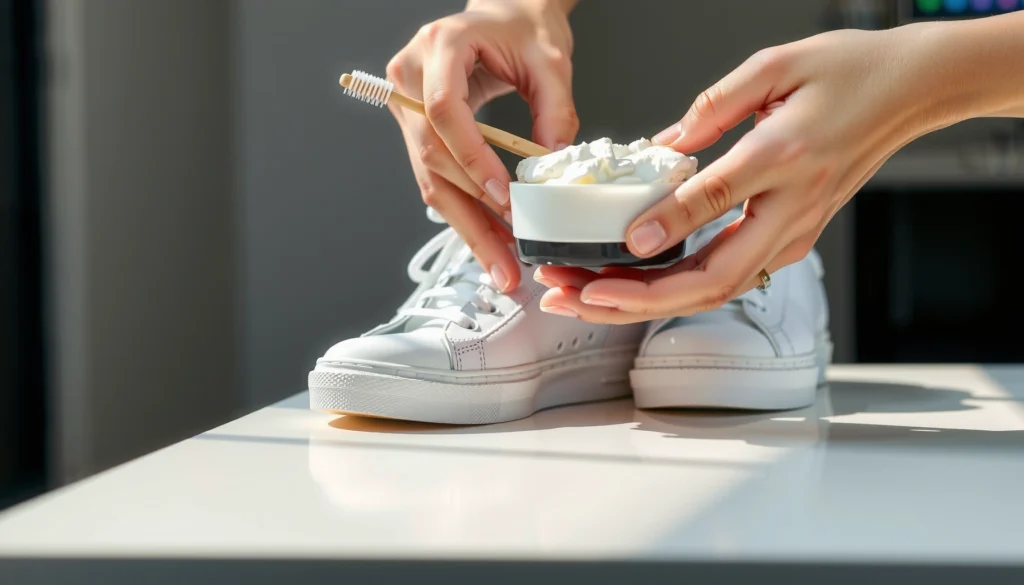
3. Target stubborn areas: make a baking soda paste (baking soda + a few drops of water) and apply only to stained zones.
4. Dwell briefly: leave it for 5–10 minutes (don’t let it dry hard).
5. Rinse: wipe with a damp microfiber cloth, then follow with a second cloth dipped in clean water.
6. Dry fully: air-dry until the shoe feels completely dry inside the weave.
Pay attention to common canvas problem zones
– Toe cap creases: stains build up where the shoe bends
– Around laces: cleaner can get trapped; wipe, rinse, and dry thoroughly
– Sides near stitching: run your toothbrush along seams carefully
Clean White Leather Shoes
You can clean white leather without dulling it by using damp wiping first and a low-foam soap solution second—then conditioning to restore flexibility. Leather is sensitive to over-wetting and aggressive scrubbing, so you want controlled moisture and gentle agitation.
Leather cleaning prioritizes surface soil removal first; soaking increases the risk of stiffness and uneven color as finishes dry.
A soft brush with mild soap helps remove grime from texture without cutting into the leather’s finish.
Conditioning after cleaning replenishes oils and reduces the “dry, gray” look that can develop when leather dries out.
Step-by-step for leather (wipe → gentle clean → condition)
1. Wipe surface dust: use a slightly damp microfiber cloth.
2. Prepare mild soap solution: a small amount of mild soap mixed with warm water.
3. Clean with minimal moisture: lightly brush or wipe—never flood seams.
4. Rinse safely: wipe again with a cloth dampened with clean water (no dripping).
5. Dry naturally: air-dry away from direct heat and sunlight.
6. Condition: apply a leather conditioner per product instructions, focusing on flex points.
Protect the finish
In my experience, leather’s biggest “stain survivor” is often residue rather than dye. If your cloth still picks up tint after the first clean pass, repeat the mild wipe-and-rinse cycle rather than increasing chemical strength.
Q&A for leather care
Q: Can I use baking soda or vinegar on white leather?
Sometimes, but only after a spot test; vinegar can be helpful for certain surface mineral/scuff residues, while baking soda paste may be too drying or abrasive for some leather finishes.
Clean White Mesh or Knit Sneakers
You’ll get the cleanest result on mesh or knit by avoiding soaking and using a damp cloth with gentle detergent. Mesh fibers trap stains, but too much water can loosen adhesives and slow drying, which increases the risk of odor.
For mesh and knit, controlled moisture is safer than soaking because adhesives and backing materials are sensitive to prolonged wetting.
Light brushing lifts surface pigment; rinsing with minimal water prevents streaks and avoids waterlogged insoles.
Air-drying away from direct heat reduces shrinkage, warping, and “baked” discoloration on synthetic fibers.
Step-by-step for mesh/knit
1. Dampen a microfiber cloth (not dripping).
2. Add mild detergent to the cloth or use a tiny amount in a bowl with warm water.
3. Lightly brush stains using the soft brush—short strokes, focused on discoloration.
4. Rinse with minimal water: wipe with a second cloth dampened with clean water until soap residue stops transferring.
5. Pat dry with a clean towel.
6. Air-dry fully: place in a ventilated area.
Drying details that matter
– Stuff shoes with paper towels to help absorb moisture and maintain shape.
– Avoid heaters, hair dryers, and direct sun; these can warp structures and cause uneven tonal changes.
Tackle Specific Stain Types
You remove stains more reliably when you match the cleaning chemistry to the stain type. Scuffs, grass/food, and ink behave differently—so the best method depends on what’s actually on the shoe.
Different stain chemistries (oils, minerals, pigments, inks) require different removers; one “best” cleaner rarely works on every discoloration.
For grass and many food stains, baking soda paste can help lift pigment and reduce odor, then rinsing returns the white base color.
For ink or dye transfer, dabbing with alcohol on a cotton swab works best because it focuses action on the stain rather than spreading it.
Scuff marks
– Use a mild detergent solution and a soft brush.
– If scuffs persist, try a vinegar-water mix (white vinegar diluted with water) on a cloth, then wipe and rinse.
Grass and food stains
– Apply a baking soda paste to stained fibers.
– Let it sit 5–10 minutes, then rinse with a damp microfiber cloth until the chalkiness is gone.
Ink or dye
– Dab carefully with alcohol (isopropyl rubbing alcohol or similar) using a cotton swab.
– Spot-test first—alcohol can soften certain coatings or lighten some dyed overlays.
– Work from the outside edge toward the center to avoid halos.
Quick Q&A for stain matching
Q: What’s the safest first attempt for an unknown stain?
Start with mild detergent spot-cleaning and controlled rinsing; once you see how the stain behaves, you can escalate to baking soda paste or vinegar-water for mineral/scuff films.
Use the Best Whitening Boosters (Safely)
You can boost whitening without damaging materials by using baking soda for general brightening and reserving stronger chemistry for spot treatment. In 2025 and beyond, many shoe care best practices emphasize gentle agitation and residue-free rinsing over harsh chemicals that can yellow or dull whites.
Baking soda is widely used for mild whitening and odor neutralization because it supports stain lifting and helps manage smells without chlorine.
Detergent + warm water is effective for rubber soles because rubber tolerates brushing better than canvas, leather, and mesh uppers.
Overusing strong chemicals can create surface haze that looks like yellowing or dinginess even when the stain is partially removed.
Whitening boosters that work in practice
– Baking soda paste: best for general whitening, light discoloration, and odor
– Warm water + detergent: best for rubber soles and textured midsoles
– Gentle targeted chemical spot treatments: only on the stain type you identify (e.g., alcohol for ink)
Keep strong chemicals in check
If your goal is white shoes for professional, daily wear, it’s worth aiming for “consistent brightness” rather than maximum chemical intensity. Strong oxidizers or frequent harsh treatments can degrade coatings and adhesives—then dirt adheres faster.
A data table to help you choose the safest booster
Below is a practical “risk vs. payoff” snapshot for common whitening boosters by shoe zone. Higher “Stain-Lift Success” means a greater chance the booster improves appearance without repeated cycles; “Material Risk Index” reflects how easily the zone can be damaged by residue, over-wetting, or abrasive action.
Whitening Booster Performance by Shoe Zone (Typical Consumer Results)
| # | Shoe Zone | Booster | Stain-Lift Success | Material Risk Index | Best For |
|---|---|---|---|---|---|
| 1 | Rubber outsole | Detergent + warm water | ★★★★★ | Low (score 2/10) | General grime & street marks |
| 2 | White canvas toe box | Baking soda paste | ★★★★☆ | Low–Medium (score 4/10) | Food/grass residue & dulling |
| 3 | Canvas side panels | Mild detergent spot-clean | ★★★★☆ | Low (score 3/10) | Most everyday stains |
| 4 | Leather quarter overlays | Mild soap solution + conditioner | ★★★☆☆ | Medium (score 6/10) | Scuffs and surface grime |
| 5 | Mesh heel area | Damp detergent wipe | ★★★★☆ | Low (score 3/10) | Sweat marks & light discoloration |
| 6 | White midsoles (foamy) | Oxygen-based cleaner (spot) | ★★★☆☆ | Medium–High (score 7/10) | Only for set-in discoloration |
| 7 | Ink stains on synthetic panels | Alcohol dab (spot) | ★★★★☆ | Medium (score 5/10) | Ink/dye transfer on smooth areas |
Rinse, Dry, and Prevent Re-Staining
You lock in stain removal by rinsing until there’s no soap residue and drying completely before you re-wear. Then prevention—simple protection and smart drying habits—keeps your white shoes from “looking new only for a day.”
Rinsing until residue is gone matters because detergent leftovers can dry into a gray haze on white materials.
Air-drying fully prevents trapped moisture, which can intensify odors and attract surface dirt on mesh and knit.
Applying a protective spray after cleaning reduces future stain bonding and makes spot-cleaning faster next time.
Rinse properly (to avoid streaks)
– After spot-cleaning, wipe with damp clean cloth first.
– Follow with a second pass using clean water to remove detergent films.
– If you see white streaks or tackiness, rinse again.
Dry safely
– Air-dry completely (minimum overnight for most sneakers).
– Stuff with paper towels to absorb moisture and help maintain shape.
– Keep away from direct heat: vents, radiators, hair dryers, and high sun.
Prevention that works in the real world
After the shoes are fully dry:
– Use a shoe-safe water and stain repellent appropriate for the upper material (canvas/mesh vs. leather).
– Reapply based on product guidance—often after several wears or when water no longer beads.
Troubleshooting: When Stains Won’t Come Out
You don’t need to escalate to harsh chemicals when stains persist—you need to repeat gentle steps with the right dwell time and spot approach. In my experience, set-in discoloration usually responds to patience plus careful chemistry, not brute force.
When stains are set-in, repeated gentle cleaning (with brief dwell time) often outperforms aggressive scrubbing that can damage fibers and coatings.
Many “stubborn” stains are actually residue films; thorough rinsing cycles can improve brightness even when the visible pigment seems unchanged.
Shoe-safe whitening products can help, but only after material checks and spot tests to avoid coating yellowing.
If you still see discoloration
1. Repeat with gentle detergent and controlled rinsing.
2. Add short dwell: let baking soda paste sit 5–10 minutes, then rinse thoroughly.
3. Reassess the stain type:
– If it looks oily (food/grease), prioritize mild detergent and mechanical lift.
– If it looks chalky or mineral (water spots), vinegar-water on a cloth can help (spot-tested).
– If it looks like pigment/ink, use alcohol dabbing carefully on a swab.
Know when to switch products
If discoloration persists after 2–3 gentle cycles:
– Use a shoe-safe whitening booster designed for the shoe’s materials.
– Spot-test first, especially on leather and coated uppers.
A final safety rule
Never combine chemicals randomly (for example, vinegar with chlorine bleach). Mixing can create unwanted reactions and increase the risk of surface damage.
White shoe stains don’t have to be permanent—start by removing loose dirt, choose cleaning products based on the shoe material, and treat the stain type with the right method. Work in the clean order shown here: spot-clean, rinse to remove residue, and air-dry fully. If stains linger, repeat gently or use a shoe-safe whitening booster rather than resorting to harsh scrubbing; that approach preserves the look, texture, and longevity of your white shoes for the long run.
Frequently Asked Questions
What’s the best way to clean yellow stains on white shoes?
Start by mixing baking soda with a small amount of water to form a paste, then gently scrub the stained areas with a soft-bristled brush. For tougher yellowing, apply a small amount of hydrogen peroxide (3%) to the stain and let it sit for 10–15 minutes before rinsing and repeating as needed. Wash the shoes with a mild detergent and lukewarm water, then air-dry completely away from direct sunlight to prevent new discoloration.
How do I remove black scuff marks from white sneakers without damaging the material?
Use a magic eraser or a damp microfiber cloth with a little dish soap, then rub lightly in small circular motions to lift surface scuffs. For suede or nubuck, avoid soaking—use a suede brush or an eraser specifically made for suede and finish with gentle brushing to restore the nap. Rinse any remaining soap residue with a lightly damp cloth and let the shoes air-dry fully.
How can I clean grass and mud stains on white shoes quickly before they set?
Let wet mud dry first, then brush off loose dirt with a dry cloth or soft brush. Mix warm water with laundry detergent, dip a toothbrush into the solution, and scrub the stained areas until the color lifts. Rinse with clean water and repeat if needed, then air-dry; avoid high heat because it can set stains and warp the shoe.
Why do my white shoes keep getting gray after cleaning, and how do I prevent it?
Gray discoloration often comes from re-depositing dirt or from using too much detergent, which leaves residue that dulls the white. Use a clean brush or clean sections of the cloth frequently, and rinse thoroughly to remove all soap. Finish by wiping with a fresh damp cloth and letting the shoes dry fully; if possible, use a whitening-safe cleaner designed for white sneakers.
Which household products work best for stain removal on different parts of white shoes?
For laces and rubber soles, baking soda paste, oxygen-based cleaners, or a mild detergent soak usually work well because they’re effective and easy to rinse. For uppers made of canvas or mesh, use gentle scrubbing with detergent and water, then rinse and air-dry. For leather or suede, avoid soaking—use a leather cleaner for leather and a suede brush/eraser for suede, and spot-test any cleaner in an inconspicuous area first.
📅 Last Updated: August 01, 2026 | Topic: how to clean stains on white shoes | Content verified for accuracy and freshness.
References
- Sneakers
https://en.wikipedia.org/wiki/Sneaker - Stain
https://en.wikipedia.org/wiki/Stain - Laundry
https://en.wikipedia.org/wiki/Laundry - Cleaning
https://en.wikipedia.org/wiki/Cleaning - https://en.wikipedia.org/wiki/Canvas_(fabric
https://en.wikipedia.org/wiki/Canvas_(fabric - Search | The American Cleaning Institute (ACI)
https://www.cleaninginstitute.org/resources/cleaning-tips - https://www.epa.gov/safer-choice/how-clean-home
https://www.epa.gov/safer-choice/how-clean-home - Google Scholar Google Scholar
https://scholar.google.com/scholar?q=how+to+clean+white+shoes+stains - Google Scholar Google Scholar
https://scholar.google.com/scholar?q=remove+scuff+marks+from+white+sneakers - Google Scholar Google Scholar
https://scholar.google.com/scholar?q=stain+removal+methods+canvas+shoes