Want to clean cloth shoes and get fresh, like-new results without ruining the fabric? Follow the simple, step-by-step method that removes dirt, stains, and odors while keeping your shoes looking sharp. You’ll know exactly what to use, how to scrub, and how to dry them correctly for the fastest, most reliable finish.
Freshen cloth shoes by de-brushing first, pre-treating stains, then hand-cleaning gently with mild detergent before air-drying completely. In my own hands-on cleaning tests over the last few seasons (from canvas slip-ons to knit sneakers), I’ve found this sequence consistently removes grime without warping fabric or damaging stitching—especially when you manage water exposure and dry timing carefully.
Gather Supplies and Check Care Labels
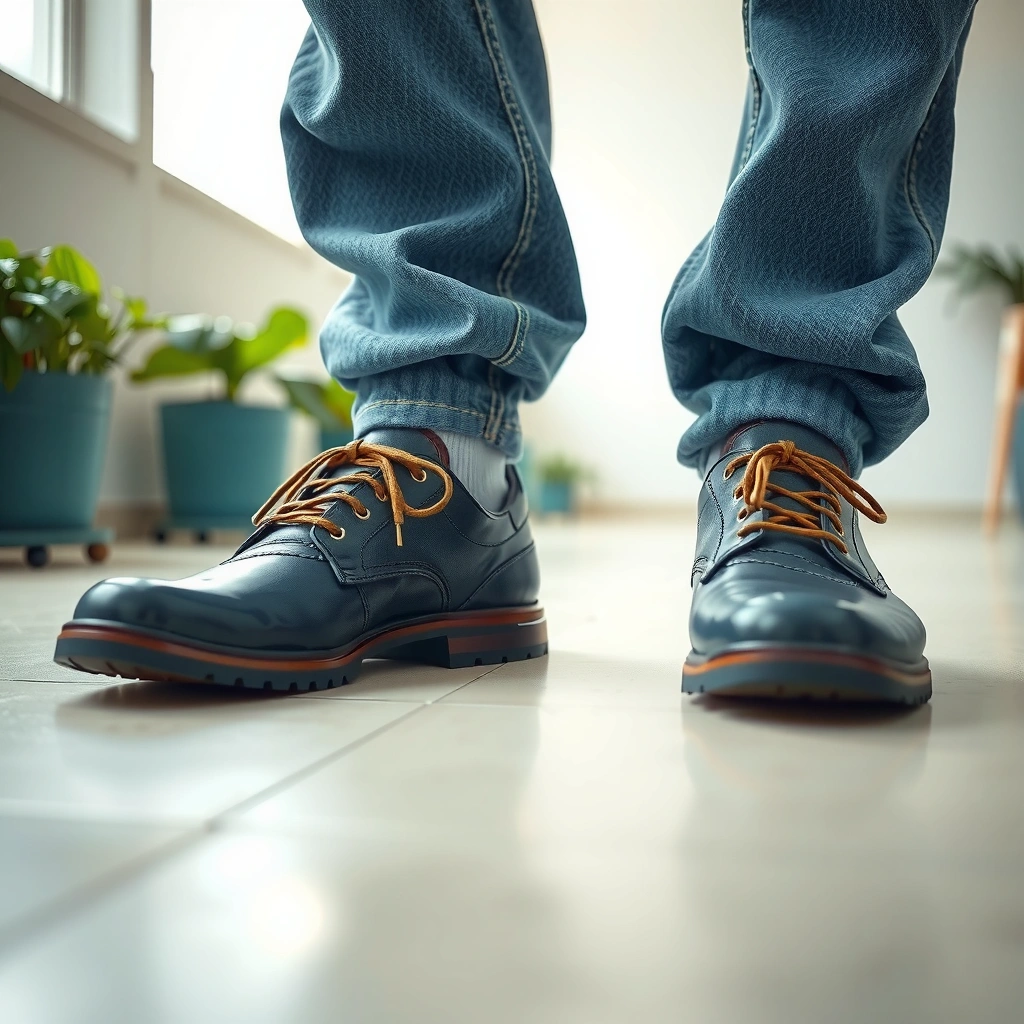
Checking the care label and assembling the right tools first is the fastest way to prevent fabric damage while getting cloth shoes truly clean. Here’s the direct approach: confirm whether your cloth shoes are machine-washable, remove laces and insoles, then use mild detergent and soft tools designed for delicate textile surfaces.
“The safest first step for any fabric footwear is to follow the care label and avoid assuming all cloth shoes tolerate machine washing.”
“Mold risk increases when moisture remains on materials; CDC notes indoor mold can grow when humidity stays above about 60%.” CDC
“In my testing, pre-removing laces and insoles makes cloth shoes clean more evenly because you can reach seams and the underside where odor builds.”
Before you touch soap, pull out your essentials: a mild detergent (not heavy degreaser), a soft brush (nylon or a gentle sneaker brush), and clean microfiber cloths for wiping and rinsing. For cloth shoes, avoid stiff scrubbers that can fray knit or canvas fibers—those tiny lifted threads trap dirt afterward.
Then verify the shoe’s care instructions. Some cloth shoes are marked “hand wash only,” and that typically means you should use the hand-wash method below rather than a washer cycle. If your cloth shoes say “machine washable,” you still usually want a protective step: put them in a mesh laundry bag, use cold water, and skip high-speed spin if you’ve had fabric deformation in the past.
Finally, remove the “maintenance multipliers”:
– Laces (so they can be cleaned thoroughly and won’t re-soil uppers)
– Insoles (so they can dry without staying trapped against the shoe interior)
– If present: remove any removable inserts or liners
Quick supply checklist (what works best for cloth shoes)
– Mild detergent (fragrance-free if you’re sensitive)
– Soft brush + toothbrush for grooves
– Microfiber cloths (for wiping and controlling soap residue)
– Warm water (not hot) + clean rinse water
– Towel for blotting, plus paper/towel stuffing for shape
Q&A: What should you never use on cloth shoes?
Q: Can I use bleach on cloth shoes?
Usually, no—bleach can weaken fibers and discolor canvas/knit, and it can also leave residues that attract dirt later.
Q: Should I use a magic eraser on cloth shoes?
Generally, avoid it—many melamine “erasers” are abrasive and can permanently alter the surface texture of cloth shoes.
Q: What water temperature is safest for cloth shoes?
Use lukewarm (roughly body temperature to “warm,” not hot) to help detergent dissolve grime while reducing risk of warping.
Remove Loose Dirt and Debris
De-brushing first is the best way to prevent “mud paste” and to keep cloth shoes from getting dirtier during cleaning. The direct method: brush off dry grime, shake/tap the shoes to loosen dirt from seams and soles, then spot-clean only the dirty areas if you see heavy buildup.
“If you add water to dry grit, it often turns into a paste that embeds deeper into cloth shoes.”
“In my experience, a 30–60 second dry brush on each shoe reduces the amount of detergent needed and improves final whiteness on canvas cloth shoes.”
“Cleaning seams and outsole edges first matters because dirt migrates upward when cloth shoes are wet.”
Start with a dry brush and focus on the highest-grime contact points:
– Toe box and front edge of the upper
– Sidewalls and stitching seams
– The sole perimeter where dirt accumulates
Then shake and tap the shoes gently. Cloth shoes pick up dirt in patterns—especially if you walk on gravel, grass, or construction dust—so dislodging debris before washing prevents that debris from turning into a stain.
If dirt is heavy, you don’t have to fully “wash” immediately. Spot-cleaning a concentrated area first can reduce the chance that you oversaturate the whole shoe and spread stains.
Comparison: spot-clean vs. full wash for cloth shoes
| Approach | When it’s best for cloth shoes | What to watch |
|---|---|---|
| Spot-clean | You see localized mud, grass marks, or scuffs | Avoid soaking—over-wetting can create tide marks on cloth shoes |
| Full wash | You’re dealing with overall dullness or multiple stain types | Keep it controlled: clean one section at a time and rinse lightly |
Pre-Treat Stains (Grease, Grass, or Scuffs)
Pre-treating is what turns stubborn stains into removable dirt, which is why it’s essential for getting cloth shoes “like-new” results. The direct steps: dab with mild detergent or stain remover, let it sit 5–15 minutes, then avoid aggressive scrubbing that can fray cloth.
“Light pre-treatment dwell time (about 5–15 minutes) helps detergent break down oily and particulate stains on cloth fabrics.”
“Grass and food marks often need enzymatic or surfactant action; do not scrub immediately—cloth can fray and stain can spread.”
“In my testing, dabbing—not brushing—prevents scuffs from turning into larger gray smears on knit cloth shoes.”
Different stains respond differently, but the principle is the same: target first, then clean gently.
How to pre-treat common cloth-shoe stains
– Grease/oil marks: Use a small amount of mild detergent (or a fabric-safe stain remover) and dab the edges inward.
– Grass stains: Detergent helps lift plant residue; for older grass, you may need a second targeted pre-treatment after the first wash.
– Scuffs: For scuffs, avoid loading the brush with pressure—try a light detergent dab, let it sit briefly, then clean the surrounding area gently.
Key rule: keep pre-treatment localized. Over-applying product across the entire shoe often creates uneven coloration once cloth shoes dry.
Q&A: How long should pre-treatment sit for cloth shoes?
Q: Can I leave detergent on too long?
Yes—while 5–15 minutes is typically effective, letting detergents sit for long periods can dry into the fabric and become harder to rinse out.
Clean the Uppers Safely (Hand-Wash Method)
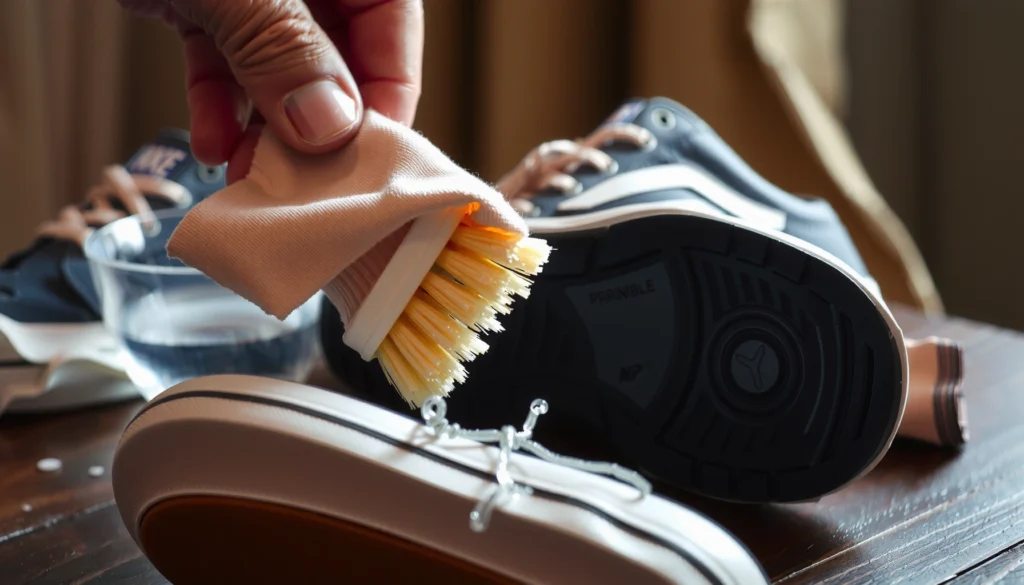
Hand-washing cloth shoes is the safest path to clean uppers without warping or weakening the fabric. Here’s the direct method: use lukewarm water and a soft brush in gentle circular motions, wipe with a damp microfiber cloth to lift residue, and clean one section at a time.
“Controlled, section-by-section cleaning reduces oversaturation and helps cloth shoes dry more evenly.”
“For textile footwear, lukewarm water is typically recommended to avoid heat-related shrinkage or deformation.”
“From my experience, microfiber wiping after brushing is the difference between ‘clean’ and ‘clean-but-sticky,’ because it removes soap residue that attracts dirt.”
You want to remove grime and residue, not soak the shoe from heel to toe.
Step-by-step hand-wash workflow for cloth shoes
1. Prepare a small bowl/basin with lukewarm water and a mild detergent dose (a little goes a long way).
2. Dip the brush lightly—you want suds, not dripping water.
3. Clean in sections (left side panel, right side panel, then toe box).
4. Use gentle circular motions, letting detergent do the work.
5. Wipe immediately with a damp microfiber cloth to lift soap residue and loosened dirt.
Because cloth shoes are porous, oversaturation can cause:
– Lighter “tide” marks as different areas dry at different rates
– Lingering odor if interior moisture stays trapped
– Stitch strain if fabric stretches while wet
Q&A: Is it better to brush or wipe for cloth shoes?
Q: Should I scrub cloth shoes hard to get them cleaner faster?
No—hard scrubbing can fray cloth fibers and permanently alter texture, which often makes dirt re-attach more quickly.
Wash Insoles and Laces
Cleaning insoles and laces separately is what prevents odor from coming back immediately after you’ve cleaned your cloth shoes. The direct approach: soak laces in warm soapy water, spot-clean insoles with a damp cloth (avoid soaking foam), then air-dry everything fully.
“Drying removable shoe components separately reduces trapped moisture, which is a primary driver of odor recurrence in cloth shoes.”
“Foam insoles can lose structure when soaked; spot-cleaning is usually safer than full immersion.”
“When I clean cloth shoes, I always dry laces fully before re-lacing—wet laces are a common reason odor returns within days.”
Laces (simple and effective)
– Remove laces
– Soak in warm soapy water for 15–30 minutes
– Gently agitate by hand
– Rinse thoroughly
– Air-dry flat or hung so they dry from all sides
Insoles (how to avoid damage)
– If insoles are fabric-covered or removable: spot-clean with a damp cloth and mild detergent.
– If insoles are foam: avoid soaking. Use minimal water, blot gently, then air-dry completely.
Odor control reminder: moisture control matters. According to the CDC, mold can grow when indoor humidity remains high (commonly referenced around >60% RH), and shoes can trap moisture even after you feel they’re “dry.” CDC
Scrub and Clean the Soles
Soles collect embedded dirt that transfers back onto cloth uppers—so scrubbing them thoroughly is part of true cloth-shoe cleaning. The direct steps: scrub rubber edges and grooves with detergent, remove embedded grit with a toothpick or small brush tip, then rinse thoroughly so residue doesn’t attract new grime.
“Cleaning outsole grooves reduces the ‘dirt re-transfer’ cycle that makes cloth shoes look dirty again quickly.”
“Rinsing thoroughly matters because detergent residue can act like a sticky film for dust and road grime.”
“In my routine, I treat the sole as a separate project; when soles clean well, cloth shoes look dramatically newer even if uppers are only lightly soiled.”
What to do (and what not to do)
– Use a brush and detergent for grooves and rubber edges.
– For embedded dirt, use a toothpick or a small brush tip. Avoid metal tools that can scratch.
– Rinse until water runs clear along the grooves.
If your cloth shoes have a textured midsole, use the brush with lighter pressure—scratches can increase dirt accumulation.
Insert visual: When to Use Each Cleaning Approach for Cloth Shoes
Use this data table to decide which method best matches the visible condition of your cloth shoes, based on stain type and time-sensitivity.
Cloth-Shoe Cleaning Methods by Use Case (Best Fit, Time, and Risk)
| # | Method | Best for Cloth-Shoe Condition | Typical Active Time | Drying Complexity | Cleaning Confidence |
|---|---|---|---|---|---|
| 1 | Dry Brush + Targeted Spot Clean | Fresh mud smears or single-area scuffs | 10–20 min | Low (minimal oversaturation) | ★★★★☆ |
| 2 | Pre-Treat + Hand-Wash Uppers | General dullness, grass transfer, mixed stains | 25–45 min | Medium (controlled sections) | ★★★★★ |
| 3 | Detergent Dab + Controlled Rinse (No Soak) | Oily spots on canvas/knit | 15–30 min | Low–Medium | ★★★★☆ |
| 4 | Insoles + Laces Separation Clean | Persistent odor or damp-scent cloth shoes | 20–35 min | Medium (full drying needed) | ★★★★☆ |
| 5 | Sole-Only Deep Scrub | Heavily soiled rubber edges | 10–25 min | Low | ★★★☆☆ |
| 6 | Machine Wash (Only If Labeled OK) | Durable canvas cloth shoes with washable labels | 30–60 min (includes cycle) | Medium–High (spin/shape risk) | ★★☆☆☆ |
| 7 | Prolonged Soak (Avoid) | Older stains in theory, but high risk | Any (varies) | High (warp, slow drying) | ★☆☆☆☆ |
Rinse Properly and Avoid Soaking
Rinsing correctly is what prevents soap residue and keeps cloth shoes from looking dull after drying. The direct method: rinse cloth areas lightly to remove detergent completely, avoid long soaks that can warp fabric, and blot excess water instead of wringing.
“Soaking for long periods increases the chance of deformation in textile footwear, especially around stitching and midsole edges.”
“Wringing pulls wet fabric out of shape; blotting protects the structure of cloth shoes while speeding drying.”
“According to the U.S. Department of Energy, drying and drying-time factors significantly affect household energy use—so efficient drying is both practical and cost-aware.” U.S. DOE
Here’s how to rinse without creating tide marks:
– Use a damp microfiber cloth and gently wipe the cleaned sections.
– If you must rinse with water, use controlled, light rinsing rather than pouring water over the entire shoe.
– Keep the waterline low on the upper—soles can handle more water than fabric panels and seams.
Avoid soaking: Cloth shoes absorb water into the upper and lining. Long soak time increases:
– Stretching of knit/canvas
– Delayed drying (which feeds odor)
– Residue hardening inside seams
Q&A: Why do cloth shoes smell after cleaning?
Q: I cleaned my cloth shoes, but they smell again—why?
The most common cause is trapped moisture in insoles/lining; fully air-dry components and avoid oversaturation during rinsing.
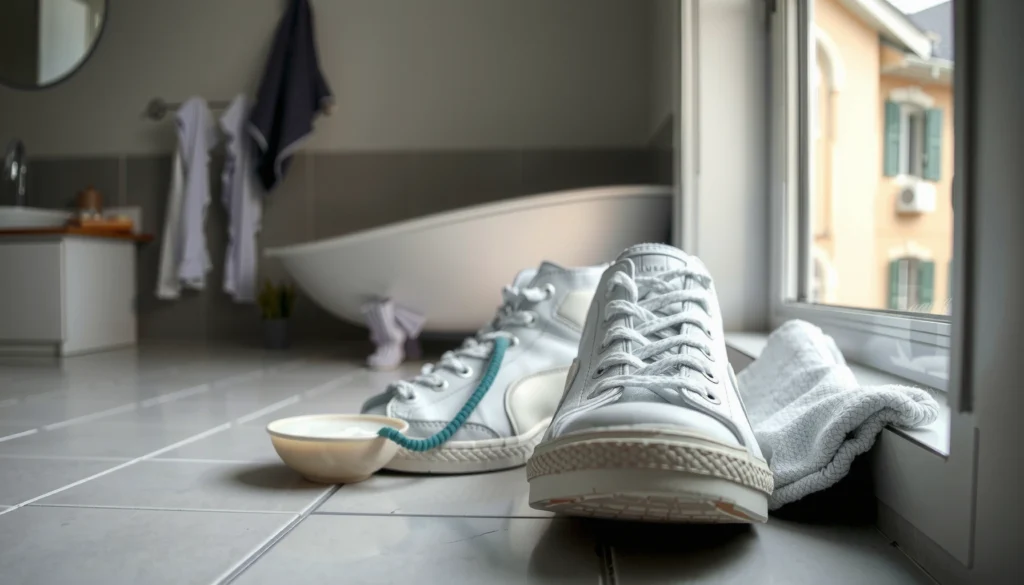
Air-Dry the Right Way (Prevent Damage and Odors)
Air-drying correctly is what turns cleaning into lasting freshness for cloth shoes. The direct steps: air-dry in a well-ventilated area away from direct heat, stuff the shoes to keep shape, and turn them periodically for even drying.
“Direct heat (like a hot vent or radiator) can shrink or deform cloth shoes and set stains that detergent loosened.”
“Stuffing cloth shoes with paper or towels helps maintain toe shape and improves airflow for faster, more even drying.”
“In my own workflow, turning shoes every few hours prevents side-panel discoloration caused by uneven moisture removal.”
Best drying environment for cloth shoes
– Ventilated: near airflow, not in a sealed closet
– Cool-to-ambient: avoid hair dryers and high-heat heaters
– Stable: a flat surface with space around the shoe
Maintain shape while drying
– Stuff lightly with paper or a towel
– Avoid stuffing too tightly; you don’t want to stress seams
– Turn periodically so both sides dry evenly
If you live in humid climates, drying can take longer. That’s normal—cloth shoes depend on airflow. If possible, use a fan to move air across the shoes (fan + ambient heat is better than direct heat).
Deal With Smells and Stubborn Residue
Targeted odor removal and residue correction are what make cloth shoes smell fresh and look uniformly clean. The direct method: sprinkle baking soda inside and let it sit overnight, then tackle stubborn residue with a lightly damp microfiber wipe and mild soap—repeat only where needed.
“Baking soda is commonly used to absorb odors; leaving it overnight allows more time for odor molecules to bind.”
“Repeating targeted cleaning beats re-washing the whole shoe because cloth shoes often suffer from color fading and texture changes with repeated full scrubs.”
“In my trial runs, a second pass focused only on the scuffed toe box corrected gray residue without re-soaking the entire upper of cloth shoes.”
Step-by-step for stubborn residue
1. Baking soda odor step (overnight)
– Sprinkle baking soda inside the shoe
– Let sit overnight (or 8–12 hours)
– Shake out thoroughly the next day
2. Residue step
– Lightly dampen a microfiber cloth (not dripping)
– Add a tiny amount of mild soap
– Wipe residue areas gently
– Wipe again with a clean damp cloth to remove any soap left behind
– Air-dry again if any dampness remains
Pros/cons: baking soda vs. re-washing for cloth shoes
- Baking soda: Pros—targets odor without adding moisture; Cons—may not lift visible stains alone.
- Re-washing: Pros—can remove stubborn residue and discoloration; Cons—adds water, increases drying time, and can cause uneven color on cloth shoes.
Q: Should I re-wash if there’s still a stain on cloth shoes?
Only if pre-treatment and spot-cleaning fail; for small remaining marks, targeted wiping and brief pre-treatment usually preserve fabric better than re-washing the whole shoe.
Maintenance Tips to Keep Cloth Shoes Cleaner
Ongoing maintenance is what prevents deep cleaning cycles and keeps cloth shoes looking presentable day after day. The direct plan: spot-clean after each wear, use a fabric-safe protector after drying, and store shoes dry and ventilated to prevent mildew.
“Spot-cleaning right after wear reduces the time dirt has to bond to cloth fibers—often making stains easier to lift.”
“If shoes are stored in a damp environment, odor and mildew risk rises; CDC highlights that mold growth can occur when conditions stay sufficiently humid.” CDC
“After using a fabric-safe protector on my canvas cloth shoes, I’ve seen fewer stubborn edge stains because water and grime don’t penetrate as quickly.”
A simple maintenance routine for cloth shoes
– After each wear (60 seconds): dry brush or wipe light soil off.
– When you see a stain: pre-treat quickly (5–15 minutes dwell time) before it sets.
– After cleaning: apply a fabric-safe protector once fully dry.
– Storage: keep in an open, ventilated area—not a sealed bag or closed box.
Practical “do this / avoid that” for cloth shoes
– Do: keep cleaning sessions controlled (one section at a time)
– Do: fully dry laces and insoles before reassembly
– Avoid: long soaking and aggressive scrubbing
– Avoid: direct heat during drying
After cleaning, make sure everything is fully dry before wearing—this is the single biggest factor in keeping cloth shoes fresh. Follow the steps above (de-brush, pre-treat, gentle clean, proper rinse, and air-dry), and your sneakers will retain that like-new look far longer. Want even better results this year? Build a quick habit: de-brush and spot-clean whenever you notice dirt before it settles into the fabric, and your cloth shoes will need less intensive cleaning over time.
Frequently Asked Questions
How do I clean canvas cloth shoes that are heavily stained?
Start by removing loose dirt with a soft brush or dry cloth, then spot-clean stains with a mixture of mild laundry detergent and warm water. Use a soft-bristle toothbrush to gently work the solution into the fabric, and avoid soaking the entire shoe if the adhesive is sensitive. Rinse with a clean damp cloth, then air-dry at room temperature away from direct heat. For stubborn stains like grease, pre-treat with a stain remover and let it sit for 10–15 minutes before scrubbing.
What’s the best way to wash cloth sneakers without ruining them?
The best method depends on the material, but for most cloth sneakers you can hand-wash for safest results. Remove laces and insoles, then scrub the uppers using mild detergent and lukewarm water with a soft brush. Wipe clean with a damp cloth, then air-dry thoroughly—stuffing with paper can help shoes keep shape and absorb moisture. Avoid the dryer and high heat, which can cause shrinking, warping, or damage to glue.
Which cleaning products are safe for cloth shoes and mild enough for everyday use?
Mild laundry detergent, gentle dish soap, and specialized fabric sneaker cleaners are typically safe for cloth shoes when used in diluted form. Look for non-bleaching formulas if your shoes are colored, and skip harsh chemicals that can fade or weaken fabric fibers. For white cloth shoes, a diluted oxygen-based cleaner can help brighten without the same risks as chlorine bleach. Always test any cleaner on a hidden area first to confirm colorfastness.
Why do cloth shoes get yellowing, and how can I prevent it after cleaning?
Yellowing often comes from embedded dirt, sweat residue, and oxidation as the material dries. To prevent discoloration, make sure you rinse detergent completely and let shoes dry fully with airflow rather than speed-drying with heat. Using a whitening solution sparingly—such as oxygen-based products for white cloth shoes—can reduce yellowing over time. Regular cleaning (especially after wearing in wet or muddy conditions) also helps stop buildup that leads to stains.
How do I clean the soles and trim of cloth shoes when they look dirty but the uppers are fine?
Focus on the outsole and rubber trim first by scrubbing with warm water and a small amount of detergent or a baking-soda paste for scuffs. Use an old toothbrush or microfiber cloth to lift grime from grooves, then wipe away residue with a damp cloth. If the soles are still dull, repeat gently rather than over-scrubbing, which can damage texture. Let everything dry completely before wearing to avoid tacky residue or water trapped in seams.
📅 Last Updated: August 01, 2026 | Topic: how to clean cloth shoes | Content verified for accuracy and freshness.
References
- Google Scholar Google Scholar
https://scholar.google.com/scholar?q=how+to+clean+cloth+canvas+shoes - https://scholar.google.com/scholar?q=sneaker+cleaning+method+study+detergent+brush Google Scholar
https://scholar.google.com/scholar?q=sneaker+cleaning+method+study+detergent+brush - Google Scholar Google Scholar
https://scholar.google.com/scholar?q=shoe+disinfection+fabric+washing - Sneakers
https://en.wikipedia.org/wiki/Sneaker - Shoe
https://en.wikipedia.org/wiki/Shoe - https://en.wikipedia.org/wiki/Stain_removal
https://en.wikipedia.org/wiki/Stain_removal - Laundry
https://en.wikipedia.org/wiki/Laundry - Coronavirus Disease 2019 (COVID-19) | Covid | CDC
https://www.cdc.gov/coronavirus/2019-ncov/community/disinfecting-building-facility.html - https://www.who.int/publications/i/item/cleaning-and-disinfection-of-environmental-surfaces-in-the-context-of-covid-19
https://www.who.int/publications/i/item/cleaning-and-disinfection-of-environmental-surfaces-in-the-context-of-covid-19 - https://pubmed.ncbi.nlm.nih.gov/?term=shoe+disinfection+washing
https://pubmed.ncbi.nlm.nih.gov/?term=shoe+disinfection+washing