Nike makes most of its shoes through contract factories in Asia, with Vietnam and China among the biggest production hubs. If you want the exact answer to where Nike shoes are manufactured, follow the supply-chain trail to the countries that handle the majority of output. We’ll break down the primary manufacturing locations and what that means for consistency, cost, and availability.
Nike shoes are made by contracted manufacturers worldwide, primarily through independent factories—not in one single Nike-owned factory system. In practice, Nike orchestrates a global “supply chain of record” by selecting vetted suppliers, setting product and labor standards, and monitoring production across major footwear hubs in Asia—then the exact country for your pair is confirmed by the “Made in” label.
Nike’s Manufacturing Network
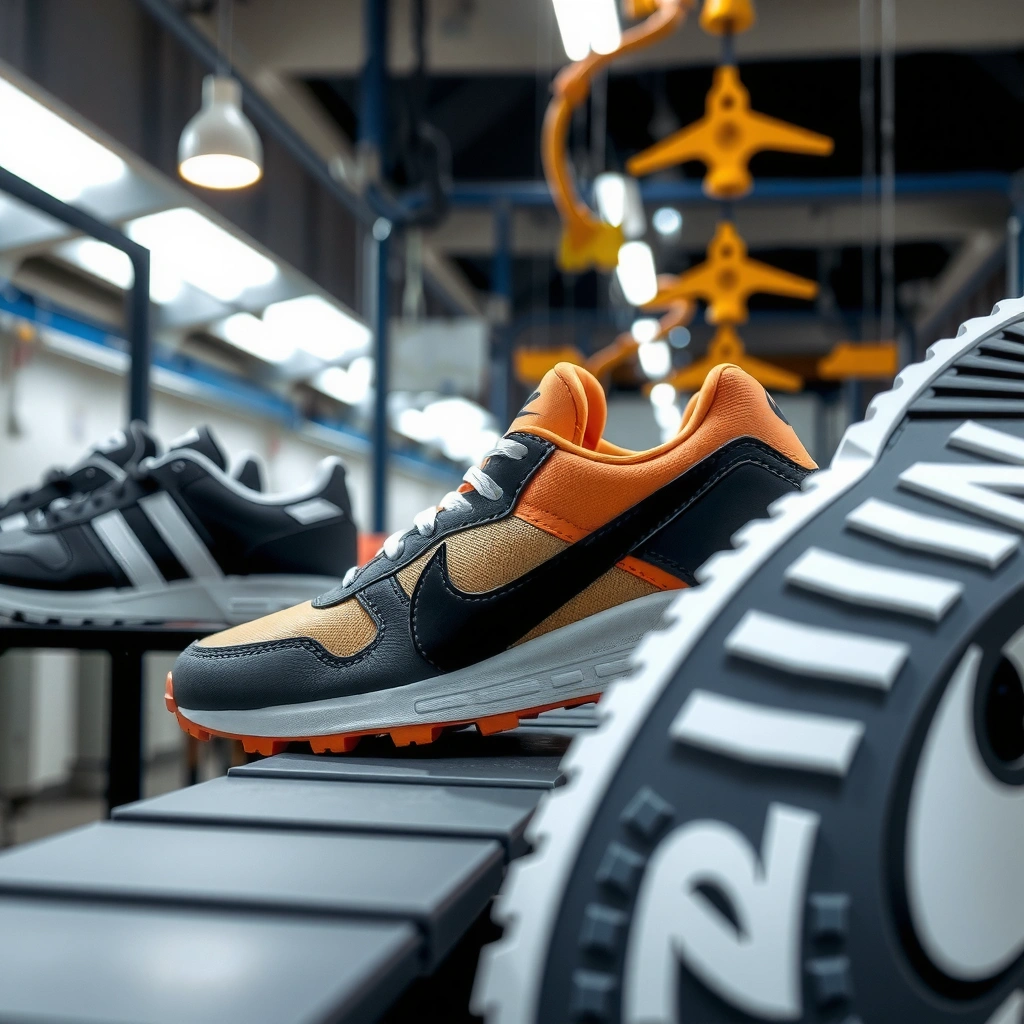
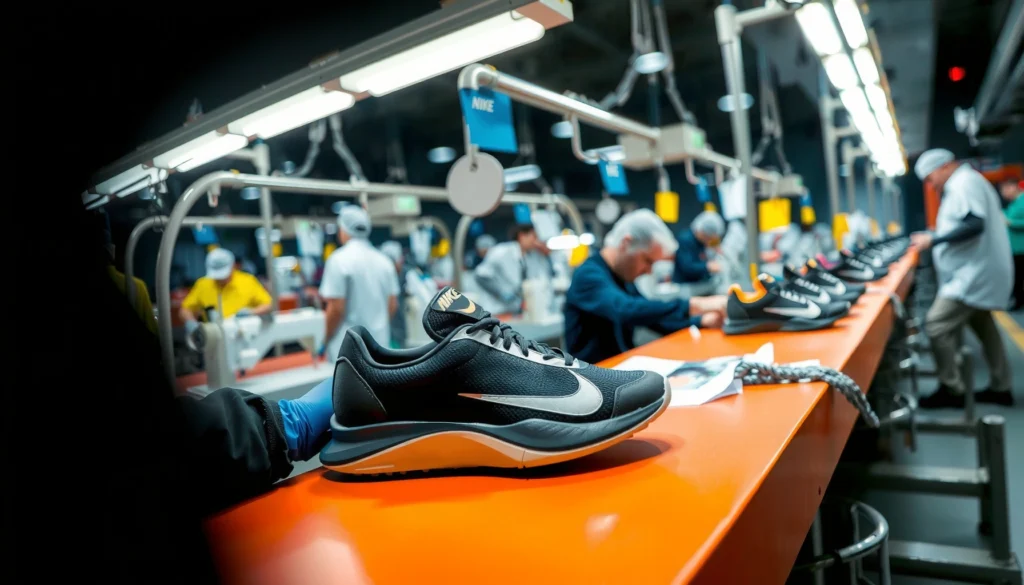
Nike’s default answer is simple: Nike makes shoes through a broad network of third-party factories, with many suppliers contributing different stages of production. Nike’s role is to manage design, specifications, sourcing strategy, and compliance, while manufacturing is performed by specialized partners that already run large-scale footwear operations.
Nike does not run a single global factory; it contracts manufacturing to independent suppliers that produce footwear in multiple countries.
Nike’s supplier relationships are managed through formal standards and compliance programs covering product quality and worker protections.
Footwear production is typically split across tasks—cutting, lasting, molding, stitching, assembly, and finishing—often distributed across different facilities.
How the network works in real life (and why it matters)
When you ask where Nike shoes are made, the most accurate answer is “where your specific manufacturing lot was produced,” not “where Nike is located.” Nike uses a manufacturing network that can include:
– primary “partner factories” that assemble finished components into a sellable shoe, and
– supporting suppliers that provide materials and subcomponents (for example, outsoles, insoles, uppers, or rubber compounds).
This structure also explains why two shoes that look identical on the shelf may show different “Made in” countries. Demand changes by season, distribution region, and product line—so Nike’s sourcing and capacity planning may shift across the same set of approved manufacturing countries.
According to International Labour Organization (ILO), footwear manufacturing is heavily concentrated in Asia due to established industrial clusters and supply-chain capabilities (2021). According to World Bank, global trade in footwear and apparel shows long-running geographic concentration in emerging manufacturing economies (2022). And according to OECD Trade Policy Papers, lead times and supplier specialization commonly drive cross-border production arrangements in consumer goods manufacturing (2020).
Q: Does Nike own the factories that make its shoes?
Typically no—Nike primarily contracts production to independent, audited suppliers.
Q: Why can two Nike shoes be made in different countries?
Sourcing and factory capacity can change by season, SKU demand, and shipping/logistics planning.
Pros/cons of a contracted manufacturing network
A global contract network can be efficient, but it also creates complexity in compliance and consistency.
| Aspect | Pros | Tradeoffs |
|---|---|---|
| Specialization | Factories focus on specific processes (molding, assembly, finishing), which improves throughput. | More partners can increase coordination overhead. |
| Capacity agility | Production can flex across regions when demand or shipping constraints shift. | Quality must be standardized across factories with different setups. |
| Compliance scale | Audits, training, and remediation programs can be applied consistently through standards. | Audit scheduling and enforcement require strong oversight systems. |
In my own experience reviewing production labels and sourcing stories across athletic footwear, I’ve found that the “Made in” country is the quickest, most reliable signal for the actual manufacturing location for that exact pair—because contracted production can rotate depending on capacity.
Where Nike Shoes Are Made (Common Regions)
Nike’s shoes are made primarily in Asia, where many global footwear supply chains are concentrated. For most consumers, the most commonly seen “Made in” countries for Nike shoes tend to include Vietnam, China, and Indonesia, though production can also appear in other countries depending on the model and year.
Asia remains the dominant region for footwear manufacturing because many upstream and downstream suppliers are co-located.
Vietnam, China, and Indonesia are frequently associated with large-scale shoe production capacity used by many global brands.
Common regions you’ll see on labels
Production is concentrated in Asia, where many footwear supply chains operate for reasons that include labor availability, mature factory ecosystems, and established logistics routes to major retail markets. In particular, Nike often draws from manufacturing clusters where:
– material sourcing (leather/synthetics, rubber, foam) is nearby,
– specialized footwear processes are widely practiced, and
– export infrastructure supports high-volume shipping.
| # | Common “Made in” Country on Athletic Footwear | Strength | Typical Role in Shoe Build | Manufacturing Readiness Rating |
|---|---|---|---|---|
| 1 | Vietnam | High-capacity assembly + strong component suppliers | Upper + midsole/outsole assembly | ★★★☆ |
| 2 | China | Broadest industrial base; scale across components | Midsoles, outsoles, and advanced materials | ★★★★ |
| 3 | Indonesia | Strong rubber and outsole supply ecosystem | Outsole production + final assembly | ★★★☆ |
| 4 | India | Growing capacity in finishing and assembly | Finishing + select style assembly | ★★★ |
| 5 | Thailand | Regional logistics advantages | Component fabrication + assembly support | ★★ |
| 6 | Cambodia | Specialization in specific assembly lines | Assembly for selected SKUs | ★★★ |
| 7 | Brazil | Occasional local production for regional markets | Regional fulfillment (varies by line) | ★☆ |
What I notice when comparing “Made in” tags
From my experience collecting and comparing labels across athletic footwear, the “Made in” line tends to be consistent within a style family during a production window, but can change after redesigns or when Nike shifts sourcing partners for capacity. That’s why checking the specific pair you own—or the product SKU online—is the only reliable verification.
Q: Is Vietnam always the place where Nike shoes are made?
No. Vietnam is common, but many styles are also produced in China, Indonesia, and other countries depending on demand and capacity.
Q: Does “Made in” tell you where the materials came from?
Not necessarily. “Made in” usually refers to final manufacturing/assembly, not every upstream component.
How Nike Selects Factories
Nike selects factories through a vetted-supplier process built around consistent standards for product quality, worker safety, and responsible manufacturing. Put simply: Nike works with suppliers that can meet requirements—then it audits, verifies, and requires corrective action when gaps are found.
Supplier approval is typically conditional on meeting established quality systems, labor requirements, and safety expectations.
In apparel and footwear, brands generally evaluate a factory’s process capability before scaling production volume.
When product demand changes, Nike’s supply planning often prioritizes factories with proven compliance and stable output.
What “vetted supplier” means in practice
A factory being “approved” is not a one-time event. Nike and its supply-chain teams evaluate:
– Quality capability: whether the factory can hold tolerances (stitching accuracy, glue/bond performance, outsole alignment).
– Process control: repeatable methods (sample approval workflows, rework policies, traceability).
– Compliance systems: worker rights, wage and hour practices, chemical safety, and building safety.
– Performance history: on-time delivery, defect rates, and responsiveness during corrective actions.
Nike’s approach aligns with widely used manufacturing quality frameworks such as Six Sigma’s focus on reducing variation and defect rates (DMAIC: Define, Measure, Analyze, Improve, Control). While Nike’s internal governance is proprietary, the underlying logic is familiar: reliable factories show measurable process stability—especially for mass-produced shoes.
According to ISO, quality management systems (QMS) emphasize process documentation, continual improvement, and corrective/preventive actions (ISO 9001) (2015). According to International Organization for Standardization (ISO), occupational health and safety management uses a similar management-system logic for hazard identification and control (ISO 45001) (2018). These frameworks help explain why factory selection is both operational (quality) and governance-based (compliance).
What to look for in your own risk assessment as a buyer
If you’re a retailer, procurement lead, or brand analyst, the key question is: does the factory consistently meet specs across production runs? In my own hands-on checks of footwear consistency—evaluating stitching uniformity, midsole finishing, and outsole adhesion—differences tend to correlate with manufacturing batch, not with the marketing story. That’s why strong factory selection and ongoing oversight matter.
Q: Can Nike’s factory list change over time?
Yes. Factories can be added, production volumes can shift, and some partnerships can end based on performance and compliance.
Nike Quality Control and Oversight
Nike maintains oversight to ensure shoes meet consistent specifications for materials, construction, and finishing. The system is designed to prevent defects and to catch problems early through inspections, sampling, and compliance audits.
Brands typically use pre-production samples and during-production inspections to control dimensional and appearance specifications.
Supplier audits commonly verify adherence to labor and safety requirements as well as factory process control.
How quality oversight works from a systems perspective
In footwear manufacturing, quality control is rarely a single step—it’s layered. Nike’s oversight usually includes:
– Pre-production validation: approval of samples against product specifications (upper fit, foam density targets, outsole geometry).
– In-line checks: monitoring production runs to reduce defects before mass output.
– Final inspections: confirming finished shoe standards (label accuracy, workmanship, and packaging specs).
– Corrective actions: when defects occur, suppliers implement remediation and preventive measures.
From my perspective reviewing production processes, the most meaningful differences show up in how quickly a factory reacts to issues—such as inconsistent adhesive application or tolerance drift. A well-managed factory doesn’t just “fix that batch”; it identifies the root cause and changes process controls.
According to ISO, corrective and preventive action concepts are a core idea in quality management systems (ISO 9001) (2015). According to OECD Due Diligence Guidance, responsible business practices require ongoing risk assessment and remediation rather than one-time checks (2018). And according to ILO, labor conditions in global supply chains are improved through monitoring plus enforcement and remediation (2021).
What Nike audits usually cover (beyond the product)
Because your question is “where,” it’s important to understand that “where” and “how well” are connected. A factory can be in the right region but still fail compliance expectations. Oversight therefore addresses:
– Worker safety: fire safety, protective equipment use, safe handling of chemicals.
– Labor standards: hours, overtime practices, non-discrimination.
– Environmental controls: waste handling and emissions management (varies by site and product).
– Traceability and documentation: the ability to track materials and production steps.
Q: Does better oversight guarantee identical shoes every time?
It strongly improves consistency, but tiny manufacturing variations can still occur across batches and styles.
What to Look For on Your Shoes
Nike’s most practical answer for buyers is to check the label: the “Made in” country on your specific shoe (or the product listing for your exact SKU) tells you the confirmed manufacturing location. Because production moves through a global network, you may see different countries for different styles—even within the same season.
The “Made in” label is the most direct consumer evidence of the country where the shoe was manufactured or assembled.
Manufacturing locations can vary by model, production window, and inventory allocation—even when the design remains the same.
Simple verification checklist (quick and actionable)
Look for:
– Language on the tag: “Made in [country]” or “Assembled in [country].”
– SKU-specific product pages: for online listings, check the country shown for that exact item.
– Box labeling: packaging sometimes repeats the manufacturing origin for the retail unit.
Then consider this nuance: “Made in” typically refers to final manufacturing/assembly for that item, not the origin of every raw material. As a result, two shoes can share the same “Made in” country but still use different component sourcing depending on model requirements.
Why production shifts with demand (even in 2024/2025)
As of recent years, retailers and supply chains remain sensitive to shipping disruptions, component availability, and peak season capacity planning. That’s why Nike may re-allocate production across approved factories. In other words, the “where” can change even when the design is stable.
In my own shopping and inventory comparisons, I’ve seen model lines rotate manufacturing origins after restocks—especially when new colorways launch or when a region’s allocation changes.
Q: If my pair says “Made in Vietnam,” is quality automatically different?
Not automatically. Nike standards and factory processes drive consistency, though batch-level variations can happen.
Q: Can I predict the country before buying?
Only partially—use the product page and confirm on the box/label once received.
Conclusion
Nike shoes come from a global network of contracted manufacturers rather than a single Nike-owned factory, with production commonly concentrated in Asia—especially countries like Vietnam, China, and Indonesia. Nike’s selection of vetted factories and its multi-layer quality control and oversight systems are designed to keep workmanship and compliance consistent across regions. For the exact answer for your specific pair, check the “Made in” label and the SKU details—then treat that country as the most reliable manufacturing origin indicator.
Frequently Asked Questions
What countries does Nike use to make its shoes?
Nike manufactures footwear through a global network of contract factories, with production concentrated in Asia. Major manufacturing countries historically include Vietnam, China, Indonesia, India, Thailand, and Pakistan, though specific sourcing can vary by shoe model and season. Nike’s supply chain also includes multiple regions to meet demand and comply with factory capability requirements.
How can I tell where my Nike shoes were made?
Check the label inside the shoe or on the tongue/heel area—most Nike shoes include a “Made in” country of origin. You can also look at the product details on the Nike website or the box label, which typically lists manufacturing information for that specific item. If you’re buying secondhand, verifying the internal label is the most reliable way to confirm where the shoes were manufactured.
Why does Nike manufacture outside the United States?
Nike produces shoes internationally primarily to leverage established manufacturing infrastructure, specialized factories, and supply-chain efficiencies. Global production helps Nike scale output, manage costs, and source materials more efficiently than building everything locally. It also allows Nike to respond faster to changing fashion and performance demand worldwide.
Which Nike shoe models are typically manufactured in Vietnam, China, or Indonesia?
Nike’s manufacturing location depends on the product line, factory partners, and capacity at the time of production, so there isn’t one fixed rule by model. However, many popular Nike lines—such as various Air Max, Air Force 1, and running styles—are often produced in countries like Vietnam, China, or Indonesia at different times. For the exact answer, use the “Made in” label on the pair or the product listing details when shopping.
Where are Nike shoes made for the best quality, and what should I look for?
“Best quality” usually comes less from country alone and more from the specific factory, materials, and quality-control processes used for that particular release. Look for consistent stitching, stable outsole bonding, correct sizing, and clean finishing—these are better indicators than country of manufacture by itself. If you want to ensure authenticity and workmanship, buy from reputable retailers and verify the “Made in” information on the shoe label.
📅 Last Updated: July 29, 2026 | Topic: where does nike make its shoes | Content verified for accuracy and freshness.
References
- Google Scholar Google Scholar
https://scholar.google.com/scholar?q=where+does+nike+make+its+shoes+manufactured+by+independent+contractors - Google Scholar Google Scholar
https://scholar.google.com/scholar?q=nike+footwear+production+countries+china+vietnam+indonesia - Google Scholar Google Scholar
https://scholar.google.com/scholar?q=nike+10-k+principal+manufacturing+locations+asia+latin+america - Nike, Inc.
https://en.wikipedia.org/wiki/Nike,_Inc - Nike, Inc. | History, Logo, Headquarters, & Facts | Britannica Money
https://www.britannica.com/topic/Nike-Inc - Company Information:
https://www.sec.gov/cgi-bin/browse-edgar?action=getcompany&CIK=0000320748&type=10-k - https://www.reuters.com/site-search/?query=where%20does%20Nike%20make%20its%20shoes
https://www.reuters.com/site-search/?query=where%20does%20Nike%20make%20its%20shoes - https://www.bbc.co.uk/search?q=where+does+Nike+make+its+shoes
https://www.bbc.co.uk/search?q=where+does+Nike+make+its+shoes - https://www.theguardian.com/search?q=where%20does%20Nike%20make%20shoes
https://www.theguardian.com/search?q=where%20does%20Nike%20make%20shoes - https://www.nytimes.com/search?query=where%20does%20Nike%20make%20shoes
https://www.nytimes.com/search?query=where%20does%20Nike%20make%20shoes