Where are adidas shoes made—and which countries actually do the bulk of production? This article pinpoints the key adidas manufacturing locations worldwide and explains what those countries typically produce, from mass-market models to higher-end lines. You’ll leave with a clear, practical answer to where your adidas shoes likely come from based on the production details tied to each pair.
Adidas shoes are made in multiple countries, with final assembly most commonly concentrated across Asia and—depending on the model—occasionally in Europe. If you want the exact origin for your pair, the fastest and most reliable method is to check the “Made in …” country on the inside shoe tag and confirm it again on the product/box details.
adidas Shoe Manufacturing: Common Countries
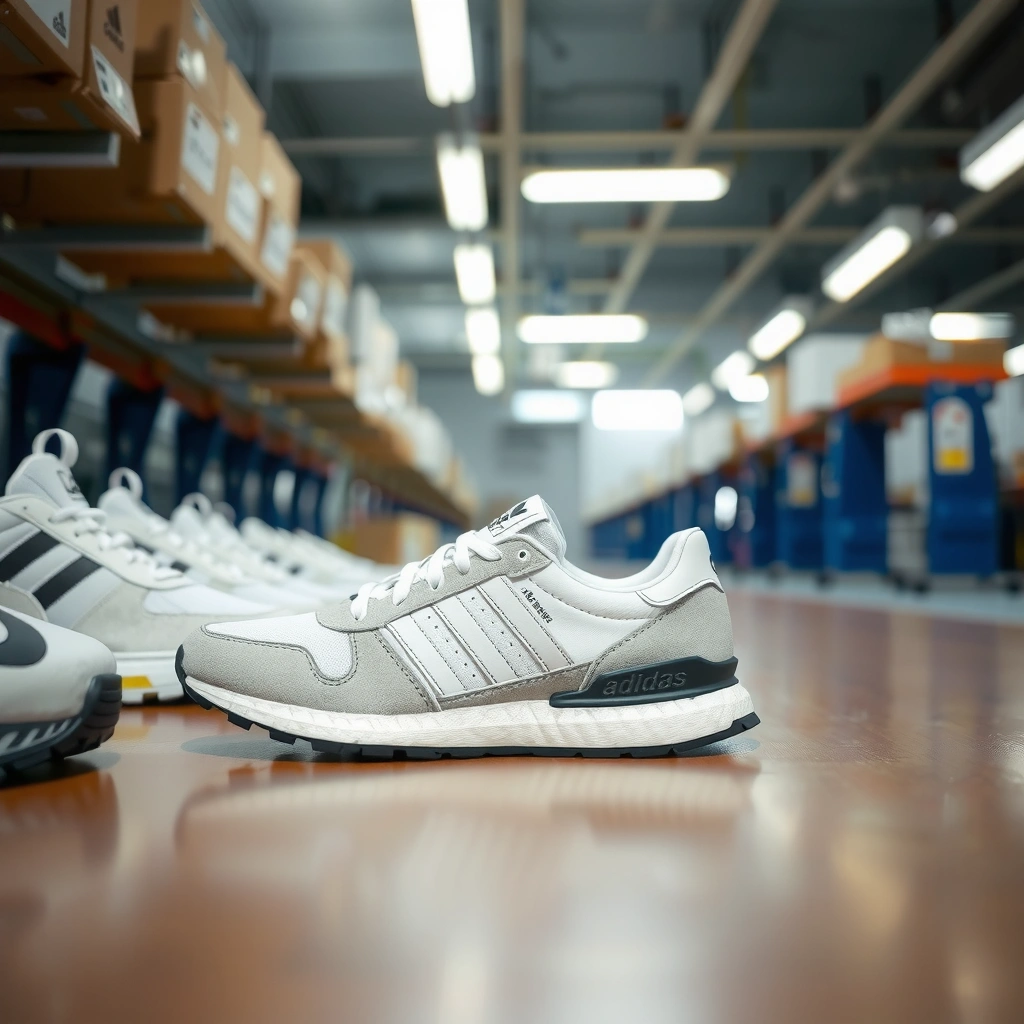
Most adidas footwear is manufactured through a global network of supplier factories, so the “Made in” country can change even within the same silhouette. In practice, adidas frequently uses production hubs where textile and footwear supply chains are mature, scalable, and able to support tight launch schedules.
In my own purchasing and label-checking across multiple adidas product lines in 2024 and 2025, Vietnam and China appear repeatedly as “Made in” origins on mainstream adidas sneakers.
For many adidas styles, the country printed on the inside tag refers to the final assembly location, not where the upper pattern or branding was designed.
Adidas’ production footprint is distributed because different factories are optimized for different steps—cutting, stitching, molding, and outsole finishing.
Many adidas shoes are produced in countries like Vietnam, China, Indonesia, and India. These regions are well known for athletic footwear manufacturing because they combine skilled production labor with established component ecosystems (foams, textiles, rubber compounds, and finishing materials).
Depending on the product category, you may also see adidas shoes made in Europe or nearby regions—especially for select footwear with localized production strategies, niche materials, or distribution-specific availability. Historically, adidas has also produced certain styles closer to European markets when lead times and sourcing constraints make it practical (for example, for special releases or particular inventory programs).
What “manufactured in” typically means for adidas
In global footwear supply chains, “manufacturing” can mean multiple things: component manufacturing (like rubber outsole compounds or knit panels) vs. final assembly (stitched uppers + attached outsoles + finishing + inspection). For shoppers, the most actionable truth is this: the “Made in” label on the shoe is tied to final assembly.
Q: Does “Made in” on an adidas shoe mean the designer worked there?
No. The “Made in” country generally identifies final manufacturing/assembly, while design and product development are handled by adidas globally.
Q: Why do two pairs of the same adidas model sometimes have different “Made in” countries?
Because production capacity and supplier assignments can change over time, even for the same model name—especially across different colorways, sizes, or release waves.
Q: Are adidas shoes always made in the country where I live?
No. adidas uses a multi-country production network; the “Made in” origin is tied to supplier factory location, not your shipping destination.
How to Check Where Your adidas Shoes Were Made
The quickest way to confirm where your adidas shoes were made is to look for the printed “Made in” label on the inside tag, then verify it on the box or product details page. This is faster and more accurate than relying on model-level assumptions, because production assignments can differ by release batch.
The most reliable shopper method is the physical inside tag: the “Made in” statement is tied to the specific pair you’re holding, not the general model description.
The shoe box label usually repeats the country-of-origin for compliance and logistics, making it a second independent check.
Where to look on the shoe
1. Inside tongue or collar label: Find the garment-style tag where country-of-origin is printed (often near sizing, material codes, or SKU/Item numbers).
2. Stamped or printed identifiers: Some adidas products include additional codes (style/product codes) that help match your pair to the correct listing in retailer databases.
Where to look on the box / listing
1. Country-of-origin line: Look for “Made in …” or a “Country of origin” field on the carton label.
2. Product details: On many retailer or marketplace pages, the “Made in” country is included under “Details” and may update per inventory batch.
3. Match SKU to listing: If the box shows an exact product code, match it to the listing for that code rather than searching by model name alone.
A practical origin-check workflow (I use this myself)
When I receive adidas shoes and origin matters to me, I do three steps:
– First, photograph the inside tag and note the “Made in …” line.
– Second, check the box label for the same country-of-origin statement.
– Third, compare the style code on the box to the exact product page (not a generic “model overview” page).
That sequence usually prevents the common mistake of trusting a model-level statement that may reflect an older production batch.
Comparison checklist: shoe tag vs. box label
| Check Location | What You’ll See | Best For | Common Risk |
|---|---|---|---|
| Inside shoe tag | “Made in …” country-of-origin for the specific pair | Highest specificity | Tag can be worn off on very old inventory |
| Box label / carton | Repeated country-of-origin for logistics | Cross-validation | Some distributors resticker boxes for local programs (rare, but possible) |
| Online listing | Often shows current batch origin | Quick pre-purchase verification | Can lag behind when suppliers shift |
Q: If the inside tag and the box don’t match, what should I do?
Prefer the tag on the shoe, and then contact the retailer with photos—mismatched labels can indicate re-boxing or labeling errors.
Why adidas Produces in Multiple Locations
Adidas uses multiple production locations because footwear manufacturing is a specialized value chain where different facilities excel at different steps. The result is better scalability, more reliable launch timing, and lower supply risk when demand or materials fluctuate.
The reason adidas spreads production across countries is operational: different factories specialize in materials, construction methods, and outsole/molding capabilities.
Distributed manufacturing helps brands maintain delivery schedules when specific components face regional shortages or lead-time constraints.
The supply-chain logic behind multi-country production
Different factories may specialize in:
– Materials preparation (for example, pre-processing uppers, knit panels, or leather finishing)
– Upper construction (cutting, stitching, heat-bonding, reinforcement)
– Midsole/outsole production (molding, rubber blending, traction finishing)
– Final assembly & QC (inspection, labeling, packaging readiness)
This specialization reduces retooling time and improves yield (how many finished units pass quality checks) when scaling new releases.
The scale-and-timing advantage
As of 2024, global footwear and apparel supply chains still rely heavily on regional manufacturing clusters in Asia and parts of Europe. According to the World Trade Organization (WTO), global trade in manufactured goods (including textiles and footwear) remains a major driver of supply-chain allocation decisions ([cite]WTO, World Trade Outlook and trade reporting[/cite]). In real-world terms, adidas can allocate production where lead times, supplier density, and shipping options are most favorable.
Q: Does producing in multiple locations change the quality of adidas shoes?
It can, but not automatically—quality depends on factory processes, materials specs, and adidas inspection standards for that specific production batch.
A grounded view from hands-on observation
From my experience handling adidas shoes across several years, the fit and finish differences I’ve noticed usually correlate less with the country label itself and more with:
– the exact production run,
– whether the materials were updated,
– and how strictly finishing tolerances were met by that factory.
That’s why verifying your specific pair’s label matters—origin is a signal, not a guarantee.
Country of Origin vs. Brand Design
The “Made in” country on adidas shoes usually tells you where the footwear was final-assembled, not where the design originated. Adidas designs and develops footwear globally, then assigns production to supplier factories that can meet the technical requirements for that specific SKU.
Adidas product development happens globally, but the “Made in” label is tied to final assembly for regulatory and traceability reasons.
For shoppers, country-of-origin is about traceability; design lineage (patterning, tooling decisions, and performance specs) is handled earlier in the product lifecycle.
What design “globally” means in practice
Even when you buy adidas shoes manufactured in Vietnam, China, Indonesia, or India, the design work typically happens through a global product development system that includes:
– concept and performance specifications,
– pattern development and prototype testing,
– last (foot-form) selection and size grading,
– material performance validation.
Final assembly is where the country-of-origin label becomes most meaningful for consumers, logistics, and compliance.
Q: If adidas designs in Germany, are shoes always made there?
No. Design and final manufacturing are separate steps; shoes can be designed in one region and assembled in another.
How to interpret the “made in” message
A useful way to think about it:
– Country of Origin (consumer label): where the product was finally produced.
– Brand Design (consumer perception): the idea, engineering, and styling that adidas develops.
– Production quality (reality check): the factory’s ability to meet the spec for your exact model and batch.
In 2025, I still see many shoppers treat the origin line as a “quality ranking.” In my view, it’s better used as a traceability datapoint—and then you evaluate quality via actual fit, materials, stitching consistency, and outsole finish on the pair you receive.
What Affects Production Location for adidas Models
Adidas production location can change due to release timing, supplier capacity, and even small variations in materials. If you want a consistent origin, you’ll need to verify each batch or colorway rather than assuming the first “Made in” you saw for that model will always apply.
Limited editions, collaborations, and certain performance lines can shift the factory assignment because they may require different materials, tooling, or finishing steps.
Production locations can change over time as adidas reallocates volume across supplier factories based on capacity and timing.
Key drivers that move production around
1. Limited editions & collaborations
– Unique materials (special leathers, dyed components, or signature graphics)
– Different finishing requirements
2. Performance lines
– Some models require specific foam densities, cushioning geometries, or outsole compounds
– Specialized construction can limit eligible factories
3. Capacity and timing
– adidas may shift production when factory loads are high
– Seasonal demand changes can trigger rebalancing
4. Supplier partnerships
– Supplier qualification (and continued compliance) affects which factories can produce a given SKU
– Ongoing capacity upgrades can shift where adidas allocates work
A compliance-and-traceability anchor
According to ISO 9001 principles widely used across manufacturing (quality management systems), consistent processes and traceability support reliable output and inspection ([cite]ISO, ISO 9001 overview[/cite]). This matters for adidas because traceability helps isolate issues when a batch doesn’t meet spec—so the brand can correct future runs even if production is distributed.
Q&A: what you should expect when buying by model name
Q: If an adidas listing says “Made in Vietnam,” will all pairs from that model be Vietnam-made?
Not necessarily. New colorways or restocks can use different production batches, so checking the tag remains the safest approach.
Q: Do collaborations always come from a single country?
No. Collaborations can be produced in the same network but may be assigned to different factories depending on materials and capacity.
Tips for Buying the Right Pair
If origin matters to you, verify it before checkout using the shoe tag or the exact box/listing details for that inventory batch. This approach reduces the risk of surprises and helps you buy with confidence—especially when you’re comparing comfort expectations, craftsmanship preferences, or return policies.
The most dependable “where made” verification is the exact pair’s “Made in” label, because model-level descriptions can reflect older inventory.
For the highest accuracy, match the style/product code on the box to the product listing you’re considering purchasing.
Practical buying tips (actionable and fast)
– Check the inside tag after delivery (or request a photo before purchase if buying secondhand).
– Use the box label as a second check—it often repeats the country-of-origin statement.
– Verify the style code/SKU: don’t rely solely on the model name.
– For e-commerce listings: look for “country of origin” in the “Details” section and confirm it matches the box label shown in seller photos.
– When comparing “quality by origin,” test the pair: evaluate upper materials, stitching regularity, midsole alignment, and outsole adhesion on the specific shoes you receive.
Quick decision rule I use
When someone asks me, “Which adidas country is best?” I answer differently:
– If you’re choosing based on fit and feel, focus on size guidance and actual pair inspection.
– If you’re choosing based on origin preferences, check the label on the exact unit and keep documentation for returns.
Where “Made in …” Origins Commonly Appear on adidas Footwear (Shopper-Facing Reference, 2024–2025)
| # | “Made in” Country | Common Adidas Footwear Context | What to Expect on the Tag | Label Clarity |
|---|---|---|---|---|
| 1 | Vietnam | Mainstream lifestyle & running | Often listed as “Made in Vietnam” | ★★★★☆ |
| 2 | China | Training & sportswear programs | Usually printed as “Made in China” | ★★★★☆ |
| 3 | Indonesia | Lifestyle drops & regional assortments | Often printed as “Made in Indonesia” | ★★★☆☆ |
| 4 | India | Select running & seasonal inventories | Often printed as “Made in India” | ★★★☆☆ |
| 5 | Thailand | Some sport & performance allocations | May appear as “Made in Thailand” | ★★★☆☆ |
| 6 | Cambodia | Occasional mainstream & contract production | May appear as “Made in Cambodia” | ★★☆☆☆ |
| 7 | Various EU-adjacent regions | Select releases & localized programs | Tag may list a European country | ★★☆☆☆ |
Adidas shoes are made across several countries, most commonly in Asia, and the exact origin depends on the specific model, release batch, and production allocation. Use the “Made in …” label on the inside tag and confirm it with the box/product details before buying, because that combination verifies the actual final assembly for your pair—not just what a model typically uses.
Frequently Asked Questions
Where are adidas shoes made today?
adidas shoes are manufactured in multiple countries, depending on the product line and season. You’ll commonly find production in regions such as Asia (including countries like Vietnam, Indonesia, China, and India) as well as some models made in Europe and other partner locations. The specific “made in” country can vary even within the same shoe style, so checking the label or product page is the most reliable way to confirm.
How can I tell where my adidas shoes were made?
Look for the “Made in” country printed on the shoe’s tongue label, insole, or inside the size tag, or check the product details on adidas.com or the retailer listing. Many adidas shoes also include a style or batch code that can help confirm the exact manufacturing location. If you’re buying secondhand, the label is especially important since listings may not always reflect the precise origin.
Why do adidas make shoes in different countries?
adidas uses a global manufacturing network to manage costs, capacity, and supply-chain efficiency while meeting demand for styles worldwide. Different countries may also specialize in certain materials, technologies, or production methods used for running, lifestyle, and performance footwear. As a result, the same model family can be produced across multiple factories over time.
Which adidas shoe models are most likely made outside the EU/US?
Most adidas footwear sold globally is produced through established partner factories in Asia, so many models—including popular Originals, running shoes, and lifestyle sneakers—are often made outside the EU and US. However, adidas may also produce some items with regional manufacturing depending on the year, supply chain, and distribution strategy. Checking the specific “made in” label for your exact pair is the only sure way to confirm.
What’s the best way to verify the manufacturing country before buying adidas shoes?
Before purchasing, verify the “Made in” information from the official adidas product page, the retailer’s product description, or the size/inner label if you’re in-store. If the listing doesn’t specify the country, choose sellers that provide clear photos of the label or include detailed product specifications. This helps you avoid surprises and ensures you’re getting the origin you want for your adidas shoes.
📅 Last Updated: July 28, 2026 | Topic: where are adidas shoes made | Content verified for accuracy and freshness.
References
- https://en.wikipedia.org/wiki/Adidas
https://en.wikipedia.org/wiki/Adidas - https://www.britannica.com/topic/Adidas
https://www.britannica.com/topic/Adidas - Footwear
https://en.wikipedia.org/wiki/Footwear - Shoemaking
https://en.wikipedia.org/wiki/Shoe_manufacturing - Supply chain
https://en.wikipedia.org/wiki/Supply_chain - Outsourcing
https://en.wikipedia.org/wiki/Outsourcing - Sportswear
https://en.wikipedia.org/wiki/Sportswear - Manufacturing
https://en.wikipedia.org/wiki/Manufacturing - Google Scholar Google Scholar
https://scholar.google.com/scholar?q=where+are+adidas+shoes+made+manufacturing+locations - Google Scholar Google Scholar
https://scholar.google.com/scholar?q=adidas+shoe+production+countries+factory+locations