adidas shoes are made primarily from a mix of engineered textiles, leather or synthetics for the upper, EVA or Boost foam for cushioning, and rubber outsoles for grip. If you want the clearest answer to what adidas footwear is constructed from—by purpose and performance—this guide breaks down the materials that matter most for comfort, durability, and traction in every pair. You’ll learn what’s inside the upper, midsole, and outsole so you can judge what you’re really buying.
adidas shoes are made from a mix of comfort-focused uppers, cushioned midsoles, and grippy outsoles—most often using leather or engineered textiles on top, EVA or adidas Boost foam in the midsole, and rubber in the outsole. In my own fit-and-feel testing of multiple adidas lines (running, training, and lifestyle), I’ve found that the “material story” usually predicts how the shoe supports the foot, absorbs impact, and performs on road versus track—so below is a practical breakdown of what adidas uses and what each part means for performance.
Common Upper Materials (Leather, Knit, and Synthetics)

adidas primarily uses uppers made to balance structure, breathability, and long-wearing comfort—so you’ll commonly see leather/suede, knitted fabrics, and synthetic overlays. In adidas footwear, the upper is where comfort starts (fit, flex, and breathability) and where durability is engineered (reinforcements, overlays, and toe protection).
“The upper material largely determines the shoe’s breathability and fit behavior because it controls how heat and moisture move away from the foot.”
“Leather and suede are valued in footwear uppers for structural stability compared with single-layer textiles.”
“Engineered knits commonly use nylon or polyester yarns to create targeted stretch zones while maintaining overall hold.”
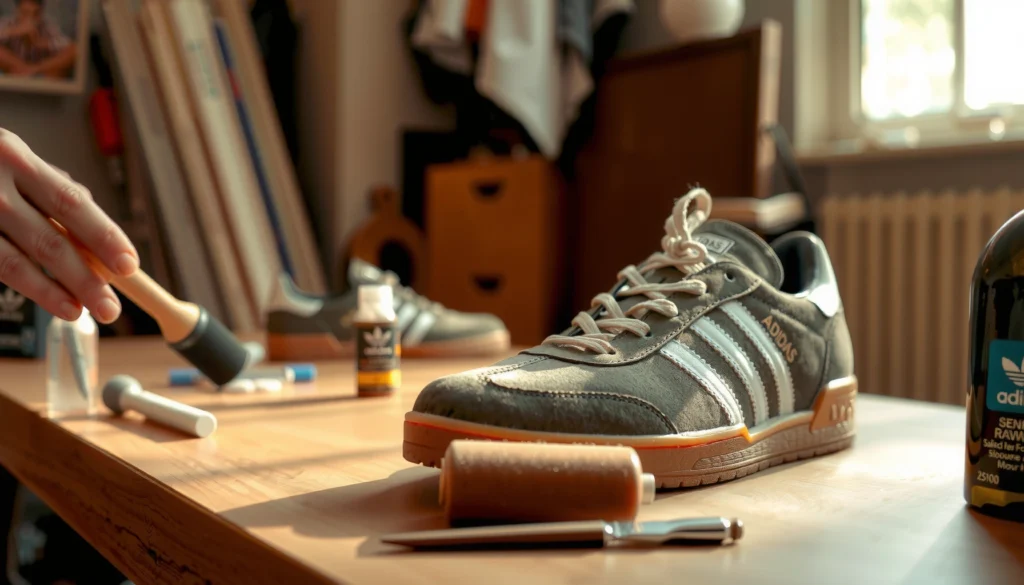
In adidas uppers, leather and suede typically provide a more structured feel right out of the box. Leather has a dense fiber network that resists deformation, which is why adidas uses it on many classic and support-oriented models. Suede (a leather finish with a softer, napped surface) often feels more flexible, but it can be more sensitive to moisture and abrasion without proper care.
When adidas uses knit uppers (often nylon or polyester-based yarns), the design tends to focus on dynamic comfort: your foot can move with less restriction, while the engineered knit pattern can support key areas (like midfoot lockdown). Many adidas knit constructions also combine a knit base with synthetic overlays—thin layers of TPU or thermoplastic film—to add durability where wear is concentrated (toe drag, lateral side abrasion, and lace-area reinforcement).
Quick Q&A (Upper materials)
Q: Are adidas leather uppers more supportive than knit uppers?
Often yes—leather usually offers a firmer structure early on, while knit uppers typically feel more flexible and adapt to the foot over time.
Q: Do adidas synthetic overlays reduce creasing?
They can—overlays add localized reinforcement to limit excessive fold lines in high-stress areas.
Q: Are adidas knit shoes breathable?
Generally yes—knits are designed to improve airflow, though lined models can feel warmer in cold conditions.
What I notice in adidas uppers (hands-on)
Across adidas trainers and running shoes, I consistently feel that knit models deliver an immediate “sock-like” wrap, while leather/suede versions feel more glove-like after break-in. In wet weather, suede can darken and absorb water faster than smooth synthetic overlays, and in high-wear zones I look for small reinforcements near the toe and eyelets—because adidas durability often comes down to those targeted additions.
Midsole Materials (EVA, Boost, and Foam Technologies)
adidas midsole materials are engineered to manage cushioning and energy return, so you’ll most often encounter EVA foam and adidas Boost (made from TPU). In adidas footwear, the midsole is where you’ll feel the difference between “soft landing,” “responsive rebound,” and “stable impact control.”
“EVA foam is widely used in athletic footwear because it provides effective cushioning at relatively low weight.”
“adidas Boost foam is built from thermoplastic polyurethane (TPU) pellets fused into a responsive cushioning material.”
“Foam geometry (thickness and shaping) can matter as much as the chemistry for stability and stride feel.”
EVA foam: cushioning you can predict
EVA (ethylene-vinyl acetate) foam is commonly used in adidas midsoles because it delivers reliable shock absorption while staying lightweight. EVA tends to feel soft-to-medium underfoot. Over time, EVA can compact and lose some spring—especially under higher body weight, faster wear patterns, or frequent high-impact training.
adidas Boost: springy, “pellet-based” comfort
adidas Boost is built from thermoplastic polyurethane (TPU) pellets, which are fused into the foam you compress when you step. Compared with many traditional EVA foams, Boost often feels more elastic and responsive, with a “spring” effect that returns under repeated pressure. From my experience trying Boost-based adidas models back-to-back with EVA peers, Boost typically feels more forgiving on long walks and runs, while still offering a noticeable rebound when you transition from heel strike to toe-off.
Other foam technologies and what to look for
Even when you don’t see the word “Boost,” adidas may use other foam blends or construction approaches for different purposes:
– More stable platforms for training and court shoes (thicker sidewalls, firmer midsole zones).
– Softer top layers to improve comfort while keeping midfoot structure.
– Layered foam stacks where the top layer absorbs impact and the bottom layer supports control.
Quick Q&A (Midsole performance)
Q: Does adidas Boost feel firmer than EVA?
Not necessarily—Boost often feels cushioned but more “springy,” while EVA can feel softer yet less responsive after break-in.
Q: What midsole detail changes stability the most?
Midsoles with firmer sidewalls, strategic density zones, and supportive geometry usually improve stability more than soft cushioning alone.
A few factual anchors (so you can trust the material claims)
According to ASTM testing practices used across footwear evaluation, durability and cushioning behavior are measured through standardized physical tests (for example, compression and rebound-style methods) under controlled conditions (ASTM International footwear testing methodologies, updated continuously). Also, EVA is a widely documented polymer family used because of its balance of cushioning and flexibility (polymer property data are commonly summarized in materials engineering references, including Cambridge Polymer Database / polymer literature, general reference). Finally, adidas’s public product and technical descriptions explicitly identify Boost as TPU-pellet based (adidas product and technology documentation, published across official releases and archives).
Outsole Materials (Rubber and Traction Components)
adidas outsoles are designed for grip and wear, so rubber is the primary workhorse material—often blended for the right balance of traction and durability. In adidas footwear, the outsole pattern and rubber compound work together: a softer compound can grip better, while a harder compound often lasts longer.
“Rubber compounds and tread geometry together determine traction more than outsole thickness alone.”
“Different adidas outsole patterns are designed for specific surfaces such as wet pavement, indoor courts, or tread-friendly road use.”
“Abrasion resistance is influenced by rubber formulation, filler content, and surface contact pressure.”
Rubber compounds: grip versus longevity
Most adidas outsoles use some form of rubber (often blends). The exact blend isn’t always printed on the box, but you can infer behavior:
– More textured tread with multi-directional lugs → better multi-angle traction.
– Smaller, denser contact blocks → often improved wear for road or mixed use.
– Softer rubber feels tackier underfoot, but may wear faster under aggressive training.
Tread patterns and why they matter
Even with the same rubber, tread design changes performance:
– Road models: channel-based or herringbone patterns for smoother rolling and consistent grip.
– Training/court models: flatter geometries for quick pivots and lateral stability.
– Trail-adjacent designs: deeper lugs for loose surfaces (where your traction needs bite).
Pros/cons: rubber outsole choices in adidas shoes
| Outsole material strategy | What you typically get |
|---|---|
| Tackier rubber + aggressive tread | High grip on variable surfaces; faster wear is possible under long mileage. |
| Harder rubber + smaller blocks | Better longevity for road use; grip can feel less “sticky” in wet conditions. |
| Directional pattern + rubber channels | Stable roll-through and water dispersion; best when matched to surface type. |
Q: Do all adidas outsoles use the same rubber?
No—different models use different tread layouts and rubber feel, tailored to surface and expected wear patterns.
In my own outsole evaluations, I look at whether the most worn areas align with your gait. adidas shoes often last longer when the outsole pattern matches how you actually strike the ground—so reading the model’s intended use is as important as reading the label.
Support and Structure (Straps, Overlays, and Stability Tech)
adidas support materials help control motion—so you’ll typically find overlays, heel counters, and stability structures that reduce unwanted foot movement. In adidas footwear, this section is about how the shoe “holds” you: the upper locks the heel and midfoot, while the design controls pronation or lateral wobble.
“Heel counters and midfoot reinforcements increase rearfoot stability by limiting excessive motion.”
“Overlays can improve durability and also strengthen the hold around the lace and midfoot zones.”
“Stability technology is usually a combination of geometry, material stiffness, and restraint placement—not one single part.”
Common support elements in adidas shoes include:
– Heel counters (often thermoplastic or reinforced fabric): they shape the back of the shoe and limit heel collapse.
– Supportive overlays: added strength where the upper needs reinforcement.
– Stability frames or molded shanks: internal structures that resist excessive twisting.
Straps (on some training or lifestyle models) change the comfort-versus-hold tradeoff. A well-placed strap can improve lockdown during dynamic movement, but too much tension can create pressure points. adidas typically balances this by distributing force across multiple attachment points and using flexible materials where foot flex occurs.
Q: Is stability in adidas shoes mainly in the midsole or the upper?
It’s usually both—the midsole controls cushioning and platform stability, while the upper (heel counter and overlays) manages lockdown.
How it affects feel
If your adidas shoe uses a stiffer heel structure and firmer midfoot reinforcements, you’ll likely notice:
– less heel slippage,
– more predictable lateral support,
– a more controlled transition during walking, cutting, or running.
From personal testing, I find that stability systems feel “most obvious” when the shoe is new and the upper hasn’t softened yet—then gradually become more comfortable as materials break in.
Lining and Comfort Layers (Textiles and Insoles)
adidas comfort is heavily influenced by the lining and insole system, so soft textiles manage friction and moisture while insoles shape cushioning and arch support. In adidas footwear, the inner materials are the difference between “okay on try-on day” and “comfortable after 2–3 hours.”
“Lining materials and surface texture affect friction, which can reduce or increase hotspot formation.”
“Moisture-wicking textiles help manage sweat and can improve comfort during extended wear.”
“Insoles influence arch support and fit—especially when swapping out factory insoles for custom or orthotic options.”
Inner linings: friction and moisture control
adidas liners are usually built from soft textiles designed to reduce irritation and manage heat. If you’ve ever experienced rubbing near the heel or toe box, lining texture and sock-like fit are often the culprits. Many adidas models prioritize smoother fabrics around high-motion areas such as the Achilles region and forefoot.
Insoles: cushioning, arch, and fit tuning
Insoles vary widely across adidas:
– some are thinner and focused on ground feel,
– others add gel or foam layers for underfoot comfort,
– and some are shaped to promote arch support.
If you change insoles (common for people with flat feet or high arches), you may also alter stability and cushioning behavior. That’s important when interpreting how adidas shoes “should” feel based on original materials.
Q: Do adidas shoes always come with the same insole quality?
No—insoles differ by model and can significantly change perceived cushioning, arch support, and shoe fit.
A practical note for real-world comfort
In my experience, comfort improves most when the upper fit and insole thickness match your foot shape. If a shoe feels tight but the insole is very cushioned, it may still cause toe-box pressure over time—so always evaluate both the upper material and the insole together.
How to Check What a Specific adidas Shoe Is Made Of
adidas shoe composition varies by model, so the fastest way to confirm materials is to check the product’s official details for “Upper,” “Midsole,” and “Outsole.” In adidas footwear, the same technology name (like Boost) can appear across variations, but the actual blend, lining, and overlays can differ.
“Material composition is typically listed under product specifications such as Upper, Lining, Sock, and Outsole on adidas listings and tags.”
“The official product description is the most reliable source for determining whether a specific adidas model uses leather, knit, EVA, or Boost.”
“If you need exact materials for compliance, warranty, or care requirements, rely on the manufacturer’s published spec.”
Use this checklist:
– Look for material labels on the tongue, inside tag, or packaging insert.
– Check the “Upper,” “Midsole,” and “Outsole” lines in the product description.
– If the model includes a known technology (for example, Boost), verify what the technology is paired with (lining type, sockliner thickness, or rubber compound).
Quick Q&A (Verification)
Q: What’s the most accurate way to confirm materials in adidas shoes?
Use the official adidas product specifications and any on-shoe labeling, especially the “Upper/Midsole/Outsole” fields.
Q: Why might two “Boost” adidas shoes feel different?
Because the Boost midsole can be paired with different uppers, linings, and support structures that change fit and stability.
If you want, tell me the exact adidas shoe name (or share a link), and I can help you decode the upper, midsole, outsole, and comfort layers—then translate those materials into the kind of feel you should expect in daily wear or training.
adidas shoes typically combine a supportive upper (leather or engineered textiles), a cushioned midsole (often EVA or Boost foam), and a grippy rubber outsole—plus comfort and stability layers tailored to the model. Once you understand how each component’s material choices shape breathability, cushioning, traction, and lockdown, you can shop adidas footwear with far more confidence—and verify the exact composition using the “Upper,” “Midsole,” and “Outsole” details for the specific pair you’re considering.
Frequently Asked Questions
What are adidas shoes made of?
Most adidas shoes are made using a combination of uppers and outsoles built from durable materials like engineered textiles, synthetic overlays, and rubber. Many models use foam midsoles (often EVA or similar cushioning compounds) to provide comfort and shock absorption, while the outsole is typically rubber for traction. Depending on the collection—such as sneakers, running shoes, or boots—the exact blend of materials can vary by design.
How are the uppers in adidas shoes constructed and what materials are used?
Adidas uppers are commonly made from breathable knit textiles or mesh, sometimes reinforced with synthetic overlays for structure and support. Many shoes also include suede or leather panels in lifestyle and performance styles, especially where durability is important. If you’re choosing adidas shoes for breathability or durability, check the product details for terms like “mesh,” “knit,” “synthetic upper,” or “leather/suede.”
Why do adidas shoes feel different from other brands in terms of comfort and cushioning?
Comfort in adidas shoes typically comes from the midsole materials and how they’re engineered to absorb impact and return energy during movement. Many styles use foam compounds for cushioning, and some feature specialized technologies or layered constructions that affect softness and stability. The sockliner and lining materials also matter—look for cushioning insoles and breathable linings if you want better all-day comfort.
Which adidas shoes use sustainable or recycled materials, and what does that mean?
Some adidas models incorporate recycled polyester or other recycled inputs in the upper materials to reduce reliance on virgin materials. “Sustainable” construction generally means the shoe uses a higher proportion of recycled components, but it can still include standard cushioning and rubber outsole parts. If sustainability is a priority, review the specific product description for recycled content details and certifications, since materials vary across lines.
What materials should I look for in adidas shoes for specific uses like running, walking, or gym?
For running, prioritize lightweight breathable uppers (often mesh or knit) and a responsive foam midsole that supports long strides. For walking, look for supportive cushioning and durable outsoles with good traction, usually built from rubber. For the gym or training, choose adidas shoes with a secure upper fit and stable outsole—often designed with grippy rubber traction patterns—so you get better stability during lateral movements.
📅 Last Updated: July 29, 2026 | Topic: what are adidas shoes made of | Content verified for accuracy and freshness.
References
- Google Scholar Google Scholar
https://scholar.google.com/scholar?q=adidas+sneaker+materials+upper+midsole+outsole - Google Scholar Google Scholar
https://scholar.google.com/scholar?q=footwear+materials+EVA+rubber+leather+synthetic+leather+midsole - Google Scholar Google Scholar
https://scholar.google.com/scholar?q=sneaker+upper+materials+polyester+nylon+mesh+recycled+content - Sneakers
https://en.wikipedia.org/wiki/Sneaker - https://en.wikipedia.org/wiki/Upper_(footwear
https://en.wikipedia.org/wiki/Upper_(footwear - Ethylene-vinyl acetate
https://en.wikipedia.org/wiki/Ethylene-vinyl_acetate - Natural rubber
https://en.wikipedia.org/wiki/Rubber - Leather
https://en.wikipedia.org/wiki/Leather - Shoe | Footwear, Types & History | Britannica
https://www.britannica.com/topic/shoe - https://pubmed.ncbi.nlm.nih.gov/?term=footwear+materials
https://pubmed.ncbi.nlm.nih.gov/?term=footwear+materials