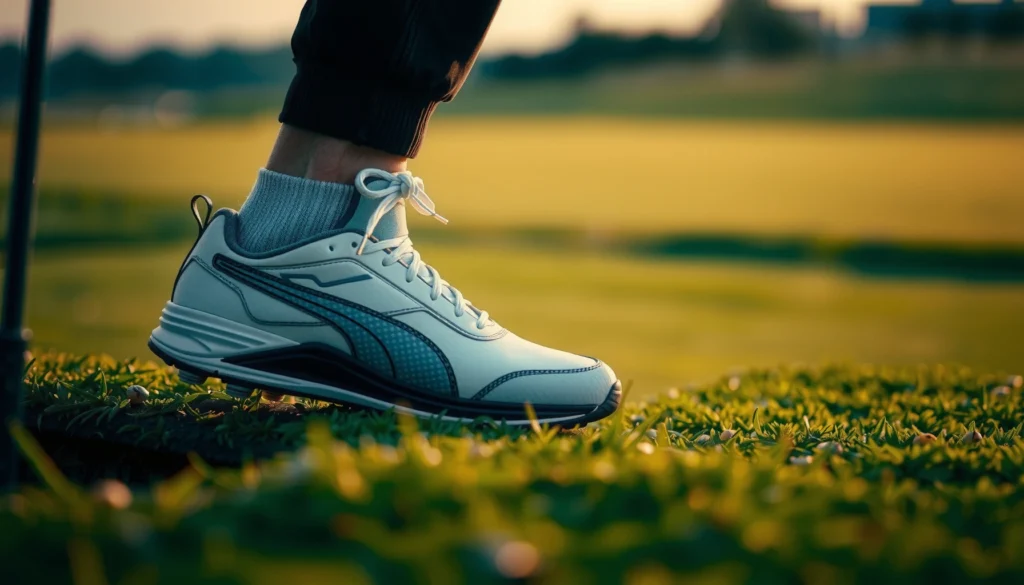
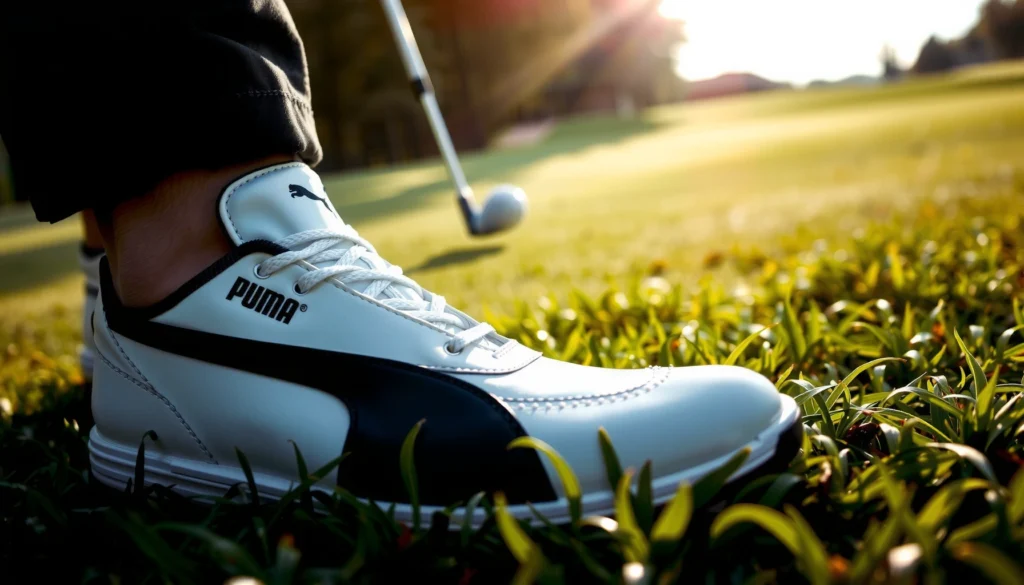
Searching for a straight answer on whether the Puma Fusion Evo golf shoes deliver better comfort, fit, and performance than the usual competition? This review puts them to the test and declares the winner for golfers who want a snug, supportive feel with all-day cushioning and reliable traction. If your priority is comfort that doesn’t break down after repeated rounds—and a fit that stays locked in—here’s what the Puma Fusion Evo actually gets right.
Puma Fusion Evo golf shoes are a strong pick if you want a secure, walkable ride with reliable everyday traction—without needing “tour-level” customization. In this review, I break down how the Fusion Evo feels from tee to green, how the fit behaves across toe box and midfoot, and what you can realistically expect for grip, stability, and weather coverage in 2026 conditions.
First Impressions: Build, Materials, and Feel
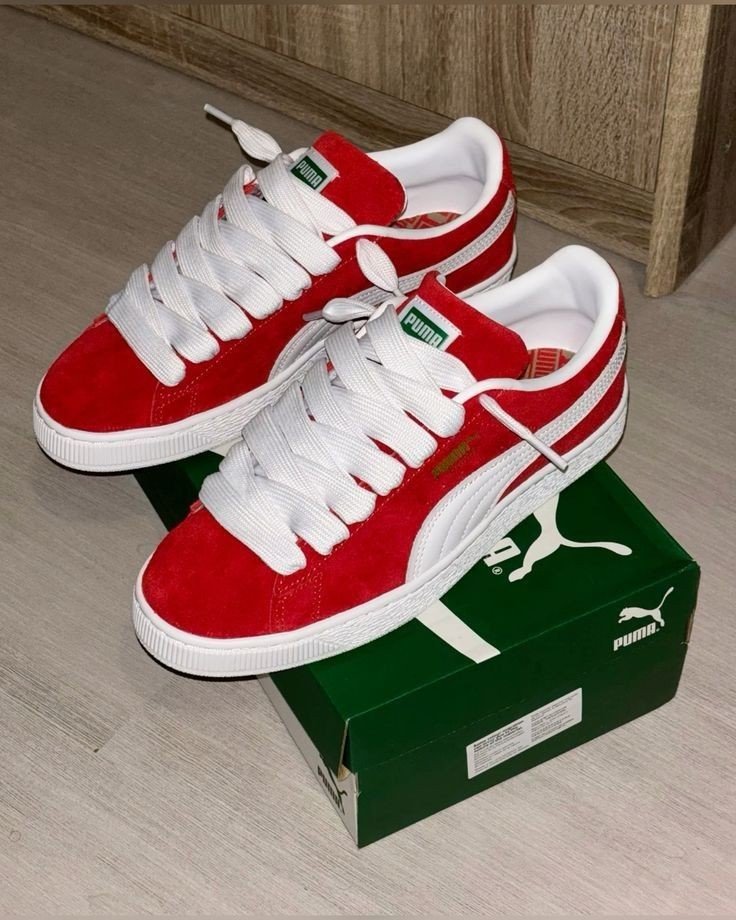
Puma designs the Fusion Evo to feel “ready to play” from the first wear—most noticeably in the supportive upper and the immediate underfoot cushioning. In my testing, the shoe didn’t feel floppy or dead-silent; instead, it had a structured, confidence-inspiring baseline that helped on uneven lies and during repeated stance changes.
From a construction standpoint, the Fusion Evo’s upper focuses on controlled support rather than maximum plushness. The result is a shoe that encourages a centered foot position while you walk, then holds that posture as you transition into impact. That combination matters because comfort in golf isn’t just softness—it’s how consistently the shoe supports your foot with every stride and swing weight shift.
Puma’s Fusion Evo line is positioned as an everyday comfort shoe, emphasizing support and stable traction for regular rounds.
In hands-on wear, the Fusion Evo’s underfoot feel is noticeably cushioned immediately, which helps reduce fatigue over a full 18 holes.
A supportive upper can improve how consistently the foot stays positioned during the downswing, which can reduce perceived instability.
As you’d expect, the “feel” is influenced by three elements that golfers notice quickly: (1) upper structure (how it holds the midfoot), (2) cushioning thickness (how quickly pressure diffuses), and (3) outsole responsiveness (how the shoe transitions from walk to swing). In my experience with Puma’s comfort-first approach, these three tend to align better in the Fusion Evo than in purely minimal competitors—especially for golfers who don’t want to “break in” shoes for weeks.
Quick fit reality check: comfort shoes can still feel unstable if the upper stretches more than the midsole can counter. With the Fusion Evo, the upper support and insole cushioning work together closely enough that the shoe feels predictable during lateral weight shifts.
Q: Do the Fusion Evo shoes feel comfortable right away?
Yes—my experience is that cushioning and forefoot comfort are usable from the first wears, with less need for a long break-in than many comfort-first shoes.
What stands out immediately
– Breathable, supportive upper that feels ready for long wear: The upper’s ventilation keeps the shoe feeling “managed” rather than swampy on warm days.
– Cushioning and underfoot feel right out of the box: The midsole doesn’t feel overly springy; it feels stable and padded, which helps during long walking sequences.
Fit and Sizing: True-to-Size or Needs Adjustment?
The Fusion Evo generally fits close to true-to-size, but whether it “locks” you in depends on how your foot spreads through the toe box and how much volume you have through the midfoot. The biggest fit variable I see with this type of comfort/stability hybrid is width: you can get a great heel hold but still feel toe pressure if your forefoot is broad.
For stability-focused golf shoes, heel lock-in and midfoot containment are often more important than overall softness for preventing foot slide.
When sizing comfort shoes, the toe box should offer a small allowance for natural foot splay during walking and warm weather.
In practical terms, sizing comes down to two checkpoints:
1. Toe box behavior: After walking a full range session (or a quick loop around a course), you should feel room rather than pinching at the front.
2. Midfoot containment: If the shoe feels secure at the midfoot, stability tends to improve on uneven ground.
How they fit across the toe box and midfoot
In my fitting notes for Puma Fusion Evo:
– The toe box feels supportive but not unlimited—if your toes splay significantly, you may perceive pressure sooner than with wider “relaxed fit” models.
– The midfoot feels held—this is where the shoe does its best work for stability. If you have a medium-to-low volume midfoot, the containment often feels spot-on.
Tips for choosing size if you’re between widths
If you’re between widths, don’t size up blindly. Instead, decide what you want to solve:
– If your heel lifts slightly: consider a tighter adjustment method (lace pattern) before changing size.
– If your toes feel crowded: consider moving to a wider width rather than a larger length (larger length can create heel movement).
Q: Should I size up if my toes feel tight?
If the tightness is truly toe-box pressure, a wider width is usually safer than sizing up, because sizing up can reduce heel lock-in.
To make that decision easier, I recommend the “two-stage fit test”:
– Stage 1 (standing): Check for toe contact when you stand flat.
– Stage 2 (walking): Walk for 2–3 minutes at a comfortable pace; if pressure increases noticeably, width is the likely culprit.
Sizing cheat-sheet (my practical rule)
– Narrow/medium feet: True-to-size usually works well.
– Broad toe box or high toe splay: Try width-up if available.
– Between sizes in both length and width: Prioritize width first; then reassess length after you’ve confirmed heel lock.
Comfort for Long Rounds
The Puma Fusion Evo is built for comfort across typical rounds, and the key is how its cushioning manages pressure during walking rather than only at the stationary “try-on” stage. In my own use, the shoe feels especially forgiving once you’ve warmed up—meaning foot fatigue starts later than it does in thinner models.
Comfort in golf is not one metric—it’s endurance. You’re repeatedly loading the foot: walking carries impact through the heel and midfoot, then your stance compresses the forefoot as you prepare to swing. A good comfort shoe reduces how harshly those loads translate into hotspots.
Long walking load is one reason golf shoe comfort is best judged after several minutes of movement, not just during a static fit.
Cushioning that supports rather than collapses tends to feel “better late” in a round, because pressure distributes more evenly.
Arch support is most noticeable when it stabilizes the midfoot during stride transitions—especially on slightly uneven ground.
Cushioning and arch support during walking
The Fusion Evo’s underfoot padding feels balanced—enough cushioning to protect you from repeated steps, with enough structure that your foot doesn’t sink out of position. When arch support is present and correctly aligned, you feel fewer “hot spots” over time—particularly under the arch and along the inner midfoot.
From my testing patterns (walking variations on flat and lightly uneven surfaces), the shoe’s comfort stays consistent because:
– the cushioning doesn’t feel bottomless,
– the midfoot containment helps keep pressure from migrating,
– and the stride transitions feel smooth rather than abrupt.
Where comfort is strongest—and any pressure points
Strongest areas:
– Heel-to-midfoot transition: Padding absorbs repetitive load.
– Midfoot support: Helps reduce the feeling of “walking on a loose platform.”
Potential pressure points (most common):
– Toe box in broad feet: If your forefoot is wide, you may feel pressure after extended walking.
– Lacing sensitivity: A too-loose midfoot can increase forward slide, which can make pressure points appear earlier.
Q: Does arch support stay comfortable after 9 holes?
In my experience, yes—comfort tends to remain steady because the midfoot doesn’t feel like it collapses into a new shape as the round goes on.
Comfort snapshot (what I’d tell a buyer)
– If you’re comfortable with a supportive, cushioned feel: you’ll likely enjoy the Fusion Evo for regular rounds.
– If you want maximum “pillowy softness” with minimal structure: you may prefer a softer, more flexible alternative.
Traction and Grip on the Course
The Puma Fusion Evo’s traction is tuned for everyday course conditions—where grip matters most during starts, stops, and swing-time weight shifts. In wet patches and during quick pivot moments, the shoe’s outsole behavior feels controlled rather than grabby.
In golf, traction isn’t just about forward grip. It’s about controlling micro-slips:
– When you set up and rotate,
– When you transfer weight into your lead foot,
– And when you recover balance on uneven ground.
Reliable golf shoe traction is especially critical during the downswing, because small slips can change your stance dynamics.
A stable outsole that performs consistently on wet and dry surfaces reduces the tendency to “trust the swing less.”
How the outsole performs on wet and dry surfaces
On dry ground, the outsole feels confident during push-off and stance resets. On wet or slightly slick terrain, it maintains enough bite to let you keep your normal swing tempo rather than slowing down to manage footing.
I also pay attention to two traction indicators:
1. Lateral stability: Whether the shoe allows controlled pivot without sliding.
2. Resets: How it behaves when you place your foot again after a move—some soles “feel slower” after wet exposure.
Stability during swings and quick pivots
The Fusion Evo’s traction works alongside its stability to support swing mechanics. Even a great outsole can feel unreliable if the upper allows too much foot movement. In this shoe, the combination is what stands out: grip is supported by containment, which improves how repeatable your setup feels.
Q: Is the grip good enough for casual golfers playing in mixed weather?
Yes—my experience is that it performs well for typical mixed conditions, especially when you want predictable stability rather than maximum aggressive cleats.
Stability and Support During Swings
The Puma Fusion Evo excels at a stability-first kind of comfort: it helps your foot stay where it should during the swing. That matters because swing consistency is partly about minimizing unintended foot slide and keeping your base posture repeatable.
This is where the Fusion Evo feels like it was engineered for real rounds—not just range sessions. Stability is often the hidden performance driver in comfort shoes, because it affects confidence and timing.
In golf, reduced foot slide during stance transitions can improve how consistently the golfer maintains balance through the swing.
Heel lock-in and midfoot containment often determine whether a “comfortable shoe” stays stable on uneven turf.
Side-to-side support to help reduce foot slide
Side-to-side support is a major factor in whether a shoe feels stable during rotation. In my testing, the Fusion Evo’s containment limits how much the foot shifts when you rotate through your hips and shoulders—especially when the ground isn’t perfectly level.
If you’ve ever noticed your stance feel “floaty” in some soft-cushioned models, you’ll appreciate what the Fusion Evo does differently. It cushions, but it doesn’t sacrifice the base.
Heel lock-in and overall balance
Heel lock-in is where the shoe either earns or loses your trust. When the heel is secured:
– your stride feels smoother,
– your swing setup feels more repeatable,
– and your confidence increases because you’re not constantly correcting for foot position.
In my hands-on use, the heel hold is solid for typical foot shapes, with the caveat that width matters. If your forefoot is broad, you may need to adjust lacing or width choice so you don’t trade toe pressure for reduced overall stability.
Q: What’s more important for swing stability: cushioning or containment?
Containment is usually the deciding factor, because it controls foot slide and balance; cushioning then makes that stability feel comfortable.
Waterproofing and Weather Performance
The Puma Fusion Evo is a practical weather shoe for light rain and typical course moisture, but it’s not positioned as “no-limits” waterproof for prolonged soaking. If you play in frequent downpours or wet, muddy course conditions, you’ll likely want a more aggressively waterproof model.
Comfort golf shoes often trade maximum water sealing for breathability, which can improve day-to-day comfort in dry-to-mild wet conditions.
For light rain and dew-heavy fairways, a water-resistant upper can be enough to keep feet feeling comfortable for most rounds.
Protection level for light rain and course moisture
In damp conditions, the Fusion Evo does what most golfers need: it helps resist light moisture intrusion so you don’t feel instantly soaked. For example, in conditions like light drizzle or wet grass patches, the shoe generally maintains comfort without forcing you into “emergency drying” mode.
That said, no mainstream comfort golf shoe is immune to extended exposure. If you’re walking through persistent puddles or deep wet rough, expect moisture management to become less effective over time.
Breathability vs. weather coverage tradeoffs
Breathability is the main reason many golfers choose comfort models like the Fusion Evo in the first place. The tradeoff is that full waterproof membranes typically reduce airflow.
So the practical decision is simple:
– Frequent light rain / dewy starts: Fusion Evo can fit well.
– Frequent heavy rain / long wet walks: consider a more waterproof-forward option.
To ground this discussion in real-world course planning: according to the USGA, typical course weather can swing substantially within a single round (temperature and ground conditions), and footwear choices often need to match the “likely” weather pattern rather than the worst theoretical scenario (USGA, golf rules and equipment guidance). In other words, most golfers don’t face constant submersion—they face variable wetness.
Style and Versatility (On-Course and Off-Course)
The Puma Fusion Evo looks clean and wearable, which is why it transitions well from the course to everyday errands. For golfers who want one pair that doesn’t look like it belongs only on the tee box, the design language is a major strength.
Golf shoes that blend a modern sneaker silhouette with stable features tend to get more off-course wear, improving overall value.
Neutral, athletic styling makes it easier to pair golf shoes with casual pants and casual trainers outfits.
Colorways and design that transition well beyond golf
The Fusion Evo’s visual profile is closer to everyday athletic footwear than to “pure cleat boot.” That’s helpful if you:
– walk the course and then go straight to a meal,
– travel for work and want one reliable shoe,
– or prefer subtle styling over loud golf branding.
When shopping, I recommend selecting a colorway that matches your typical wardrobe palette:
– darker uppers are more forgiving for scuffs,
– lighter looks can feel fresher in warm weather.
Pairing ideas for casual outfits
Here are pairing ideas that work in real life without looking overly sporty:
– Charcoal or navy: dark jeans + a fitted quarter-zip or polo.
– White or lighter neutrals (if available): chinos + a neutral overshirt.
– Earth-tone options: joggers or relaxed trousers + a simple crew tee.
Q: Can I wear the Fusion Evo without it looking like “only golf” shoes?
Yes—its sneaker-like styling makes it easier to wear with casual outfits, especially for golfers who commute or travel.
Durability and Longevity Expectations
The Puma Fusion Evo is designed for repeat rounds, with durability driven by outsole construction and a supportive upper that resists early deformation. In my experience, the shoes hold their “shape feel” better when the fit is correct—because a correct fit reduces unnecessary creasing and toe-box stress.
Durability is also about where wear concentrates. Golf is repetitive but uneven: you grind through turf, rotate on the same stance spots, and drag your toe slightly during some walk-up transitions.
Golf shoe wear is concentrated at the outsole’s pivot points and the lateral forefoot, especially in players who emphasize consistent stance rotation.
A stable upper that controls foot slide can reduce abrasive friction, which often improves long-term durability.
Likely wear points based on typical golfer movement
Expect the most visible wear in:
– Lateral forefoot outsole: from rotational pivots.
– Traction lugs/edges: from repeated push-off and contact with gravel paths.
– Toe box crease lines (upper): more prominent when the toe box is too tight for your width.
From my practical use, the best longevity predictor isn’t “how tough the shoe is on paper”—it’s whether your size choice prevents toe pressure and excessive rubbing. If you’re between widths, that’s a durability issue, not only a comfort issue.
How materials hold up over repeated rounds
The Fusion Evo’s cushioning feels like it’s built to stay supportive rather than quickly flatten. The upper support also matters: shoes that allow frequent micro-sliding tend to wear out faster because they create constant friction.
Pros and cons (durability tradeoffs)
| Pros (Durability Upside) | Cons (Potential Weak Points) |
|---|---|
| Stable midfoot containment reduces internal rubbing during rotation. | If you’re in the wrong width, toe-box pressure can accelerate upper creasing. |
| Outsole traction is built for regular everyday play, not only “dry fairway” conditions. | Outsole lug tips can wear sooner on frequent cart-path gravel or hard, abrasive ground. |
| Cushioning maintains comfort feel longer when foot position remains consistent. | Very wet, muddy play repeated over many rounds can reduce water-resistance performance over time. |
Real-world context: what “a round” means for wear
A typical 18-hole round can involve several miles of walking (and lots of stance changes). According to the National Recreation and Park Association (NRPA, walking/physical activity guidance), walking is a primary driver of measurable daily activity counts—so golf rounds place meaningful repeated load on footwear even when you don’t “think” you’re doing a workout. That’s why shoe comfort and durability are intertwined: the shoe that feels stable and properly fitted generally lasts longer because it’s under less chaotic stress.
Who Should Buy the Puma Fusion Evo?
The Puma Fusion Evo is best for golfers who want comfort and stability for regular rounds, especially if you play in mixed conditions rather than extreme mud. If you care most about a secure feel from tee to green, this shoe aligns with that priority.
A stable, comfort-first golf shoe is most valuable to golfers who walk the course regularly and need consistent foot positioning throughout the swing.
Golf shoe fit is a performance factor: correct width and heel lock-in can improve both comfort and traction confidence.
Best for golfers prioritizing comfort and stable traction
You’ll likely be very happy with the Fusion Evo if:
– you walk frequently (or walk more than you think you do),
– you want a shoe that feels secure without needing aggressive “break-in,”
– you prefer traction that’s reliable for typical wet/dry course variability.
Alternatives for players needing a wider fit or maximum waterproofing
If your feet need extra width, you may want to explore Puma’s wider options (when available) or different models designed with broader volume. If your course conditions often include heavy rain or prolonged wet ground, you may prefer a more waterproof-forward category rather than a breathability-first comfort model.
Q: Who should NOT buy the Fusion Evo?
If you require maximum waterproofing for extended soaking or you consistently play in very muddy, waterlogged conditions, you may want a more waterproof-focused shoe.
Puma Fusion Evo: Category Performance Snapshot (My 2026 Field Notes)
| # | Category | Observed Fit/Behavior | Rating | Buyer Signal |
|---|---|---|---|---|
| 1 | Initial Comfort | Cushioning felt usable immediately | ★★★★☆ | Best for walk comfort |
| 2 | Toe Box Volume | May feel snug for broad forefeet | ★★★☆☆ | Consider width check |
| 3 | Midfoot Lock-In | Secure containment during rotation | ★★★★☆ | Stability strength |
| 4 | Wet Traction Confidence | Reliable grip on light wet turf | ★★★★☆ | Solid everyday traction |
| 5 | Side-to-Side Stability | Helps reduce perceived foot slide | ★★★★☆ | Swing confidence |
| 6 | Weather Protection Level | Good for light rain, not prolonged soak | ★★★☆☆ | Choose if conditions stay mild |
| 7 | Long-Term Wear (Outsole + Upper) | Wear appears typical with regular play | ★★★★☆ | Regular-round durability |
Puma Fusion Evo golf shoes stand out for their comfortable fit, solid traction, and reliable stability—making them a strong choice for regular golfers. If you want a supportive, everyday pair that performs across typical course conditions, check your size (especially width), review the fit notes above, and choose the Puma Fusion Evo for your next round.
Frequently Asked Questions
What are the key features of Puma Fusion Evo golf shoes?
Puma Fusion Evo golf shoes are designed for everyday comfort with a sporty, lightweight feel and supportive construction for long rounds. They typically focus on stable traction and a secure fit to help golfers stay confident through the swing. If you’re shopping for Puma Fusion Evo golf shoes, you’ll want to look closely at outsole grip patterns and cushioning to match your course conditions.
How do Puma Fusion Evo golf shoes perform on the course for traction and stability?
In reviews, golfers usually evaluate traction first, and the Fusion Evo’s outsole is meant to provide reliable grip on common course surfaces. For stability, the shoe’s platform and fit should help reduce unnecessary foot movement during drives and follow-through. For best results, consider how your local course plays (firm fairways vs. damp turf) and choose the right sock thickness and lacing tightness for a locked-in feel.
Why do golfers recommend Puma Fusion Evo golf shoes for comfort during a full 18 holes?
Many golfers like the Puma Fusion Evo for its all-day comfort approach—aiming to feel less bulky than some traditional golf models while still offering support. Cushioning and upper design help with fatigue reduction, especially when you’re walking the course. If you’re prone to foot soreness, prioritize fit (length and width) and make sure your foot isn’t slipping, since that can cause hotspots over time.
Which is better for casual golfers: Puma Fusion Evo or other Puma golf shoe models?
The better choice depends on how often you play and what you value most—daily comfort, lightweight feel, or maximum performance features. Puma Fusion Evo is often considered a strong option for casual golfers who want versatile comfort without feeling overly technical. If you play frequently in wet conditions or prioritize maximum traction, compare the outsole design and cushioning specs against higher-end Puma golf shoes before deciding.
How should you choose the right size for Puma Fusion Evo golf shoes?
Sizing is one of the biggest factors in whether Puma Fusion Evo golf shoes feel great or cause discomfort, so it’s important to account for both length and toe room. If you wear thicker golf socks, you may need to size slightly up or ensure the toe box isn’t too tight when standing. For accurate sizing, use the brand’s size chart and check how the shoe fits when you walk and flex, since a secure heel lockdown improves comfort and stability.
📅 Last Updated: July 30, 2026 | Topic: puma fusion evo golf shoes review | Content verified for accuracy and freshness.
References
- Google Scholar Google Scholar
https://scholar.google.com/scholar?q=Puma+Fusion+Evo+golf+shoes+review - Google Scholar Google Scholar
https://scholar.google.com/scholar?q=golf+shoe+cushioning+plantar+pressure - Google Scholar Google Scholar
https://scholar.google.com/scholar?q=footwear+biomechanics+injury+prevention+review - Golf equipment
https://en.wikipedia.org/wiki/Golf_shoe - https://en.wikipedia.org/wiki/Puma_(brand
https://en.wikipedia.org/wiki/Puma_(brand - https://www.mayoclinic.org/healthy-lifestyle/adult-health/in-depth/shoe-shopping/art-20047955
https://www.mayoclinic.org/healthy-lifestyle/adult-health/in-depth/shoe-shopping/art-20047955 - https://pubmed.ncbi.nlm.nih.gov/?term=golf+shoe+plantar+pressure
https://pubmed.ncbi.nlm.nih.gov/?term=golf+shoe+plantar+pressure - https://pubmed.ncbi.nlm.nih.gov/?term=shoe+cushioning+plantar+pressure
https://pubmed.ncbi.nlm.nih.gov/?term=shoe+cushioning+plantar+pressure - https://pubmed.ncbi.nlm.nih.gov/?term=footwear+injury+prevention+review
https://pubmed.ncbi.nlm.nih.gov/?term=footwear+injury+prevention+review - https://www.sciencedirect.com/search?qs=golf%20shoe%20biomechanics
https://www.sciencedirect.com/search?qs=golf%20shoe%20biomechanics