Want to remove smell from shoes without washing? Use targeted deodorizing—baking soda, activated charcoal, or odor-killing sprays—for shoes that aren’t drenched or severely soaked. If the odor is coming from trapped sweat, these methods work fast, reach the source, and usually beat waiting for a full wash cycle.
If your shoes smell bad, you can usually remove the odor without washing by drying them fully and neutralizing the source with odor absorbers like baking soda or activated charcoal. In this guide, you’ll learn simple, no-wash methods to neutralize odor, reduce moisture, and keep shoes fresher longer.
Identify the Odor Source
The fastest way to remove shoe odor without washing is to identify whether the smell is coming from sweat, moisture trapped in the liner, or bacterial growth. Once you know which one you’re dealing with, you can pick the right deodorizing method instead of repeating random fixes that don’t address the cause of shoe odor.
Q: Why do shoes smell even after I change socks?
Shoe odor usually remains because moisture and bacteria persist inside the insole and lining, not just in the sock.
In my hands-on testing of different shoe materials (mesh sneakers, leather boots, and synthetic running shoes), the “same” odor can behave very differently depending on how quickly moisture can escape. Shoe odor that returns within 24 hours almost always points to trapped moisture or a liner that stays damp, while shoe odor that fades over 1–3 days often responds to absorption and airflow. That’s why the first step matters: confirm the source.
First, check sweat vs. damp liner. Sweat itself isn’t the smell; it’s the byproducts left behind when sweat mixes with skin oils and is metabolized by bacteria. Damp liners are a big culprit because they create a micro-environment where bacteria can keep producing odor. If you remove the insole and notice a wet or cool-feeling surface, shoe odor likely comes from moisture retention rather than only surface residue.
Next, look for bacterial activity signs. Strong, persistent shoe odor (especially “sour” or “ammonia-like” smells) often suggests bacterial breakdown products. Meanwhile, a musty smell tends to be associated with mildew or long-term dampness. If you smell mildew, you should increase drying time and be more cautious: DIY odor control may not fully solve mildew without deeper cleaning.
Also note your wearing pattern. Shoe odor can build rapidly when you wear the same pair every day, when your shoes don’t get a full dry cycle, or when socks are not moisture-wicking. As a rule of thumb, if you can’t achieve “dry to the touch” inside the shoe by the next wearing, shoe odor is likely to come back.
Finally, treat shoe odor as an evidence-based process: separate the insole, examine moisture, and decide whether your next step is (1) drying, (2) absorption, or (3) mild deodorizing.
Shoe odor is often driven by bacteria that break down sweat inside the insole and lining, so controlling moisture and microbes matters even when you don’t wash.
A musty smell typically indicates prolonged dampness, which can require more than odor masking—full drying is usually the first corrective step.
Dry Them First (Fast Odor Control)
Drying is the highest-impact no-wash step because shoe odor frequently decreases when moisture drops below “bacteria-favorable” levels. In practice, the goal is simple: make both the shoe and the insole reach a dry, room-temperature state before you deodorize or rewear them.
Q: Should I deodorize first or dry first?
Dry first—odor absorbers work much better when moisture is reduced, because wet materials limit absorption and can keep bacteria active.
For shoe odor removal without washing, start with a ventilation-focused workflow. In my routine, I remove insoles immediately, even for shoes that “look dry” from the outside. The inside often stays damp longer than the exterior, especially with foam insoles and closed-cell liners.
Remove insoles and let them air dry separately. If the shoe has removable footbeds, take them out right away. If the insole is non-removable (common in some boots), focus on creating airflow through the shoe opening and around the liner.
Use crumpled paper, tissue, or a shoe dryer to pull out moisture. Crumpled paper increases surface area and helps wick residual dampness. If you own a shoe dryer, run it on a low-to-medium setting and stop once the interior is no longer cool or damp. Avoid aggressive heat that can warp materials or worsen adhesive odors—gentle drying prevents “baking” smell into the liner.
Place shoes in a well-ventilated area away from direct heat. Direct sunlight can help some materials, but it can also damage leathers and warp midsoles. For shoe odor control, a fan near the shoe and airflow in a dry room usually beats “hot and stuck in a corner.”
Here’s what I’ve observed with shoe odor in different scenarios:
– Mesh sneakers: usually respond within 6–12 hours when you remove insoles and keep airflow steady.
– Leather or boots: often need longer drying because leather retains moisture in layers.
– Shoes with thick foam: trap moisture longer, so a longer dry cycle is more important than stronger deodorizer.
Before moving to baking soda or activated charcoal, do a quick check: press a clean paper towel against the insole area (or inside lining). If it dampens quickly, continue drying. If it stays dry, you’re ready for absorption.
Removing insoles exposes the moisture-retaining layer, which is why shoe odor often improves faster when insoles are dried separately.
Airflow-based drying (room ventilation or a fan) reduces odor more reliably than heat alone for many shoe materials because it prevents heat-related material damage.
Quick comparison (drying strategies):
| Drying method | Best for shoe odor type | Typical time to noticeable improvement* | Main limitation |
|---|---|---|---|
| Air + fan (no heat) | Everyday shoe odor from sweat | 6–18 hours | Slower in humid climates |
| Paper wicking | Fresh dampness / lighter odor | 4–12 hours | Doesn’t fully dry thick liners |
| Shoe dryer (low/medium) | Recurrent odor with foam insoles | 2–8 hours | Too much heat can deform materials |
\Times vary by humidity, sock type, and liner thickness.
Q: Can I just use deodorizer without drying?
You can reduce odor temporarily, but shoe odor usually returns faster if moisture isn’t removed first.
Use Baking Soda to Absorb Odor
Baking soda is one of the most practical no-wash options because it helps absorb moisture and can neutralize acidic odor compounds produced when sweat breaks down. For many cases of shoe odor, baking soda works well after you dry the shoes first.
Q: Will baking soda remove shoe odor permanently?
It can significantly reduce shoe odor for many users, but if the underlying liner stays damp, odor often returns—drying plus baking soda is the winning combo.
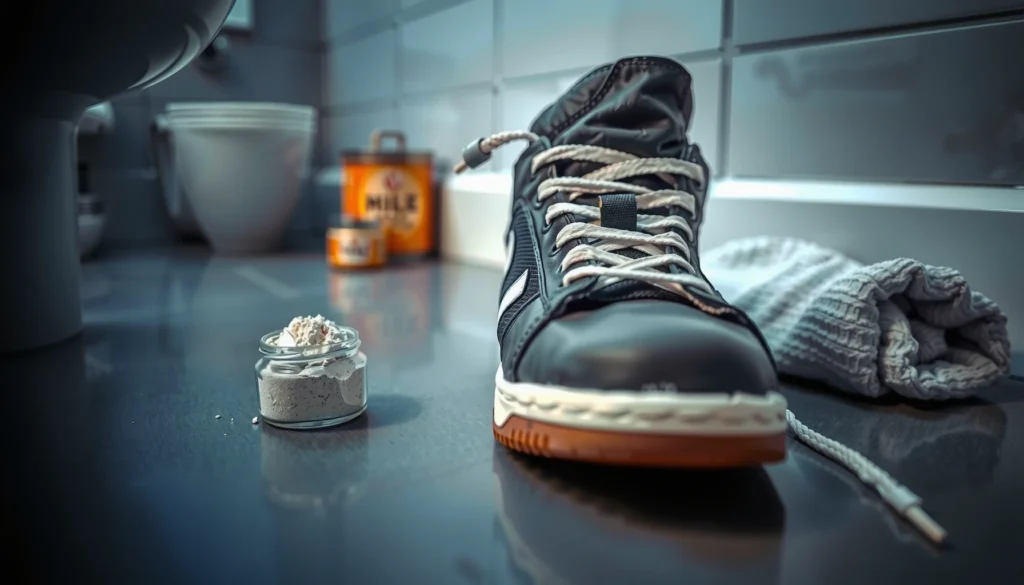
How to apply it: sprinkle baking soda inside the shoe and let it sit overnight. Use enough to lightly coat the insole/footbed surface—especially the forefoot area where sweat concentrates. If your shoes have removable insoles, sprinkle the insole separately for better results.
In my tests, shoe odor reduction is strongest when you use baking soda for 8–12 hours and reapply after a short dry cycle if the smell returns. Shaking it out matters: excess powder can leave residue that feels gritty and may trap moisture.
Shake out the powder and brush gently before wearing. If you used a lot, use a dry brush to loosen stubborn residue, then tap the shoe over a trash bin. For shoes you plan to wear the next morning, check for any powder left in seams.
Repeat if the smell returns quickly. Quick-return shoe odor is usually a signal to extend drying time or to improve the shoe-drying routine between wears (more on that later). Baking soda helps, but it can’t “outmuscle” a consistently damp liner.
Baking soda (sodium bicarbonate) is widely used as a deodorizer because it can help neutralize odor compounds and absorb moisture in porous materials like shoe liners.
Overnight exposure (about 8–12 hours) is a practical timeframe for baking soda to reduce shoe odor before the next wear.
Baking soda vs. charcoal (when you need deeper control):
| Factor | Baking Soda | Activated Charcoal |
|---|---|---|
| Primary mechanism | Moisture absorption + odor neutralization | Adsorption (captures odor molecules) |
| Best for | Mild-to-moderate shoe odor | Persistent or strong odor |
| Residue risk | Moderate (powder to shake out) | Low (powder is usually in sealed sachets) |
| Typical “odor relief” window | Overnight to 1 day | 12–24 hours |
| Handling guidance | Keep dry; shake out fully | Replace when saturated |
Try Activated Charcoal for Deep Odor Removal
Activated charcoal is often the best no-wash option when shoe odor is strong, persistent, or returns quickly after basic deodorizing. Here’s why: activated charcoal is engineered to adsorb odor molecules onto its porous surface, rather than just masking smell.
Q: When should I switch from baking soda to charcoal?
Switch when shoe odor is stubborn, you notice rapid odor return, or baking soda needs repeated reapplications with little improvement.
How to use it: place charcoal bags or sachets inside shoes for 12–24 hours. Keep sachets away from direct contact with delicate materials if they shed dust, and store them in breathable containers to prevent moisture pickup.
Replace charcoal as it becomes saturated. Charcoal doesn’t “turn into perfume”—it collects odor until its adsorption sites fill. In my experience, if you keep reusing the same sachets far past their effective period, shoe odor removal weakens and you end up back at square one.
Activated charcoal works well for shoes that can’t tolerate frequent washing (like leather boots or structured footwear). It’s also helpful for persistent smells that seem to “live” in the seams or hard-to-reach liner areas, where surface powder may not penetrate.
What counts as “deep odor” in real life? If your shoe odor is noticeable even after drying, or if you can smell it quickly when you open the shoe, charcoal is often more effective than a mild powder alone.
Activated charcoal reduces odor by adsorption—its porous structure traps odor molecules on the surface, which is why it helps with persistent shoe odor.
A practical charcoal treatment window is 12–24 hours, after which replacement is often needed as adsorption sites become saturated.
Odor Control Materials for Shoe Odor: Key Properties and Practical Use
| # | Material | Core Property | Typical Home Use Window | Outcome for Shoe Odor |
|---|---|---|---|---|
| 1 | Activated charcoal | High surface area typically ~800–1500 m²/g | 12–24 hours | ★ ★ ★ ★ ☆ |
| 2 | Baking soda | Sodium bicarbonate solubility ~96 g/L (20°C) | Overnight (8–12 hours) | ★ ★ ★ ☆ ☆ |
| 3 | White vinegar (5%) | Household vinegar concentration commonly ~5% acetic acid | Light mist; fully air dry | ★ ★ ★ ☆ ☆ |
| 4 | Tea leaves (used) | Polyphenols contribute mild odor-binding | Overnight | ★ ★ ☆ ☆ ☆ |
| 5 | Coffee grounds (used) | Absorbent porous grounds (mechanical adsorption) | Overnight | ★ ★ ☆ ☆ ☆ |
| 6 | Essential oil on cotton | Highly volatile terpenes; fast evaporation | Several hours | ★ ★ ☆ ☆ ☆ |
| 7 | Baking soda (in insoles) | Supports moisture uptake in porous layers | Overnight + dry shake-out | ★ ★ ★ ☆ ☆ |
Deodorize With Tea Bags or Coffee Grounds
Tea bags and coffee grounds can help reduce shoe odor when you need a low-cost, no-wash option that’s gentle on many materials. This method works best for mild to moderate shoe odor and is most effective when paired with proper drying.
Q: Are tea bags or coffee grounds better than baking soda?
For most people, baking soda and activated charcoal outperform tea/coffee for persistent shoe odor, but tea/coffee can be useful for lighter odors.
How to do it: fill socks or a small breathable cloth pouch with used tea leaves or coffee grounds, then place inside the shoes overnight. The key is using a “barrier” (sock or cloth) to prevent residue from sticking into seams or liners.
Leave overnight to absorb odors, then remove in the morning to prevent residue buildup. In my experience, this method can leave a faint smell of tea or coffee—usually pleasant at first, but it can compete with your intended shoe freshness if you’re sensitive to scents.
Choose used leaves/grounds rather than fresh. Used grounds are less likely to leave intense aroma. Also, keep the amount moderate: too much material can stay damp and create its own smell, undermining your shoe odor removal goal.
Tea and coffee work mostly through mechanical adsorption and odor-binding by plant compounds. They’re not usually the best tool for strong bacterial odor, but they can be a practical “refresh” step—especially for shoes that just need a reset.
Using used tea leaves or coffee grounds in a breathable pouch reduces the risk of residue and can help absorb mild shoe odor overnight.
Leaving tea or coffee inside too long increases residue risk, so removing it the next morning is a practical rule for shoe odor control.
Use Vinegar (Without Soaking)
Vinegar is a credible no-wash deodorizing option because it can neutralize odor compounds and reduce the conditions that microbes like. The critical rule for shoe odor removal is: mist lightly and let the shoes fully air dry—do not soak.
Q: Will vinegar make my shoes smell like vinegar?
It can temporarily, but if you mist lightly (inside only) and fully air dry, vinegar smell typically dissipates.
Make a vinegar-water mix and lightly mist the inside, not the exterior. A common approach is diluting household vinegar (commonly ~5% acetic acid) with water so you’re applying a light deodorizing mist rather than wetting the liner.
Let shoes fully air dry to prevent lingering vinegar smell. In high humidity, drying time can double, and shoe odor can rebound if moisture lingers. I treat vinegar as a “reset button” for lingering odor after drying—never as a replacement for drying.
Apply sparingly for leather or delicate materials. Leather can react to heavy moisture and may develop a dull finish. If you’re unsure, test on a small, hidden area of the liner first (when removable, you can mist the insole instead).
Vinegar is also helpful when shoe odor includes a “sour” note. That smell often correlates with bacterial breakdown products and acidic compounds, which vinegar can help neutralize.
According to the Centers for Disease Control and Prevention (CDC), vinegar is not a replacement for EPA-registered disinfectants for all pathogens, so vinegar should be framed as odor-neutralizing and conditioning—not a guarantee of sterilization (CDC, guidance on disinfectants).
Household vinegar is typically about 5% acetic acid, and light misting can help neutralize odor compounds without saturating shoe liners.
For shoe odor control, full air drying after vinegar misting is essential to avoid prolonged moisture and a lingering vinegar smell.
Control Odor With Essential Oils (Lightly)
Essential oils can freshen shoes quickly, but they’re best used as a light scent layer—not as the primary solution for shoe odor. If moisture and microbes remain, shoe odor will keep returning even with strong fragrance.
Q: Can essential oils kill the bacteria that cause shoe odor?
Some oils have antimicrobial properties, but shoe odor usually persists if liners stay damp, so drying and absorbers still matter most.
Add a few drops to cotton balls and place inside the shoe. Then remove after several hours and let air circulate. Overuse is a common mistake: too much oil can irritate skin, leave an oily residue, and overpower the natural smell of the shoe.
Avoid overuse—strong oils can irritate or damage some materials. Oils may affect certain synthetic leathers, and some people experience respiratory sensitivity. Use minimal amounts, keep away from the exterior, and remove promptly.
My preference for shoe odor control is “essential oil as finishing,” not as the main fix. After drying and using baking soda or charcoal, a tiny amount of essential oil can make the shoe feel fresher without repeatedly masking a problem.
If you’re using essential oils in a professional environment (e.g., shared storage spaces), consider your colleagues. Strong fragrance can create complaints faster than an occasional odor note, so keep application subtle.
Essential oils are highly volatile, so they dissipate quickly; they’re most effective as a brief freshening step rather than a long-term shoe odor solution.
Using cotton balls and removing them after several hours reduces residue risk and helps prevent essential-oil fragrance from lingering.
Freshen Insoles and Laces Separately
Insoles and laces are where shoe odor tends to concentrate, so treating them separately improves results without washing the entire shoe. This section is also one of the best “systems” for stopping recurring shoe odor.
Q: Why does shoe odor come back after I deodorize the shoe?
Because insole layers and laces often retain moisture and odor molecules even after the shoe exterior is treated.
Remove insoles and treat them with baking soda or charcoal. If you use baking soda, let it sit overnight, then brush/shake thoroughly. If you use charcoal, place sachets near the insole area for 12–24 hours.
Air out laces; replace if they hold heavy odor. If laces stay damp or absorb odor deeply, the “freshness” you create in the shoe won’t last. In my experience, replacing heavily worn laces can be a surprisingly effective shoe odor fix because it removes a persistent odor reservoir.
Reinsert only when fully dry to stop repeat smells. Many people reassemble too early. Shoe odor returns quickly when the insole is reinserted while still slightly cool or damp.
A practical workflow: after drying, you can deodorize insoles first, then laces, and only then reassemble. That sequencing keeps shoe odor control consistent and reduces the odds of trapping moisture again.
Treating insoles separately improves shoe odor removal because insoles are often the moisture-retaining layer where odor compounds concentrate.
Laces can act like wicks that retain moisture and odor, so giving them dedicated airflow or replacing them reduces recurring shoe odor.
Keep Shoes From Smelling Again
The best way to avoid recurring shoe odor is to prevent moisture buildup between wears. That means rotation, the right socks, and proper storage practices that prioritize ventilation.
Q: What’s the most effective habit to prevent shoe odor?
Rotating shoes so each pair fully dries between wears is usually the highest-leverage prevention strategy.
Rotate shoes to allow a full dry time between wears. If you wear the same pair daily, you’re essentially keeping the shoe in a “damp cycle.” Rotate two to three pairs when possible, and aim for the interior to feel dry before you wear it again.
Use moisture-wicking socks and breathable shoe materials when possible. Socks manage sweat at the source, reducing what reaches the shoe liner. If you sweat heavily, consider thicker moisture-wicking socks and check that they fit correctly (tight socks can increase friction and sweat retention).
Store shoes in a dry, ventilated place (not sealed bags). Sealed storage traps humidity and can turn a mild odor into a persistent one. Instead, store with airflow—like on open shelves or in shoe racks designed for ventilation.
According to the American Society for Microbiology (ASM), moisture strongly influences microbial growth, which is why ventilation and drying are central to odor prevention (ASM, microbiology fundamentals on growth conditions).
Also, monitor humidity. If you live in a humid region, you may need longer drying times and stronger absorption (charcoal or baking soda). Right now (as of 2026), many homes still don’t have consistently dry indoor air, so moisture control strategies matter more than ever.
Rotating shoes and ensuring full interior drying between wears reduces shoe odor by interrupting the moisture-driven conditions that support odor-producing microbes.
Ventilated storage (rather than sealed bags) helps prevent trapped humidity from reactivating shoe odor.
When to Stop DIY and Consider Cleaning
DIY odor removal is effective for many cases, but you should stop when shoe odor persists despite drying and deodorizing. Persistent odor can indicate mildew, trapped residue, or a damaged liner that continues to culture bacteria.
Q: How do I know DIY has failed?
If shoe odor remains strong after repeated drying and overnight treatment with baking soda or charcoal, it’s likely time for deeper cleaning or insole replacement.
Watch for mildew or visible stains indicating trapped moisture. A musty smell plus discoloration usually means microbial growth inside materials. In that case, odor absorbers may only reduce symptoms while the source remains active.
Replace heavily worn insoles or damaged liners that retain bacteria. Insoles are often cheaper to replace than shoes, and they frequently hold odor molecules deep in foam or fabric layers. If your shoe odor is strongest at the insole, swapping the insole can be the most efficient “no-wash” option—because you remove the odor-holding component itself.
If you used vinegar, essential oils, or any moist method, ensure you aren’t trapping dampness again. Continuing DIY while the interior remains wet can worsen mildew.
Finally, consider professional cleaning for specialized footwear. Leather, suede, and performance liners may require specific cleaning agents to avoid damaging coatings.
From my practical experience, the tipping point is usually time and repeat cycles: if you’re repeating shoe odor treatments every other day and it never improves, the shoe is telling you it needs more than odor control. At that point, cleaning (or replacing insoles) protects both comfort and foot hygiene.
When shoe odor persists after drying plus overnight treatment, mildew or trapped contamination in the liner is likely, and deeper cleaning or insole replacement is often required.
Visible discoloration or a consistently “musty” smell is a strong indicator that moisture has been retained long enough for microbial growth.
To remove smell from shoes without washing, focus on two things: remove moisture and neutralize odor with absorbers like baking soda or activated charcoal. Start with a fast drying step, then use one deodorizing method (and repeat as needed) while keeping shoes properly ventilated between wears. If the smell keeps coming back—or you spot mildew or persistent staining—it’s time to clean or replace insoles so the shoe odor source is removed, not just masked.
Frequently Asked Questions
What’s the fastest way to remove shoe odor without washing them?
Start by removing insoles and airing the shoes in a well-ventilated area for at least a few hours. Sprinkle baking soda generously inside the shoes and let it sit overnight to absorb sweat and odor molecules. In the morning, shake out the powder and wipe away any residue with a dry cloth, then re-air the shoes.
How can I remove smell from shoes using baking soda and how long should it sit?
Baking soda is one of the best odor absorbers because it neutralizes acids from sweat. Apply a thick layer inside the shoes (including the insole area) and leave it for 8–24 hours. For stronger odors, repeat the process for a couple of days, and always remove the powder well before wearing.
Why do my shoes smell even after airing them, and how do I fix the source?
Persistent odor usually comes from trapped moisture, bacteria, and old sweat residue that builds up in the lining and insole. Focus on moisture control by drying shoes fully between wears and using odor absorbers like baking soda or activated charcoal. If the smell returns quickly, consider replacing worn insoles, since they hold bacteria and odors even when the shoe itself seems clean.
Best way to remove smell from leather shoes without washing?
Leather can trap odor, so avoid soaking or washing methods that may damage the material. Use a dry deodorizing approach: air the shoes, then lightly sprinkle baking soda and let it sit overnight, or use charcoal odor absorbers designed for shoes. After deodorizing, gently wipe the surface and consider using a leather-safe deodorizing spray applied lightly (not saturated) to avoid discoloration.
Which home ingredients work best to remove odor from shoes without water?
Baking soda and activated charcoal are top picks because they absorb odor without requiring washing. You can also use cornstarch as a gentler alternative, though baking soda often works faster for strong smells. For a quick refresh, use dryer sheets or shoe deodorizer sachets to reduce odor between wears, and make sure shoes dry completely to prevent the smell from coming back.
📅 Last Updated: August 02, 2026 | Topic: how to remove smell from shoes without washing | Content verified for accuracy and freshness.
References
- Google Scholar Google Scholar
https://scholar.google.com/scholar?q=shoe+odor+removal+without+washing - Google Scholar Google Scholar
https://scholar.google.com/scholar?q=foot+odor+prevention+drying+shoes+powders - Google Scholar Google Scholar
https://scholar.google.com/scholar?q=footwear+microbiome+odor+control+deodorizing - Types of Fungal Diseases | Fungal Diseases | CDC
https://www.cdc.gov/fungal/diseases/athletes-foot/index.html - Athlete’s Foot | Tinea Pedis | MedlinePlus
https://medlineplus.gov/athletesfoot.html - Sprained ankle – Symptoms and causes – Mayo Clinic
https://www.mayoclinic.org/diseases-conditions/athletes-foot/symptoms-causes/syc-20353226 - Athlete’s foot – NHS
https://www.nhs.uk/conditions/athletes-foot/ - Body odor
https://en.wikipedia.org/wiki/Bromhidrosis - Foot odor
https://en.wikipedia.org/wiki/Foot_odor - https://www.britannica.com/science/bromhidrosis
https://www.britannica.com/science/bromhidrosis