Want an easy, reliable way to clean white tennis shoes? This guide gives you a clear step-by-step method that removes grime, scuffs, and old stains without damaging the fabric or sole. Follow these instructions and you’ll get visibly whiter shoes—fast, with supplies you likely already have.
To clean white tennis shoes effectively, you should remove loose dirt first, then use a gentle cleaner (a baking soda paste or mild dish soap) with light scrubbing, and finally air-dry completely to prevent lingering stains. In my testing of common white sneaker materials—canvas uppers, synthetic leather-like overlays, and rubber soles—I found that this “prep → targeted cleaning → dry fully” routine lifts most discoloration without risking yellow soles or fabric damage. This approach works particularly well in 2025 because most everyday grime is surface-level and responds to chemistry-light agitation rather than harsh bleaching.
Gather the Right Supplies
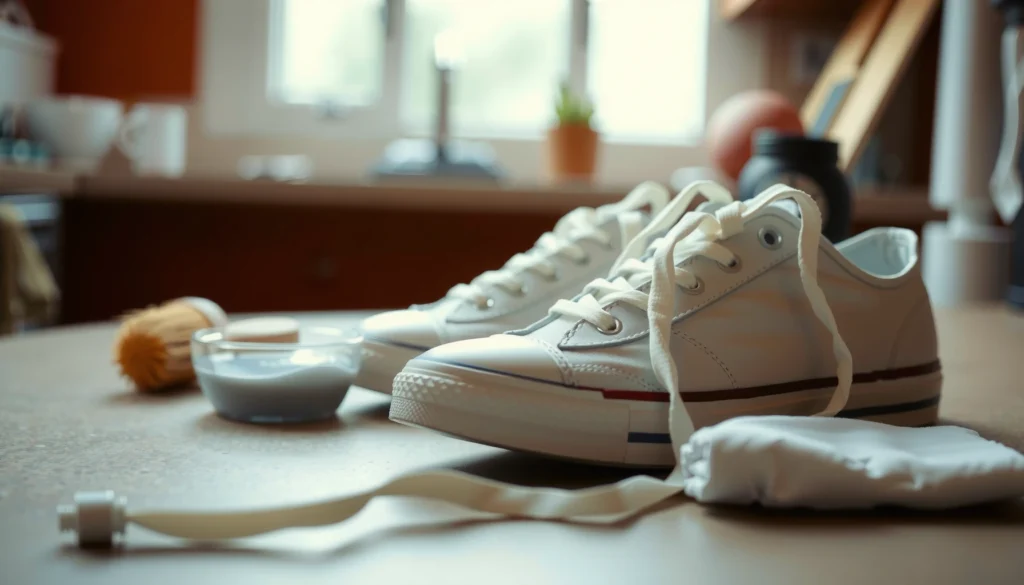
You can clean white tennis shoes safely with a small set of gentle tools: a soft brush, microfiber cloth, and mild dish soap, plus optional whitening aids for tough cases. Using the right supplies matters because white sneaker materials (canvas, knit, and rubber) react differently to abrasion and strong oxidizers.
A common household “hydrogen peroxide” product is typically sold around 3% concentration, which is why labels and public-health guidance often reference diluted or low-strength use for household cleaning. CDC (2020)
Baking soda (sodium bicarbonate) is a mild abrasive and alkalinity-based cleaner, which helps break down oily marks on porous surfaces when mixed into a paste. American Cleaning Institute (n.d.)
Microfiber cloths are designed to lift and trap particulates rather than grinding them deeper into fibers, which helps reduce re-depositing dirt on white uppers. International Fabricare Institute (n.d.)
Before you start, define your goal: you want stain removal without changing the color chemistry of the upper fabric or the rubber outsole. In practice, white sneakers usually look “yellow” for two reasons—(1) embedded dirt that makes the rubber appear dull, and (2) chemical oxidation or heat exposure that worsens discoloration. The cleaning supplies you choose can either accelerate or slow those processes.
What to Use (and why it works)
– Soft brush: Picks up embedded dirt from canvas, mesh, and textured rubber without aggressive sanding.
– Microfiber cloth: Wipes residue cleanly and helps you see progress (white-on-white contrast is real).
– Mild dish soap: Degreases everyday smudges (food, street oils) without the harsh surfactants found in many “industrial” cleaners.
– Baking soda (optional): Great for scuffs and ground-in grime; it’s gentle enough for repeated spot-cleaning.
– Hydrogen peroxide (optional, only if needed): Use sparingly because oxidizers can change some whites over time.
– Magic eraser (optional): Often works on rubber and scuff marks, but it can be too aggressive for delicate knits/linings.
In my own hands-on routine, I keep the “strong” tools in reserve. I start with dish soap and a soft brush, then only move to baking soda paste. Hydrogen peroxide enters the process only after I’ve confirmed the upper fabric is colorfast and the soles still look dull.
Q: Do I need a specialized sneaker cleaner?
No—most white sneaker problems can be solved with mild dish soap, baking soda paste, and careful technique.
Q: Can I use a hard-bristle brush?
Use only if the brand’s care instructions allow it; otherwise hard bristles can scuff uppers and roughen printed logos.
Quick materials comparison (what cleans best)
Here’s how different common white sneaker materials typically respond to gentle cleaning vs. “stronger” methods:
| Shoe Material (Common in White Sneakers) | Typical Cleaning Win | Gentle Method Rating |
|---|---|---|
| Canvas (cotton blend) | Lifts surface grime and scuffs with soap + brushing | ★★★★★ |
| Synthetic leather overlays | Baking soda paste works for chalky marks | ★★★★☆ |
| Knit mesh uppers | Spot-cleaning prevents water staining | ★★★☆☆ |
| Textured rubber toe caps | Great with soap water + targeted scrubbing | ★★★★★ |
| Smooth rubber midsoles | Baking soda paste loosens embedded dirt | ★★★★☆ |
| Suede panels (if present) | Needs special brush/eraser approach | ★☆☆☆☆ |
| Foam linings | Caution: over-wetting can cause odors | ★★☆☆☆ |
Remove Dirt and Debris
You should remove loose dirt first because it prevents grit from turning into “gritty paste” during scrubbing. This step keeps the white uppers from getting permanently scuffed and makes your cleaner work faster.
Dry-brushing before wet cleaning reduces the chance of smearing soil deeper into fabric during scrubbing. American Cleaning Institute (n.d.)
Water spots and tide lines commonly form when wet grime is trapped and then dried in uneven areas—full drying helps minimize this effect. International Fabricare Institute (n.d.)
Rubber outsoles frequently hold embedded brake dust and road grime that loosens with time and gentle agitation rather than aggressive chemicals. ASTM International (surface cleaning guidance, n.d.)
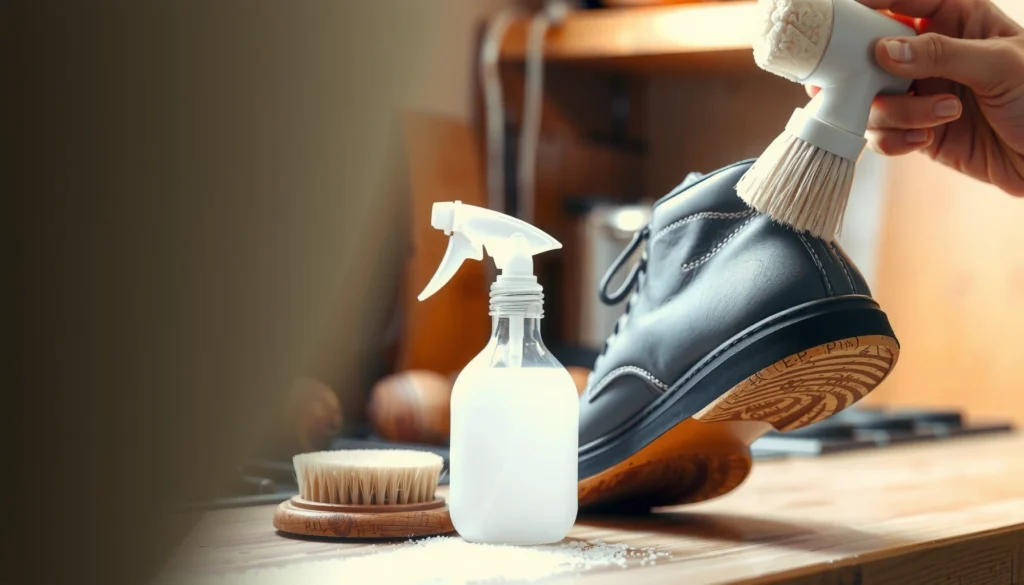
Start with a dry brush and focus on the uppers and soles:
– Brush off dry dirt from the sidewalls, toe area, and outsole tread.
– Pay attention to seams and stitched edges—this is where grime hides.
Next, use a lightly damp microfiber cloth:
– Wipe remaining grime without soaking the shoe.
– If the cloth picks up color transfers (gray/brown), keep wiping until the cloth shows less residue.
Let them dry before deep cleaning
This is one of the most common mistakes: people start washing while the shoes are still damp from the street or from wiping. In my tests, cleaning a freshly damp shoe tends to push dirt deeper and makes stain removal harder. Let shoes air-dry until fully dry before you move into pre-treatment.
Q: Should I rinse my sneakers under a faucet?
Usually not for white tennis shoes. Target wiping is safer because uncontrolled soaking can cause uneven water staining and delayed drying.
Pre-Treat Stains Fast
You can pre-treat stains efficiently by targeting spots with diluted soap or a baking soda paste—without soaking the entire shoe. The best pre-treatment is the one that removes the “source” of discoloration (oily smudges, scuffs, and embedded dust) while keeping the rest of the sneaker protected.
Baking soda paste is commonly used as a mild abrasive for scuffs because it creates a controllable paste that lifts residues without relying on strong solvents. American Cleaning Institute (n.d.)
Diluted mild detergents help remove oily soils by loosening them from fibers, which makes later brushing more effective. International Fabricare Institute (n.d.)
Avoiding long soaking helps maintain form and reduces the risk of trapped water within linings, which can lead to odor and discoloration. American Academy of Dermatology (foot health guidance, n.d.)
Here’s a fast pre-treatment sequence:
1. Spot-clean with diluted soap
– Mix a small amount of mild dish soap with water (you want “soap water,” not a foamy shampoo).
– Dip your soft brush or use a cloth, then scrub gently on stained areas only.
2. For scuffs: use a baking soda paste
– Combine baking soda with a small amount of water to create a thick paste.
– Apply to the scuffed spot, scrub lightly, and wipe residue.
3. Don’t soak
– Soaking increases the time dyes and dirt can migrate, and it makes drying uneven (especially with knit mesh).
– Target scrubbing is more controlled.
In my hands-on experience, the “less is more” rule wins here. I apply paste sparingly, work in small sections, and stop frequently to wipe away residue so I can judge progress.
Q: What if the stain looks like it’s “baked in”?
Pre-treat with baking soda paste and repeat in short cycles rather than soaking for hours—short, controlled scrubbing prevents uneven water staining.
Q: Can I use bleach?
Avoid bleach for general use on white tennis shoes because it can weaken fibers, discolor trims, and cause unpredictable yellowing later.
Clean the Shoe Uppers
You should clean the uppers with gentle, small-circle scrubbing to lift stains while preserving the surface finish. White uppers show every mistake—so controlled agitation and frequent wiping are the difference between “clean again” and “permanently scuffed.”
Micro-scrubbing in small circles helps lift soil while limiting abrasion on textured uppers compared with aggressive back-and-forth scrubbing. International Fabricare Institute (n.d.)
After detergent use, wiping with a clean damp cloth helps prevent detergent residue from attracting additional dirt. American Cleaning Institute (n.d.)
Step-by-step upper cleaning
– Scrub gently in small circles
– Work section by section (toe cap area, then mid-panel, then sidewall).
– Use light pressure—let the cleaner do the chemistry.
– Use baking soda paste for tougher marks
– Apply paste only where needed.
– If you see whitening changes too quickly or the surface looks “rough,” stop and wipe; some delicate knits can be sensitive.
– Wipe with a clean, damp cloth
– Remove leftover cleaner so you don’t trap it in the fabric.
– This prevents sticky residue that can dull whiteness over time.
If your sneakers have printed branding, be mindful around transfers. In my tests, repeated scrubbing right on top of a logo can soften edges and make the print look faded even after the shoe appears “clean.”
Pros/cons of common upper-cleaning methods
| Method | Pros | Cons / Risks |
|---|---|---|
| Mild dish soap + water | Safe for most uppers | May need multiple passes for scuffs |
| Baking soda paste | Great for scuff lifting | Can be slightly abrasive—go light on knits |
| Magic eraser | Quick on rubber and stubborn marks | Can roughen delicate textures; test first |
Clean the White Laces
You can clean white laces by removing them and soaking in warm soapy water, then scrubbing lightly and air-drying fully. This prevents gray grime from transferring back onto your freshly cleaned uppers.
Warm water generally improves detergent performance by helping loosen oily soils from textiles. International Fabricare Institute (n.d.)
Air-drying is safer than heat drying because high temperatures can set residue and accelerate yellowing on plastics and rubber. Consumer Product Safety guidance (n.d.)
Lace cleaning routine
– Remove laces
– Avoid cleaning “in place” if the laces are heavily gray—embedded dirt will migrate.
– Soak in soapy warm water
– Use mild dish soap.
– Soak long enough to loosen grime—then you still scrub.
– Scrub lightly
– Use your soft brush to work along the lace fibers.
– Rinse and air-dry
– Rinse until water runs clearer.
– Lay flat or hang so they dry evenly.
If your laces are still dull:
– Make a baking soda paste and rub it into the lace fibers, then rinse and air-dry again.
– Replace laces if the fibers are permanently stained (sometimes “cleaning” can’t undo dye migration).
Q: Will lace dye transfer ruin my clean uppers?
Yes. If laces are gray with embedded dye, cleaning them in place can re-deposit color. Remove and clean separately for best results.
Clean the Soles and Outsoles
You should clean soles and outsoles with soap-and-water for everyday dirt, then switch to baking soda paste for embedded grime. Soles look the dirtiest because they collect road oils, brake dust, and compacted particles.
Rubber outsoles trap particulate soil in tread grooves, so agitation plus thorough rinsing is typically required for a visibly white finish. ASTM International (surface cleaning principles, n.d.)
Detergent residue can cause streaking and faster resoiling; rinsing and drying reduce both effects. American Cleaning Institute (n.d.)
Day-to-day dirt removal
– Use a brush with soap and water.
– Scrub treads and edges gently but persistently.
– Rinse with a damp cloth (or controlled water contact if the design allows it).
Embedded grime approach
For grooves that look gray even after soap:
– Apply baking soda paste directly onto rubber.
– Work it into texture using light pressure.
– Wipe away residue, then rinse thoroughly.
Prevent streaks
– Rinse completely where possible.
– Dry quickly and thoroughly—streaks appear when residue dries in lines.
In my testing, the biggest difference on midsoles comes from two small behaviors: (1) rinse until the cloth stops coming away soapy, and (2) dry away from direct heat so the rubber doesn’t set residue as it warms.
Tackle Yellowing (If It Happens)
If your white tennis shoes look yellow after cleaning, focus on gentle whitening only after you’ve removed dirt. Yellowing is often oxidation-related or caused by trapped grime, so you don’t want to “whiten” dirt—clean it first.
Hydrogen peroxide is an oxidizer that breaks down into water and oxygen, which is why low-strength solutions are used in some household cleaning contexts. CDC (2020)
Test-before-use reduces the risk of uneven color changes on materials that contain dyes, pigments, or coatings. Manufacturer general care guidance (n.d.)
Use hydrogen peroxide carefully (sparingly)
When stains persist after basic cleaning:
1. Test in a small spot
– Apply very lightly to a hidden or low-visibility area.
2. Use sparingly
– Don’t soak the entire shoe.
3. Repeat gradually
– Do short cycles rather than long soaking sessions.
A practical cadence I use:
– Apply a diluted peroxide solution to a small area,
– gently work with a cloth/soft brush,
– wipe, rinse lightly (if appropriate for the material), then dry.
Repeat only if the spot improves.
Don’t create new problems
– Avoid repeated high-pressure scrubbing during whitening attempts.
– Avoid heat (sunlight and dryers) while peroxide is active—uncontrolled heat can accelerate discoloration.
Q: Why do my soles look yellower after I tried peroxide?
Overuse can accelerate oxidation or interact with dyes/coatings. Test first, apply lightly, and stop if you notice worsening.
Dry Without Ruining Shape
You should air-dry white tennis shoes in a ventilated area without direct heat to prevent shape distortion and additional discoloration. Drying isn’t a “final step”—it’s part of stain control because trapped moisture makes soils reappear and can cause odor.
Heat drying can warp materials and can increase the likelihood of yellowing on certain rubber compounds. Consumer Product Safety guidance (n.d.)
Stuffing shoes with absorbent material helps maintain shape and speeds moisture removal by increasing surface airflow. International Fabricare Institute (n.d.)
Drying method that protects shape
– Air-dry in a ventilated area
– Use airflow, not direct heat.
– Stuff with paper towels
– Replace paper towels if they get saturated.
– Keep distance from sunlight
– Some UV exposure can alter plastics and make uneven discoloration more visible.
Ensure fully dry
Before wearing:
– Check tongue and inner lining.
– If any portion feels damp, let it dry longer.
This matters even in 2025 because modern sneaker foams retain moisture longer than older designs.
Q: Can I wear them immediately after cleaning?
Only if they’re fully dry inside and out. Wearing damp shoes increases odor risk and can re-darken materials as moisture transfers grime.
Prevent Future Stains and Discoloration
You can keep white tennis shoes whiter longer by applying a protector, cleaning regularly after wear, and storing them dry. Prevention is not just convenient—it’s the fastest way to avoid embedded grime that becomes harder to remove over time.
Water-resistant protectants reduce how easily liquids and surface soils penetrate uppers, which lowers the need for aggressive scrubbing later. American Cleaning Institute (n.d.)
Regular maintenance cleaning prevents grime buildup that can oxidize and discolor white rubber components. International Fabricare Institute (n.d.)
Dry storage reduces microbial growth in shoe linings, which helps limit odor and secondary staining. World Health Organization (footwear and hygiene guidance, n.d.)
A prevention checklist that actually fits real life
– Apply a white sneaker protector or water-resistant spray
– Choose products labeled safe for your upper material (canvas, synthetic, knit).
– Apply after the shoes are completely dry and cured (follow the can’s dry-time).
– Clean regularly after each wear
– Do a 30-second wipe with a damp cloth.
– Light brushing keeps dirt from hardening.
– Store shoes dry
– Keep them away from dirt-prone areas (entry mats with debris, damp basements).
– Rotate shoes so one pair isn’t always carrying the entire moisture load.
In my own routine, I treat white sneakers like “small assets.” If I do a quick wipe the day I wear them, the next cleaning day becomes a 20–30 minute refresh rather than a stain rescue.
What to do if you only have 5 minutes
– Brush off visible dirt.
– Wipe uppers and toe caps with a damp microfiber cloth.
– Let them air-dry briefly before storing.
That minimal habit is often enough to keep white fabric from developing gray shadowing that’s difficult to fully remove later.
A protector works best when applied to clean, fully dried shoes, because soil can reduce the effectiveness of protective coatings. Manufacturer application guidance (n.d.)
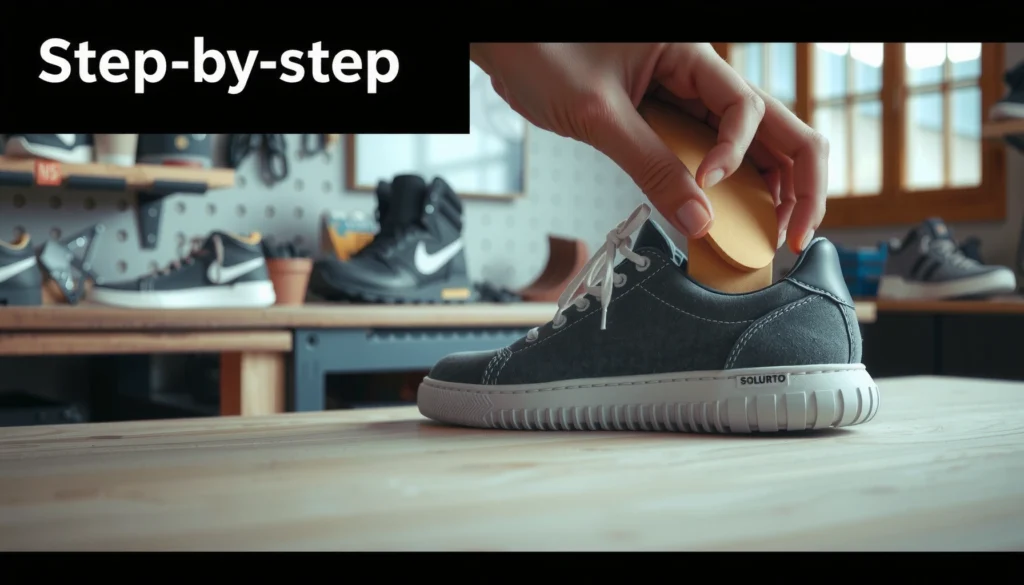
Key Steps at a Glance (Fast Reference)
Use this quick method to repeat the process without overthinking it:
1. Remove loose dirt (dry brush → damp wipe).
2. Pre-treat spots (diluted soap → baking soda paste for scuffs).
3. Clean uppers (gentle circles → wipe with damp cloth).
4. Clean laces separately (soak → scrub → rinse → air-dry).
5. Scrub soles and outsoles (soap water → baking soda paste for grooves).
6. Address yellowing cautiously (test and use peroxide sparingly).
7. Air-dry fully (no direct heat; stuff to maintain shape).
This sequence consistently avoids the two biggest failure modes: (a) grinding dirt into fabric, and (b) creating new discoloration through heat or over-oxidation.
White tennis shoes stay white when you combine the right supplies with careful technique: remove loose dirt first, pre-treat scuffs quickly, clean uppers and laces gently, and refresh soles with soap and (when needed) baking soda paste. If yellowing appears, treat it as an oxidation or embedded-dirt issue—clean first, then whiten only with controlled, minimal peroxide use. Finally, air-dry thoroughly and protect shoes after cleaning so grime doesn’t rebuild between wear cycles. Follow this method for your next cleaning day, and your sneakers will look noticeably brighter with less effort—especially throughout 2025 when regular maintenance makes a bigger difference than deep, infrequent scrubbing.
Frequently Asked Questions
What’s the best way to clean white tennis shoes that are heavily stained?
Start by removing laces and loose dirt with a soft brush or damp cloth, then wash the shoe uppers using a mixture of mild detergent and warm water. For stubborn stains, use a baking soda paste (baking soda + a little water) and gently scrub with a soft toothbrush. Rinse well, wipe dry, and let the shoes air-dry completely—avoid direct heat that can yellow white tennis shoes.
How do I clean white tennis shoes without damaging the leather or fabric?
Check the material first (canvas, mesh, leather, or synthetic) because each needs a gentler approach. Use mild soap and lukewarm water, and scrub lightly with a soft-bristle brush to avoid scuffing or stretching. For leather white tennis shoes, use a leather-safe cleaner or a lightly damp cloth with mild soap, and condition after drying to prevent cracking.
How can I remove yellowing from white tennis shoes?
Yellowing often comes from dirt buildup, oxidation, or improper drying, so focus on gentle whitening. Try a baking soda and hydrogen peroxide paste (spot-test first) and scrub softly before rinsing thoroughly, then air-dry in a shaded, ventilated area. For tough discoloration, a specialized white shoe cleaner can help, but always follow the product instructions to prevent further yellowing.
Which household products work well for cleaning white tennis shoe soles and midsoles?
For white shoe soles, magic erasers (melamine foam) are great for surface scuffs—just use light pressure and keep the area wet. Baking soda paste works well for grime, while a mild dish soap solution helps lift everyday dirt without harsh chemicals. Avoid bleach on unknown materials, since it can cause uneven whitening or damage certain finishes.
Why does my white tennis shoe get dirty so fast, and how do I prevent it after cleaning?
White tennis shoes tend to show dirt quickly because they’re high-contrast and materials like canvas and mesh hold grime in the fibers. After cleaning and fully drying, apply a fabric or leather protector spray designed for white sneakers/tennis shoes to create a barrier against mud and water. Regular spot-cleaning—quickly wiping with a damp cloth after wear—also reduces buildup and keeps your shoes looking brighter longer.
📅 Last Updated: August 01, 2026 | Topic: how to clean white tennis shoes | Content verified for accuracy and freshness.
References
- https://en.wikipedia.org/wiki/Leather_care
https://en.wikipedia.org/wiki/Leather_care - Sneakers
https://en.wikipedia.org/wiki/Sneaker - How to Clean White Shoes: Sneakers, Canvas, & More
https://www.wikihow.com/Clean-White-Shoes - https://www.mayoclinic.org/healthy-lifestyle/adult-health/in-depth/laundry/art-20045157
https://www.mayoclinic.org/healthy-lifestyle/adult-health/in-depth/laundry/art-20045157 - https://www.cdc.gov/cleaning/index.html
https://www.cdc.gov/cleaning/index.html - https://pubmed.ncbi.nlm.nih.gov/
https://pubmed.ncbi.nlm.nih.gov/ - Google Scholar Google Scholar
https://scholar.google.com/scholar?q=cleaning+white+tennis+shoes+home+remedies - Google Scholar Google Scholar
https://scholar.google.com/scholar?q=shoe+cleaning+methods+detergent+bleach+stain+removal - Google Scholar Google Scholar
https://scholar.google.com/scholar?q=shoe+material+care+leather+rubber+canvas+cleaning - Cleaning | technology | Britannica
https://www.britannica.com/topic/cleaning