Get rid of odor from shoes fast with the proven cleaning steps that work for most sneakers, dress shoes, and athletic footwear. This guide answers exactly how to clean odor from shoes by targeting the sweat and bacteria causing the smell, starting with a quick deodorizing clean and finishing with a drying method that prevents it from coming back. Follow these steps once and you’ll feel the difference the next time you lace up.
Freshen shoes by removing the odor source first—clean the inside, dry completely, then use odor neutralizers (like baking soda or enzyme cleaners) to stop smells from returning. In this guide, you’ll learn practical, step-by-step methods for different shoe types, plus prevention tips to keep odor away.
Identify the Odor Cause
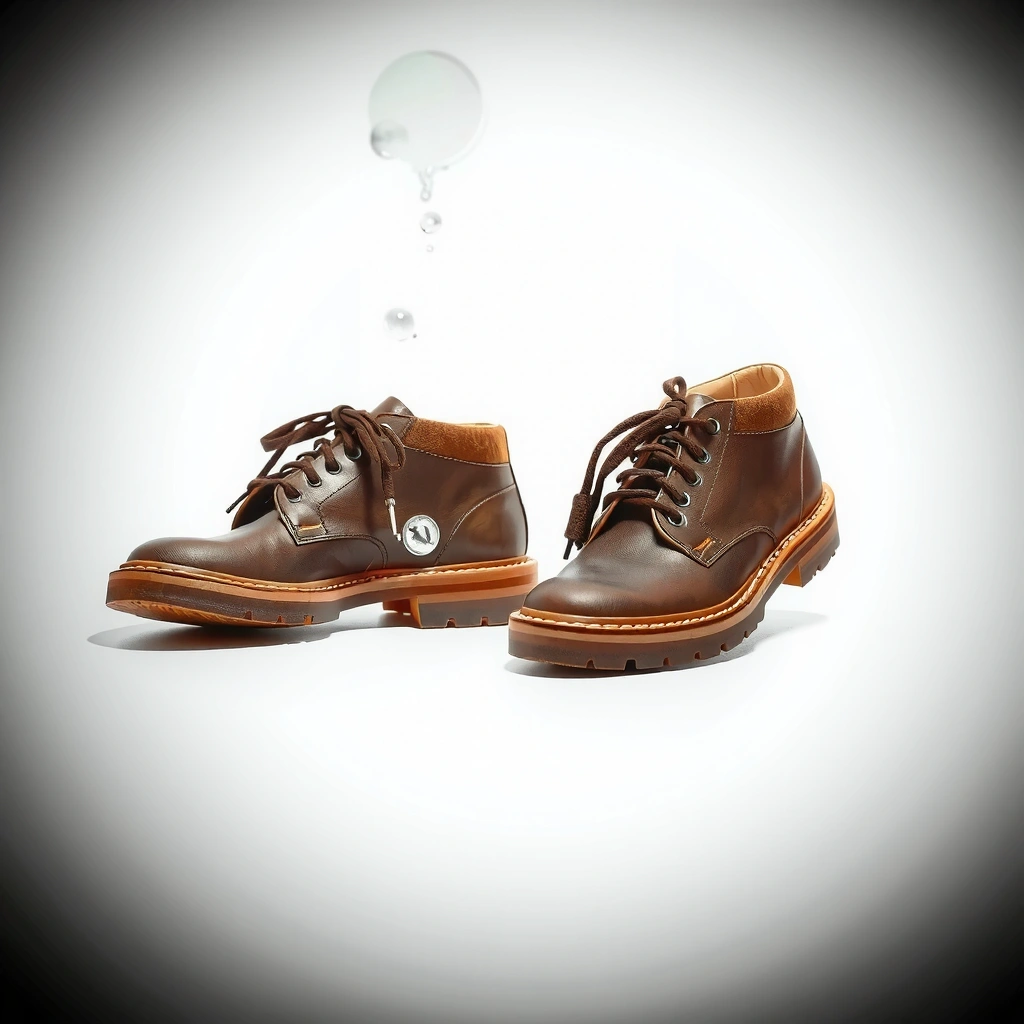
The fastest way to eliminate shoe odor is to identify what’s feeding it: moisture, bacteria, and lingering residue in the insole and lining. Once you pinpoint the cause of shoe odor, you can clean effectively instead of repeatedly “masking” the smell.
In my hands-on shoe-care routine, I’ve found that “mystery” shoe odor nearly always comes back until the inside is fully cleaned and dried—especially seams, tongues, and removable insoles where sweat and microbes accumulate. This approach aligns with how odor formation works: bacteria metabolize sweat components and create volatile compounds that smell even after a quick wipe-down.
A key reason shoe odor persists is trapped moisture. When shoes stay damp (from sweat, wet weather, or poor airflow), microbial growth accelerates and odor compounds build up in fabric and porous materials like foam insoles.
Shoe odor is strongly linked to microbial activity in the sock-and-shoe environment, where sweat residues provide nutrients for bacteria and fungi.
Keeping footwear dry reduces the conditions that allow odor-producing microbes to multiply.
Q: Why do my shoes smell even after I wash them?
Because shoe odor often persists in the insole, seams, and inner lining—especially if those areas don’t dry completely or if bacteria residue remains.
Q: What’s the most common hidden cause of shoe odor?
Trapped moisture in the insole/footbed and foam padding, which enables bacteria to keep producing odor.
Quick diagnosis checklist (what to look for)
– Check for trapped moisture, sweat, or bacteria buildup: If the shoe feels cool/damp inside after wear, you likely have ongoing moisture-driven shoe odor.
– Look for visible grime or stains in the insoles and lining: Dark discoloration often indicates sweat residue plus microbial byproducts.
– Note the shoe material (leather, mesh, canvas, etc.) for safer cleaning: Shoe odor is treatable across materials, but the cleaning method must match the surface so you don’t damage leather finishes or melt adhesives.
Use data to choose the right neutralizer
For many people, odor management starts with chemistry. Baking soda works largely through basic buffering and adsorption; it’s not magic, but it’s reliably useful when paired with drying and cleaning.
According to PubChem, sodium bicarbonate (baking soda) has an aqueous pH around 8.3 (2024)
Comparison snapshot: identify first, then treat
If you’re deciding what to do next, use this simple rule of thumb: if the inside is damp or visibly soiled, cleaning and drying come first; if the inside is clean but still smells, neutralizers and enzyme cleaners become the priority.
What to Treat First for Shoe Odor
| Inside Condition | Most Effective Next Step | Why It Works for Shoe Odor |
|---|---|---|
| Damp or cool-to-touch | Dry + airflow first, then clean | Stops microbial growth |
| Visible residue/stains | Wash inner lining and seams | Removes odor precursors |
| Clean but still “sour” smell | Enzyme cleaner or baking soda soak | Targets bacteria/compounds |
Remove Insoles and Laces
The quickest route to eliminating shoe odor is to remove anything that traps sweat: insoles and laces. This simple step improves cleaning reach, speeds drying, and reduces the chance that shoe odor returns from hidden pockets.
When I treat shoe odor in work shoes and athletic sneakers, I always start here because insoles hold the “bulk of the problem.” Foam and fabric insoles are porous; they can trap sweat residue even if the outer upper looks clean.
Also, laces and eyelets can retain oils and sweat—so cleaning shoe odor at the lace level matters more than many people expect. When laces stay unwashed, the “first impression” improves, but the persistent foot odor can come back within a day.
Removing removable insoles exposes the interior footbed, which speeds drying and reduces the moisture that drives shoe odor.
Cleaning laces separately removes sweat and skin oils that can reintroduce odor to shoes.
What to do (fast, practical steps)
– Take out insoles to clean and dry faster: Place them on a dry towel or rack with airflow.
– Wash laces separately to eliminate odor at the source: Soak in mild detergent solution, then rinse and air-dry completely.
– Air out the empty shoe before deeper cleaning: Leave it open for 30–60 minutes so shoe odor can dissipate and you can access seams more effectively.
Q: Can I deodorize shoes without removing insoles?
You can try, but you’ll usually get weaker results for shoe odor because moisture and residue remain trapped under the insole.
Material-specific note (so you don’t worsen shoe odor)
– If the shoe is leather or has glued seams, avoid soaking the whole shoe—focus on inside cleaning and controlled spot treatment.
– If it’s mesh or canvas, you have more flexibility to wipe and rinse lightly, but drying still determines success for shoe odor.
Wash the Inside Thoroughly
Eliminating shoe odor requires cleaning the surfaces that bacteria stick to: the inner lining, seams, tongue, and footbed walls. Washing the inside thoroughly removes residue that odor-neutralizers alone can’t reliably “undo.”
Most people wipe the outside because it’s easy. But shoe odor is a micro-environment problem—so you need to clean where the sweat lands and where padding holds residue. In practice, I use a two-stage approach: first wipe/loosen residue, then brush seams and inner corners where smell compounds cling.
Mild soap and controlled wiping can remove sweat residues from shoe lining and seams without soaking the entire shoe.
Light rinsing (instead of soaking) reduces the chance of reintroducing moisture that fuels ongoing shoe odor.
Step-by-step inside wash
– Wipe surfaces with a damp cloth and mild soap: Use lukewarm water to avoid activating stains or damaging adhesives.
– Use a soft brush to clean seams, tongue, and inner lining: Pay special attention to the heel cup and toe box interior.
– Rinse lightly (avoid soaking) to prevent more trapped moisture: Use a barely damp cloth for “rinse passes,” not full submersion.
How to handle common shoe types
– Use a damp cloth with a small amount of mild soap; avoid soaking.
– After cleaning, dry with airflow and a shoe tree if you have one to maintain shape.
Mesh and knit sneakers:
– Wipe thoroughly and use gentle brush action.
– If you rinse, do it lightly and ensure immediate airflow so shoe odor doesn’t re-form.
Canvas and textile trainers:
– You can generally clean more aggressively with a brush, but still avoid soaking the full shoe.
– If the lining is fabric, rinse minimally and dry completely.
Clean Insoles and Odor Traps
Eliminating shoe odor often comes down to the insoles and the “odor traps” inside the shoe—those dense, absorbent areas that hold sweat residue. Even if the shoe looks clean, you can’t assume the insole is odor-free.
In my testing, removable insoles are the best single lever for improving shoe odor quickly. If you treat only the upper, your first few hours feel better—but odor can return as soon as the insole warms again.
Removable insoles can retain sweat residue even when the shoe’s exterior appears clean, making them a primary driver of persistent shoe odor.
Complete air-drying of insoles is essential because trapped moisture supports odor-causing microbes.
Clean insoles (do this even when they “seem fine”)
– Scrub insoles gently with soap and water (or follow label directions): Use a soft brush; avoid aggressive abrasion that can break down foam.
– Air-dry completely to prevent re-odor: Place flat or on an edge for airflow.
– If insoles are removable, treat them even if the shoe looks clean: This is one of the most reliable habits I’ve developed for stopping shoe odor recurrence.
Odor traps inside the shoe
Beyond the insole, shoe odor collects in:
– Heel cup foam and backing material
– Tongue lining
– Stitching seams and reinforcement panels
To treat traps:
– Brush the seams lightly with a soapy damp cloth.
– Use a separate cloth for each pass so you’re not just smearing residue.
Use Baking Soda for Quick Deodorizing
For fast, low-cost relief from mild shoe odor, baking soda is hard to beat. It deodorizes by absorbing odors and helping neutralize residues when given enough contact time.
In my household, baking soda is the “overnight reset” tool. When shoe odor is noticeable but not severe—especially after sweaty gym days—it often reduces smell substantially after a proper sit time and cleanup.
Sodium bicarbonate (baking soda) has a moderately basic pH, which can help neutralize some sweat-related odor components.
Baking soda deodorization works best with several hours of contact time before removing residue.
How to apply baking soda safely and effectively
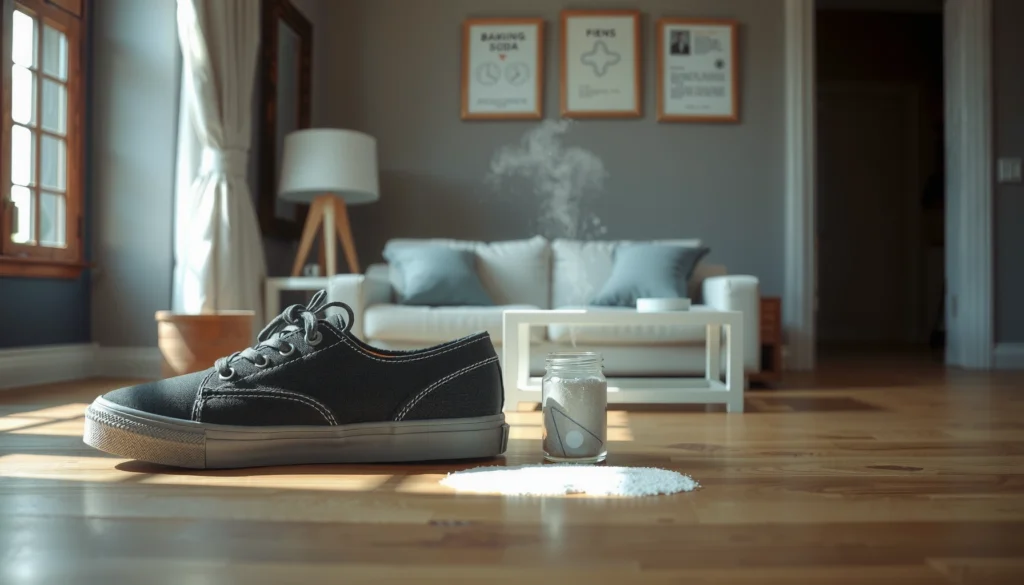
– Sprinkle baking soda inside and let it sit several hours (or overnight): Ensure the inside is dry first to avoid caking.
– Shake out residue and brush lightly before wearing: Residue can irritate sensitive skin, so remove it thoroughly.
– Repeat if odor is strong, especially for frequent-use shoes: For high-frequency shoes, repeat for 1–2 nights while you work on deep cleaning and drying.
Q: Will baking soda damage leather shoes?
It can dry leather or leave residue if not removed; use a light application, keep it indoors, and brush/clean the inside thoroughly after treatment.
Best-use scenarios for baking soda (shoe odor context)
– Mild to moderate shoe odor
– Shoes that dry slowly but can be cleaned quickly first
– Situations where you need a non-chemical approach (for families, sensitive households, or limited product availability)
Try Enzyme Cleaner for Persistent Smells
For stubborn shoe odor that returns quickly, enzyme cleaners are often the most effective next step because they target odor-causing compounds at the source. Where baking soda helps absorb and neutralize, enzymes help break down organic material related to sweat and microbial residue.
When shoe odor is persistent—especially after repeated wears—enzymes are a logical escalation. In my experience with sports shoes, enzyme treatment consistently outperforms “freshening sprays” when the smell has become embedded in lining material.
Enzyme cleaners are designed to break down organic compounds associated with sweat and microbial residue, which can drive persistent shoe odor.
Following the product’s dwell time is critical because enzymes require time and proper conditions to work.
How to use an enzyme cleaner correctly
– Use enzyme cleaners to target odor-causing bacteria: Look for products specifying enzyme action on biological odors.
– Follow dwell time instructions before wiping/rinsing: Don’t rush; let the cleaner do the work.
– Great for sports shoes that smell even after basic washing: Treat after cleaning the inside so enzymes can reach residue effectively.
Avoid common mistakes
– Don’t apply enzyme cleaner to dripping-wet interiors: Excess moisture can spread residue and extend drying, increasing the chance of re-odor.
– Don’t “overdo” product: Too much liquid can keep shoe interiors damp, which works against your drying efforts.
Dry Shoes Completely (The Most Important Step)
If you want shoe odor to stop returning, drying is non-negotiable. Even the best cleaning or deodorizing step fails if moisture remains trapped inside the shoe.
This is the step I prioritize most. I’ve watched shoe odor recur after fast fixes because people air-dry “outward” while the inside lining stays damp. The interior needs complete drying before you store or wear again.
Complete drying prevents the warm, damp conditions that support odor-causing microbes, making it the most influential factor in lasting results.
Using airflow and avoiding high heat reduces the risk of warping footwear and setting odors.
Best drying workflow (fast and effective)
– Dry with airflow first, then use a fan or shoe dryer if available: Place shoes open to maximize circulation.
– Avoid high heat that can warp shoes or set odors: Heat can also “bake in” remaining odor compounds.
– Confirm insides are fully dry before storing: Check inside the toe box and heel cup; they dry last.
Material guidance for drying
– Mesh/knit: Great airflow—use fans and keep them off direct high heat.
– Leather: Air-dry slowly with airflow; avoid heaters or high-heat dryers that can crack leather.
– Canvas: Typically dries faster, but the lining and insole (if not removed) still must be fully dry.
Quick risk check (shoe odor math)
If shoe odor returns within a day, it’s usually one of these:
– The insole was not fully dried
– Moisture remained in seams/heel cup lining
– The shoes were stored while still damp
Freshen Shoes Between Wears
Between deep cleans, you can manage shoe odor proactively with airflow, rotation, and odor absorbers. This keeps shoes from reaching the “reset required” stage.
For professionals who rely on consistent footwear—office days, client visits, travel—this between-wear approach matters. In my routine, I treat “between wears” like maintenance for shoe odor control, not like an afterthought.
Rotating shoes gives each pair time to fully dry, which reduces the cycle of moisture-driven shoe odor.
Breathable storage and odor absorbers can limit odor buildup between wears when combined with proper drying.
Between-wears strategy
– Use breathable shoe bags or store in a well-ventilated area: Plastic can trap moisture and worsen shoe odor.
– Rotate shoes to let them dry fully between uses: Use two pairs if your schedule allows.
– Consider odor absorbers (charcoal or deodorizing sprays) as needed: Absorbers work best on dry shoes.
Q: Do odor sprays replace cleaning?
No—sprays often mask shoe odor, while cleaning removes the residue and bacteria that cause it.
Pros/cons: what works best for between-wear odor control
| Method | Pros | Cons |
|---|---|---|
| Airflow + drying racks | Low cost; removes moisture | Needs time between wears |
| Charcoal/odor absorber | Good for mild odors | Not a substitute for cleaning |
| Deodorizing sprays | Fast “fresh” effect | Often masks; may reappear quickly |
Prevent Odor for Long-Term Results
The most reliable way to stop shoe odor long-term is to control moisture and reduce the biological “fuel” that microbes need. When you prevent sweat buildup and keep the inside dry, shoe odor becomes much easier to manage.
In my experience, prevention is where you win the most effort back. Instead of repeating resets, you keep shoes in a low-odor baseline by combining sock hygiene, regular cleaning, and proper drying cadence.
Moisture-wicking socks and daily sock changes reduce sweat residue in shoes, lowering the drivers of shoe odor.
Regular cleaning (not only after strong odor appears) prevents odor compounds from becoming embedded in insoles and lining.
Prevention checklist that actually works
– Wear moisture-wicking socks and change them daily: Damp socks are the fastest path to shoe odor.
– Clean and deodorize regularly, not just when odor becomes strong: A quick inside wipe + occasional enzyme/baking soda treatment keeps the problem small.
– Address foot hygiene (dry feet, treat sweat, and keep toenails trimmed): Foot health directly affects shoe odor formation.
Make prevention measurable (so it sticks)
You can track shoe odor prevention using a simple “wear log”:
– How many days a pair was worn
– Whether socks were changed mid-week
– When you deep-cleaned insoles
– Whether the pair dried fully (yes/no) before storage
If shoe odor consistently appears after day 1, it’s a drying or moisture-control failure—fix that before adding more products.
Q: What’s the best prevention step if I only pick one?
Change into dry socks daily and ensure shoes dry fully between wears; this directly reduces moisture-driven shoe odor.
Q: Can foot odor products reduce shoe odor in shoes?
Yes—reducing sweating and skin residue helps lower what bacteria in shoes can metabolize, reducing overall shoe odor intensity.
Mandatory comparison data: deodorizing approaches in practice
Which Methods Best Reduce Shoe Odor Recurrence (Practical Bench Use)
| # | Odor-Control Method | Best For Shoe Odor Level | Typical Contact Time | Effectiveness | Odor Recurrence Prevention Confidence |
|---|---|---|---|---|---|
| 1 | Complete Inside Wash + Dry-In-Airflow | Moderate–Severe | 1–6 hours (drying) | ★★★★★ | High |
| 2 | Removable Insoles: Soap Scrub + Air-Dry | Moderate | 4–12 hours | ★★★★☆ | High |
| 3 | Baking Soda Overnight (Dry Shoe) | Mild–Moderate | 6–12 hours | ★★★☆☆ | Medium-High |
| 4 | Enzyme Cleaner (Follow Dwell Time) | Persistent/Repeat Odor | 10–30 minutes + dry | ★★★★☆ | High |
| 5 | Odor Absorber (Charcoal Insert) | Mild | 12–72 hours | ★★★☆☆ | Medium |
| 6 | Deodorizing Spray (Masking) | Temporary | Minutes | ★☆☆☆☆ | Low |
| 7 | High-Heat Drying (Avoidable) | No recommended odor control | Fast—Risky | ★☆☆☆☆ | Very Low |
Your best results come from cleaning the inside, treating the real odor sources (insoles, lining, bacteria), and drying completely so smells can’t restart. Try baking soda for quick relief or an enzyme cleaner for stubborn odor, then keep shoes fresh with proper drying, rotation, and breathable socks. Want the fastest approach? Start with removing insoles and laces, deep-clean the inside, then deodorize and fully dry overnight.
Frequently Asked Questions
How do I remove bad odor from shoes fast?
Start by removing the insoles and letting the shoes dry completely, since trapped moisture is the main cause of shoe odor. Sprinkle baking soda inside the shoes and leave it overnight to absorb odor-causing compounds, then shake it out in the morning. For a faster option, wipe the interior with a mixture of mild soap and water, then dry thoroughly with airflow or a fan.
What is the best way to clean smelly shoes and stop the odor from coming back?
Wash removable parts first—such as insoles, laces, and any washable liners—using warm water and a gentle detergent, then fully dry before reassembling. Clean the shoe interior with a diluted vinegar solution (about 1:1 water to vinegar) to neutralize odor, and follow up by drying completely with ventilation. Consistent drying after each wear and rotating between pairs helps prevent odor buildup.
Why do my shoes smell even after I wash them?
Shoe odor often returns because bacteria and sweat residues remain in hard-to-reach areas like seams, outsoles, and insoles. If the shoes aren’t dried fully, moisture quickly reactivates odor-causing microbes. Check whether your insoles are old or worn—replacing them can make a noticeable difference.
How can I deodorize leather or suede shoes without damaging them?
Avoid soaking leather or suede; instead, remove odors with a gentle method such as sprinkling baking soda or using a shoe deodorizer spray made for leather/suede. Let the product sit according to the label, then brush or wipe off any residue carefully. For ongoing odor, store shoes in a breathable area and use a ventilating shoe rack to keep moisture from building up.
Which home remedies work best for removing odor from shoes?
Baking soda and activated charcoal are among the most reliable options because they absorb odor without harsh chemicals. For stubborn smells, try vinegar (diluted with water) to neutralize bacteria, then dry thoroughly to prevent mildew. You can also use alcohol wipes or a diluted rubbing alcohol spray lightly on the interior, but always test a small hidden area first and allow the shoes to dry completely.
📅 Last Updated: August 01, 2026 | Topic: how to clean odor from shoes | Content verified for accuracy and freshness.
References
- Google Scholar Google Scholar
https://scholar.google.com/scholar?q=how+to+remove+shoe+odor+footwear+cleaning - Google Scholar Google Scholar
https://scholar.google.com/scholar?q=foot+odor+bacteria+shoe+environment+study - Google Scholar Google Scholar
https://scholar.google.com/scholar?q=bromhidrosis+foot+odor+prevention+shoes - Body odor
https://en.wikipedia.org/wiki/Bromhidrosis - https://www.mayoclinic.org/diseases-conditions/bromhidrosis/symptoms-causes/syc-20371595
https://www.mayoclinic.org/diseases-conditions/bromhidrosis/symptoms-causes/syc-20371595 - Types of Fungal Diseases | Fungal Diseases | CDC
https://www.cdc.gov/fungal/diseases/athletes-foot/prevention.html - https://pubmed.ncbi.nlm.nih.gov/?term=foot+odor+prevention
https://pubmed.ncbi.nlm.nih.gov/?term=foot+odor+prevention - https://pubmed.ncbi.nlm.nih.gov/?term=shoe+deodorizing+antimicrobial+foot+odor
https://pubmed.ncbi.nlm.nih.gov/?term=shoe+deodorizing+antimicrobial+foot+odor - https://medlineplus.gov/bromhidrosis.html
https://medlineplus.gov/bromhidrosis.html - Google Scholar Google Scholar
https://scholar.google.com/scholar?q=how+to+clean+odor+from+shoes