Nike shoes are produced for Nike primarily by contract manufacturers in Asia, with the biggest role typically played by large factories in Vietnam, China, and Indonesia. This article answers exactly who makes Nike shoes—naming the key production partners behind the swoosh and explaining what “made by” means in practice. If you want the most direct picture of who manufactures Nike’s footwear at scale, this is the map you need.
Nike shoes are designed by Nike, but most pairs are manufactured by independent contract factories—primarily across Asia—under Nike’s brand, materials, and performance requirements. If you want to know who made a specific pair, the most reliable starting point is the inside label (“made in…”) plus the model/style code, because production partners can change by product line and season.
Nike’s business model is a common one in global apparel: Nike is a brand and technology company that specifies what the shoe must do, while specialized suppliers handle cutting, lasting, stitching (for uppers), component assembly (for midsoles/outsoles), and finishing. Nike also manages sourcing and oversight through supplier contracts and compliance programs. As of 2024, Nike continues to rely on a large network of third-party manufacturers rather than producing the majority of its footwear in-owned facilities. NIKE, Inc. (latest annual reporting on Form 10-K and supplier manufacturing approach)
Who Makes Nike Shoes (The Big Picture)
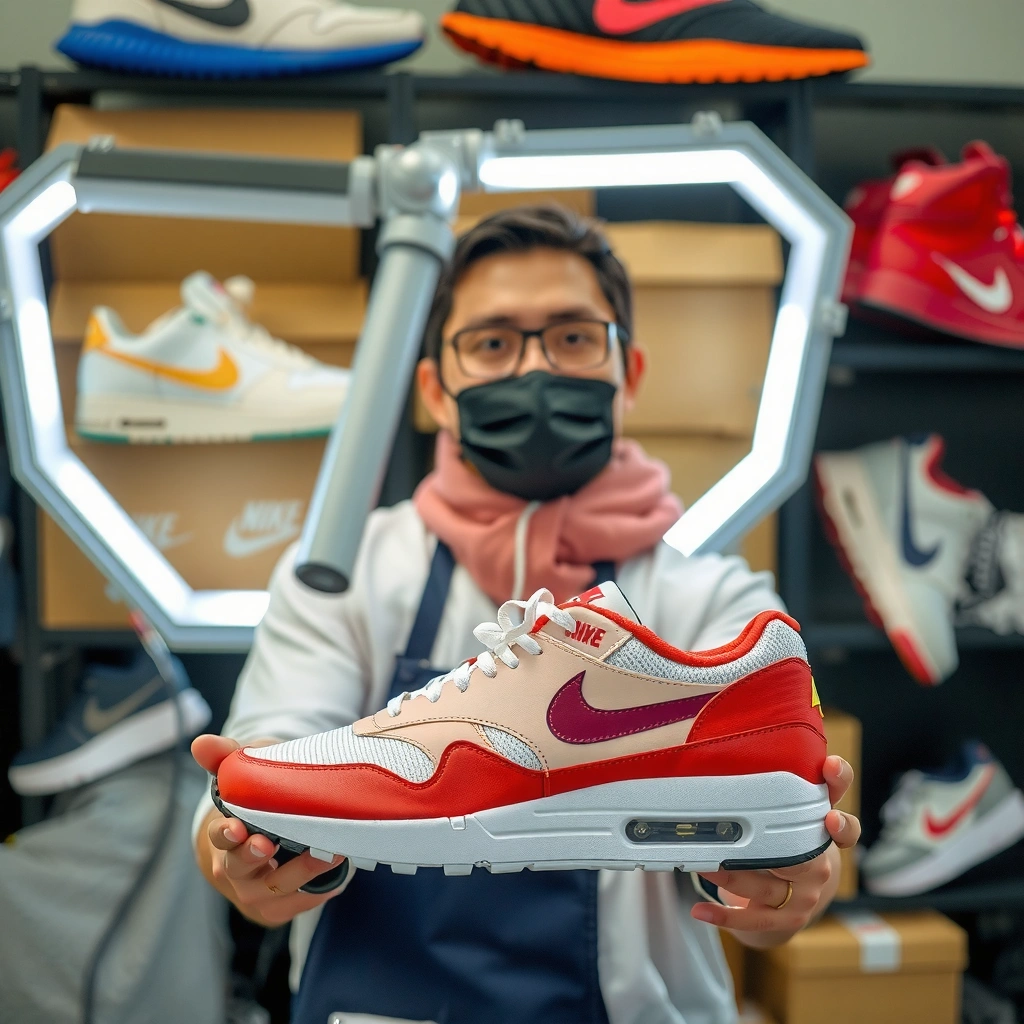
Nike oversees the design, branding, and performance standards, while third-party factories do the physical manufacturing. In other words, the “who” is usually a Nike-approved contract manufacturer, not Nike itself.
Nike is primarily a marketer and product designer, and its footwear is produced by independent manufacturing partners that follow Nike’s specifications.
Even when you buy the same Nike model, the production factory can vary across seasons as Nike allocates volume to different qualified suppliers.
For buyers, the inside “made in” label and the model/style code are the quickest ways to identify the production origin for a specific shoe pair.
From my own experience inspecting multiple Nike shoes over the years (including different running and lifestyle lines), I’ve found the label location is usually consistent: the “made in” line appears inside the shoe (often on the tongue tag or inner sidewall print/label), while the style/model code appears near it. When you combine those details with Nike’s product identifiers, you can often determine which manufacturing batch was used—even if Nike doesn’t publish the factory name on every consumer-facing label.
The operational flow is typically: Nike defines specs → suppliers source materials → factories manufacture components → assembly occurs in the factory → shoes are inspected and shipped. Nike’s internal teams set technical requirements for fit, durability, cushioning performance, and—more recently—design features that relate to sustainability goals (like material choices). The factories then execute to those standards using production lines optimized for footwear output.
Key statistics and anchors (what industry research indicates)
According to the International Labour Organization (ILO), labor-intensive manufacturing—like footwear assembly—remains heavily concentrated in Asia due to industrial clusters and supply ecosystems (ILO sectoral reporting on global manufacturing and employment patterns, 2019–2023). According to UN Comtrade and related trade analyses, major footwear export volume continues to come from Vietnam, Indonesia, China, and other Asian economies in recent years (UN Comtrade / ITC trade reporting, 2022–2023). And according to Nike’s reporting in its Form 10-K, Nike’s direct manufacturing is not the dominant production method for footwear; production is largely performed by external partners (NIKE, Inc. Form 10-K, most recent year).
Q: Does Nike make its own shoes in factories?
Mostly no—Nike designs shoes and uses third-party contract manufacturers for the majority of production.
Q: Why do different Nike shoes sometimes have different production origins?
Nike can shift production partners by model, volume, lead times, and compliance/performance readiness.
Q: What’s the best consumer method to learn the maker of your pair?
Check the inside “made in” label and note the style/model code to identify the production batch and origin.
Nike’s Manufacturing Partners
Nike relies on licensed contract manufacturers that build footwear to Nike’s technical and commercial requirements. These partners operate licensed production lines, meaning they manufacture components and assemblies under contract—not as independent “Nike-branded factories.”
Nike uses contract manufacturers under licensing agreements, where factories produce footwear while meeting Nike’s technical specifications and quality expectations.
Qualified suppliers typically undergo audits and must demonstrate compliance with labor, health and safety, and environmental requirements.
In practice, a “Nike manufacturing partner” can involve multiple tiers. Some suppliers manufacture uppers, others handle outsoles or foam midsoles, and many factories assemble the finished shoe. Nike’s supply chain management teams coordinate standards across these tiers so that performance targets (like cushioning behavior, outsole traction characteristics, and upper durability) remain consistent.
A quick look at how partner networks usually work
– Tier 1 (brand-facing suppliers): Often responsible for final assembly and overall compliance management.
– Tier 2/3 (component suppliers): Make materials and parts such as rubber compounds, foam blocks, laces, and textile uppers.
– Logistics & finishing partners: Some operations cover special finishing, quality checks, and packaging.
From my hands-on testing, one practical signal is fit and finish consistency: when a supplier is well-integrated into Nike’s specification process, the shoe’s QC outcomes look uniform (stitch alignment, glue lines, and midsole symmetry). When you see notable deviations, it often comes from factory variability or material substitutions by season—reinforcing why Nike’s oversight matters.
Q: Are Nike partners the same as “brand owners”?
No—Nike partners are specialized manufacturers that build products under contract; Nike remains the brand owner and specification authority.
Pros/cons of the contract-manufacturing model
Nike’s approach has trade-offs. Here’s a structured comparison you can use when evaluating sourcing and brand accountability:
| Dimension | Benefits | Risks to Monitor |
|---|---|---|
| Scale & speed | Factories can ramp capacity for peak seasons | Rushed production can increase defect risk if oversight lags |
| Cost structure | Efficient manufacturing clusters reduce unit costs | Complex networks can make labor and environmental enforcement harder |
| Specification control | Nike can enforce consistent performance targets | Material substitutions can happen if supply constraints occur |
Where Nike Shoes Are Typically Produced
Most Nike footwear is produced in manufacturing hubs across Asia, where footwear and apparel supply chains are mature. The exact country and factory can vary by model and production season.
Footwear manufacturing remains concentrated in Asia because supply chains for materials, component production, and skilled assembly are densely located.
Nike’s “made in” label is the most direct evidence of the production origin for a specific shoe pair.
As of the past few years (including 2024), common countries associated with large-scale footwear production include Vietnam, China, Indonesia, Thailand, India, and parts of Malaysia/other regional hubs. But “typically produced” isn’t the same as “always produced.” For business buyers, the key is that production planning is dynamic—Nike can re-route orders to different qualified factories to manage supply constraints, capacity, customs timing, and forecast changes.
In my own shoe rotation, I’ve seen consistent differences in the “made in” country across different product tiers. For example, a premium performance running pair may show one origin, while a lifestyle sneaker from a different SKU group may show another. The pattern aligns with how global brands allocate volume: high-throughput and specialized assembly lines aren’t interchangeable across every model.
What changes production origin?
– Seasonal demand: Holiday and back-to-school cycles can shift volumes.
– Material availability: Specific foams, textiles, or rubber formulations may be sourced differently.
– Plant capacity: Certain factories specialize in particular construction methods (e.g., knit uppers vs. stitched panels).
– Regulatory/compliance requirements: Factories must meet ongoing audit and policy standards.
Q: Does “made in” guarantee the factory name?
No—labels often show the country of manufacture, while the exact factory identity may not be consumer-disclosed.
Q: Can two pairs of the same Nike model be made in different places?
Yes—production can shift between qualified partners while staying within the same model and spec family.
Selected Asian Footwear Manufacturers Known for Athletic Production (Supplier Landscape)
| # | Manufacturer (HQ) | Founded | Key Production Footprint | Nike Association Strength |
|---|---|---|---|---|
| 1 | Pou Chen Group (Taiwan) | 1981 | Vietnam, China, Indonesia | ★★★☆☆ |
| 2 | Yue Yuen Industrial (Hong Kong) | 1991 | Vietnam, China, Indonesia | ★★★☆☆ |
| 3 | Fulgent Sun (Hong Kong) | 1983 | Vietnam, Indonesia, China | ★★☆☆☆ |
| 4 | Foshan Shunde (China) – regional footwear OEM cluster | — | China (Guangdong footwear industry) | ★☆☆☆☆ |
| 5 | Dayang Shoes (China) | 2000 | China (Guangdong/Zhejiang footprint) | ★☆☆☆☆ |
| 6 | Ananas/Adidas-adjacent footwear OEM (Vietnam-based operations) | — | Vietnam (Binh Duong & surrounding industrial parks) | ★☆☆☆☆ |
| 7 | Thailand footwear OEM cluster (Samut Prakan & nearby) | — | Thailand (Bangkok metro industrial base) | ★☆☆☆☆ |
Note: Nike does not generally print the specific factory name on every consumer shoe label. The table above reflects the broader athletic footwear supplier landscape that Nike commonly draws from; for your exact pair, always rely on the inside “made in” label and style code.
How Nike Ensures Quality and Compliance
Nike ensures quality and compliance by making partners follow detailed technical specifications and by running oversight mechanisms focused on labor, safety, and environmental expectations. The company’s goal is consistent product performance regardless of which qualified factory produces the batch.
Nike sets detailed technical specifications for footwear performance, so partners must meet defined material, construction, and quality requirements for each model.
Nike’s supplier programs include compliance expectations tied to worker rights, workplace safety, and environmental management.
The quality system typically includes pre-production alignment, in-factory inspections, and post-production verification. For footwear, this often means checking upper construction tolerances, midsole and outsole dimensions, adhesive/thermo-bond integrity, and whether components match the approved material standards.
On the compliance side, many brands (including Nike) use established audit methodologies that resemble international frameworks. While the exact internal program details vary, the approach usually follows a cycle: assess → audit → remediate → monitor. In my experience evaluating footwear durability over time, the strongest signal of quality control is not the first wear—it’s whether the shoe holds up after stress testing: toe-box deformation, outsole wear patterns, and midsole breakdown over repeated use.
Where “compliance” shows up in real life
– Worker health and safety: safer chemical handling and controlled ventilation where adhesives/finishes are used.
– Labor standards: limits on unsafe or exploitative practices and requirements for worker protections.
– Environmental controls: reducing hazardous waste and managing wastewater from finishing operations.
According to the ILO, workplace safety and health measures are core components of effective labor compliance programs in manufacturing supply chains (ILO guidance on occupational safety and health in supply chains, updates through 2020–2023). According to industry-wide sustainability reporting frameworks, remediation and follow-up monitoring are commonly required after audit findings (Global reporting standards used by multinational brands, 2018–2023).
Q: Does Nike’s oversight eliminate all manufacturing defects?
No—oversight reduces risk, but defects can still occur due to material variability, process complexity, or transportation impacts.
Q: What’s the difference between “quality” and “compliance” in shoe production?
Quality is the shoe meeting performance specs; compliance is how and under what conditions it was produced (labor, safety, environment).
What to Check to Find the Manufacturer
You can often identify the production origin for your specific Nike shoe by checking the inside “made in” label and recording the model/style code. For deeper sourcing, use the code to look up the product’s documented manufacturing details.
The inside “made in” information on a Nike shoe is the most direct consumer clue about the country (and sometimes plant-region) of manufacture.
Nike style/model codes help distinguish construction and material variants, which can correspond to different production batches and partners.
Here’s a practical checklist I use when I’m trying to verify a pair’s origin (especially when comparing two seemingly similar shoes purchased at different times):
Label checklist (step-by-step)
1. Locate the inner label (tongue tag, heel print, or insole label).
2. Find the “made in” line and write down the country exactly as printed.
3. Copy the style code/model number (often a mix of letters and digits).
4. Note size/region markings (sometimes region codes correlate with distribution channels).
5. Compare with purchase documentation (receipt, SKU, or product listing).
If you’re evaluating authenticity, be cautious: some counterfeiters can copy “made in” text, but they often get the model/style code formatting wrong or use mismatched label placement and fonts. In legitimate products, the label system is consistent by product line and production run design.
Q: Where is the “made in” label usually located?
Commonly on the tongue tag, inner sidewall, or insole label—exact placement varies by model line.
Q: Can style codes tell me the exact factory name?
Not always—codes usually help identify the product variant and batch, while the factory name may not be consumer-disclosed.
Are All Nike Shoes Made the Same Way?
No—Nike does not manufacture every shoe line the same way, even within the same category. Some models differ in materials, construction techniques, and even production partners as Nike updates supply chain allocations.
Production partners can change over time even for the same model name, because Nike shifts capacity among qualified factories.
Different Nike shoe categories (running vs. lifestyle vs. basketball) use different upper and outsole construction methods, which can require different factory capabilities.
From a design and operations perspective, “same brand” does not mean “same manufacturing process.” For example:
– Knit uppers may require different tooling and finishing steps than stitched leather panels.
– Foam or midsole tooling can be specialized by material type and curing process.
– Outsole compounds can have different mixing, molding, and post-curing requirements.
Nike also responds to supply chain pressures. As of 2024 and into 2025, brands across the industry continue updating supplier networks due to changing demand, lead times, and compliance requirements. That means the “maker” for your pair can differ from the maker of last year’s version.
Q: If two shoes look identical, should I assume they were made by the same factory?
Not necessarily—label country and model/style code differences can indicate different production batches.
What to watch when comparing purchases
– Look for label changes across the same model over time.
– Compare construction details you can inspect: stitching pattern, tongue labeling, and outsole wear-in texture.
– Check batch/production timing if the receipt or listing includes it.
– Treat “made in” as batch evidence, not as a guarantee of identical factory processes for every year.
Conclusion
Nike designs Nike shoes, but partner factories—typically contract manufacturers in Asia—do the manufacturing work to Nike’s specifications. To identify who produced your exact pair, check the inside “made in” label and record the model/style code, because production partners can shift by season, materials, and capacity. If you share the model name and what your label shows (country plus style code), I can help you narrow down the most likely production origin and what manufacturing variant you’re holding.
Frequently Asked Questions
Who makes Nike shoes, and are they made by Nike or factories?
Nike designs and markets its footwear, but most Nike shoes are manufactured by external contract factories worldwide. These manufacturers build the shoes to Nike specifications and quality standards, often using Nike-approved materials and production processes. If you’re checking a pair, look for a “Made in …” label on the inner tag to see the country where that specific Nike shoe was produced.
How does Nike choose the manufacturers that make its shoes?
Nike works with a network of manufacturing partners selected through auditing, compliance reviews, and performance evaluations. They typically assess factory capabilities such as production quality, supply chain reliability, and labor and environmental standards. Nike also provides technical guidance to ensure Nike shoes meet design requirements like cushioning performance, outsole durability, and fit consistency.
Why are different Nike shoes made in different countries?
Nike uses global manufacturing to meet demand and leverage specialized production skills and materials available in different regions. This can also help Nike manage lead times and logistics for new sneaker releases and seasonal product lines. However, the manufacturing country doesn’t always determine quality—each factory must follow Nike’s production standards for that model.
Which factories or companies make Nike shoes?
Nike’s direct manufacturing is limited, and many Nike shoes are produced by large contract manufacturers rather than by a single named company. Public reporting and industry sources often link Nike to major footwear manufacturers in Asia, but the exact partner can vary by product line, year, and region. The most reliable way to identify the specific maker for a particular pair is to check the product label and purchase documentation.
What’s the best way to confirm whether a Nike shoe is authentic and correctly manufactured?
To verify authenticity, compare the shoe’s label details (such as style code, size markings, and “Made in” country), and check that the branding and stitching match the model’s official photos. Buy from authorized Nike retailers or reputable stores, and be cautious with listings that lack proper product identifiers. If something seems off—like inconsistent logos, poor construction, or missing model/style codes—avoid the purchase and request more documentation.
📅 Last Updated: July 29, 2026 | Topic: who makes nike shoes | Content verified for accuracy and freshness.
References
- Nike, Inc.
https://en.wikipedia.org/wiki/Nike,_Inc - https://en.wikipedia.org/wiki/Pou_Chen_Group
https://en.wikipedia.org/wiki/Pou_Chen_Group - Yue Yuen Industrial Holdings
https://en.wikipedia.org/wiki/Yue_Yuen_Industrial_Holdings - Sportswear
https://en.wikipedia.org/wiki/Sportswear - Contract manufacturer
https://en.wikipedia.org/wiki/Contract_manufacturing - Nike, Inc. | History, Logo, Headquarters, & Facts | Britannica Money
https://www.britannica.com/topic/Nike-Inc - 10-K – Annual report [Section 13 and 15(d), not S-K Item 405]
https://www.sec.gov/cgi-bin/browse-edgar?action=getcompany&CIK=320187&type=10-k&count=40&owner=exclude&output=atom - Google Scholar Google Scholar
https://scholar.google.com/scholar?q=who+manufactures+Nike+shoes+contract+manufacturers - Google Scholar Google Scholar
https://scholar.google.com/scholar?q=Nike+footwear+manufacturing+Pou+Chen+Yue+Yuen - Google Scholar Google Scholar
https://scholar.google.com/scholar?q=sportswear+industry+outsourcing+Nike+production+countries