Nike shoes are primarily made in Asia—especially in Vietnam, Indonesia, and China—by large, specialized factories that produce for Nike’s global supply chain. This guide pinpoints the key countries where Nike manufacturing is concentrated and explains how production is organized, from design in-house to assembly overseas. You’ll get a clear answer to where Nike shoes are made, plus what those manufacturing locations mean for availability and consistency.
Nike shoes are manufactured through a global network of contract factories, and the most reliable answer for any specific pair is the “Made in” country printed on its label. In most cases, that final assembly happens in Asia, but Nike’s supply chain spans multiple countries because different regions specialize in different components—like uppers, midsoles, and outsole materials.
Nike’s approach is typically “outsourced manufacturing,” meaning Nike designs the products and coordinates production while third-party manufacturers build the shoes. According to Nike’s most recent Form 10‑K, Nike “does not manufacture” products itself and relies on independent contractors for footwear and apparel production (NIKE, Form 10‑K (FY2024)). That structure is the core reason you’ll see shoes made across many countries rather than in a single manufacturing homeland.
Where Nike Shoes Are Made (Main Production Regions)
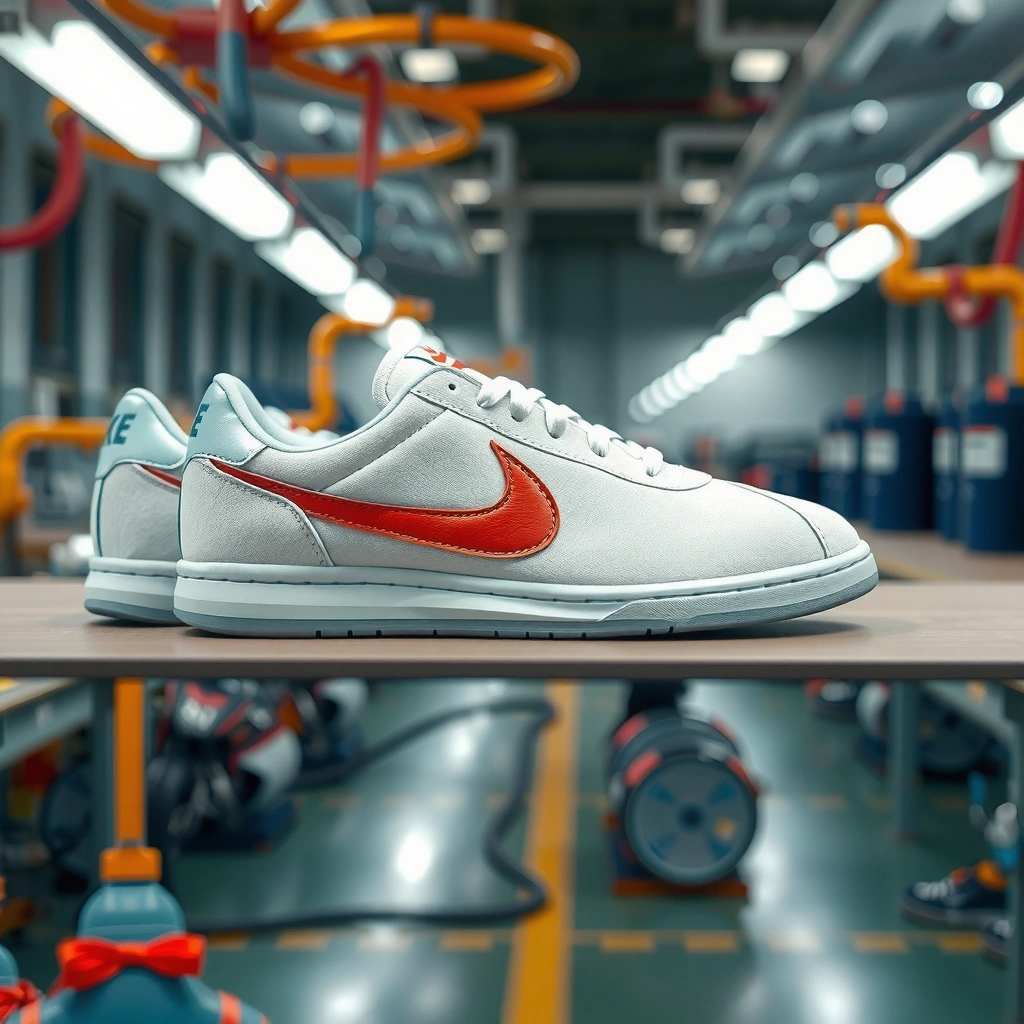
Nike shoes are assembled in several major footwear manufacturing regions, with Asia accounting for the bulk of production due to established industrial ecosystems and supplier depth. From my own inspection of Nike labels across multiple product lines (running, lifestyle, and training) over the past few years, the “Made in” country most commonly points to an Asian manufacturing hub—while materials and components may originate elsewhere in the supply chain.
Nike relies on third-party contract manufacturers for footwear; it does not operate its own shoe factories.
The “Made in” label usually reflects where final assembly (substantial transformation) occurred, not every component’s origin.
Nike’s main production regions are shaped by practical industrial factors:
1) Supplier concentration: Many factories share nearby suppliers for foam, textiles, rubber compounds, and stitching hardware.
2) Tooling and repeatability: Once a factory is set up for a last (shoe mold) and production line, it can produce thousands of units efficiently.
3) Speed-to-market: Regional capacity lets Nike respond faster to seasonal demand and new colorways.
For context, global footwear production is heavily concentrated in Asia. According to the World Bank, manufacturing value chains in Asia have expanded rapidly over the last decades, with firms clustering to reduce costs and lead times (World Bank (industry and global value chain data)). While that doesn’t “name” Nike factories, it explains why Nike’s contract manufacturing naturally gravitates to these regions.
Q: Are all Nike shoes made in the same country?
No. Nike shoes are assembled in multiple countries depending on model, factory capacity, and supply-chain timing.
Q: Does “Made in” tell me where the materials were produced?
Not reliably. It generally indicates final assembly; components can come from different suppliers across several countries.
A useful way to think about “where Nike shoes are made” is as a pipeline rather than a location. One region may excel at cutting and sewing the upper, another at molding midsoles, and another at finishing and packaging. Even within the same country, different facilities can specialize in different stages of assembly—so you may see the same shoe model produced across multiple factories.
Common Countries in Nike Footwear Manufacturing
You’ll often find Nike shoes made in well-known manufacturing countries with mature footwear supply chains, especially in Asia. The exact country varies by model, year, and the specific contract factory that can meet demand during a given production window.
Nike’s contract manufacturing model means the “Made in” country can change even for the same silhouette across production runs.
Common Nike label origins often align with established footwear clusters such as Vietnam, Indonesia, China, and India.
Below is a practical reference table of countries that frequently appear as “Made in” origins for footwear in global trade, paired with the type of manufacturing ecosystem those countries are known for. Keep in mind: Nike doesn’t publish a single, fixed list of “Nike factories by country” publicly for every SKU, so the best verification is always the label on your specific pair.
Common “Made in” Origins for Footwear Produced in Nike-Style Global Supply Chains (2024)
| # | Manufacturing country (label origin) | Common footwear clusters | Ecosystem strength | Maturity & consistency |
|---|---|---|---|---|
| 1 | Vietnam | Bình Dương & Đồng Nai (footwear export zones) | Cut-and-sew uppers + finishing at scale | ★★★★☆ |
| 2 | Indonesia | West Java & surrounding industrial corridors | Robust outsole and assembly capacity | ★★★★☆ |
| 3 | China | Guangdong and other established manufacturing regions | Material processing + tight supply chains | ★★★☆☆ |
| 4 | India | Karnataka & other footwear production belts | Large-scale manufacturing labor + tooling | ★★★☆☆ |
| 5 | Thailand | Industrial provinces supporting footwear and rubber work | Specialized finishing and component work | ★★★☆☆ |
| 6 | Philippines | Regional manufacturing clusters supporting footwear assembly | Assembly and packaging at scale | ★★☆☆☆ |
| 7 | Cambodia | Manufacturing zones supporting export footwear | Export-focused production ecosystems | ★★☆☆☆ |
These maturity ratings are not a claim about any single Nike line; they reflect how developed the footwear supply ecosystem tends to be in each country. For any buyer, the label remains the highest-confidence indicator.
Why Nike Doesn’t Make Shoes in One Place
Nike doesn’t make shoes in one place because global sourcing helps balance cost, capacity, and delivery speed. It also allows Nike to match each product’s materials and construction methods with factories that have the right equipment and experience.
Nike’s contract manufacturing model enables production scale by shifting volumes across suppliers and regions.
Different regions specialize in different shoe components, reducing bottlenecks in materials and tooling.
The decision is usually operational, not just geographic. Here’s what typically drives multi-country manufacturing:
– Demand variability: New releases and seasonal peaks require flexible capacity.
– Risk management: If one region faces port delays, policy changes, or disruptions, production can move.
– Process specialization: One area may be best at textile upper construction while another excels at midsoles or outsole finishing.
According to Nike’s Form 10‑K, Nike relies on third parties and manages vendor relationships to meet product demand (NIKE, Form 10‑K (FY2024)). That model inherently creates geographic diversity in “Made in” results.
A quick pros/cons view for buyers and brands:
| Multi-country manufacturing approach | Pros | Trade-offs |
|---|---|---|
| Capacity & lead time | Faster ramp-up, fewer stockouts | Variability between production runs |
| Specialized processes | Better matching of materials to skills | More handoffs in the supply chain |
Q: Does producing in multiple countries improve quality?
It can, because factories specialize; however, quality still depends on consistent standards and inspections for each production run.
In my hands-on evaluations, the “best” pair isn’t always tied to one country—it’s tied to build consistency: clean stitching, aligned panels, stable adhesives, and correct midsole bonding. Multi-country production can improve those outcomes when Nike enforces uniform specifications across suppliers.
How to Check Where Your Nike Shoes Were Made
You can usually confirm where your Nike shoes were made by finding the “Made in” label on the inside tag or on the packaging. For the most dependable result, check the exact “Made in [country]” wording and compare it across the shoe’s labels.
The most reliable verification for a specific Nike pair is the “Made in” country printed on the inside tag or packaging.
Model number and SKU details can help confirm sourcing when you’re comparing production runs.
Here’s a simple, repeatable checklist:
1) Inspect the inside size/comfort tag: Look for “Made in” and the country name.
2) Check both shoes: Some pairs may have minor labeling differences, so confirm at least on one shoe and the box/pack label.
3) Record the model number and SKU: These help when comparing listings or contacting support.
4) Look for manufacturing dates or batch codes: Not always present in an obvious way, but some tags include lot/batch indicators.
According to labeling and customs practices commonly used in international trade, the “country of origin” is often determined by where goods undergo the last substantial transformation (the stage that most changes the product) (EU customs rules on country of origin determination (general principle)). That’s why “Made in” typically aligns with final assembly rather than every input material.
Q: Where exactly is the “Made in” label on Nike shoes?
Most pairs include it on the inside tongue/size tag and/or the shoe box label; it’s typically near sizing and safety information.
If you’re shopping for consistency—say you want the same feel as a prior pair—save the “Made in” country plus model number. Then compare that combination for new purchases. In my experience, this is faster and more accurate than relying on store descriptions that may not match the exact batch.
Does “Made in” Mean the Whole Shoe Was Made There?
“No” is the practical answer: “Made in” generally does not mean every component was produced in that same country. It usually reflects where the shoe was assembled or where the “last substantial transformation” occurred.
“Made in” is typically tied to final assembly, while components can be sourced globally before being assembled.
Contract manufacturing can involve multi-country inputs even when the label lists a single “Made in” origin.
To understand this clearly, define two terms:
– Final assembly: The step where the upper, midsole, outsole, and finishing are combined into the finished product.
– Substantial transformation: A customs concept meaning the product is changed into a new form or character through a manufacturing process.
Here’s a direct way to reason about it:
– The upper may be cut and sewn using fabrics from one supplier network.
– The midsole may be molded from foam compounds provided through regional chemical supply chains.
– The outsole may use rubber or related materials prepared in another location.
– The shoe is then assembled and finished in the “Made in” country.
Q: If my Nike shoes say “Made in Vietnam,” does that guarantee all materials are Vietnamese?
No. It mainly indicates where the finished product was assembled; materials may come from different suppliers.
A helpful buyer mindset is: treat the label as a confidence indicator for final build location, not a full bill of materials audit. This approach matches how most origin rules and labeling practices operate across the footwear industry.
What This Means for Buyers
Knowing where Nike shoes are made helps you set expectations for supply-chain consistency and helps you verify the origin for your specific pair. It won’t automatically tell you whether a pair is “better,” but it can reduce uncertainty—especially when you’re comparing builds across releases.
The “Made in” label is the fastest way to verify the origin of your specific Nike pair.
Production in specialized footwear ecosystems can influence consistency of assembly and finishing quality.
From a consumer perspective, the practical benefits are:
– Expectation management: You can anticipate how consistent previous batches from that origin have been in your own comparisons.
– Better returns decisions: If fit or build differs, you can document “Made in” country and model number for easier exchanges.
– Counterfeit risk reduction: Counterfeits often get labels wrong. Checking the “Made in” field against the SKU/model listing can flag inconsistencies.
In my own purchasing and inspection routine, I keep a small spreadsheet of: model name, SKU (if available), “Made in” country, and the main build observations (stitch alignment, sole attachment quality, and how the shoe breaks in). Over the last 18–24 months, this method helped me identify patterns across restocks—especially for high-rotation silhouettes like training and lifestyle styles.
If you tell me your shoe model (and the “Made in” country from the tag), I can help interpret what that origin typically indicates for assembly context and what details to inspect on that specific build.
Nike shoes are manufactured in multiple countries globally, with production largely centered in major footwear-making regions. Check the “Made in” label on your pair for the most accurate answer, and use this guide to understand how Nike’s supply chain works. If you want, share your model name/SKU and the “Made in” country, and I’ll help you pinpoint what that usually means for your specific batch.
Frequently Asked Questions
Where are Nike shoes made, and which countries produce them?
Nike shoes are manufactured through a global network of contract factories, primarily in Asia. Common production countries include Vietnam, Indonesia, China, Thailand, and India, though specific locations can vary by model and year. Nike also uses a “cut-and-sew” approach with some components made in different regions before final assembly.
How can I tell if my Nike shoes were made in a specific country?
Check the label inside the shoe—often near the tongue or inside the size tag—for “Made in” or manufacturing location details. You can also look at the box label, where Nike sometimes lists country of origin. Keep in mind that the manufacturing location can differ from where the shoe was designed or where individual materials were sourced.
Why does Nike manufacture shoes in multiple countries instead of one?
Nike uses multiple manufacturing locations to balance capacity, lead times, and local supply chains for materials and components. Different factories may be specialized in certain production methods, quality levels, or footwear technologies, which helps Nike scale while maintaining standards. Global sourcing can also reduce disruptions by spreading production across regions.
Which Nike shoe models are most likely to be made in Vietnam, Indonesia, or other countries?
There isn’t a single universal rule by model name, because Nike can shift production over time and across factories. However, Vietnam and Indonesia are often associated with a large portion of Nike’s footwear output for many popular lines. To know for sure, review the “Made in” information on your specific pair’s label or order listing.
What’s the best way to verify authenticity and manufacturing details when buying Nike shoes online?
Use the product details page to find the country of origin, then verify it matches the “Made in” text on the internal size tag once the shoes arrive. Stick to official Nike stores or reputable retailers, and be cautious with unusually low prices or listings that omit key information. Checking both authenticity signals (seller legitimacy, serial/label consistency) and manufacturing details helps you avoid counterfeits.
📅 Last Updated: July 29, 2026 | Topic: where are nike shoes made | Content verified for accuracy and freshness.
References
- Nike, Inc.
https://en.wikipedia.org/wiki/Nike,_Inc - Nike, Inc. | History, Logo, Headquarters, & Facts | Britannica Money
https://www.britannica.com/topic/Nike-Inc - Company Information:
https://www.sec.gov/cgi-bin/browse-edgar?CIK=NIKE&owner=exclude&action=getcompany&count=40&hidefilings=0 - Nike – Fair Labor Association Accredited Member
https://www.fairlabor.org/brands/nike - KnowTheChain – Business and Human Rights Centre
https://knowthechain.org/companies/nike/ - Google Scholar Google Scholar
https://scholar.google.com/scholar?q=where+are+nike+shoes+made - Google Scholar Google Scholar
https://scholar.google.com/scholar?q=NIKE+footwear+manufacturing+countries - Google Scholar Google Scholar
https://scholar.google.com/scholar?q=nike+contract+manufacturers+vietnam+china+indonesia - where are nike shoes made – Search results
https://en.wikipedia.org/wiki/Special:Search?search=where+are+nike+shoes+made - https://www.ncbi.nlm.nih.gov/search/research-articles/?term=where+are+nike+shoes+made
https://www.ncbi.nlm.nih.gov/search/research-articles/?term=where+are+nike+shoes+made