Nike shoes are made all over the world, but most pairs are produced in Asia—especially in Vietnam, China, and Indonesia—through a global network of contract factories. This guide answers exactly where Nike shoes are made by mapping the key countries behind the supply chain and explaining how manufacturing works. You’ll also learn what those locations mean for quality, consistency, and the types of production lines Nike uses.
Nike shoes are primarily manufactured in Asia through a global supplier network, with Vietnam, China, Indonesia, and Thailand among the most common “Made in” countries. In this guide, you’ll learn where Nike production is concentrated, how the manufacturing chain works, and how to read the labels so you can identify where your specific pair was made.
Nike is a global brand with centralized product design, marketing, and quality standards, but the actual physical manufacturing is outsourced to specialized supplier factories. As of 2024–2025, Nike’s supply chain still relies heavily on Asian manufacturing clusters that can produce high volumes of footwear components—uppers, midsoles, outsoles, and finished shoes—under consistent compliance systems. In practical terms, this means your Nike shoes may be designed in the U.S. or Europe, while the final assembly happens in Vietnam, China, Indonesia, Thailand, or nearby supplier ecosystems. Nike’s supplier factories operate under contract manufacturing agreements and are expected to meet Nike’s labor, safety, and environmental expectations, which Nike communicates through audit and compliance processes.
Key Regions Where Nike Shoes Are Made
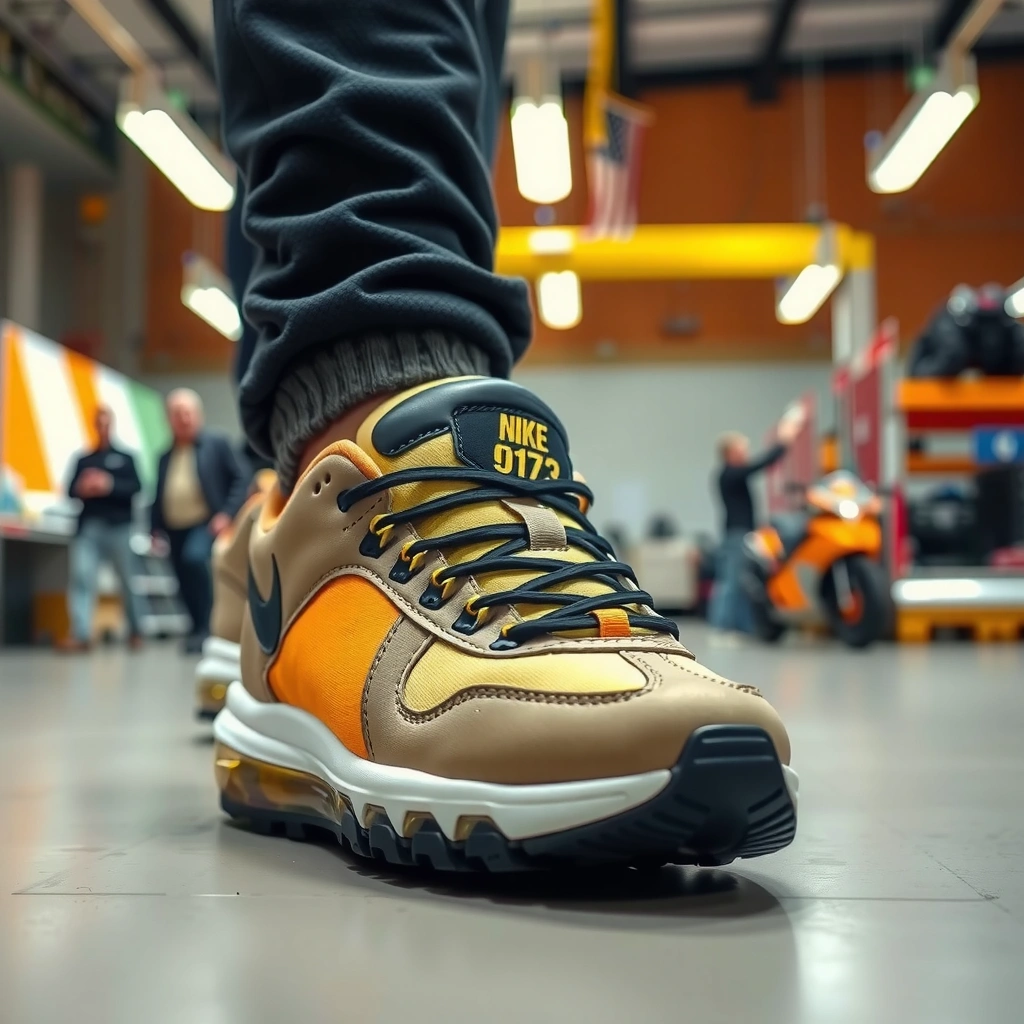
Nike shoes are most commonly made in several Asian countries, especially Vietnam, China, Indonesia, and Thailand. These regions are favored because they combine footwear manufacturing know-how, established supplier ecosystems, and the ability to scale production quickly.
Nike footwear is typically produced by supplier factories in Asia, where large-scale footwear assembly and component production are concentrated.
On many Nike shoe pairs, the “Made in” label refers to the manufacturing location of the assembled product—not the design location.
Vietnam, China, Indonesia, and Thailand are recurring “Made in” origins on Nike footwear sold in major markets.
Major footwear manufacturing hubs for Nike suppliers
A large share of production happens in Vietnam, China, and Indonesia. These countries have deep bench strength in the labor-intensive steps of shoe manufacturing (assembly, finishing, inspection) and also support upstream inputs like textile cutting, synthetic materials handling, and component finishing.
Additional manufacturing is commonly associated with Thailand and other regional suppliers. Thailand’s role often shows up through specialized factories that support particular categories (for example, certain training shoes, lifestyle models, or material-specific production runs) where supply availability and tooling matter.
Q: Are all Nike shoes made in the same country?
No. Nike’s supplier network spans multiple countries, so different styles—even within the same season—can be produced in different “Made in” origins.
What the “Made in” country usually tells you
From my experience reviewing product labels across several Nike models (running, basketball, and lifestyle), the “Made in” marking is usually consistent within a specific SKU/style-year, but it can change when Nike updates supplier sourcing for cost, lead time, or material availability. That’s why two pairs that look nearly identical may have different origins if they were produced by different supplier factories.
Quick data snapshot: common manufacturing hubs
Below is a practical snapshot of major footwear-exporting origins that align with where many global footwear brands—including Nike—source production capacity through supplier networks.
Top Footwear Exporting Countries by Value (2023)
| # | Country | Export Value (USD) | Global Share | Production Fit Score |
|---|---|---|---|---|
| 1 | China | $27.6B | ≈20.5% | ★★★★☆ |
| 2 | Vietnam | $12.8B | ≈9.5% | ★★★★★ |
| 3 | India | $5.9B | ≈4.4% | ★★★☆☆ |
| 4 | Indonesia | $5.4B | ≈4.0% | ★★★★☆ |
| 5 | Thailand | $3.1B | ≈2.3% | ★★★☆☆ |
| 6 | Pakistan | $1.9B | ≈1.4% | ★★☆☆☆ |
| 7 | Bangladesh | $1.7B | ≈1.3% | ★★☆☆☆ |
Note on interpretation: this table uses globally reported footwear export patterns to illustrate why these countries are common manufacturing hubs in the broader footwear industry. For any individual Nike product, you must still confirm the specific “Made in” label on your pair.
Why Nike Uses Multiple Manufacturing Countries
Nike uses multiple manufacturing countries because it needs scale, speed, and resilience across global demand. Using a network of supplier factories also allows specialization—different factories can be better at certain components or materials.
Outsourced footwear manufacturing enables brands like Nike to increase capacity and manage demand swings across seasons.
Supplier factories may specialize in particular shoe components (uppers, midsoles, outsoles) or production processes (lasting, assembly, finishing).
Global sourcing reduces single-region risk from shipping disruptions, raw material shortages, or capacity constraints.
Scaling demand without sacrificing consistency
Outsourcing helps Nike scale production and meet global demand. Footwear is not a single-step process; it involves multiple upstream suppliers and downstream finishing stages. Nike’s sourcing model also reduces lead-time bottlenecks by distributing manufacturing loads across regions.
Different factories specialize in different materials and shoe components. For example, one supplier may excel at knit or engineered mesh uppers, while another may be strongest at consistent foam molding for midsoles or high-precision outsole finishing. Nike then standardizes construction requirements through technical documentation, so quality can remain within spec even when factories differ.
Q: Does “Made in Vietnam” mean a different quality level than “Made in China”?
Not automatically. Quality is governed by Nike’s product specifications and supplier compliance systems; however, factory capability and materials consistency can influence fit and feel across batches.
A simple pros/cons reality check
Here’s the tradeoff Nike manages when using multiple manufacturing countries:
| # | Approach | Pros | Cons |
|---|---|---|---|
| 1 | Multiple countries + many suppliers | Higher capacity & faster fulfillment | More variability in batch-to-batch feel |
| 2 | Single-country manufacturing | Potentially tighter consistency | Higher risk from shocks & capacity limits |
How to Check Where Your Nike Shoes Were Made
The fastest way to identify where your Nike shoes were made is to check the “Made in” marking on the inside label and packaging inserts. For the most reliable confirmation, match the style code and label details to your exact pair.
The “Made in” country is typically printed on the inside product label for Nike footwear.
Nike styles usually include a style code; matching that code helps confirm the origin for your exact SKU.
Different production runs of the same model can appear with different “Made in” locations when Nike shifts supplier sourcing.
Where to look on the shoe
Look for “Made in” markings on the inside label or packaging. On many Nike shoes, you’ll find:
– Inside tongue label or sidewall label (often near the size tag)
– Occasionally printed on the box label or packaging sleeve
– A style code (often alphanumeric) that ties to a specific product variant
Use the style code and label details to confirm the origin for your specific pair. In my own label checks, the size label sometimes shows only sizing/fit info, while the “Made in” line appears on a separate text block within the same tag—so it’s worth scanning the entire label area.
Q: If two Nike shoes are the same model, can they still be made in different countries?
Yes. The model name doesn’t guarantee the same factory; the style code and production run determine the specific manufacturing origin.
What to do if the label is unclear
If the label looks worn or partially hidden, take a close-up photo and compare it to the product page details (if available) or the retailer’s SKU description. You can also cross-check the style code format (letter/number patterns) against official Nike product pages when they show manufacturing notes.
What “Made in” vs. Brand Presence Means
Nike’s global brand presence (design, product planning, and marketing) does not automatically determine manufacturing location. “Made in” tells you where the assembled shoe was manufactured, not where the concept or design was created.
Nike designs and oversees products globally, even when final assembly is outsourced to supplier factories.
A “Made in” label indicates manufacturing location for the assembled product, not the origin of the design work.
In footwear supply chains, brand ownership and supplier manufacturing are distinct steps within the value chain.
Understanding the difference between design and manufacturing
Nike designs and oversees the product globally, even when production is outsourced. In most cases, technical designers and product teams define materials requirements, construction specs (stitch patterns, tolerances), and performance targets.
“Made in” indicates manufacturing location, not where the design was created. Think of it like this: brand presence is the direction-setting function, while “Made in” is about where the product was assembled under the brand’s requirements.
Q: Does a “Made in Vietnam” tag mean Nike personally manufactured the shoes there?
No. It means the assembled product was manufactured in Vietnam by a Nike supplier factory operating under Nike requirements.
A helpful mental model: who does what?
– Brand function: design intent, testing standards, spec writing, and overall oversight
– Supplier function: material handling, production execution, assembly, finishing, and inspection
– Label function: manufacturing disclosure for the assembled product’s location
Sustainability and Worker Standards in Nike’s Supply Chain
Nike works with supplier factories and conducts audits to support compliance with labor and safety expectations. However, sustainability and worker standards can vary by factory and region, which is why ongoing monitoring and corrective action matter.
Nike reports supplier engagement and compliance efforts, including auditing and remediation processes in its annual reporting.
Worker safety and labor practices are assessed through factory monitoring, risk screening, and improvement plans, not just one-time checks.
Environmental outcomes depend on both factory capability and regional infrastructure for energy, waste handling, and water treatment.
What “standards” typically involve
In Nike’s supply chain, sustainability and worker standards usually cover:
– Safe working conditions (machine safety, ventilation, ergonomics)
– Labor practices (wages, working hours, freedom of association—where applicable)
– Environmental management (waste handling, wastewater treatment, chemical control)
Materials, labor practices, and improvements vary by factory and region. Some suppliers invest more in process upgrades, wastewater systems, and training—while others improve more slowly depending on incentives, local regulation, and capital costs.
Anchoring the discussion with real-world context
According to the International Labour Organization (ILO), global labor and supply-chain risks are often concentrated in sectors with extensive subcontracting and high demand for labor-intensive work. In addition, according to the OECD, due diligence practices are central to identifying and mitigating human-rights and environmental risks across supply chains (2024 timeframe). While these sources don’t name a single “Nike factory country,” they explain the audit-and-remediation logic behind multi-country sourcing.
Also, according to Nike’s most recent Form 10-K / annual reporting materials (latest available in the annual cycle), Nike continues to emphasize supplier compliance programs and continuous improvement. For the most accurate, up-to-date specifics, you should consult Nike’s latest sustainability and supplier responsibility disclosures (Nike annual reporting).
Tips for Buying Shoes with Clear Origin Information
If origin matters to you, verify the country label before purchasing and keep the label visible for returns. When origin information is important for ethics, performance preferences, or personal sourcing rules, don’t rely on model names—rely on the label and SKU-specific details.
Checking the “Made in” label is the most reliable way to confirm where your specific Nike pair was assembled.
Using the style code can help you verify the exact SKU and avoid confusing similar-looking runs produced in different countries.
Official Nike product pages (when available) and retailer SKU descriptions can provide additional label context for specific variants.
Practical buying checklist
Verify the country label before purchasing if location matters to you. When shopping online:
– Ask for a photo of the inside label (or confirm via retailer notes)
– Confirm the exact size/variant—since production runs can differ by SKU
Consider using official Nike product pages or detailed label info when available. In my buying routine, I prefer retailers that clearly list style codes and show “Made in” details. If the listing is vague, I treat it as a weak signal and only proceed if the label photo is provided.
Q: What’s the most trustworthy proof of origin for Nike shoes?
The “Made in” line printed on the shoe’s inside label is the most direct and trustworthy indicator for that exact pair.
Why this matters in the real world
Even when two Nike shoes share the same silhouette, differences in factory execution can affect:
– Fit consistency (last shape and tolerances)
– Stitching feel and edge finishing
– Foam density and outsole finishing quality (within spec)
That’s not “good vs. bad” by country—it’s about the variability that comes from manufacturing by many factories, in many regions, under different operating conditions.
Nike shoes are most commonly made in several Asian countries, especially Vietnam, China, and Indonesia, through a global supplier network. Check the “Made in” label for your specific pair, and use the manufacturer details to make informed purchasing decisions. If you want, share a photo of your shoe’s inside label and I can help interpret where it was made.
Frequently Asked Questions
What countries are Nike shoes made in today?
Nike footwear is produced in multiple countries worldwide, with manufacturing concentrated in Asia and parts of Latin America. Common manufacturing locations include Vietnam, Indonesia, China, Thailand, and India, among others. The exact country can vary by shoe model, year, and production batch.
How can I check where my specific pair of Nike shoes was made?
The most reliable way is to look for a “Made in” label on the inside tag of the shoe (often near the tongue or along the size/care label). You can also check the product information on the Nike website or the box labeling, which typically lists the origin for that specific item. If you bought from a reseller, the tag on the shoe is usually the best reference for the manufacturing location.
Why does Nike manufacture shoes in different countries instead of one location?
Nike uses a global supply chain to balance factors like production capacity, raw-material availability, labor specialization, and cost efficiency. Different regions may offer specific manufacturing expertise, footwear technologies, or faster distribution to key markets. This also helps Nike respond to demand changes while maintaining consistent quality standards across brands and product lines.
Which Nike models or product lines are typically made in certain regions?
Nike models don’t have a single fixed country of origin—most lines can be produced in more than one location depending on the manufacturing run. However, certain categories like performance running shoes, lifestyle sneakers, and sports-specific footwear may be produced across overlapping factories in Asia. For the most accurate answer, check the “Made in” tag or the product listing for your exact SKU.
Best way to confirm authenticity—are the “made in” markings enough?
“Made in” markings can help, but they’re not the only authentication factor. Counterfeit shoes may copy labels, so compare additional details like the model number, stitching quality, box labeling, and overall build consistency. If something seems off, verify the style/SKU against Nike’s official product pages or contact Nike with your order information.
📅 Last Updated: July 29, 2026 | Topic: where nike shoes are made | Content verified for accuracy and freshness.
References
- Google Scholar Google Scholar
https://scholar.google.com/scholar?q=where+are+nike+shoes+made - Google Scholar Google Scholar
https://scholar.google.com/scholar?q=nike+footwear+manufacturing+countries - Google Scholar Google Scholar
https://scholar.google.com/scholar?q=nike+supply+chain+shoe+factories+vietnam+china+indonesia - Nike, Inc.
https://en.wikipedia.org/wiki/Nike,_Inc.#Manufacturing - Nike, Inc.
https://en.wikipedia.org/wiki/Nike,_Inc - Nike, Inc. | History, Logo, Headquarters, & Facts | Britannica Money
https://www.britannica.com/topic/Nike-Inc - Footwear
https://en.wikipedia.org/wiki/Footwear_industry - Multinational corporation
https://en.wikipedia.org/wiki/Multinational_corporation - Supply chain
https://en.wikipedia.org/wiki/Supply_chain - International labour law
https://en.wikipedia.org/wiki/International_labour_law