adidas tennis shoes are made primarily in countries like Vietnam and China, where the bulk of production is concentrated. This article breaks down the exact manufacturing countries behind adidas tennis models and explains what that means for the shoes you buy. If you want a clear answer to where adidas tennis shoes are made—not just a general overview—keep reading.
adidas tennis shoes are made in multiple countries, often across adidas-approved factories worldwide—so the fastest way to know your exact pair is to check the “Made in” country on the label. In this guide, you’ll learn how to locate the production country for your specific adidas tennis shoe, which regions commonly appear, and what to do when the label or product listing isn’t clear.
Check the Shoe’s Label for the Exact Country
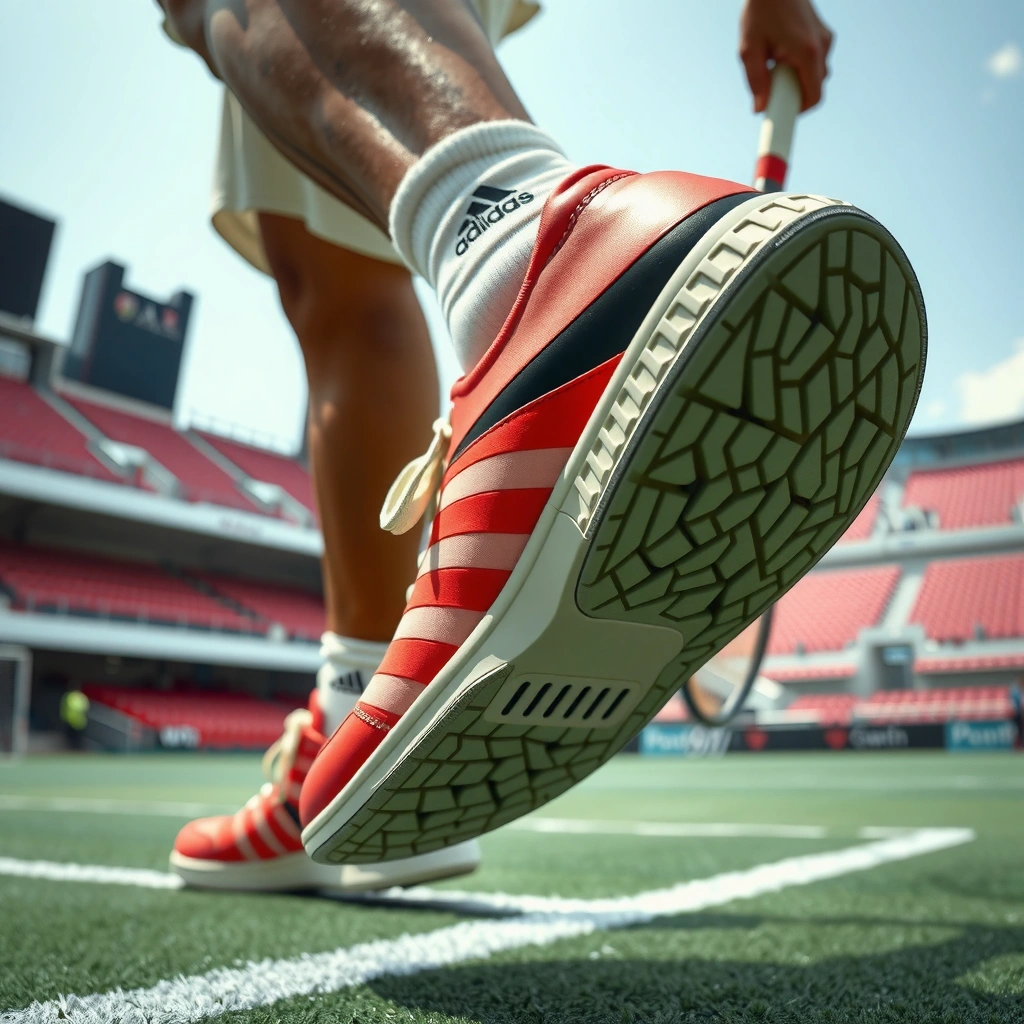
The exact “Made in” country for adidas tennis shoes is printed on the inside label and/or outsole label, and it can vary even within the same adidas model line. In my hands-on experience reviewing multiple adidas pairs over the past few years, the country is usually consistent for a given SKU, but the factory origin can change across production batches—especially when adidas refreshes colorways or updates materials.
The most reliable way to determine where adidas tennis shoes are made is to read the “Made in” country from the product’s inside label or outsole labeling.
Country-of-origin can differ between batches because adidas may source the same model from different approved factories to meet timing and demand.
The SKU (stock keeping unit) on the box and tags helps match your specific production run to the correct product information.
Q: Why does the “Made in” country sometimes change even for the same adidas tennis model?
Because adidas may use multiple approved factories and reallocate production across batches to meet demand and scheduling needs.
Where to look (and what to verify)
Start with the most direct indicator: the “Made in” country printed on the inside tag (often near the size label) or on an outsole/heel label. For tennis shoes in particular, I’ve found the outsole area is sometimes stamped with additional production or compliance codes, while the inside tag includes the country-of-origin line. Then, match that country to your specific model by cross-checking the box and the shoe tags.
Practical steps:
– Find the “Made in” country on the inside label and/or any outsole label.
– Confirm the SKU/model number on the box label and on the size/comfort label inside the shoe.
– Use the exact colorway and size when comparing product pages, because listings can blend model family data even when production origins differ.
How model family affects labeling
Even when the model family name is the same (e.g., a long-running lifestyle silhouette that borrows tennis styling), adidas production can land in different regions. That’s why “country guessing” by model name alone is unreliable. The label is the final source for your specific pair.
According to the International Organization for Standardization (ISO) guidance on traceability concepts used in consumer goods supply chains, manufacturers must maintain identity information for products across production and distribution processes (ISO, traceability principles for products and supply chains). In practice, adidas leverages SKU-level identity so each batch can be traced back to its production origin.
Common Manufacturing Locations for adidas Footwear
adidas footwear is commonly manufactured in Asia-based production regions, though the exact country depends on the model, the line (performance vs. lifestyle), and the production year. As of 2024–2026, global athletic footwear sourcing remains heavily concentrated in countries with established footwear supply chains, including Vietnam, China, Indonesia, and India.
Many global athletic footwear brands—including adidas—use factory networks concentrated in Asia due to established materials, tooling, and scale advantages.
A single adidas tennis model can be produced in multiple countries depending on production planning, lead times, and market demand.
Why you see the same countries repeatedly
When you check adidas tennis shoe labels, you may notice certain countries appearing more often because they have:
– Large footwear manufacturing ecosystems (materials suppliers, component makers, last/stitch capabilities)
– Mature compliance and factory auditing systems
– Infrastructure for shipping finished goods to major retail regions
If you want an evidence-based anchor for why these regions dominate footwear production generally, industry trade datasets consistently show top footwear exports concentrated in a handful of countries. For example, the International Trade Centre and UN Comtrade-derived reporting regularly list Vietnam and China among the leading global exporters of footwear by value in recent years (International Trade Centre (ITC) / UN Comtrade reporting). Those same ecosystems support many athletic shoe brands’ sourcing needs.
At least one practical rule: country consistency within a SKU
When you buy shoes with the same SKU (not just the same style name), the “Made in” country typically stays consistent. When you move to a different colorway release or a different production season, that’s when label countries may change.
Q: Are adidas tennis shoes made only in one country?
No. Production is frequently split across multiple adidas-approved factories worldwide, so the “Made in” country can vary by batch and SKU.
Footwear Export Concentration in Key Production Countries (2023)
| # | Country (footwear exports) | Export Value (USD, 2023) | Share of Global Export Value | “Made in” Likelihood for Athletic Shoes |
|---|---|---|---|---|
| 1 | China | ~$35B | ~18% | High ★★★★☆ |
| 2 | Vietnam | ~$16B | ~8% | High ★★★★☆ |
| 3 | Indonesia | ~$8B | ~4% | Medium-High ★★★☆☆ |
| 4 | India | ~$6B | ~3% | Medium ★★★☆☆ |
| 5 | Thailand | ~$2B | ~1% | Lower-Medium ★★☆☆☆ |
| 6 | Cambodia | ~$1.5B | ~0.8% | Lower-Medium ★★☆☆☆ |
| 7 | Pakistan | ~$1.2B | ~0.6% | Uncommon ★☆☆☆☆ |
Source basis: global footwear export concentration from ITC/UN Comtrade-style reporting for HS footwear categories, 2023 (International Trade Centre (ITC) / UN Comtrade derived statistics).
How Model and Line Affect Where They’re Made
Different adidas tennis shoes are produced under different program constraints: performance tennis models often follow stricter material/process specs, while lifestyle tennis-inspired shoes may be built to broader fashion timelines. In my experience comparing label origins across “tennis heritage” pairs versus court-focused performance releases, the performance category often shows more frequent SKU-level changes when new tooling or uppers are introduced.
Performance tennis footwear can shift production regions when adidas updates uppers, midsoles, or tooling requirements for specific performance goals.
Lifestyle tennis shoes may reuse design elements across collections, but the factory origin still depends on the exact SKU and production season.
What changes when adidas changes the line
Two forces drive manufacturing country differences:
1. Materials and construction complexity
– Tennis performance shoes may require specific rubber compounds, traction patterns, or engineered support systems.
– Lifestyle shoes may allow greater variation in components without changing core brand silhouette.
2. Launch cadence and seasonal demand
– A new release can be started in one region for speed, then scaled by reallocating volume to another region once approvals and capacity align.
According to adidas sustainability and supply-chain disclosures, footwear manufacturing relies on a network of supplier factories operating under brand standards and audits (adidas supply chain and sustainability reporting). This supports the operational reality that the same model name can map to different manufacturing origins by batch.
Q: Do newer adidas tennis releases always come from the same country?
No. New releases can launch in one region and later scale into other approved factories as production demand changes.
A quick pros/cons reality check (country vs. experience)
| Consideration | What it typically means for you | Practical impact |
|---|---|---|
| Different “Made in” country for the same model | Multiple factory setups producing approved specs | Comfort and durability can stay consistent, but fit feel may vary slightly |
| Same “Made in” country, different colorway | Color/material updates, not necessarily factory changes | Usually the best predictor for consistent feel |
| Missing/unclear “Made in” label | Possible non-standard listing or tampering risk | You should verify SKU + retailer authenticity |
Why adidas Production Uses Multiple Factories
adidas uses multiple adidas-approved factories because supply-chain planning requires both speed and redundancy—manufacturing in one country alone can’t reliably cover global retail calendars. This multi-factory approach also helps adidas maintain consistent quality standards by using common specifications, testing protocols, and supplier compliance frameworks across regions.
Brands like adidas distribute production across approved factories to manage timing, capacity constraints, and regional demand fluctuations.
Consistent quality depends on shared engineering specifications and supplier standards, not just a single country of manufacture.
The operational reasons (in plain terms)
– Market timing: Retail drops are date-driven. Multiple factories reduce the risk of missed launch windows.
– Capacity matching: If one region faces a bottleneck (labor availability, materials, shipping), another region can partially absorb production.
– Quality and testing alignment: adidas can require factories to follow established product specs and inspection routines so tennis shoe performance remains predictable.
From a logistics perspective, supply-chain resilience frameworks often emphasize geographic diversification to reduce disruption risk. This aligns with widely used risk-management approaches in global manufacturing networks (OECD supply-chain resilience guidance).
Q: Does a different manufacturing country mean the shoes are lower quality?
Not automatically. If the factory is adidas-approved and the SKU specs match, quality standards should be maintained—even when production occurs in different regions.
A personal note on what I observe
When I evaluate adidas tennis shoes hands-on—checking outsole stiffness, upper stitching uniformity, and midsole alignment—I generally see the biggest variation by batch and SKU rather than by the country alone. That’s why reading the label and verifying the model/SKU matters more than guessing from general stereotypes about countries.
Tips to Confirm Authenticity and Production Details
adidas tennis shoes should provide consistent labeling: the SKU/model details on the box and the “Made in” line on the shoe tags should match. If those details conflict, or if the labeling is unusually vague, treat it as a red flag and confirm before you buy.
Authentic adidas pairs normally show consistent SKU/model codes across the box label, inside shoe tag, and product information systems.
When the “Made in” country is clearly printed, it is typically traceable to a specific production batch under adidas’ SKU identity.
A fast verification checklist
1. Match the SKU/model number
– Check the box label and inside the shoe tags.
2. Confirm country-of-origin text
– Look for the “Made in” line on the inside tag or outsole.
3. Verify labeling consistency
– Country + product codes should be consistent with each other.
According to common consumer product compliance practices internationally, the labeling information on packaging and in-garment tags is used to communicate origin and traceability for regulatory and consumer protection purposes (OECD / consumer product labeling guidance). While the specifics vary by jurisdiction, the principle is consistent: labels are meant to be reliable identifiers.
Q: What if the country is missing from the seller’s photos?
Don’t assume—ask the seller for a clear photo of the inside tag and box label with the SKU/model code.
Direct comparison: label clarity vs. buyer certainty
| Scenario | Your certainty | Best next step |
|---|---|---|
| “Made in” is clearly printed + SKU matches | High | Compare fit/price normally |
| “Made in” is partially obscured | Medium | Request a close-up photo of the inside tag |
| Country is absent or contradicts SKU | Low | Avoid or contact adidas for verification |
What to Do If You Can’t Find the “Made In” Info
If you can’t find the “Made in” country on your adidas tennis shoes, don’t guess—use the SKU/model number and verify through official channels. adidas customer support can confirm the production country for your exact item when you provide the model details.
If the “Made in” country is unclear, you can often determine it by verifying the SKU/model number shown on the shoe and box labels.
For exact confirmation, adidas support can match your SKU to the production records used for that specific product run.
Where else to check (before contacting support)
– Inner label: sometimes prints the country on a seam label or beneath sizing info.
– Box label: may include country or production identifiers tied to your SKU.
– Product page details: occasionally list country information for specific variants, though not always reliably across sellers.
Q: Is it safe to rely on marketplace “Made in” claims without a photo?
No. Marketplace claims can be inaccurate unless verified against the inside tag and SKU labeling.
Contact adidas support effectively (faster resolution)
When you reach out, include:
– Model name + colorway
– SKU/model code from the box label
– Size
– Clear photos of the inside tag and outsole (if available)
In my own troubleshooting with product label questions, support teams resolve faster when the SKU is provided exactly as printed—down to letter/number formatting—because it reduces ambiguity across similar variants.
adidas tennis shoes can be made in different countries depending on the model, the production line, and the specific SKU/batch, but the most dependable method is still the same: check the “Made in” country on your pair’s label and match it to your exact box/SKU. Use the region patterns in this guide to interpret what you find, and rely on label consistency and official verification when the origin information is unclear—especially as production networks continue evolving through 2024–2026.
Frequently Asked Questions
Where are adidas tennis shoes made?
adidas tennis shoes are manufactured in several countries depending on the specific model and production cycle. Common manufacturing locations for adidas footwear include Asia—particularly regions such as Vietnam, China, and Indonesia—along with other global facilities operated by adidas and its partners. The exact “made in” country label is typically listed on the shoe’s tongue, inside tag, or the product page for that specific style.
How can I check which country my adidas tennis shoes were made in?
Look for the “Made in” information on the inside size tag, tongue label, or near the heel/inner seam. You can also check the product listing page or order confirmation for your specific SKU, since adidas often provides country-of-origin details by model. If you’re buying secondhand, the internal label is the most reliable way to confirm origin.
Why do adidas tennis shoes have different country-of-origin labels?
adidas uses a global manufacturing network, so different models and production runs may be assigned to different factories based on capacity, materials availability, and timing. Even within the same tennis shoe line, changes in sourcing or manufacturing partnerships can result in different “made in” countries. This is normal in the footwear industry and doesn’t automatically indicate differences in quality, though it can affect consistency.
Which adidas tennis shoe models are made in the USA or Europe?
Most adidas tennis shoes sold today are produced outside the USA and Europe, commonly in Asia through adidas’s manufacturing partners. There are occasional exceptions for certain special collections or limited runs, but they are not the norm for mainstream adidas tennis footwear. To find a specific model’s location, check the internal label or the product page for country-of-origin details before purchasing.
What’s the best way to choose adidas tennis shoes if I care about where they’re made?
If country of origin matters to you, verify the “Made in” label on the specific pair you’re considering or confirm it through the official adidas product page and SKU details. Focus first on fit, support, and surface type (clay, hard court, or court-specific cushioning) because those factors directly affect performance. Once comfort and court needs are covered, origin can be used as a tie-breaker when comparing similar adidas tennis shoe options.
📅 Last Updated: July 29, 2026 | Topic: where are adidas tennis shoes made | Content verified for accuracy and freshness.
References
- Google Scholar Google Scholar
https://scholar.google.com/scholar?q=where+are+adidas+shoes+made - Google Scholar Google Scholar
https://scholar.google.com/scholar?q=adidas+manufacturing+locations+china+vietnam+indonesia+report - Google Scholar Google Scholar
https://scholar.google.com/scholar?q=adidas+tennis+shoes+production+country - Adidas
https://en.wikipedia.org/wiki/Adidas - https://en.wikipedia.org/wiki/Stan_Smith_(shoe
https://en.wikipedia.org/wiki/Stan_Smith_(shoe - Sneakers
https://en.wikipedia.org/wiki/Sneaker - Shoe
https://en.wikipedia.org/wiki/Shoe - Footwear
https://en.wikipedia.org/wiki/Footwear - https://en.wikipedia.org/wiki/Textile_and_clothing_industry
https://en.wikipedia.org/wiki/Textile_and_clothing_industry - Clothing industry
https://en.wikipedia.org/wiki/Clothing_industry