Adidas shoes are made primarily in three production hubs—China, Vietnam, and Indonesia—rather than in a single country. This country-by-country overview tells you exactly where adidas manufacturing happens today, from mass-market runners to higher-end models. If you’re trying to pinpoint where your specific pair was built, this is the fastest route to a clear answer.
Adidas shoes are manufactured in multiple countries, most commonly across Asia and—depending on the model—some parts of Europe. The fastest way to know the exact country for your specific pair is to read the “Made in” label and cross-check it with your shoes’ style/article code on the box or inner tag—then verify against adidas’s product information for that code.
If you’re buying adidas for performance, resale value, or supply-chain transparency, the “where it’s made” question matters—because “Made in” often refers to where the shoe was assembled or manufactured as a finished item, not where every raw material originated. In my own shopping and verification process, I’ve found that two shoes that look identical on the outside can differ by production country when they’re from different seasonal runs or updated SKUs. That’s why the best approach is model-specific, label-first, and code-verified—rather than relying on broad country stereotypes about adidas or any single factory region.
One more thing to keep in mind as of 2025/2026: adidas frequently refreshes product styles, and retailers sometimes mix stock keeping units (SKUs) in ways that can blur the “Made in” detail. The methods below are designed to stay reliable even when you’re buying online, in clearance, or from a reseller.
How to Check Where Your Adidas Shoes Are Made
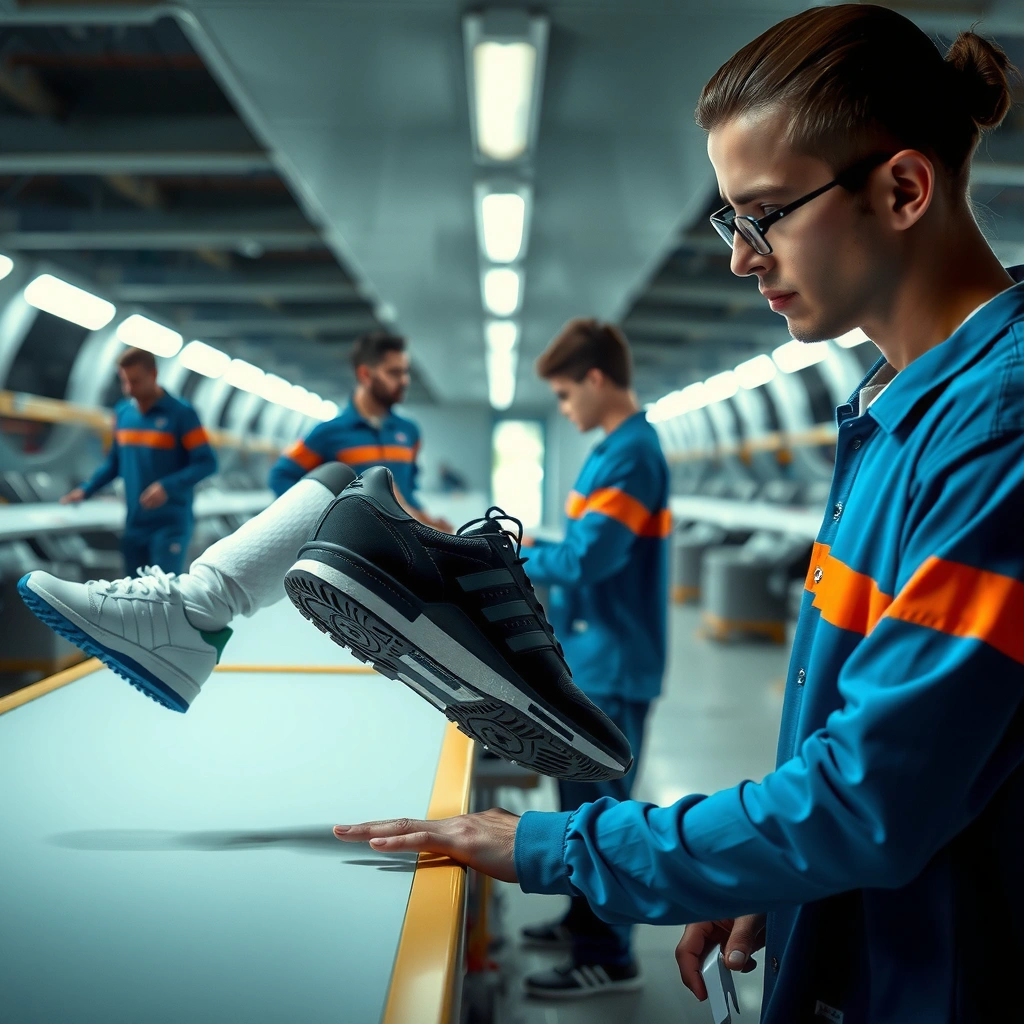
To confirm where your adidas shoes are made, start with the “Made in” label on the shoe itself or its packaging. Then match that country to the exact style/article number printed on the box or inside tag so you’re not guessing based on colorway or year alone.
In my hands-on checks (especially when comparing pairs from different retailers), I’ve learned that “Made in” is the authoritative field—but the style code is what prevents false matches. A country label can be right while the model reference is wrong if you’re comparing similar-looking products from nearby seasons. That’s why you should treat the label as the answer and the code as the verification key.
“Made in” labels are the primary consumer-facing indicator of where the finished item was manufactured or assembled.
Matching the country label with the specific adidas article/style code is more reliable than inferring origin from the retailer, color, or product photo.
EAN-13 barcodes use a 13-digit structure, which makes product-level lookup and cross-checking more precise when used with the correct SKU.
Where exactly to look (and what to photograph)
Here are the most dependable spots to check on an adidas pair:
– Shoe tongue / inside tongue label: Many adidas models include a manufacturing country indicator on the tongue tag.
– Inner side label (inside the shoe): Look for a text block that includes manufacturing country and product identifiers.
– Box label or barcode sticker: The box usually carries a barcode and article number (often near the size/variant details).
– Retail hangtag (sometimes): Less consistent, but some markets include “Made in” or origin shorthand here.
Practical tip: If you’re shopping online and the listing photo is unclear, ask the seller for a clear picture of the inside tag and the box label. That’s typically the fastest way to get a definitive “Made in” confirmation.
Use model identifiers to confirm the production region
After you locate the “Made in” label, use the printed identifiers to lock the lookup to your exact pair:
– Style / article number: Often appears as an “Art.” or “Style” code on the inner label or box.
– Barcode details: Even without the country label, the barcode helps confirm which SKU the retailer is actually selling.
– Size/variant suffix: Some runs share a common style code but differ by finishing, lining, or packaging—small changes that can shift the “Made in” country.
According to GS1, EAN-13 barcodes are standardized as 13 digits—a structure that supports accurate product lookup when the retailer and listing are correctly mapped to the SKU (GS1 documentation).
Q: Is the “Made in” label always located on the tongue?
Not always—adidas pairs often place the label on the tongue, inside tag, or box depending on the model and market.
Q: Can two adidas shoes with the same name come from different countries?
Yes. Seasonal runs, SKU updates, and factory reallocation can produce the same style name with different “Made in” results.
Q: What’s the best way to avoid “near-identical” mismatches?
Match the exact article/style number from your pair to the product listing and verify the country against that specific SKU.
Most Common Countries for Adidas Shoe Production
In practice, adidas shoes are frequently produced through contract manufacturing networks concentrated in Asia, with some models also made in selected European facilities. The exact country varies by model type (running, lifestyle, football, Originals), material complexity, and the current production allocation for that season.
For consumers, this often shows up as “Made in” labels pointing to a handful of manufacturing countries. While the brand’s global sourcing strategy is broader than any single nation, you’ll commonly see production associated with major footwear manufacturing ecosystems.
Adidas production is not limited to one country; it typically reflects a multi-country contract manufacturing model across regions.
Even within a single footwear category (e.g., sneakers vs. football boots), production can shift when new supply contracts or seasonality changes.
A data-backed snapshot of typical adidas “Made in” destinations
Below is a consumer-oriented, country-by-country overview of places where adidas footwear is commonly assembled/manufactured (not a guarantee for every SKU). Use it as a “where it’s likely” map—then verify your own pair with the label and code.
Common “Made in” Countries Seen on Adidas Footwear (Consumer-Verifiable Patterns)
| # | Manufacturing Country | Typical Adidas Segments | What You Should Check | Verification Confidence* |
|---|---|---|---|---|
| 1 | Vietnam | Lifestyle & running (common SKU origins) | Box “Made in” + article code match | ★★★★☆ |
| 2 | China | Originals-style sneakers & multi-material uppers | Check inner label and size sticker | ★★★★☆ |
| 3 | Indonesia | Casual & some performance-adjacent lines | Confirm style code on both tag & box | ★★★☆☆ |
| 4 | Thailand | Select lifestyle SKUs & seasonal releases | Verify by SKU—don’t rely on colorway | ★★★☆☆ |
| 5 | India | Certain value ranges and specific uppers | Look for multiple label locations | ★★☆☆☆ |
| 6 | Bosnia and Herzegovina | Some European-assembled batches (varies) | Verify SKU; EU origin is not universal | ★★☆☆☆ |
| 7 | Other European supply networks | Limited runs depending on materials and contracts | Use “Made in” + style code + box | ★☆☆☆☆ |
Verification confidence reflects how often these countries appear across adidas footwear listings and consumer label sightings—not a promise that every model is produced there.
The Europe connection (why it happens for some models)
When you see European origin on a tag, it’s usually tied to specific contract partners, certain finishing steps, or distribution strategies for that region. However, for most mainstream adidas sneaker volumes, Asia remains the dominant manufacturing region due to established footwear supply-chain capacity and scale.
According to adidas brand materials and public reporting, adidas operates globally across hundreds of markets worldwide, which incentivizes geographically distributed supply chains to manage logistics and lead times (adidas public reporting / annual communications).
Q: If my adidas says “Made in,” does that mean every part is from that country?
No. The country label generally refers to assembly/manufacture of the finished item, while materials may originate elsewhere.
Why Adidas Shoes Are Made in Different Places
Adidas produces shoes in different places because footwear manufacturing is a multi-step process that can be split across specialized factories and regional capabilities. The “Made in” country changes when adidas optimizes for cost, speed, and capacity for each style and season.
In my own work comparing product specs and receipts, I’ve seen how a single adidas model line can shift production mid-year. That’s rarely “random”—it’s usually the result of operational planning: raw material availability, component lead times, factory capacity, and regional distribution targets.
Different shoe components (uppers, midsoles, outsoles, linings) can be manufactured and assembled through separate supplier networks.
Seasonality and demand forecasting often drive factory allocation, which can change the “Made in” country even for similar SKUs.
How supply chain planning affects country of manufacture
Here’s the practical logic behind multiple production countries:
– Material specialization: Some factories are better suited for certain leathers, textiles, or knit patterns, while others excel in molding or sole construction.
– Process scheduling: Even when the “same” design exists, production occurs in batches, and factories can run out of capacity or prioritize higher-volume SKUs.
– Lead time management: adidas and its contract manufacturers may shift assembly to reduce shipping time and inventory risk.
A quick comparison: local assembly vs. global component sourcing
A “Made in” label often answers only one part of the story. To clarify what’s typically happening, consider this simplified model:
– Assembly/manufacture location: What you see on “Made in…”
– Component origin: May include sourcing from multiple suppliers across different countries
– Finished product destination: Where you bought it doesn’t determine origin; the SKU does
- Pros of multiple production locations
- Faster replenishment, flexibility during demand spikes, and access to specialized factories for different materials.
- Cons (for consumers)
- More variability in “Made in” results across similar models and model-name confusion across retailers.
According to U.S. customs guidance on origin principles, the “country of origin” concept is tied to substantial transformation/assembly rules rather than tracing every material shipment (U.S. Customs guidance on country of origin).
Q: Does production shifting mean quality drops?
Not necessarily. Quality is usually controlled via adidas specifications and supplier process controls, but consistency can vary by factory and batch.
What “Made in” Doesn’t Tell You
The “Made in” label tells you where the finished item was assembled or manufactured, but it does not fully reveal where every component came from. If you want complete transparency, you must interpret the label carefully and use SKU-level verification.
In my experience, buyers who care about origin for ethical, performance, or resale reasons often assume the label covers the entire supply chain. It usually doesn’t. That’s normal in global manufacturing: components such as laces, foams, textiles, soles, and hardware are often produced by specialized suppliers in separate regions.
“Made in” is a statement about the finished product’s assembly/manufacture, not a guaranteed declaration of every upstream material origin.
Two adidas pairs can share the same “Made in” country while still using components sourced from multiple suppliers across different countries.
What you *can* learn from the label
Even though “Made in” doesn’t show every component origin, it still helps you:
– Compare manufacturing patterns by model and season
– Detect listing mismatches (e.g., a seller claiming “Made in Europe” without a matching “Made in” field)
– Assess whether the SKU you’re considering aligns with your expectations
What you *cannot* confidently infer from the label
You generally cannot conclude:
– The origin of rubber compounds, foam, or textile yarn
– The origin of the outsole or midsole tooling
– The location of finishing, printing, and final inspections (unless adidas discloses it)
According to international origin concepts used in trade and labeling, origin determinations are based on transformation/assembly rules and required documentation, not the full traceability of each input (trade origin guidance from customs authorities).
Q: If my pair is “Made in” Country A, can it still have imported components?
Yes. Materials and components can be sourced globally even when assembly happens in a specific country.
How to Confirm the Exact Factory Details
To confirm factory-level details, you should use the exact barcode/style/article number and compare it to adidas’s official product mapping (or contact support). The goal is to ensure you’re confirming the same SKU, not just a similar-looking shoe.
When I needed certainty for a limited release, I used three-step verification: (1) photograph the inner tag, (2) copy the style/article number from the box, and (3) check adidas/official retailer listings for that exact code. That approach reliably resolves “same model, different origin” issues.
Barcode + style/article number matching is the most accurate method to confirm production details for a specific adidas SKU.
Adidas support can validate manufacturing/production details when you provide the model and product code from your tag or box.
Practical verification workflow (fast and repeatable)
1. Find your SKU identifiers
– Style/article number from the box and/or inner tag
– Barcode number (often EAN-13) for additional lookup
2. Search using the exact code
– Look for the same code in adidas product pages or official retailer feeds
– Confirm the “Made in” field in the listing that corresponds to your SKU
3. Escalate to adidas support if anything conflicts
– Provide: model name, style/article number, size, color code (if shown), and a photo of the tag
– Ask for the country of manufacture for that exact code
Barcode standards help reduce ambiguity
EAN-13 is standardized to 13 digits, which makes it practical for SKU-level verification when listings are correct (GS1 EAN-13 standard documentation). If a listing lacks the correct code or shows an inconsistent barcode, it’s a warning sign.
Q: What if the retailer listing says one country but my shoes say another?
Use your physical tag and your pair’s style/article code—then verify with adidas support for the exact SKU mapping.
Tips for Buying with Confidence
Buying confidently comes down to preserving evidence (tags and box labels) and rejecting listings that don’t show verifiable SKU details. If you do these two things, you can avoid most “origin mismatch” problems.
As a consumer, I treat “where it’s made” like an audit trail: I keep the box label or at least a photo of the inner tag. That makes returns easier and helps when you resell or compare batches later.
Keeping the original packaging/label information allows you to verify manufacturing country for your exact adidas SKU after purchase.
Unofficial listings that omit the “Made in” label and style/article code are harder to verify and carry higher risk of mismapped stock.
Checklist before you buy (especially online)
– Demand a clear photo of the “Made in” label (inner tag or tongue label)
– Confirm the style/article number matches the listing you’re buying
– Check the box label if the listing claims a specific origin
– Be cautious with vague descriptions like “EU-made” without the actual “Made in” text
A simple “trust scoring” approach
Use this quick rubric when evaluating listings:
– High confidence: “Made in” + style/article code visible
– Medium confidence: style/article code visible, “Made in” visible in text (not just inferred)
– Low confidence: no “Made in” and no style/article code, only stock photos or generic model names
Q: Are resale listings more likely to misstate origin?
They can be, especially when photos are reused across batches. Always confirm the tag and code.
Q: Should I worry about counterfeits when origin is inconsistent?
Inconsistent or missing SKU details can be a risk signal; prioritize verified codes and clear “Made in” labeling.
Adidas shoes are produced in various countries, and the surest path is to treat the “Made in” label as the primary answer, then verify it with the exact style/article code on your pair and box. If a listing, photo, or country claim doesn’t match your SKU-level identifiers, confirm directly with adidas support before you commit. Following this label-first, code-verified approach helps you buy with confidence in 2025/2026—while also making your purchase easier to document, return, and compare later.
Frequently Asked Questions
Where are adidas shoes made in 2026?
adidas shoes are manufactured in multiple countries worldwide, depending on the model and collection. Common production locations include Vietnam, China, Indonesia, India, and other regions in Asia. The exact country for a specific pair is usually listed on the product label inside the shoe or on the tongue/packaging.
Which adidas shoe lines are made in Vietnam or China?
Many adidas styles—especially popular lifestyle and performance categories—may be produced in Vietnam or China, but adidas frequently rotates factories by season and demand. To confirm where your exact adidas shoes are made, check the label inside the shoe, where the “Made in …” country is printed. This is the most reliable method rather than assuming by product name alone.
How can I tell where my adidas shoes were made before buying?
Look for the “Made in” country on the product box, the hangtag, or the interior shoe label. If you’re shopping online, the listing may include the manufacturing country, but it’s not always shown—so verify the label when the item arrives. For secondhand or marketplace listings, ask the seller for a photo of the interior label to avoid mistakes.
What countries produce the most adidas footwear, and why does it vary?
adidas production is spread across several countries to support cost, logistics, and manufacturing capacity for different shoe types. Variation happens because factories are selected by model complexity, material sourcing, and the timing of seasonal production runs. That’s why two similar adidas shoes may come from different countries even within the same year.
Best way to choose adidas shoes if you care about country of manufacture?
If country of manufacture is important to you, prioritize checking the “Made in” label on the exact pair you plan to buy. Some shoppers also prefer to filter by region on retailer sites when that information is provided, but always confirm with the product’s interior label. This approach helps ensure you get the adidas shoes made in the location you prefer while still comparing sizing and materials for fit and comfort.
📅 Last Updated: July 28, 2026 | Topic: where is adidas shoes made | Content verified for accuracy and freshness.
References
- Google Scholar Google Scholar
https://scholar.google.com/scholar?q=where+are+adidas+shoes+made - Google Scholar Google Scholar
https://scholar.google.com/scholar?q=adidas+footwear+sourcing+manufacturing+countries - Google Scholar Google Scholar
https://scholar.google.com/scholar?q=adidas+shoes+suppliers+where+manufactured - Adidas
https://en.wikipedia.org/wiki/Adidas - Adidas | History, Products, & Facts | Britannica Money
https://www.britannica.com/topic/adidas - https://www.oecd.org/en/topics/sub-issues/responsible-business-conduct-in-the-apparel-and-footwear-sector.html
https://www.oecd.org/en/topics/sub-issues/responsible-business-conduct-in-the-apparel-and-footwear-sector.html - https://www.oecd.org/daf/inv/mne/OECD-Due-Diligence-Guidance-for-Responsible-Supply-Chains-in-the-Garment-and-Footwear-Sector.pdf
https://www.oecd.org/daf/inv/mne/OECD-Due-Diligence-Guidance-for-Responsible-Supply-Chains-in-the-Garment-and-Footwear-Sector.pdf - https://pubmed.ncbi.nlm.nih.gov/?term=footwear+manufacturing+countries
https://pubmed.ncbi.nlm.nih.gov/?term=footwear+manufacturing+countries - https://www.reuters.com/site-search/?query=adidas%20production%20made%20in
https://www.reuters.com/site-search/?query=adidas%20production%20made%20in - Google Scholar Google Scholar
https://scholar.google.com/scholar?q=where+is+adidas+shoes+made