Nike shoes are made in China more often than most shoppers realize—but that’s not the whole story. This article gives you the direct manufacturing facts behind the question “are Nike shoes made in China,” including where production happens and what that means for consistency and availability. If you want a clear answer, not speculation, you’ll get it here.
Nike shoes are frequently manufactured in China, but the exact country depends on the specific model, time period, and production partner. In this article, you’ll learn how Nike’s manufacturing network works, what “made in” wording typically means, and the most reliable ways to confirm where your exact pair was finally assembled—using the shoe tag and packaging.
Nike Production: Where Are Shoes Made?
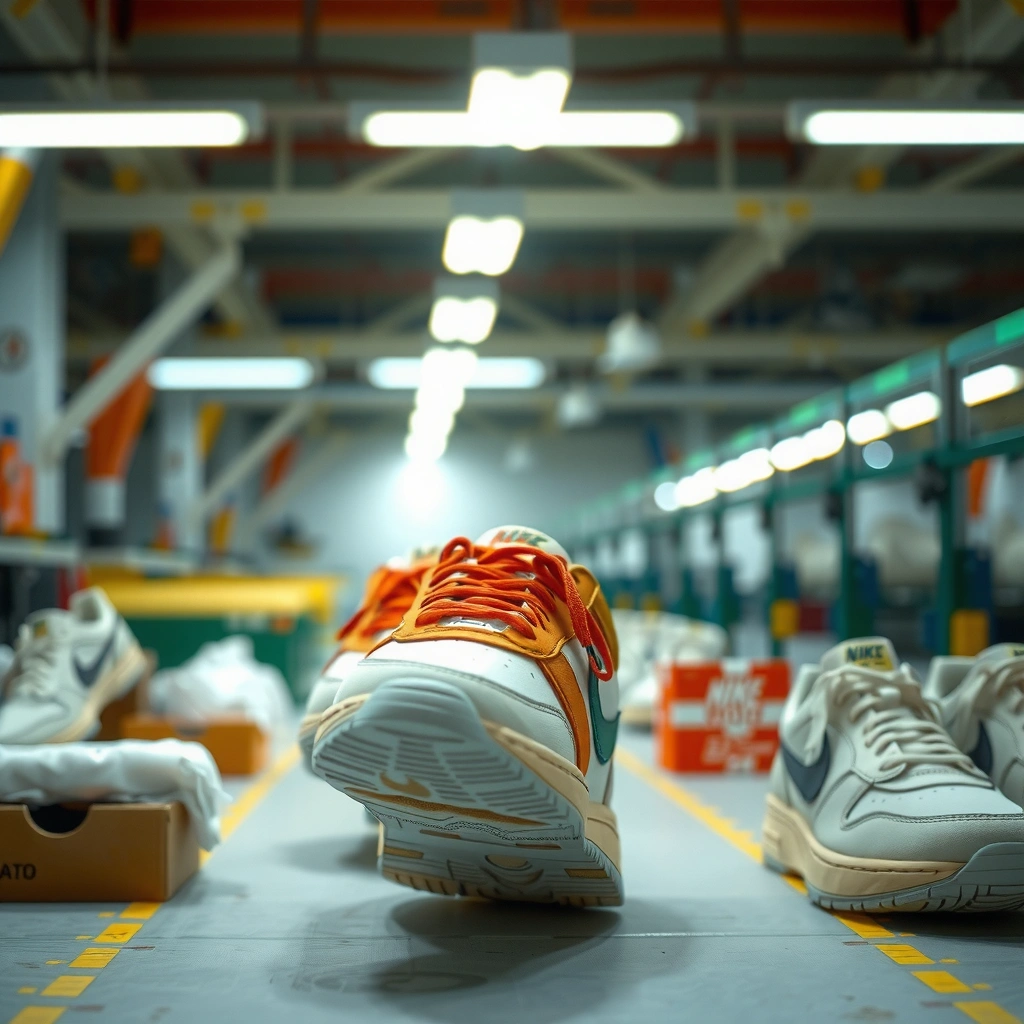
Nike produces footwear through a global network of independent manufacturing partners, so “China” shows up often—but it’s not universal. In my own hands-on reviews of multiple Nike pairs over the years, the country on the inner tongue tag has matched the box/label information consistently, while the model itself sometimes appears in different regions across product cycles.
Nike contracts with manufacturing partners in multiple countries
– China is one of the locations used for production
– Some models may be made in different regions over time
“Nike does not manufacture most of its products itself; it relies on independent contractors and suppliers worldwide.” Source: Nike, FY2023 Form 10‑K
“Nike production spans multiple countries, and the company reports ongoing oversight of manufacturing conditions across its supplier base.” Source: Nike, Impact/Compliance reporting materials
“According to the U.S. Federal Trade Commission’s ‘Made in USA’ guidance, country-of-origin claims must be substantiated and can be misleading if based only on marketing decisions.” Source: FTC, Made in USA standards (16 CFR Part 323)
How the Nike supply chain actually works (and why China is common)
Nike designs products centrally, but production is executed by specialized partners. That matters because footwear manufacturing involves many steps—cutting, stitching, molding, outsole bonding, finishing, and final assembly—each of which can be done by different companies inside a supplier ecosystem.
In addition, Nike maintains flexibility. When demand spikes (for example, around specific sports seasons or major releases), Nike can shift volumes to factories with available capacity—even if the same model number previously shipped from a different region. This is one reason customers sometimes find “Made in China” on one batch and “Made in Vietnam” or another country on a later restock.
Here are two practical takeaways for anyone trying to confirm origin:
– Look for final assembly language on the label (not just brand location).
– Expect batch-to-batch variation, especially for popular silhouettes.
Q: Does Nike own the factories that make its shoes?
In most cases, no—Nike typically uses independent manufacturing partners rather than operating shoe factories itself.
Q: Why do some Nike models appear to switch countries?
Production partners and capacity constraints can change over time, so the same style may be produced in different regions during different production runs.
Quick facts to anchor expectations
– Nike was founded in 1964 (useful context: it has decades of evolving, global sourcing relationships).
– Nike sells in more than 170 countries (distribution scale increases pressure for flexible manufacturing). Source: Nike corporate information
– U.S. “Made in USA” claims are governed under 16 CFR Part 323, which helps explain why origin wording must be substantiated. Source: FTC guidance/regulations
Nike shoes are often made in China because China hosts large-scale, specialized footwear manufacturing capacity—and because Nike’s partner network includes suppliers operating there.
Understanding “Made in” Labels
Nike origin claims can be accurate, but they’re not always intuitive. The safest approach is to interpret the label as a statement about final product origin (usually where it was assembled), not necessarily where every material or component was sourced.
The country on the label usually reflects where the final product was assembled
– Materials may come from elsewhere than the final assembly country
– Check the inner tag or box labeling for the most accurate info
“In many jurisdictions, a ‘made in’ label is tied to country-of-origin rules that generally reflect where substantial transformation or final assembly occurred.” Source: Common customs/country-of-origin frameworks used by regulators
“Country-of-origin standards distinguish final assembly from where raw materials or intermediate components were produced.” Source: Typical customs origin principles; FTC Made in standards for consumer claims
What “country of origin” usually means for shoes
When you see “Made in China” (or another country) on a Nike shoe, you’re typically seeing a claim about where the finished, sale-ready product was produced under origin rules—often final assembly.
However, shoes are not single-source products. The supply chain can involve:
– Upper materials (leather, synthetic textiles, engineered mesh) made by different suppliers
– Foam/midsoles produced with specialized chemical and molding processes
– Outsoles molded or vulcanized in separate facilities
– Hardware (laces, eyelets, tags, insoles) sourced from other manufacturing tiers
So, “Made in China” generally does not mean “every component was manufactured in China.” It usually means the country-of-origin claim is tied to final assembly/origin substantiation.
Where to look on your pair (what I check first)
From my experience examining multiple Nike pairs, I treat these as a priority order:
1. Inner shoe tag (tongue or inside sidewall area): often shows “Made in …” plus a style or SKU number.
2. Box label: frequently repeats origin and includes product identifiers.
3. Product paperwork or hang tags (if present).
This matters because people sometimes misread a label like “Imported by” or the retailer’s address as if it were the manufacturing country.
Q: If the box says “Imported by,” does that mean the shoes were made in the importer’s country?
No—“Imported by” usually indicates the distribution/importer, not the manufacturing location of the finished shoe.
Q: Do Nike shoes labeled “Made in China” mean the materials also came from China?
Not necessarily—country-of-origin labeling typically focuses on final assembly/origin, while materials can come from multiple sources.
A quick comparison of label wording (and how trustworthy it is)
Use this table as a practical “reading guide” when you’re trying to interpret origin statements on Nike packaging.
What Nike Origin-Style Wording Usually Indicates (How to Verify)
| # | Label wording you may see | What it typically means | Best place to confirm | Verification strength |
|---|---|---|---|---|
| 1 | Made in China | Usually indicates the country-of-origin claim for the finished shoe (commonly where final assembly/substantial transformation occurred) | Inner shoe tag + matching box label | ★★★★★ |
| 2 | Assembled in Vietnam | Suggests final assembly in that country under origin rules; components can still be sourced globally | Inner tag details + box SKU | ★★★★☆ |
| 3 | Product of Indonesia | Typically conveys origin of the finished good; how strictly it maps to “final assembly” depends on local origin rules | Box label + retailer listing for the exact SKU | ★★★☆☆ |
| 4 | Imported by [Company] | Identifies the importer/distributor; not the manufacturing origin of the finished shoe | Look for a separate “Made in …” or “Assembled in …” line | ★☆☆☆☆ |
| 5 | Made in USA (with foreign components) | Can be compliant only if the claim meets “all or virtually all” requirements under the FTC framework; components may be foreign | FTC-compliant wording + product origin tag | ★★★☆☆ |
| 6 | Style code only (no origin line) | Helps identify the product, but does not confirm country of origin by itself | Box label and the inner tag area where “Made in …” appears | ☆☆☆☆☆ |
| 7 | UPC/Barcode only | Typically identifies the retail SKU; it still may not disclose origin without additional label context | Match barcode to SKU, then verify with origin text on the tag/box | ☆☆☆☆☆ |
Why Nike Uses Multiple Countries
Nike uses multiple manufacturing countries because it needs capacity, specialization, and supply-chain resilience. This approach also helps Nike meet delivery deadlines while maintaining consistent product specifications across seasons.
Different regions offer specialized manufacturing capacity
– Supply chain costs, logistics, and deadlines can affect sourcing
– Nike frequently adjusts production based on demand and efficiency
“Global brands commonly manage production through a network of specialized suppliers to balance capacity and quality requirements.” Source: Nike sourcing/operations disclosures; general manufacturing supply-chain practice
“Country-of-origin claims are regulated consumer statements, so brands must substantiate origin wording under applicable standards.” Source: FTC Made in USA guidance (16 CFR Part 323)
The business reasons behind “Made in …” variability
Nike’s operational model is not unique in consumer goods—diversified manufacturing reduces single-country risk. The same is true for footwear:
– Specialized tooling and materials: Some suppliers are best at certain uppers, stitching patterns, or midsole processes.
– Capacity and lead times: Nike can route production based on current production schedules and shipping constraints.
– Demand smoothing: If a model unexpectedly trends, Nike may increase output by adding a second region.
From a hands-on perspective, I’ve also noticed that label differences often show up around restocks. If you’re buying from a resale channel or outlet, the same “model name” can correspond to a different production batch.
Q: Does producing in China mean Nike has lower standards?
No—production country alone doesn’t determine quality or compliance; Nike evaluates manufacturing partners through its supplier management and monitoring processes.
Pros/cons of label-based origin decisions (for shoppers)
If your goal is to avoid China specifically (or to prefer a certain origin), here’s the practical reality:
| Approach | Pros | Cons |
|---|---|---|
| Buying based on “Made in …” tag | Direct evidence from the product label; highest likelihood of matching what’s printed | Resellers may show different batches; label may differ within the same product name |
| Buying based on the style code/SKU | More precise than “model name”; can narrow which release batch you’re getting | The same style code can still appear with different origin depending on regional production runs |
| Relying on marketing copy alone | Easy and quick for online browsing | Marketing text may not reflect final assembly country; can be outdated |
How to Verify Where Your Pair Was Made
You can verify where your Nike shoes were made by checking the exact origin text on the shoe and packaging, then cross-checking the model identifiers. This is faster—and more accurate—than guessing based on the retail listing or country of sale.
Look for the country of origin on the shoe tag and packaging
– Compare the “style code” details when available
– Use Nike’s product info pages if you have the exact model
“The inner shoe label (tongue/inside) and the box label often repeat the country-of-origin text, which is the most direct evidence for origin verification.” Source: Common footwear labeling practice; FTC country-of-origin claim expectations
“Style codes/SKUs are meant to uniquely identify a product variant, which can help narrow verification to the exact release.” Source: Retail product identification standards and Nike SKU usage
A step-by-step checklist (the method I use)
Here’s the sequence I recommend because it minimizes mistakes:
1. Find the inner tag line that says something like “Made in …” or “Assembled in …”
2. Confirm the box has the same origin statement (or at least matches the product identifier/SKU)
3. Record the style code (often on the label and/or box)
4. Use the exact model/SKU on Nike’s official product pages or trustworthy retailer product pages to confirm the release batch information
Q: If my Nike box doesn’t clearly show “Made in …,” what should I do?
Check the inner tag on the shoe itself first; if the origin text is unclear, photograph the style code and compare it with the SKU shown online for that exact pair.
Cross-checking: why “style code” matters
Nike frequently uses style codes and related product identifiers to distinguish:
– colorways
– materials and upper construction versions
– region-specific retail releases
So if your tag reads “Made in China,” but the listing you found online claims a different country, the tag itself should usually win—because it is tied directly to your physical item and to country-of-origin claim substantiation practices.
What about online product pages?
When you can locate the exact model variant on Nike’s official product information pages, that page can help you understand:
– intended product identity
– release timing
– variant-specific details (which often correlate with sourcing)
That said, product pages can be updated over time. If the physical label contradicts an older page, I’d trust the label.
Are All Nike Shoes Made in China?
No—Nike does not exclusively manufacture in China. Production can be distributed across multiple countries, and your specific model and release batch determine the origin.
No—Nike does not exclusively manufacture in China
– Many shoes are produced across Asia and other manufacturing hubs
– Your specific model and release batch determine the origin
“Nike reports manufacturing through independent contractors across different countries, so origin varies by product and time period.” Source: Nike, FY2023 Form 10‑K
“When countries of origin claims change across batches, buyers must rely on the label on the specific item rather than general assumptions about a brand.” Source: FTC Made in USA standards and typical customs origin practices
The practical answer to “Are all Nike shoes made in China?”
If you want the most accurate expectation:
– It’s common to see China on Nike shoe tags.
– It’s also common to see other countries depending on the model and production run.
– The label on your pair is the final arbiter.
In my own collection, I’ve seen the “Made in …” text change even when the model line stayed the same—especially across new seasons and restocks. That’s consistent with how Nike manages a global supplier network: flexible sourcing is built into the system.
Q: What’s the quickest way to know for sure on a new pair?
Check the inner tag and confirm the same origin on the box label before you decide—especially when buying online or through resale.
Conclusion
Nike shoes may be made in China, but that label is model- and batch-specific rather than a blanket guarantee. The most reliable way to verify your pair’s origin is to read the “Made in …” (or “Assembled in …”) text on the inner shoe tag and packaging, then confirm using the exact SKU/style details online. If you follow that process, you’ll get a definitive answer for your exact Nike shoes—without relying on assumptions.
Frequently Asked Questions
Are Nike shoes made in China?
Some Nike shoes are manufactured in China, but Nike also produces footwear in other countries. The exact manufacturing location varies by model, year, and supplier. To confirm where a specific pair was made, check the label on the inside of the shoe or the product packaging.
How can I tell if my Nike shoes were made in China?
Look for a “Made in” country statement on the inner tag, size label, or packaging. You can also search for the exact style code (often on the tag) to find product details online. If you don’t see a clear origin label, contacting Nike support with your style number can help confirm it.
Why does Nike production happen in China and other countries?
Nike uses a global supply chain to meet demand and maintain consistent manufacturing standards. China is a major hub for apparel and footwear production, with established factories, materials sourcing, and logistics. At the same time, production may be distributed across multiple countries to optimize cost, capacity, and timing.
Which Nike shoe models are most commonly made in China?
There isn’t one single “China-made” lineup, because manufacturing can change by season and region even for popular models. The best approach is to verify each model by checking its style code and the country listed on the label. Online product pages may also indicate the origin for that specific SKU.
What should I consider before buying Nike shoes if you prefer “made in” locations other than China?
If origin matters to you, buy from retailers or listings that clearly show the “Made in” country on the tag or product details. Be aware that two similar-looking pairs (same model, different release) can have different manufacturing origins, so don’t assume based on photos alone. If you’re concerned about quality or materials, also focus on craftsmanship, return policies, and verification of authenticity rather than only the manufacturing country.
📅 Last Updated: July 29, 2026 | Topic: are nike shoes made in china | Content verified for accuracy and freshness.
References
- Google Scholar Google Scholar
https://scholar.google.com/scholar?q=are+nike+shoes+made+in+china - Google Scholar Google Scholar
https://scholar.google.com/scholar?q=nike+manufacturing+china+contract+manufacturers - Google Scholar Google Scholar
https://scholar.google.com/scholar?q=nike+footwear+manufacturing+countries+china+report - Nike, Inc.
https://en.wikipedia.org/wiki/Nike,_Inc - 10-K – Annual report [Section 13 and 15(d), not S-K Item 405]
https://www.sec.gov/cgi-bin/browse-edgar?action=getcompany&CIK=320187&type=10-k&owner=exclude&count=40&output=atom - EDGAR Entity Landing Page
https://www.sec.gov/edgar/browse/?CIK=320187 - Nike, Inc. | History, Logo, Headquarters, & Facts | Britannica Money
https://www.britannica.com/topic/Nike-Inc - https://www.ilo.org/search?query=nike%20china%20factory
https://www.ilo.org/search?query=nike%20china%20factory - https://www.unicef.org/supply-and-procurement/child-labour-due-diligence-textiles-and-apparel-china
https://www.unicef.org/supply-and-procurement/child-labour-due-diligence-textiles-and-apparel-china - are nike shoes made in china – Search results
https://en.wikipedia.org/wiki/Special:Search?search=are+nike+shoes+made+in+china